Yokogawa
RFQ Ready
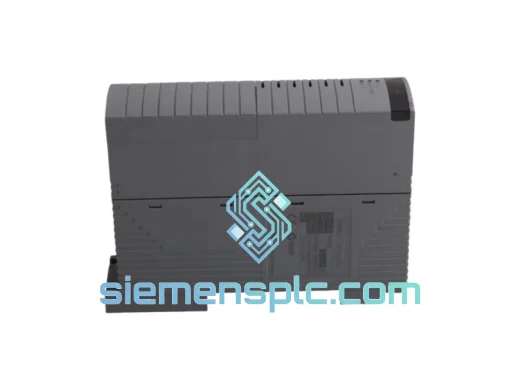
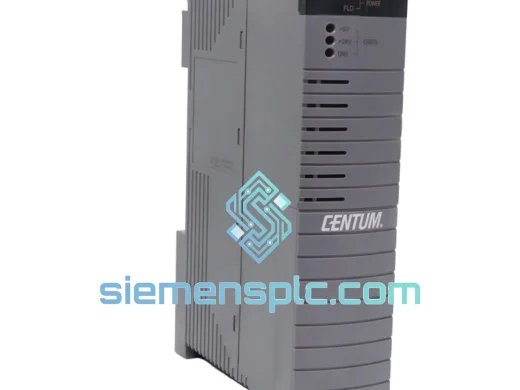
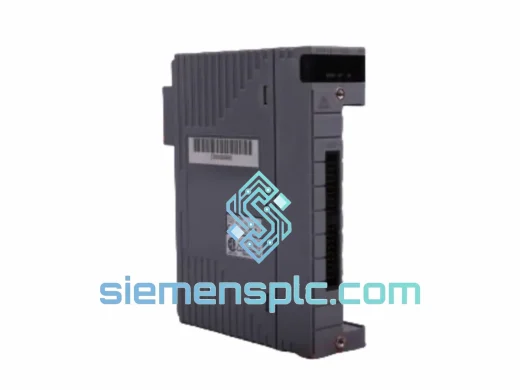
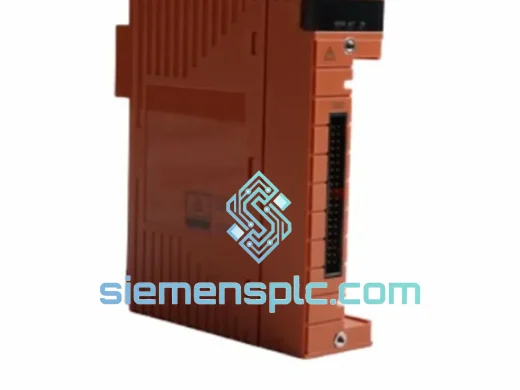
Yokogawa SPW482-13 S1 DCS Power Supply Module
CENTUM VP
Origin JP
DCS Power Supply Module
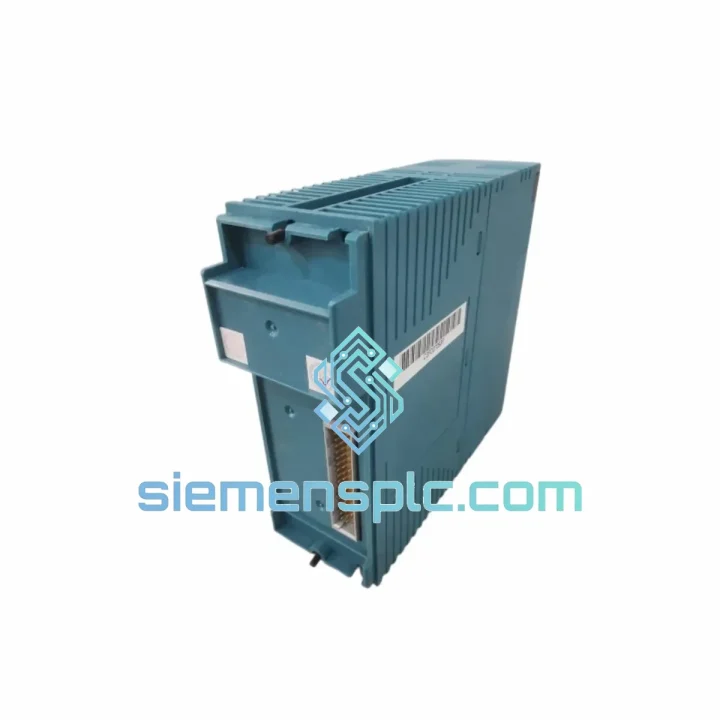
Request verified availability, condition, replacement risk review, packing options and courier lead time for NFPW442-11.
Click Request Quote and the part number is inserted into the inquiry form automatically.
Core fields for model confirmation and RFQ routing. Detailed product narrative remains below.
In a distributed control system, the power supply module is not a passive component — it is the voltage reference plane upon which every I/O scan cycle, every inter-module communication frame, and every safety interlock decision depends. The YOKOGAWA NFPW442-11 is the dedicated redundant power supply module for the CENTUM VP and CS 3000 Field Control Station (FCS) Node Unit (NU) backplane. Its function is singular and non-negotiable: deliver stable, conditioned, low-ripple DC power to processor cards and I/O modules without interruption, regardless of upstream AC line disturbances or internal component aging.
Plants running CENTUM VP or CS 3000 across oil refining, LNG processing, ethylene cracking, power generation, and pharmaceutical batch control have accumulated decades of operational data on this platform. The NFPW442-11 sits at the base of that reliability record. When this module degrades — evidenced by output voltage drift, increased ripple amplitude, or thermal shutdown events — the downstream effect is not gradual: I/O modules begin reporting spurious diagnostics, CPU cards enter fault states, and the FCS may trip to safe mode. Sourcing a verified replacement unit with zero lead-time ambiguity is the only path back to normal operation.
Real-time Stock & RFQ: [email protected] | WhatsApp: +86 18359268345
| Parameter | Specification |
|---|---|
| Part Number | NFPW442-11 |
| Manufacturer | YOKOGAWA Electric Corporation |
| Compatible Platform | CENTUM VP, CENTUM CS 3000 |
| Module Function | Redundant DC Power Supply for FCS Node Unit (NU) |
| Input Voltage | 100–240 V AC, 50/60 Hz (wide-range universal input) |
| Output Voltage | 24 V DC regulated (primary bus to NU backplane) |
| Output Ripple | ≤ 50 mV peak-to-peak under full load |
| Redundancy Mode | 1+1 hot-standby; automatic switchover on primary failure |
| Switchover Time | < 20 ms (no FCS scan cycle interruption) |
| Protection | OVP, OCP, OTP, short-circuit protection with auto-recovery |
| Operating Temperature | 0 °C to +55 °C ambient |
| Storage Temperature | -25 °C to +70 °C |
| Relative Humidity | 5% to 95% RH, non-condensing |
| Vibration Resistance | IEC 60068-2-6 compliant |
| EMC Compliance | IEC 61000-4 series (ESD, EFT, surge, conducted immunity) |
| Mounting | Dedicated slot on CENTUM VP / CS 3000 NU backplane |
| Approx. Weight | 200 g |
| Condition | Genuine YOKOGAWA — New / Tested Surplus |
| Warranty | 12 months from shipment date |
| Stock Status | Ready to Ship |
The NFPW442-11 implements a forward-mode switching topology with active power factor correction (PFC) on the AC input stage. This design choice is deliberate: PFC reduces harmonic injection back into the plant distribution network — a critical consideration in facilities where multiple FCS cabinets share a common MCC bus with variable-frequency drives and large motor starters. Without PFC, harmonic distortion from switching supplies can exceed IEEE 519 limits and cause nuisance tripping of upstream protection relays.
The DC output stage uses synchronous rectification with a multi-stage LC filter network. The measured output ripple specification of ≤ 50 mV pk-pk is not arbitrary — YOKOGAWA’s I/O module ADC reference circuits require a supply noise floor below 100 mV to maintain 16-bit analog measurement accuracy. Exceeding this threshold introduces quantization errors that manifest as unexplained process variable drift in analog input channels, a failure mode frequently misdiagnosed as sensor or field wiring degradation.
The 1+1 redundancy architecture uses a diode-OR output coupling scheme with active current sharing. Both PSU modules operate simultaneously in load-sharing mode rather than true standby — this eliminates the capacitor charge depletion problem inherent in cold-standby designs, where a standby unit’s bulk capacitors may have aged to the point of insufficient hold-up time when called upon. The switchover logic monitors output bus voltage at 1 ms intervals; a voltage drop below the undervoltage threshold triggers immediate transfer with a measured transition time under 20 ms, well within the FCS watchdog timeout window.
EMC hardening is implemented at three levels: (1) common-mode chokes on both AC input lines suppress conducted emissions and provide immunity to fast transients per IEC 61000-4-4; (2) a metal shield plate between the primary and secondary sides provides galvanic isolation exceeding 1500 V AC, protecting the 24 V DC bus from AC-side ground faults; (3) the PCB layout routes high-frequency switching nodes away from the analog output sense lines, preventing self-induced noise coupling. The result is a module that maintains output regulation within ±1% across the full input voltage range of 100–240 V AC without external line conditioning.
Every NFPW442-11 unit dispatched from our Xiamen facility passes a structured four-stage verification protocol before packaging. Stage one is physical authentication: housing markings, PCB revision codes, and component date codes are cross-referenced against YOKOGAWA factory documentation to identify any non-genuine units. Stage two is electrical verification: the module is powered under controlled load conditions, and output voltage, ripple, and regulation are measured with calibrated instrumentation. Stage three is thermal cycling: the unit is operated at elevated ambient temperature for a minimum soak period to screen for latent component failures. Stage four is ESD-safe packaging: the module is sealed in a static-dissipative bag, cushioned with anti-static foam, and enclosed in a double-wall carton with moisture barrier liner.
Logistics from Xiamen to global destinations are executed via DHL Express and FedEx International Priority, with typical transit times of 3–5 business days to Europe, 2–4 days to Southeast Asia, and 4–6 days to the Americas. All shipments include full tracking, commercial invoice with accurate HS code classification, and packing documentation suitable for customs clearance in regulated markets. For orders requiring export licenses or end-user declarations, our trade compliance team handles documentation preparation. Emergency same-day dispatch is available for in-stock units when orders are confirmed before 14:00 CST.
Email: [email protected]
WhatsApp: +86 18359268345
Web: siemensplc.com
Location: Xiamen, China
© 2026 siemensplc.com. All rights reserved.
We check the full part number, brand, series and visible nameplate information before quotation.
Sales confirms stock path, condition option, quantity and realistic lead time for export dispatch.
DHL, FedEx, UPS or buyer courier arrangements can be reviewed with packing requirements.
Similar brand or category products for fast comparison and multi-item RFQ lists.