Yokogawa
RFQ Ready
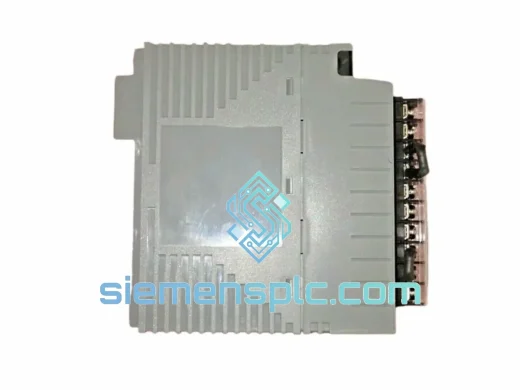
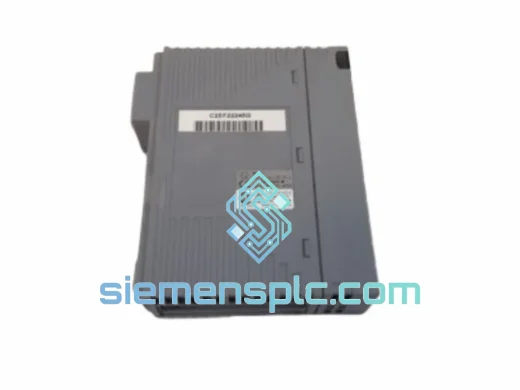
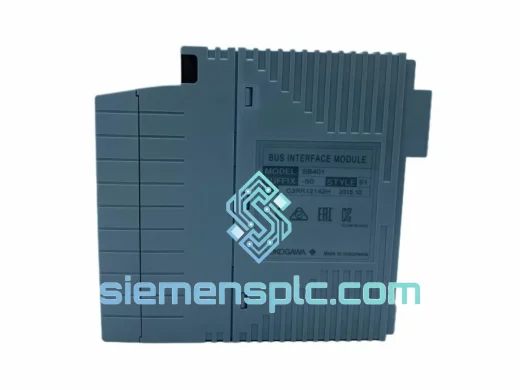
Yokogawa SB401-50 Serial Bus Interface Module – CENTUM VP
CENTUM VP
Origin JP
Serial Bus Interface Module
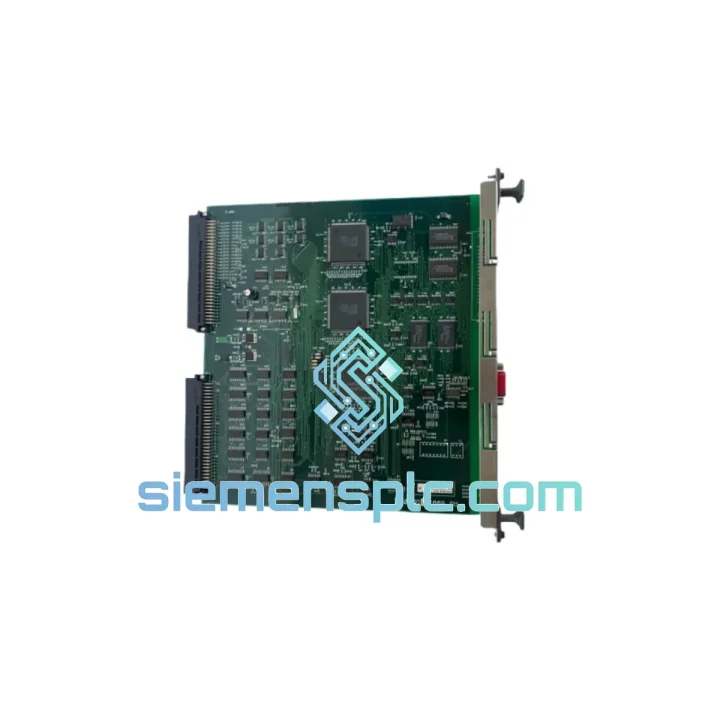
Request verified availability, condition, replacement risk review, packing options and courier lead time for SB301 S1.
Click Request Quote and the part number is inserted into the inquiry form automatically.
Core fields for model confirmation and RFQ routing. Detailed product narrative remains below.
The YOKOGAWA SB301 S1 is a dedicated Serial Bus (SB) interface module engineered for deployment within YOKOGAWA’s CENTUM distributed control system architecture. Its primary function is to serve as the physical and logical bridge between the field control station (FCS) backplane and the serial bus network, enabling deterministic, high-integrity data exchange across process segments. In a CENTUM CS or CS 3000 installation, the SB301 S1 occupies a defined slot within the node unit and manages the arbitration, framing, and error-detection functions that underpin real-time process control loops.
Unlike generic communication adapters, the SB301 S1 is purpose-built for YOKOGAWA’s proprietary SB bus topology. This means the module’s firmware is tightly coupled to the CENTUM kernel scheduler, allowing it to participate in the system’s deterministic scan cycle without introducing jitter that would compromise PID loop stability. For process engineers managing continuous operations in refining, petrochemical, or power generation environments, this level of timing precision is not optional — it is a fundamental requirement.
Real-time Stock & RFQ: [email protected] | WhatsApp: +86 18359268345
| Parameter | Specification |
|---|---|
| Manufacturer | YOKOGAWA Electric Corporation |
| Part Number | SB301 S1 |
| Module Category | Serial Bus Interface Module |
| Compatible Platform | YOKOGAWA CENTUM CS / CS 3000 / VP Series |
| Communication Bus | YOKOGAWA Proprietary Serial Bus (SB) |
| Bus Topology | Token-passing ring / point-to-point segment |
| Data Transfer Rate | Per YOKOGAWA SB bus specification (contact for datasheet) |
| Form Factor | Single-slot rack-mount module |
| Operating Temperature | 0 °C to +55 °C (storage: −20 °C to +70 °C) |
| Relative Humidity | 5% to 95% RH, non-condensing |
| Power Supply | Supplied via CENTUM node unit backplane (24 V DC bus) |
| Isolation | Optical isolation on SB bus interface lines |
| Diagnostic LED Indicators | RUN, ERR, COM status LEDs on front panel |
| Connector Type | Proprietary YOKOGAWA SB bus connector |
| Weight | Approx. 300 g |
| Country of Origin | Japan |
| Warranty | 12 months from date of shipment |
The SB301 S1’s internal architecture reflects YOKOGAWA’s engineering philosophy of separating communication management from process computation. The module houses a dedicated communication processor that handles all SB bus protocol tasks — token acquisition, frame assembly, CRC verification, and retransmission scheduling — independently of the FCS CPU. This separation ensures that a burst of communication errors on the SB segment does not consume FCS CPU cycles, preserving the deterministic execution of control algorithms.
Optical Isolation Architecture: The SB bus interface lines pass through opto-isolators before reaching the module’s internal logic. This galvanic barrier prevents ground loop currents — common in large industrial facilities where field equipment and control room equipment share different ground potentials — from corrupting the digital signal. The isolation barrier is rated to withstand transient voltages consistent with IEC 61000-4-5 surge immunity requirements, providing protection against switching transients from large motor starters and transformer inrush events on the same facility power grid.
EMC Design: The module’s PCB layout employs a multi-layer stackup with dedicated ground planes beneath the high-frequency communication traces. Ferrite beads are placed at the SB bus connector entry points to suppress common-mode noise in the 1 MHz–100 MHz range. The front panel is bonded to the node unit chassis ground through low-impedance spring contacts, ensuring the module contributes to the overall Faraday cage effect of the CENTUM cabinet. This design approach is consistent with EN 55011 Class A emission limits for industrial equipment.
Redundancy Arbitration Logic: In CENTUM systems configured with dual-redundant FCS nodes, the SB301 S1 participates in the active/standby arbitration protocol. The module continuously monitors heartbeat signals from its peer module in the redundant node. Upon detection of a peer failure — defined as absence of heartbeat for a configurable number of scan cycles — the standby SB301 S1 asserts bus mastership within one scan period, typically under 100 ms, without requiring host CPU intervention. This hardware-level failover logic is critical for processes where a communication gap exceeding one scan cycle would trigger a process safety interlock.
Watchdog and Self-Diagnostics: An internal hardware watchdog timer monitors the communication processor’s execution loop. If the processor fails to reset the watchdog within the defined interval — indicating a firmware hang or hardware fault — the module asserts an ERR signal on the backplane bus, triggering an FCS alarm and initiating a controlled module reset. This self-healing behavior prevents a silent communication failure from going undetected during continuous operation.
Every YOKOGAWA SB301 S1 unit supplied by siemensplc.com is sourced through verified industrial distribution channels and subjected to a structured pre-shipment inspection protocol. Physical inspection covers label integrity, connector pin condition, PCB surface examination for signs of rework or damage, and front panel LED functionality verification. Units that do not pass inspection are quarantined and not offered for sale.
All units are shipped in anti-static ESD bags sealed within foam-lined cartons, with moisture barrier desiccant packs included for long-haul ocean freight shipments. Export documentation — including commercial invoice, packing list, and certificate of origin — is prepared in compliance with Chinese customs export regulations and the import requirements of the destination country. Our logistics team in Xiamen, China has established relationships with DHL Express, FedEx International Priority, and freight forwarders specializing in industrial equipment, enabling delivery to most destinations within 3–7 business days for express shipments.
A 12-month warranty covers manufacturing defects and functional failures under normal operating conditions. Dead-on-arrival (DOA) claims are processed within 48 hours of receipt notification, with replacement units dispatched from Xiamen stock upon claim approval. For projects requiring advance replacement units to minimize downtime, contact our sales team to arrange a swap agreement prior to shipment.
📧 Email: [email protected]
📱 WhatsApp: +86 18359268345
🌐 Web: siemensplc.com
📍 Location: Xiamen, China
© 2026 siemensplc.com. All rights reserved.
We check the full part number, brand, series and visible nameplate information before quotation.
Sales confirms stock path, condition option, quantity and realistic lead time for export dispatch.
DHL, FedEx, UPS or buyer courier arrangements can be reviewed with packing requirements.
Similar brand or category products for fast comparison and multi-item RFQ lists.