Yokogawa
In Stock OK
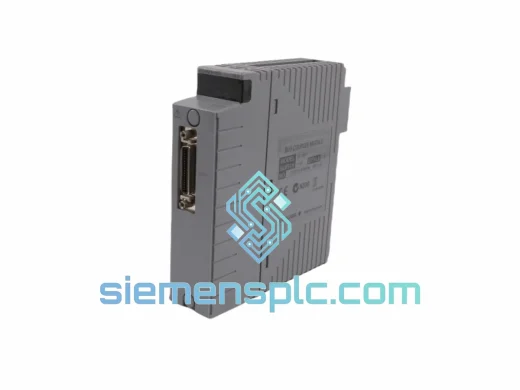
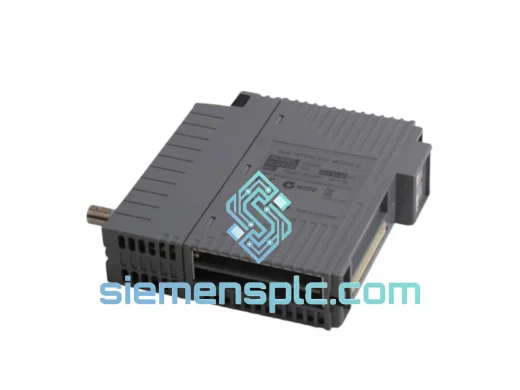
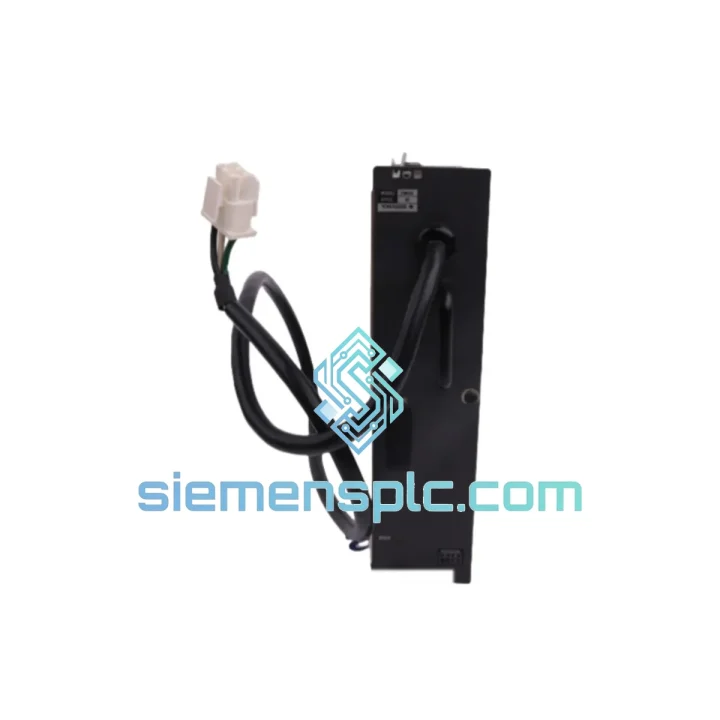
YOKOGAWA YCB146 Field Bus T-Connector
Request verified availability, condition, replacement risk review, packing options and courier lead time for YCB146.
BrandYokogawa
Part NumberYCB146
ConditionAvailability Check
Lead TimeRFQ Confirmation
DocumentsDatasheet / photos by RFQ
ShippingExport packing available
Auto-filled RFQ
YCB146
Click Request Quote and the part number is inserted into the inquiry form automatically.
- Reply by email: [email protected]
- WhatsApp / Tel: +86 18359268345
- Mon-Sat 9:00-18:00 GMT+8
Procurement Data
Key Product Information
Core fields for model confirmation and RFQ routing. Detailed product narrative remains below.
- Brand
- Yokogawa
- Primary Part Number
- YCB146
- Product Type
- Field Bus Connector
- Series / Family
- CENTUM VP
- Manufacturer
- YOKOGAWA Electric Corporation
- Country of Origin
- JP
- Model Function
- Field Bus T-Branch Connector (trunk-to-spur)
- Catalog Category
- DCS & Safety Modules
Model confirmed for inquiry
YCB146
Send quantity, destination and urgency. The RFQ form keeps this part number attached.
Request Quote
Product Overview
YOKOGAWA YCB146 – Stop the Bleed: Every Minute of DCS Downtime Costs You Money
Your CENTUM VP or CS 3000 field bus segment just dropped. Instruments are going blind. The control room is calling. You’ve isolated the fault to a failed T-connector — and now you need a verified replacement in your hands before the next shift. That’s exactly the scenario the YOKOGAWA YCB146 Field Bus T-Connector is stocked for at siemensplc.com. We hold physical inventory in Xiamen and ship globally via DHL/FedEx Express. No lead-time games. No broker markups. Just the part, verified, boxed, and moving.
The YCB146 is a trunk-to-spur branch connector engineered to IEC 61158 / ISA-S50.02 Fieldbus Foundation H1 physical-layer specifications. It is a genuine YOKOGAWA OEM component — not a third-party substitute — designed to maintain signal integrity across the full H1 segment impedance budget. When a counterfeit or mismatched connector introduces reflections into your trunk, you get ghost faults, intermittent device dropouts, and hours of diagnostic dead-ends. The YCB146 eliminates that risk entirely.
URGENT REQUIREMENT? Contact: [email protected] | WhatsApp: +86 18359268345
Quick Technical Datasheet
| Parameter | Value |
|---|---|
| Part Number / SKU | YCB146 |
| Manufacturer | YOKOGAWA Electric Corporation |
| Series | CENTUM VP / CS 3000 Field Bus Accessories |
| Function | Field Bus T-Branch Connector (trunk-to-spur) |
| Standard Compliance | IEC 61158, ISA-S50.02 (FF-H1 physical layer) |
| Compatible DCS Platforms | CENTUM VP, CS 3000, CS 1000 |
| Weight | 400 g |
| Origin | Japan |
| Condition | New / Tested Surplus (specify on inquiry) |
| Stock Status | ✔ Ready to Ship – Xiamen Warehouse |
| Lead Time | Same-day dispatch for in-stock units |
Troubleshooting & Replacement Tips
Fault Pattern Recognition: A failing YCB146 typically presents as intermittent loss of one or more field devices on a single H1 segment — not a full segment collapse. If your FCS diagnostic shows sporadic “Communication Error” or “Device Not Responding” for instruments clustered on one spur, and the fault clears temporarily when you wiggle the connector housing, the T-connector is your prime suspect before you start chasing cable faults or power conditioner issues.
Pre-Replacement Checks:
- Verify segment termination: confirm both ends of the trunk have active terminators (100 Ω + 1 µF). A missing or failed terminator mimics a bad T-connector symptom.
- Measure trunk voltage at the suspect branch point. H1 nominal is 9–32 VDC. A reading below 9 V at the spur entry indicates either a power conditioner fault or excessive voltage drop through a corroded connector body.
- Use a Fieldbus diagnostic tool (e.g., Relcom FBT-6, Softing FG-100) to capture signal level and noise on the segment before pulling the connector. Document the baseline — you’ll need it to confirm the fix worked.
Replacement Procedure (Hot-Swap Caution): The YCB146 is a passive component with no internal electronics, but the H1 segment remains live during replacement in most plant configurations. Before disconnecting:
- Notify the control room — even a momentary trunk interruption will cause all devices on the segment to go to their configured failsafe states.
- If the process cannot tolerate a brief device dropout, schedule the swap during a planned maintenance window or isolate the affected spur instruments to manual control first.
- When reconnecting, ensure the trunk cable polarity is maintained (H1 is polarity-sensitive at the physical layer). Reversed polarity on a spur will take that instrument offline without triggering an obvious fault code — it just disappears from the segment.
- After reconnection, allow 30–60 seconds for all field devices to re-establish communication before clearing alarms. Check the FCS device status list to confirm all instruments are back online before returning to automatic control.
No Configuration Required: Unlike addressable I/O modules or smart transmitters, the YCB146 requires zero firmware loading, no DIP switch settings, and no address assignment. It is a purely passive mechanical and electrical branch point. Swap it, torque the cable glands to spec, and the segment self-recovers.
Reliability in Harsh Conditions
The YCB146 was not designed for a climate-controlled server room. It was built for the field — and in YOKOGAWA’s world, “the field” means offshore platforms in the South China Sea, petrochemical complexes in the Middle East, and pulp mills in Scandinavia. The connector housing is rated for continuous operation across a wide industrial temperature range, with internal contacts that resist the micro-fretting corrosion that kills cheaper connectors over years of thermal cycling.
Vibration is the silent killer of field bus connectivity. Compressor skids, pump stations, and turbine halls generate continuous broadband vibration that works loose connections over months. The YCB146’s mechanical locking design maintains contact force under sustained vibration loads — a detail that matters when you’re troubleshooting a segment fault at 2 AM and the last thing you want is a connector that was “fine last week.”
In high-humidity environments — coastal plants, cooling tower areas, steam-laden process areas — the sealed housing prevents moisture ingress that would otherwise cause insulation resistance degradation between trunk conductors. A compromised insulation resistance on an H1 segment manifests as increased noise floor, reduced signal amplitude, and eventually complete segment failure. The YCB146’s environmental sealing is your first line of defense against that failure mode.
Global Express Logistics
Our Xiamen warehouse operates on a same-business-day dispatch model for in-stock items confirmed before 15:00 CST. Here’s how the logistics chain works from the moment you confirm your order:
- Order Confirmation → Picking & Packing: The YCB146 is pulled from shelf stock, inspected against the order, and packed in anti-static, moisture-barrier packaging with a printed packing list and any requested documentation (CoC, test records).
- Export Documentation: We handle commercial invoice, packing list, and HS code declaration (HS 8536.90 for connector components). For destinations requiring a Certificate of Origin, we coordinate with the local Chamber of Commerce — typical turnaround is 24 hours.
- Carrier Selection: DHL Express and FedEx International Priority are our primary carriers from Xiamen Gaoqi International Airport. Transit times: Southeast Asia 1–2 days, Middle East / Europe 2–3 days, Americas 3–4 days. For extremely urgent requirements, we can arrange same-day courier handoff to the airport.
- Tracking & Visibility: A tracking number is emailed within 2 hours of carrier pickup. We monitor shipments proactively and flag any customs holds or delivery exceptions before you have to ask.
- Customs Clearance Support: For destinations with complex import requirements (India, Brazil, Saudi Arabia), we provide pre-shipment documentation packages to your local customs broker to prevent clearance delays.
When your plant is down and every hour of lost production is measured in thousands of dollars, the logistics chain is not a secondary concern — it is part of the solution. We treat it that way.
Contact Information
Email: [email protected]
WhatsApp: +86 18359268345
Web: siemensplc.com
© 2026 siemensplc.com. All rights reserved.
Ready to quote
[email protected]
Send This Part Number to Sales
RFQ workflow
Quality workflow ->
Confirmation Process
01Model confirmation
We check the full part number, brand, series and visible nameplate information before quotation.
02Availability reply
Sales confirms stock path, condition option, quantity and realistic lead time for export dispatch.
03Packing & courier
DHL, FedEx, UPS or buyer courier arrangements can be reviewed with packing requirements.
Continue sourcing
Browse full catalog ->
Related Automation Parts
Similar brand or category products for fast comparison and multi-item RFQ lists.