Honeywell
RFQ Ready
Honeywell TK-ODD321 Discrete Output Module – Safety Manager
Safety Manager
Origin US
Discrete Output Module
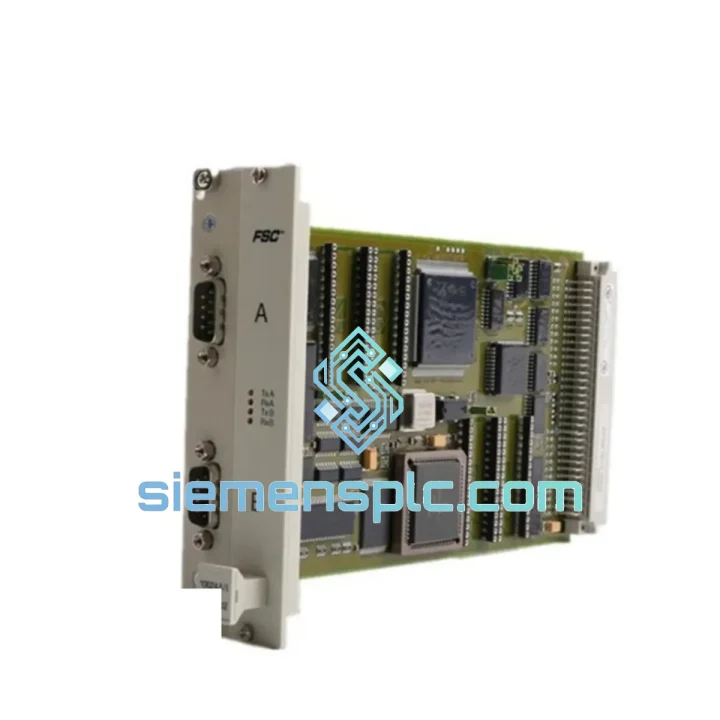
Request verified availability, condition, replacement risk review, packing options and courier lead time for 10216/2/1.
Click Request Quote and the part number is inserted into the inquiry form automatically.
Core fields for model confirmation and RFQ routing. Detailed product narrative remains below.
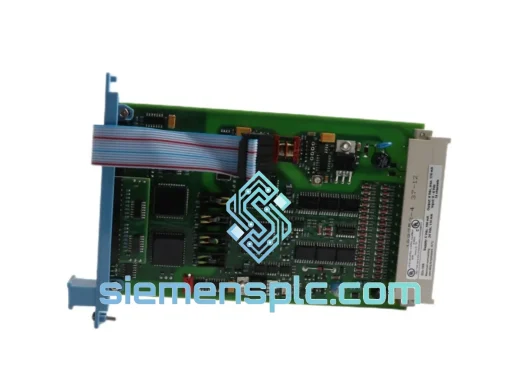
The Honeywell 10216/2/1 is a dual-channel digital output module engineered specifically for deployment within the Honeywell Safety Manager platform and compatible legacy safety instrumented system (SIS) architectures. Its defining characteristic is the integration of continuous line monitoring on each output channel — a hardware-level supervisory function that actively interrogates the field wiring circuit for open-circuit and short-circuit conditions during normal operation, not only during scheduled proof tests. This architecture directly addresses one of the most persistent failure modes in safety output loops: undetected wiring faults that remain dormant until a safety demand exposes them.
In process safety engineering, the distinction between a module that drives an output and one that simultaneously monitors the integrity of that output circuit is operationally significant. The 10216/2/1 belongs to the latter category. Each channel maintains a low-level diagnostic current through the connected field circuit, measuring impedance continuously. A deviation beyond the configured threshold — whether caused by a broken conductor, a corroded terminal, or an inadvertent short — is immediately flagged to the safety logic solver via the backplane bus, generating a fault record and triggering an alarm at the operator interface. The safety function remains intact; the fault is surfaced before a demand, not discovered during one.
📩 Real-time Stock & RFQ: [email protected] | WhatsApp: +86 18359268345
| Manufacturer | Honeywell Process Solutions |
| Part Number | 10216/2/1 |
| Module Classification | Digital Output Module with Line Monitoring |
| Platform | Honeywell Safety Manager / Legacy SIS I/O Chassis |
| Output Channels | 2 (independent dual-channel configuration) |
| Output Signal Type | Discrete digital output (solid-state or relay — per chassis variant) |
| Nominal Supply Voltage | 24 VDC |
| Line Monitoring Mode | Continuous — open-circuit and short-circuit detection per channel |
| Diagnostic Coverage (DC) | High — integrated self-test with backplane fault reporting |
| Safety Integrity Level | SIL 2 / SIL 3 capable (architecture-dependent; refer to Honeywell SIL data package) |
| Communication Interface | Proprietary Honeywell Safety Manager backplane bus |
| Mounting Method | Rack-mount via Safety Manager I/O chassis slot |
| Operating Temperature | 0 °C to +60 °C |
| Storage Temperature | −40 °C to +85 °C |
| Relative Humidity | 5 % to 95 % RH, non-condensing |
| Approx. Weight | 200 g |
| Applicable Standards | IEC 61508, IEC 61511, TÜV-assessed |
| RoHS Compliance | Yes |
| Warranty (Supplied Unit) | 12 months from date of shipment |
Line Monitoring Circuit Architecture
The 10216/2/1 implements a passive impedance-sensing topology on each output channel. A regulated diagnostic current — typically in the low-milliamp range — is injected into the output loop in parallel with the load (solenoid valve coil or relay winding). The module’s measurement circuit samples the loop voltage drop at a fixed scan interval synchronized to the safety logic solver’s watchdog cycle. If the measured impedance falls outside the pre-characterized band for a healthy circuit, the module latches a fault flag in its local diagnostic register and propagates the fault status to the logic solver within one bus scan cycle. This approach achieves fault detection without interrupting the output state — the field device remains energized (or de-energized) as commanded while the fault is being reported.
EMC Design and Noise Immunity
The module’s output driver stage incorporates transient voltage suppression (TVS) diodes across each output terminal pair, rated to clamp inductive kickback from solenoid valve coils during de-energization. The backplane interface uses optocoupler isolation between the field-side circuitry and the logic-side bus, providing galvanic separation that prevents ground loops and common-mode noise from propagating into the safety logic solver. The PCB layout follows IEC 61000-4 series EMC guidelines, with separate ground planes for the field-side and logic-side circuits, minimizing capacitive coupling between high-voltage field wiring and low-voltage logic signals.
Redundancy Arbitration Logic
When two 10216/2/1 modules are configured in a 1oo2 (one-out-of-two) redundant output architecture, the Safety Manager logic solver manages output arbitration at the application layer. Each module independently drives its assigned output channel; the logic solver monitors both module health registers and output feedback states. A discrepancy between the commanded state and the measured output state on either channel triggers a diagnostic alarm without initiating a spurious trip, preserving process availability while alerting the operator to a degraded redundancy condition. This behavior is consistent with IEC 61511 requirements for partial stroke testing and proof test management in high-demand SIS applications.
Backplane Bus Protocol Handling
The module communicates with the Safety Manager CPU via a time-division multiplexed backplane bus. Each I/O module is assigned a fixed time slot within the bus scan cycle, ensuring deterministic latency between the CPU’s output command and the module’s physical output state change. The 10216/2/1’s bus interface logic includes a watchdog timer: if the module does not receive a valid bus frame within the configured timeout window, it drives its outputs to the de-energized (safe) state autonomously, independent of CPU command. This fail-safe behavior is implemented in hardware logic, not firmware, eliminating the risk of a software fault masking the watchdog response.
Every Honeywell 10216/2/1 unit supplied by siemensplc.com undergoes a structured pre-shipment verification process conducted at our Xiamen, China facility:
Global Logistics from Xiamen, China: Shipments are dispatched from our Xiamen warehouse via DHL Express, FedEx International Priority, or freight forwarder, depending on order volume and destination. Standard export documentation — commercial invoice, packing list, and certificate of origin — is provided with every shipment. For destinations requiring additional customs documentation, our logistics team coordinates the required paperwork to minimize clearance delays. Typical transit times: 3–5 business days to Europe and North America via express courier; 5–10 business days via standard international freight.
Email: [email protected]
WhatsApp: +86 18359268345
Web: siemensplc.com
Location: Xiamen, China
© 2026 siemensplc.com. All rights reserved.
We check the full part number, brand, series and visible nameplate information before quotation.
Sales confirms stock path, condition option, quantity and realistic lead time for export dispatch.
DHL, FedEx, UPS or buyer courier arrangements can be reviewed with packing requirements.
Similar brand or category products for fast comparison and multi-item RFQ lists.