Siemens PLC sourcing desk · Multi-brand automation spares [email protected] +86 18359268345
Request Quote
Honeywell In Stock OK

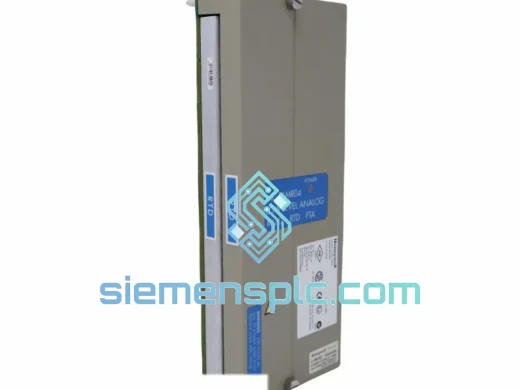
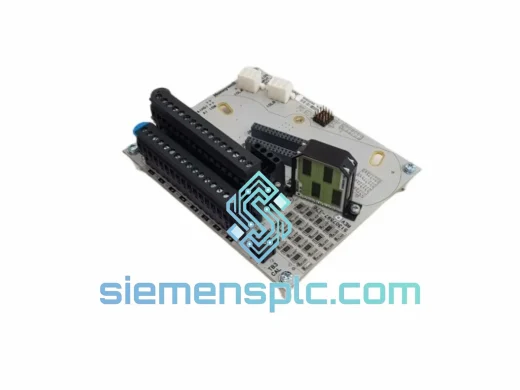
Honeywell 2MLF-AD16A 2MLF-AD16A-CC Analog Input Module

Request verified availability, condition, replacement risk review, packing options and courier lead time for 2MLF-AD16A.

Exact part2MLF-AD16A RFQ auto-fillPart number attached Export packingDHL / FedEx / UPS Sales replyEmail or WhatsApp
BrandHoneywell Part Number2MLF-AD16A ConditionAvailability Check Lead TimeRFQ Confirmation DocumentsDatasheet / photos by RFQ ShippingExport packing available
Auto-filled RFQ 2MLF-AD16A

Click Request Quote and the part number is inserted into the inquiry form automatically.

Procurement Data

Key Product Information

Core fields for model confirmation and RFQ routing. Detailed product narrative remains below.

Brand
Honeywell
Primary Part Number
2MLF-AD16A
Product Type
Analog Input Module
Series / Family
TDC 3000
Manufacturer
Honeywell Process Solutions
Country of Origin
US
Model Function
16-Channel Analog Input — current, voltage, TC, RTD
Catalog Category
I/O Modules
Operating Temp.
0°C to +60°C
Model confirmed for inquiry 2MLF-AD16A Send quantity, destination and urgency. The RFQ form keeps this part number attached.
Request Quote
Product Overview

2MLF-AD16A / 2MLF-AD16A-CC: Cut the Downtime. Get the Card. Ship Today.

You’re not browsing a catalog — you’re in the middle of a shutdown. The HPPM threw an AI card fault, your operator station is showing 16 bad PVs, and every minute the unit stays down is burning money. The Honeywell 2MLF-AD16A and its conformal-coated variant 2MLF-AD16A-CC are on the shelf in Xiamen right now. Verified stock. Tested before dispatch. Export docs ready. We’ve shipped to refineries in the Middle East, chemical plants in Southeast Asia, and power stations in Europe — all on emergency timelines. This is what we do.

Stop waiting on your distributor’s lead time. Contact us directly and we’ll have a tracking number in your inbox before your next shift change.

URGENT REQUIREMENT? Contact: [email protected] | WhatsApp: +86 18359268345


Quick Technical Datasheet

Part Number 2MLF-AD16A  |  2MLF-AD16A-CC (conformal coat variant)
Manufacturer Honeywell Process Solutions
Platform TotalPlant Solution (TPS) / TDC 3000
Function 16-Channel Analog Input — current, voltage, TC, RTD
Input Ranges 4–20 mA  |  1–5 VDC  |  TC: J/K/T/E/R/S/B  |  RTD: Pt100 (2/3/4-wire)
A/D Resolution 12-bit standard mode; 16-bit high-resolution mode (selectable per channel)
Accuracy ±0.1% of full scale at 25°C
Channel Isolation Optical isolation — channel-to-channel and channel-to-backplane bus
Scan Cycle ~100 ms for all 16 channels (configurable via HPPM)
Power Consumption ≤ 5 W typical from backplane rails
Operating Temperature 0°C to +60°C
Storage Temperature −40°C to +85°C
Relative Humidity 5–95% RH, non-condensing
Backplane Interface TPS LCN / HPPM card cage (single-slot)
Address Configuration Automatic slot addressing — no DIP switches, no jumpers
Certifications CE  |  UL  |  FM Class I Division 2
Country of Origin United States
Coating (CC variant) Full-board conformal coat — polyurethane/acrylic per IPC-CC-830
Stock Status ✔ Ready to Ship — Xiamen, China

Troubleshooting & Replacement Tips

After years of field work across TPS installations in refineries, LNG terminals, and chemical complexes, the failure modes on the 2MLF-AD16A follow a short, predictable list. Here’s the diagnostic logic before you commit to a replacement — and the exact steps to execute the swap without creating new problems.

Fault Pattern Analysis:

  • “AI Card Failure” alarm on HPPM console: This is a hard board fault — typically a collapsed internal power rail or a failed A/D converter IC. Reseating the card will not fix it. The module needs to be replaced. Pull it, confirm the fault clears on the HPPM after removal, and install the replacement.
  • Single channel stuck at BAD PV, all others healthy: Before ordering a replacement, verify the field loop. Disconnect the transmitter and inject a 4–20 mA signal directly at the field terminal. If the channel reads correctly, the problem is upstream — open loop, failed transmitter, or wiring fault. If the channel stays bad with a known-good signal source, the input multiplexer for that channel has failed. Replace the module.
  • Intermittent LCN Communication Loss: Check the backplane connector on the card cage slot first. Oxidized or bent pins on the backplane are a common cause of intermittent comm faults that look like a failing card. Clean the connector with isopropyl alcohol, reseat the card, and monitor for 30 minutes. If the fault recurs, the card’s LCN transceiver is degrading — replace before it causes a full comm dropout.
  • All 16 channels simultaneously reading 0 mA or pegged at full scale: The module’s internal DC-DC converter has failed. Verify the +5 V and ±15 V backplane rails at the card cage with a multimeter before condemning the card — if the rails are low, the cage power supply is the root cause, not the AI module.
  • Thermocouple channels drifting >0.5% over time: Cold junction compensation (CJC) circuit degradation. This is common on cards that have been running in high-ambient-temperature cabinets for 8–12+ years. Recalibration is a temporary fix; the CJC reference will continue to drift. Replacement is the correct long-term action.
  • “Module Type Mismatch” fault after installing a replacement: Firmware version conflict. The HPPM checks the I/O firmware stamp on insertion. If the replacement card’s firmware is older than the HPPM’s expected baseline, it will reject the card. Contact us with your HPPM firmware revision — we can match the card firmware to your system before shipment.

Step-by-Step Replacement Procedure:

  1. Check HPPM redundancy status. In a redundant HPPM configuration, the secondary controller maintains process control during the swap. In simplex mode, coordinate with the control room — all 16 AI points will go to their last-good-value or failsafe state during the card change.
  2. In the TPS Engineer’s Console, suppress alarms for all tags associated with the affected I/O module. Place critical loops in MANUAL to prevent cascade trips during the momentary signal interruption.
  3. The 2MLF-AD16A supports hot-swap in redundant HPPM configurations. In simplex mode, follow your site’s card cage power-down procedure if required by your MOC process.
  4. Extract the failed card using the ejector levers. Inspect the backplane connector on the cage slot for damage or contamination before inserting the replacement.
  5. Seat the replacement card with firm, even pressure until both ejector levers click into the locked position. A partially seated card will generate intermittent comm faults that are indistinguishable from a defective module.
  6. No address configuration is required. The TPS backplane assigns the slot address automatically — the HPPM identifies the card by physical cage position. Do not attempt to set any jumpers or switches on the board.
  7. After insertion, the HPPM executes a self-test sequence lasting 15–30 seconds. The STATUS LED will cycle from red to green when the card passes. If it remains red, check the firmware compatibility note above.
  8. Verify all 16 channels return to GOOD PV status at the operator station. Cross-check 4–5 channels against independent field readings or transmitter local indicators to confirm the replacement card is reading within calibration spec.
  9. For the 2MLF-AD16A-CC: the conformal coating has no effect on any electrical parameter or installation procedure. The swap is identical to the standard variant.
  10. Remove alarm suppression and return loops to AUTO. Document the card replacement in your maintenance management system with the new module’s serial number.

Reliability in Harsh Conditions

The 2MLF-AD16A was not designed for a climate-controlled server room. It was designed for the environments where TPS systems actually operate — refinery control buildings at 50°C ambient, offshore platform cabinets with salt air ingress, chemical plant enclosures with corrosive gas exposure, and tropical installations where humidity swings from 30% to 95% between day and night.

Honeywell built the TPS I/O card series to IPC-A-610 Class 3 workmanship standards — the same classification used in aerospace and defense electronics. This means every solder joint, every component placement, and every PCB trace is held to a higher standard than commercial-grade industrial equipment. The optical isolation architecture on the 2MLF-AD16A eliminates ground loop interference even in facilities with aging earthing infrastructure, which is a persistent problem in brownfield plants where the original grounding system was installed decades ago.

The 2MLF-AD16A-CC conformal-coated variant extends the operational envelope further. The full-board coating — applied per IPC-CC-830 — provides a physical barrier against:

  • Salt fog and chloride-laden air in coastal and offshore installations
  • Hydrogen sulfide (H₂S) and sulfur dioxide (SO₂) atmospheres in sour gas processing facilities
  • Condensation cycles in cabinets where climate control is inadequate or intermittent
  • Fungal and biological growth in high-humidity tropical deployments
  • Particulate contamination from process dust in cement, mining, and bulk materials handling plants

Both variants carry FM Class I, Division 2 certification — a requirement for installation in classified areas where flammable gases or vapors may be present under abnormal conditions. This covers the majority of refinery and chemical plant control room environments.

Every unit in our inventory is stored in ESD-safe packaging inside a climate-controlled warehouse. Before any module ships, it goes through a visual inspection for physical damage and a power-on functional check. We do not ship boards that have not been verified. If a unit fails our pre-shipment check, it does not go out — we pull another from stock.


Global Express Logistics

Our dispatch location is Xiamen, Fujian Province — one of China’s primary export gateways with direct DHL Express and FedEx International Priority access through Xiamen Gaoqi International Airport. For emergency orders, the logistics chain works as follows:

  • Order Confirmed (Day 0): Module pulled from ESD storage, inspected, packed in anti-static foam insert with rigid outer carton. Export documentation prepared in parallel: commercial invoice, packing list, Certificate of Origin, and HS Code 8537.10 declaration.
  • Same-Day Dispatch: Orders confirmed before 14:00 CST target same-day handover to DHL or FedEx. We handle all export customs formalities on our side — no action required from you.
  • Transit Times (typical): Southeast Asia 1–2 business days  |  Middle East 2–3 days  |  Europe 3–4 days  |  North America 3–5 days  |  Australia/NZ 3–4 days
  • Tracking: AWB number provided within 4 hours of dispatch via email and WhatsApp. Real-time tracking link included.
  • DDP Option: We can ship Delivered Duty Paid to most destinations — you receive the module with all import duties and customs clearance handled. Request a DDP quote when you contact us.
  • Weekend & Holiday Dispatch: For confirmed plant shutdowns, we arrange weekend dispatch. Tell us the urgency when you reach out — we prioritize accordingly.

We have shipped to end-users in Saudi Arabia, UAE, Singapore, Malaysia, India, Germany, the Netherlands, the United States, and Australia on emergency timelines. The process is established. The documentation is clean. Customs delays from our side are not a variable you need to worry about.


Contact Information

Email: [email protected]
WhatsApp: +86 18359268345
Web: siemensplc.com
© 2026 siemensplc.com. All rights reserved.

Ready to quote

Send This Part Number to Sales

[email protected]
RFQ workflow

Confirmation Process

Quality workflow ->
01Model confirmation

We check the full part number, brand, series and visible nameplate information before quotation.

02Availability reply

Sales confirms stock path, condition option, quantity and realistic lead time for export dispatch.

03Packing & courier

DHL, FedEx, UPS or buyer courier arrangements can be reviewed with packing requirements.