Bently Nevada
RFQ Ready
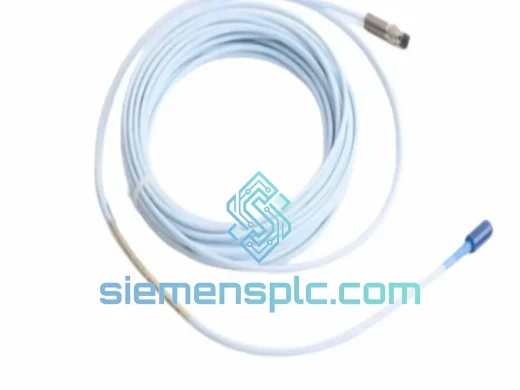
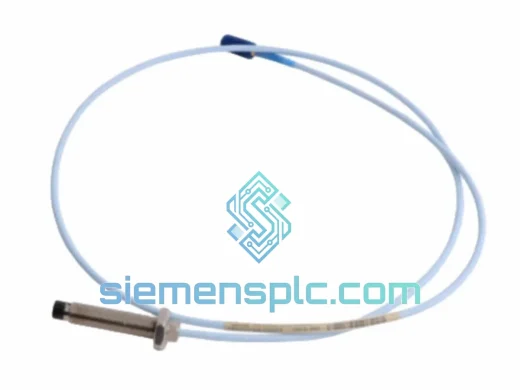
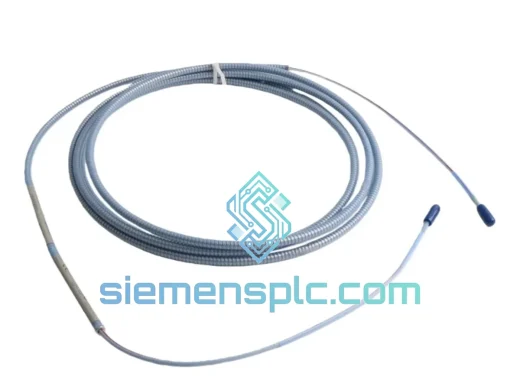
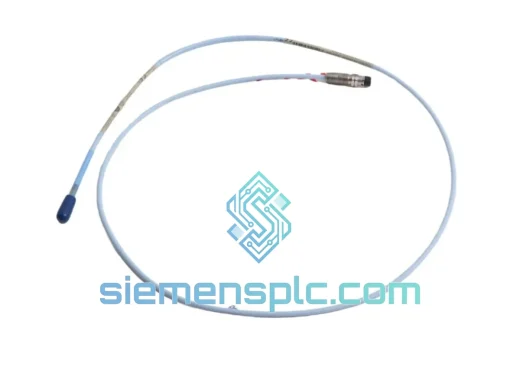
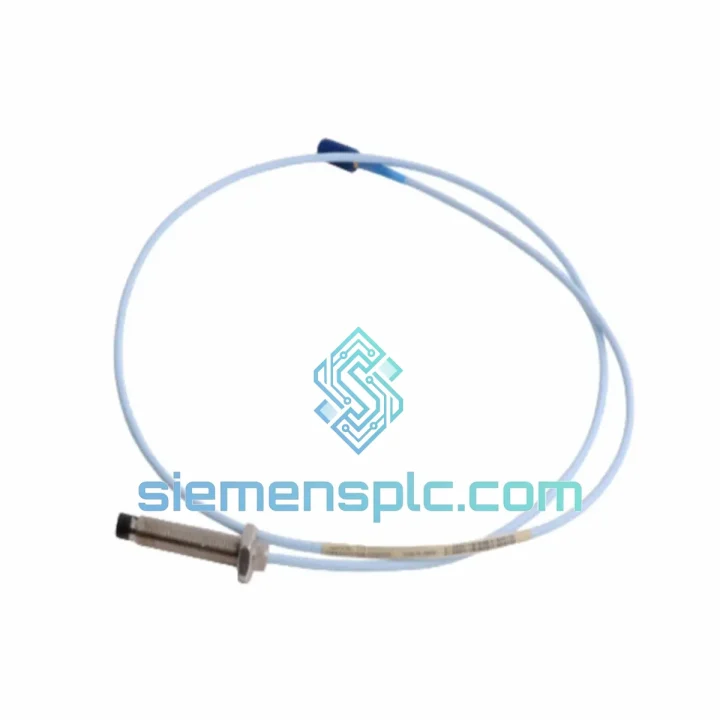
Bently Nevada 330196-05-30-10-00 Proximity Probe – 3300 XL ETR
3301
Origin US
Proximity Probe
Request verified availability, condition, replacement risk review, packing options and courier lead time for 330173-00-06-10-02-00.
Click Request Quote and the part number is inserted into the inquiry form automatically.
Core fields for model confirmation and RFQ routing. Detailed product narrative remains below.
The Bently Nevada 330173-00-06-10-02-00 is an 8mm eddy-current proximity probe belonging to the 3300 XL Proximity Transducer System. It functions as the primary sensing element in continuous, non-contact measurement of radial shaft vibration, average shaft centerline position, and differential shaft eccentricity on critical rotating machinery. The probe operates on the eddy-current induction principle: a high-frequency alternating magnetic field — generated by a resonant LC oscillator circuit within the paired driver/oscillator — projects from the wound coil at the probe tip into the conductive target surface. As the air gap between probe tip and shaft changes, the eddy-current loading on the coil alters the oscillator’s tank circuit impedance. The driver converts this impedance variation into a linear, negative-slope DC voltage output: the closer the target, the more negative the output voltage.
This measurement architecture requires no mechanical contact with the rotating shaft, eliminating wear, friction-induced measurement error, and the installation constraints associated with contacting displacement sensors. The 330173-00-06-10-02-00 is factory-calibrated against AISI 4140 alloy steel targets — the standard reference material specified in API 670 — and ships as a matched probe-cable assembly with a 6 ft (1.83 m) integral cable terminated in a 2-pin MIL-C-26482 Series I connector (shell size 02). The 10-32 UNF threaded body allows precise axial positioning during installation, with each thread revolution advancing the probe tip by 0.794 mm — enabling the technician to set the nominal air gap to the calibrated center of the linear range (approximately 1.0 mm) with repeatable mechanical precision.
Real-time Stock & RFQ: [email protected] | WhatsApp: +86 18359268345
| Part Number | 330173-00-06-10-02-00 |
| Brand | Bently Nevada (Baker Hughes) |
| Series | 3300 XL Proximity Transducer System |
| Probe Tip Active Diameter | 8 mm |
| Integral Cable Length | 6 ft (1.83 m) |
| Thread Specification | 10-32 UNF (0.794 mm/revolution axial advance) |
| Connector Interface | 2-pin MIL-C-26482 Series I, Shell Size 02, gold-plated contacts |
| Linear Measurement Range | 0.25 mm – 2.26 mm (10 – 89 mil) |
| Scale Factor (Sensitivity) | 7.87 V/mm ± 0.25% (200 mV/mil nominal) |
| Frequency Response (–3 dB) | DC to 10,000 Hz |
| Nominal Supply Voltage | –24 VDC (range: –18 VDC to –26 VDC) |
| Output at 1.0 mm Nominal Gap | –10.0 VDC ± 0.5 V |
| Operating Temperature Range | –35°C to +177°C (–31°F to +351°F) |
| Target Reference Material | AISI 4140 alloy steel (API 670 standard) |
| Probe Body Material | 316L stainless steel |
| Cable Jacket Dielectric | PTFE (εr ≈ 2.1 at oscillator frequency band) |
| Ingress Protection | IP67 (probe body and connector mated) |
| Hazardous Area Certification | ATEX / IECEx (Zone 1 / Zone 2 classified areas) |
| Applicable Standards | API 670 (5th Edition), ISA-67.04 |
| Oscillator Carrier Frequency | 1.0 – 1.5 MHz (nominal, driver-dependent) |
| Warranty | 12 months from date of shipment |
Coil Geometry and Active Zone Definition
The sensing coil wound within the 330173-00-06-10-02-00 tip is potted in a thermally stable, low-outgassing epoxy matrix. The 8mm active diameter defines the probe’s spatial sensitivity footprint: the eddy-current field penetrates the target to a skin depth (δ) governed by δ = 1/√(π·f·μ·σ), where f is the oscillator frequency, μ is the target permeability, and σ is the target conductivity. For AISI 4140 steel at 1.0 MHz, δ ≈ 8–12 μm. This shallow penetration depth means the probe responds exclusively to surface displacement, not bulk material movement — a critical characteristic for accurate shaft vibration measurement where surface finish and material homogeneity directly affect calibration accuracy.
PTFE Cable Dielectric and Signal Integrity
The integral cable’s PTFE jacket maintains a dielectric constant of approximately 2.1 across the 1.0–1.5 MHz oscillator band, compared to PVC at εr ≈ 3.5–4.5. This lower dielectric constant reduces distributed cable capacitance per unit length, which would otherwise detune the driver’s resonant circuit and shift the probe’s effective sensitivity. The 6 ft cable run is within the 3300 XL system’s specified cable length budget, ensuring the driver’s automatic gain control (AGC) loop can compensate for cable impedance without saturating. The braided shield, referenced to driver chassis ground, provides >40 dB common-mode rejection of radiated interference from adjacent variable-frequency drives and power cables operating at 50/60 Hz and their harmonic frequencies.
MIL-C-26482 Connector Contact Resistance and Mechanical Retention
The gold-plated 2-pin connector contacts maintain contact resistance below 5 mΩ across the operating temperature range. At the probe’s signal current levels (typically <10 mA), a 5 mΩ contact resistance introduces a voltage drop of <50 μV — negligible relative to the driver’s output noise floor of approximately 5 mV RMS. The bayonet locking mechanism is rated for axial pull forces exceeding 45 N, preventing accidental disconnection in high-vibration bearing housing environments where probe cables are subject to continuous mechanical excitation at shaft rotational frequency and its harmonics.
EMC Architecture and Magnetic Shielding
The 316L stainless steel probe body provides a degree of magnetic shielding against low-frequency stray fields from motor windings and transformer cores. The coaxial cable construction — center conductor carrying the oscillator signal, surrounded by a grounded braided shield — attenuates common-mode interference to levels below the driver’s input sensitivity threshold. In installations where radiated field strengths exceed 10 V/m (e.g., near large variable-speed drives), the probe’s coaxial architecture maintains measurement accuracy within the API 670 ±1% full-scale specification without requiring additional shielding conduit.
Each Bently Nevada 330173-00-06-10-02-00 unit dispatched from siemensplc.com undergoes a structured pre-shipment verification protocol. Inspection steps include: visual examination of the probe body, thread condition, and cable jacket for mechanical damage; dimensional check of the 10-32 UNF thread and 8mm tip geometry; cable continuity and insulation resistance measurement (IR >100 MΩ at 500 VDC); connector contact resistance verification (<5 mΩ); and confirmation of OEM part number label, date code, and serial number against the accompanying calibration documentation. Units are packed in original OEM packaging where available, or in equivalent anti-static, moisture-proof enclosures with silica gel desiccant packs to prevent corrosion during ocean or air freight transit.
Logistics operations are based in Xiamen, China — a Tier-1 export hub with direct access to DHL Express, FedEx International Priority, UPS Worldwide Express, and TNT Economy Express networks. Standard export documentation (commercial invoice, packing list, certificate of origin, and HS code 9031.80 classification) is prepared for every shipment. In-stock units ordered before 14:00 CST are eligible for same-day dispatch. Indicative transit times: 2–4 business days to Europe and North America via express courier; 4–7 business days to Southeast Asia, the Middle East, and South America. Customs clearance support, including pre-shipment HS code confirmation and shipper’s export declaration preparation, is available upon request at no additional charge.
All units are covered by a 12-month warranty from the date of shipment, applicable to manufacturing defects and calibration drift exceeding the specified ±1% full-scale accuracy band. Warranty claims are acknowledged within 48 business hours, with replacement or repair options determined following remote diagnostic review of the returned unit’s calibration data.
Email: [email protected]
WhatsApp: +86 18359268345
Web: siemensplc.com
Location: Xiamen, China
© 2026 siemensplc.com. All rights reserved.
We check the full part number, brand, series and visible nameplate information before quotation.
Sales confirms stock path, condition option, quantity and realistic lead time for export dispatch.
DHL, FedEx, UPS or buyer courier arrangements can be reviewed with packing requirements.
Similar brand or category products for fast comparison and multi-item RFQ lists.