ABB
RFQ Ready
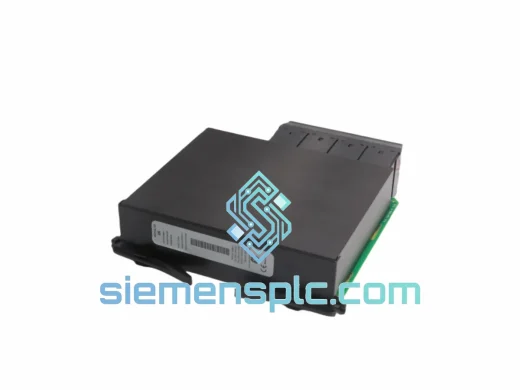
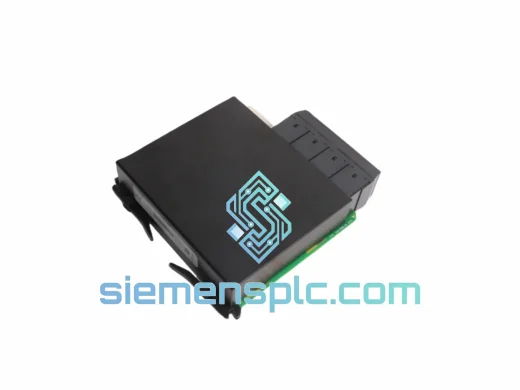
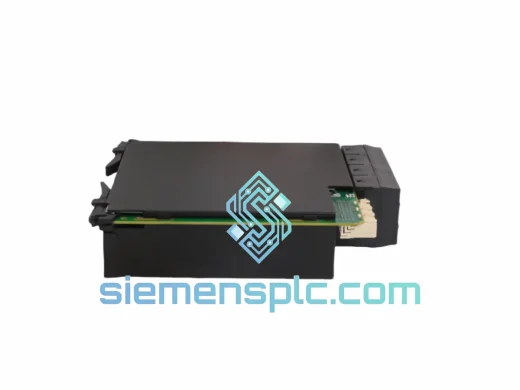
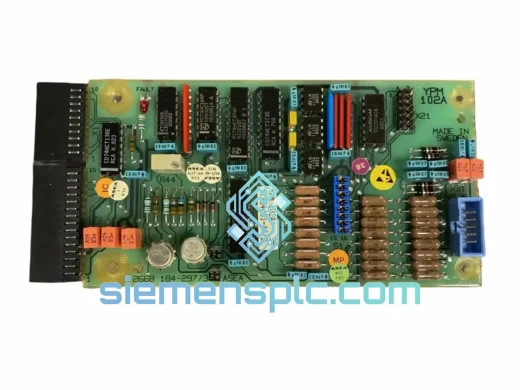
ABB YPM102A YT204001-AA Analog Output Module – AC 800M S800 I/O
S800
Origin SE
Analog Output Module
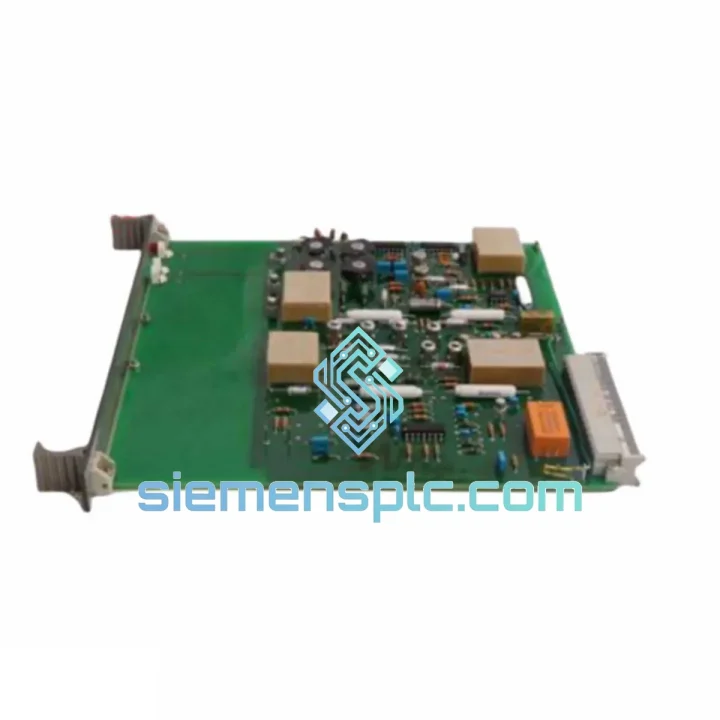
Request verified availability, condition, replacement risk review, packing options and courier lead time for 381-643065-2.
Click Request Quote and the part number is inserted into the inquiry form automatically.
Core fields for model confirmation and RFQ routing. Detailed product narrative remains below.
The 381-643065-2 is a field-replaceable, zone-assigned sensor scan module produced by Tokyo Electron Limited (TEL) for integration into its semiconductor process equipment platforms — spanning plasma etch, chemical vapor deposition (CVD), atomic layer deposition (ALD), and thermal treatment systems. Within TEL’s distributed I/O architecture, each 381-643065-2 unit occupies a discrete zone assignment: chamber body, transfer module, load lock, or end-effector assembly. It functions as the primary interface between physical sensor elements — proximity, pressure, temperature, and flow — and the equipment’s central process controller, executing signal conditioning, threshold evaluation, and structured state reporting within a fixed scan frame window.
The module’s role is not passive data relay. It applies first-stage threshold logic at the zone level, reducing the interrupt burden on the central controller and ensuring that sensor state transitions are reported with sub-cycle latency relative to the scan frame period. In process environments where a missed sensor edge can trigger a recipe abort or an undetected process deviation, this determinism is a hard engineering constraint — not a performance aspiration. TEL’s scan architecture is designed so that the controller’s recipe step-gating logic depends on confirmed scan module output; the 381-643065-2 is a load-bearing component in that control chain.
Tokyo Electron maintains a consistent position among the top three semiconductor equipment suppliers globally, with installed base spanning sub-5 nm logic fabs, DRAM manufacturers, and advanced packaging facilities. The 381-643065-2 reflects TEL’s modular serviceability philosophy: sensing functions are isolated into discrete, independently replaceable assemblies. When a scan module fault is detected — via controller-side scan bus error logging with zone and slot identifiers — the affected module is extracted and replaced without disturbing adjacent modules, chamber hardware, or process-critical wiring harnesses. Mean time to repair (MTTR) for a scan module swap is measurably shorter than for integrated sensing architectures, a factor with direct impact on equipment availability in high-volume manufacturing environments.
Stock is held at our Xiamen, China facility. Same-day dispatch is available for confirmed in-stock units via DHL Express, FedEx International Priority, or UPS Worldwide Express. Each unit ships with a certificate of conformance, part number and revision label, and complete export documentation. A 12-month warranty from shipment date covers defects in materials and workmanship under normal operating conditions as defined by TEL’s equipment specifications.
Real-time Stock & RFQ: [email protected] | WhatsApp: +86 18359268345
| Parameter | Specification |
|---|---|
| Part Number | 381-643065-2 |
| Manufacturer | Tokyo Electron Limited (TEL) |
| Module Classification | Distributed Sensor Scan Module — Zone-Assigned I/O |
| Compatible Platforms | TEL Tactras, Vigus, Trias, and related etch / CVD / ALD / thermal series (confirm revision compatibility at RFQ) |
| Scan Bus Interface | TEL proprietary multi-pin scan bus; time-multiplexed polling architecture |
| Scan Frame Period | 1–10 ms per full scan frame (equipment-generation dependent) |
| Signal Conditioning | Differential input conditioning on all sensor lines; common-mode noise rejection |
| Galvanic Isolation | Optocoupler-based isolation boundary, rated 2,500 V AC (process-side to logic-side) |
| Supply Voltage | 24 V DC nominal; supplied via module-bay backplane connector |
| Power Consumption | ≤ 8 W under full sensor load (equipment-generation dependent) |
| Operating Temperature | 0°C to 55°C ambient; derate above 45°C per TEL module specification |
| Cleanroom Compatibility | ISO Class 3 / Class 1 compatible; low-outgassing housing materials |
| Mounting Method | Module-bay slide-in; tool-free extraction per TEL standard maintenance procedure |
| Unit Weight | 2,900 g |
| Country of Origin | Japan |
| Condition Available | New OEM / Tested Refurbished (specify at RFQ) |
| Export Classification | EAR99 / ECCN subject to end-use verification |
| Packaging Standard | Anti-static inner bag, foam-lined rigid inner box, humidity indicator card, double-boxed outer carton rated for air cargo |
| Warranty | 12 months from shipment date — materials and workmanship defects under normal operating conditions |
Zone-Partitioned Scan Architecture and Fault Containment Logic: The 381-643065-2 operates within TEL’s zone-partitioned scan bus topology. The central controller polls each zone module sequentially within a fixed scan frame. A module that fails to respond within its allocated time slot generates a zone-specific scan bus fault entry — not a system-wide alarm. This containment boundary allows the equipment to continue operating unaffected zones while the faulted zone is isolated for module replacement. In multi-chamber cluster tools, a single scan module fault does not force a full tool shutdown, preserving throughput on adjacent process chambers and limiting the blast radius of a single component failure.
EMC Tolerance in High-Power RF Environments: Plasma etch and CVD chambers operate RF generators at 13.56 MHz and harmonics, with delivered power levels reaching 3,000 W or higher. The electromagnetic environment inside a process tool is among the most demanding encountered by electronic assemblies in any industrial application. The 381-643065-2 addresses this through differential signal conditioning on all sensor input lines, rejecting common-mode interference induced by RF coupling onto sensor wiring. PCB ground plane geometry and shielded connector interfaces further attenuate conducted and radiated EMI ingress, maintaining scan bus output signal integrity under full RF power conditions without requiring external shielding additions.
Optocoupler Isolation Boundary and Transient Protection: A defined galvanic isolation boundary separates the process-side sensor circuits — referenced to chamber ground potentials subject to plasma-induced transients — from the logic-side scan bus, which interfaces directly with the equipment controller’s I/O backplane. Optocoupler arrays rated at 2,500 V AC implement this boundary. During plasma ignition events, arc detection responses, or ground fault conditions in the process chamber, transient voltages can appear on sensor wiring. Without this isolation boundary, such transients propagate onto the scan bus and risk corrupting controller memory or damaging I/O interface hardware. The 381-643065-2’s isolation architecture prevents this propagation path entirely.
Scan Cycle Determinism and Recipe Step-Gating: TEL process recipes gate step transitions on confirmed sensor state. A wafer cannot advance from etch to transfer until the chamber sensor scan confirms the correct end-of-step conditions across all assigned zones. The 381-643065-2 is designed to respond within its allocated scan slot with no communication jitter that would trigger a controller timeout. Timeout events force recipe holds or aborts, directly impacting wafer yield and equipment throughput. The module’s embedded response logic is optimized for the scan bus timing parameters of its target equipment generation, ensuring reliable step-gating under all normal operating conditions without requiring controller-side timeout margin adjustments.
Thermal Dissipation and Derating Behavior: The module’s PCB layout incorporates thermal relief zones around power-dissipating components, and the housing geometry interfaces with the equipment’s forced-air cooling path through the module bay. The 55°C ambient ceiling with derating above 45°C is consistent with TEL’s standard module thermal specification. In equipment installations where ambient temperature within the electronics bay approaches the derating threshold — common in facilities with inadequate HVAC capacity or high equipment density — thermal derating must be factored into the module’s expected service life and preventive maintenance interval.
Firmware Revision Compatibility Matrix: Each 381-643065-2 unit carries embedded firmware that must fall within the compatibility matrix of the host controller’s software revision. Mismatched firmware revisions can result in scan bus initialization failures or incorrect sensor state reporting without generating an explicit fault code — a failure mode that is difficult to diagnose without revision-level documentation. Our technical team maintains revision compatibility records and verifies the appropriate module revision for a given equipment software version prior to shipment, eliminating this risk at the procurement stage.
Every 381-643065-2 unit dispatched from our Xiamen facility undergoes a structured pre-shipment verification sequence. Visual inspection confirms connector pin integrity — checking for bent, corroded, or missing pins that would cause scan bus initialization failure — housing condition, and label accuracy against the part number and revision marking. For refurbished-grade units sourced from decommissioned TEL equipment, bench-level scan bus communication response testing is performed prior to grading and packaging. Units that do not meet the acceptance criteria are quarantined and not offered for sale.
Packaging is executed to anti-static and mechanical protection standards appropriate for precision electronic assemblies in international air freight. The sequence is: anti-static inner bag (heat-sealed), foam-lined rigid inner box with custom-cut foam inserts to prevent movement during transit, humidity indicator card, and outer corrugated carton rated for air cargo handling loads. Fragile, ESD-sensitive, and this-side-up markings are applied to all outer surfaces. Gross weight and dimensions are documented on the outer carton for carrier compliance and customs declaration accuracy.
Shipment is executed via DHL Express, FedEx International Priority, or UPS Worldwide Express from Xiamen Gaoqi International Airport (XMN). Typical transit times are 2–4 business days to major industrial hubs in North America, Europe, Southeast Asia, the Middle East, and South Korea. Full export documentation accompanies every shipment: commercial invoice, packing list, certificate of conformance, and certificate of origin. Our logistics team manages HS code classification and export compliance review to minimize customs clearance delays at destination. For time-critical requirements, same-day dispatch is available for confirmed in-stock units when orders are placed before the daily cutoff.
The 12-month warranty covers defects in materials and workmanship under normal operating conditions as defined by TEL’s equipment specifications. Warranty claims are initiated by contacting our technical team at [email protected]. Target response time for warranty claim assessment is 3 business days from receipt of the returned unit at our Xiamen facility. Replacement or repair is executed based on the fault assessment outcome, with return shipping covered for confirmed warranty defects.
Email: [email protected]
WhatsApp: +86 18359268345
Web: siemensplc.com
Location: Xiamen, China
© 2026 siemensplc.com. All rights reserved.
We check the full part number, brand, series and visible nameplate information before quotation.
Sales confirms stock path, condition option, quantity and realistic lead time for export dispatch.
DHL, FedEx, UPS or buyer courier arrangements can be reviewed with packing requirements.
Similar brand or category products for fast comparison and multi-item RFQ lists.