Yokogawa
RFQ Ready
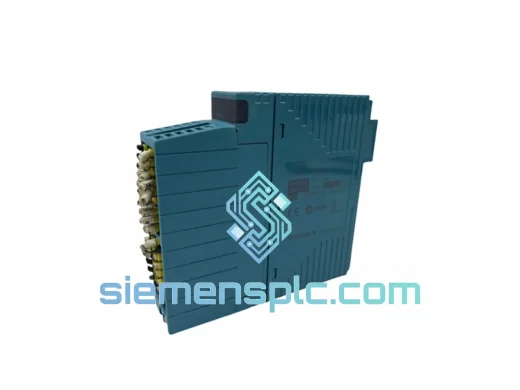
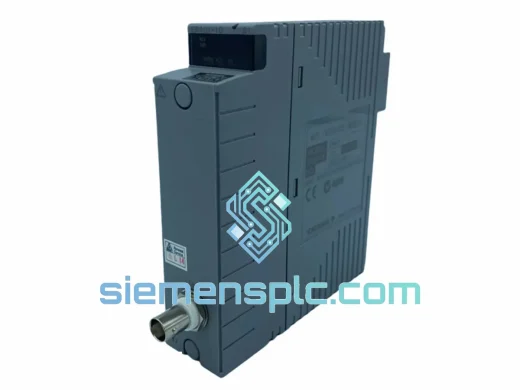
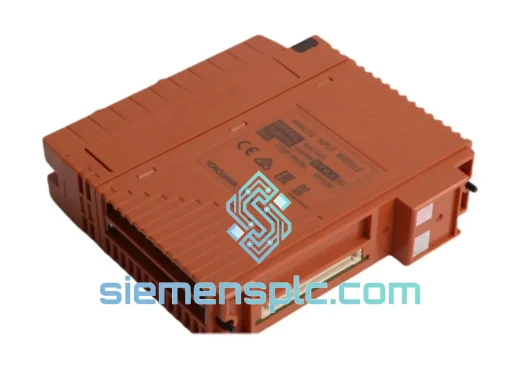
Yokogawa SAI143-H63/PRP S3 DCS Analog Input Module
CENTUM VP
Origin JP
DCS Analog Input Module
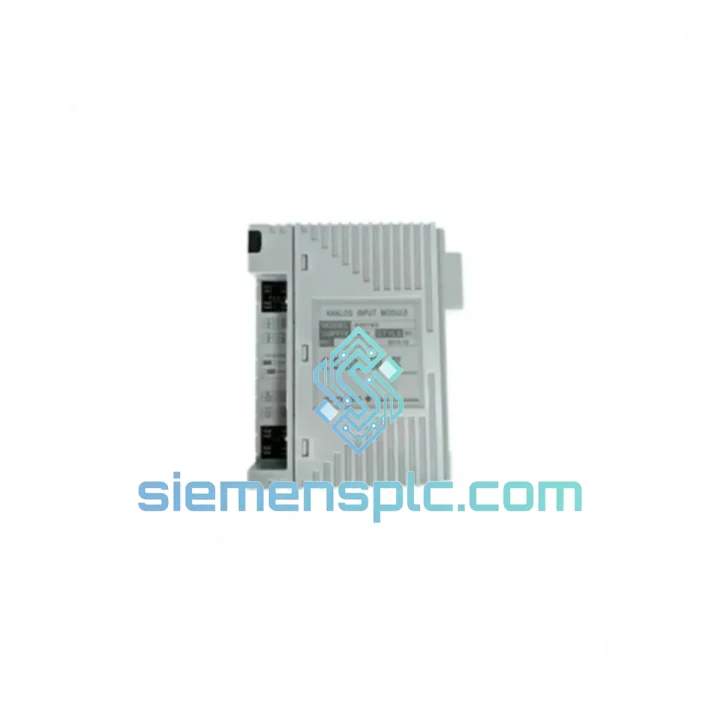
Request verified availability, condition, replacement risk review, packing options and courier lead time for AAR181-S03.
Click Request Quote and the part number is inserted into the inquiry form automatically.
Core fields for model confirmation and RFQ routing. Detailed product narrative remains below.
The AAR181-S03 is a dedicated resistance temperature detector (RTD) analog input module designed for deployment within Yokogawa’s CENTUM VP Field Control Station (FCS) architecture. Its primary function is the conversion of low-resistance RTD sensor signals — typically in the range of 0 Ω to 400 Ω for Pt100 elements — into calibrated digital process values that are transmitted across the FCS internal I/O bus to the CPU node for closed-loop control execution. In temperature-critical processes such as crude distillation, pharmaceutical bioreactor management, and power plant steam cycle monitoring, the measurement chain integrity provided by this module directly determines the stability margin of the control loop.
Within the AAR18x family, the AAR181-S03 variant is configured for multi-channel RTD acquisition with channel-to-channel isolation, enabling simultaneous measurement of multiple independent temperature points without ground loop interference — a common failure mode in multi-sensor installations where sensor sheaths share a common process vessel ground. The module slots into the CENTUM VP I/O nest unit (ANB10S / ANB11S series) and communicates with the FCS node unit via Yokogawa’s proprietary high-speed I/O bus, maintaining deterministic scan cycle synchronization with the FCS control execution period.
Real-time Stock & RFQ: [email protected] | WhatsApp: +86 18359268345
| Parameter | Specification |
|---|---|
| Part Number | AAR181-S03 |
| Manufacturer | Yokogawa Electric Corporation |
| Module Series | CENTUM VP FCS Analog I/O — AAR18x |
| Module Function | RTD (Resistance Temperature Detector) Analog Input |
| Compatible Platform | CENTUM VP Field Control Station (FCS) |
| Compatible Nest Units | ANB10S, ANB11S |
| Supported RTD Types | Pt100 (IEC 60751), Pt1000, Ni100, Cu10, JPt100 |
| Measurement Range | -200 °C to +850 °C (Pt100, IEC 60751 class A) |
| Resistance Input Range | 0 Ω to 400 Ω (nominal, Pt100 full span) |
| Measurement Accuracy | ±0.1 °C typical (Pt100, at 23 °C ambient) |
| Channel Isolation | Channel-to-channel optical isolation |
| Wiring Configuration | 3-wire RTD (standard); 4-wire supported per channel |
| Power Supply | Supplied via FCS I/O bus backplane (no external PSU required) |
| Operating Temperature | 0 °C to +55 °C |
| Storage Temperature | -25 °C to +70 °C |
| Relative Humidity | 5% to 95% RH (non-condensing) |
| EMC Compliance | IEC 61000-4 series (ESD, EFT, surge, conducted RF) |
| Enclosure / Form Factor | DIN-rail compatible module, front-access terminal board via ATB series |
| Weight | 580 g |
| Country of Origin | Japan |
| Warranty | 12 months from date of shipment |
The AAR181-S03 implements a three-stage signal conditioning chain before digitization. At the front end, a precision constant-current source — typically 1 mA DC — is injected through the RTD element. The resulting voltage drop across the sensor resistance is proportional to temperature per the Callendar–Van Dusen equation for platinum elements. This voltage is routed through a differential instrumentation amplifier with a common-mode rejection ratio (CMRR) exceeding 120 dB at 50/60 Hz, which suppresses the power-frequency interference that is endemic in industrial cable trays running parallel to motor drive cabling.
Channel-to-channel isolation is implemented via optocoupler barriers on each analog input path. This architecture prevents ground loop currents — which arise when RTD sensor sheaths are bonded to process equipment at different ground potentials — from corrupting adjacent channel readings. In a 16-channel RTD nest, a single unmitigated ground loop can introduce measurement errors exceeding 2 °C on neighboring channels; the AAR181-S03’s isolation topology eliminates this failure mode entirely.
The analog-to-digital conversion stage employs a sigma-delta (ΣΔ) ADC architecture. Sigma-delta converters achieve high resolution (typically 16-bit effective) at low signal bandwidths by oversampling and noise shaping — characteristics well-matched to RTD temperature measurement, where process dynamics rarely exceed 1 Hz. The oversampling ratio also provides inherent averaging of high-frequency noise without requiring external RC filter networks that would otherwise introduce phase lag into the measurement chain.
EMC hardening is achieved through a combination of board-level filtering (ferrite beads on all I/O lines, X2/Y2 class capacitors on power rails) and module-level shielding. The module housing provides a Faraday cage effect that attenuates radiated RF interference from adjacent variable-frequency drives (VFDs) and high-current contactors — equipment that coexists in the same control room environment in virtually every process plant installation.
The 3-wire RTD compensation circuit uses a matched resistance bridge topology: the lead resistance of the third wire is measured and subtracted from the total loop resistance in real time, compensating for cable resistance drift caused by ambient temperature variation along the cable run. For installations with cable runs exceeding 100 m, this compensation mechanism maintains measurement accuracy within the module’s published specification without requiring field recalibration.
Every AAR181-S03 unit supplied by siemensplc.com is sourced from verified supply channels — authorized Yokogawa distributors, certified industrial surplus dealers, or documented plant decommissioning projects with full traceability records. Prior to shipment, each module undergoes a structured inspection protocol: visual examination of PCB, connector pins, and module housing for physical damage; firmware version verification against Yokogawa’s published revision history; and functional bench testing against the module’s published I/O specifications using calibrated RTD simulation equipment.
Units are shipped from our Xiamen, China operations center. Xiamen’s port infrastructure supports direct air freight connections to major industrial hubs across Southeast Asia, the Middle East, Europe, and the Americas, with typical transit times of 3–7 business days for air freight shipments. All modules are packaged in anti-static (ESD) bags, enclosed in foam-lined rigid cartons, and sealed with tamper-evident tape. Export documentation — including commercial invoice, packing list, and certificate of conformance — is prepared to comply with destination country customs requirements, minimizing clearance delays.
A 12-month warranty is provided from the date of shipment, covering functional defects under normal operating conditions. Warranty claims are processed with a target response time of 1 business day, and replacement units are dispatched from Xiamen stock where available. For customers requiring extended warranty coverage or on-site spare pool management, contact our technical sales team to discuss service level agreements.
Email: [email protected]
WhatsApp: +86 18359268345
Web: siemensplc.com
Location: Xiamen, China
© 2026 siemensplc.com. All rights reserved.
We check the full part number, brand, series and visible nameplate information before quotation.
Sales confirms stock path, condition option, quantity and realistic lead time for export dispatch.
DHL, FedEx, UPS or buyer courier arrangements can be reviewed with packing requirements.
Similar brand or category products for fast comparison and multi-item RFQ lists.