Yokogawa
In Stock OK
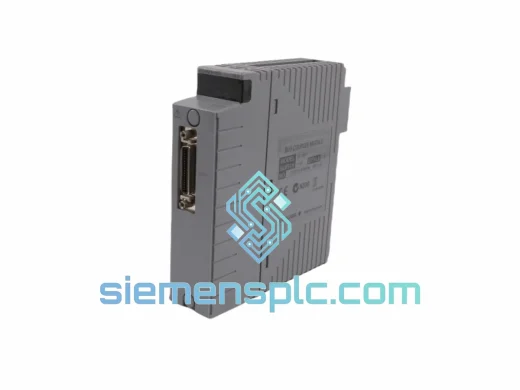
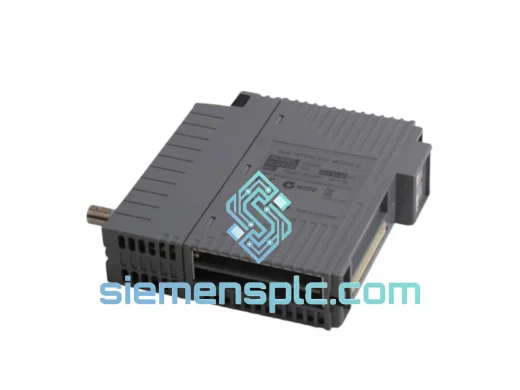
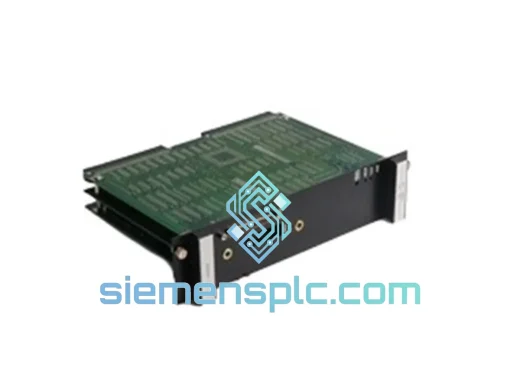
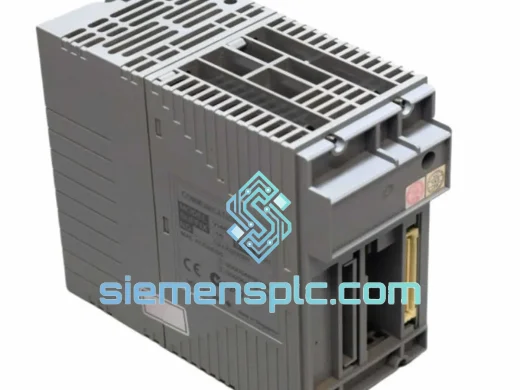
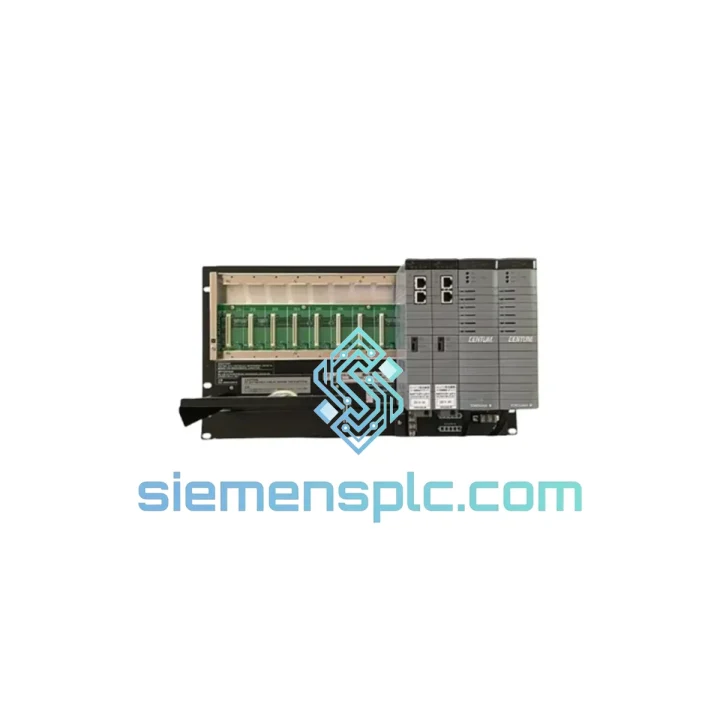
Yokogawa AFV30D S2 Field Control Unit
Request verified availability, condition, replacement risk review, packing options and courier lead time for AFV30D S2.
BrandYokogawa
Part NumberAFV30D S2
ConditionAvailability Check
Lead TimeRFQ Confirmation
DocumentsDatasheet / photos by RFQ
ShippingExport packing available
Auto-filled RFQ
AFV30D S2
Click Request Quote and the part number is inserted into the inquiry form automatically.
- Reply by email: [email protected]
- WhatsApp / Tel: +86 18359268345
- Mon-Sat 9:00-18:00 GMT+8
Procurement Data
Key Product Information
Core fields for model confirmation and RFQ routing. Detailed product narrative remains below.
- Brand
- Yokogawa
- Primary Part Number
- AFV30D S2
- Product Type
- Field Control Unit
- Series / Family
- CENTUM VP
- Manufacturer
- Yokogawa Electric Corporation
- Country of Origin
- JP
- Catalog Category
- DCS & Safety Modules
- Operating Temp.
- 0 °C to 55 °C
- Humidity
- 5% – 95% RH, non-condensing
Model confirmed for inquiry
AFV30D S2
Send quantity, destination and urgency. The RFQ form keeps this part number attached.
Request Quote
Product Overview
AFV30D S2 Down? Every Minute of Downtime Costs You — We Ship Today
A failed Field Control Unit in a CENTUM VP or CS 3000 system doesn’t just trip an alarm — it shuts down an entire process loop. Reactor temperatures drift. Distillation columns go manual. Operators scramble. The clock starts the moment that FCU goes dark, and every hour offline translates directly into lost production revenue. We’ve seen it: a single AFV30D S2 failure in a refinery FCU nest can cost upwards of $50,000 per hour in lost throughput before the maintenance team even locates a replacement unit.
That’s exactly why siemensplc.com stocks the Yokogawa AFV30D S2 as a ready-to-ship unit, verified, inspected, and packed for immediate dispatch from Xiamen. No 8-week OEM lead time. No distributor back-order queue. You call, we ship — same business day for orders confirmed before 3 PM CST.
⚡ URGENT REQUIREMENT? Contact: [email protected] | WhatsApp: +86 18359268345
Quick Technical Datasheet
| Manufacturer | Yokogawa Electric Corporation |
| Full SKU | AFV30D S2 |
| Module Type | Field Control Unit (FCU) |
| Compatible Platform | CENTUM VP, CENTUM CS 3000 |
| Suffix Code | S2 — Standard, dual-redundancy capable |
| Control Bus | Vnet/IP (Ethernet-based) |
| Redundancy | Hot-standby dual FCU pairing supported |
| Scan Period | 100 ms – 1000 ms (configurable) |
| Power Supply | 24 VDC via system power bus |
| Operating Temperature | 0 °C to 55 °C |
| Humidity | 5% – 95% RH, non-condensing |
| Mounting | FCU nest (DIN rail / panel-mount) |
| Weight | Approx. 700 g |
| Country of Origin | Japan |
| Stock Status | ✅ Ready to Ship — Xiamen Warehouse |
Troubleshooting & Replacement Tips
Replacing an AFV30D S2 in a live CENTUM VP system is not a plug-and-play operation. Here’s what field experience actually looks like:
Common Failure Signatures Before Full FCU Death:
- ALM 3011 / ALM 3012 — FCU communication timeout on Vnet/IP. Often the first sign of a degrading processor board. Don’t dismiss it as a network glitch — check FCU LED status immediately.
- ALM 3021 — FCU self-diagnostic failure. The unit has detected an internal hardware fault. At this point, plan for replacement, not reset.
- Intermittent control loop oscillation — If PID loops that were stable for years suddenly start hunting, and tuning hasn’t changed, suspect FCU scan-cycle jitter caused by a failing CPU module.
- Redundancy switchover events — Repeated hot-standby switchovers (check CENTUM event log) with no network cause point directly to primary FCU hardware degradation.
Step-by-Step Replacement Procedure (AFV30D S2):
- Document current configuration: Before touching anything, export the FCS database from CENTUM VP Engineering Station. Confirm the hardware revision code printed on the FCU label — it must match the replacement unit’s revision to avoid firmware incompatibility.
- Verify redundancy state: If running dual-redundant, confirm the standby FCU is healthy and has taken control cleanly. Do not pull the primary while the standby is also in fault state.
- Power isolation: The AFV30D S2 draws power from the FCU nest bus. Isolate the nest power supply — do not attempt hot-swap unless your system revision explicitly supports it (check Yokogawa TI 33J01A10-01EN).
- Physical swap: Slide the AFV30D S2 out of the nest slot. Note the ESB (Enhanced Signal Bus) connector orientation — it’s keyed, but forced insertion at an angle will damage the backplane pins. Seat the replacement unit firmly until the locking tab clicks.
- Firmware check: Power up the new FCU. Before downloading the FCS database, verify the firmware version via CENTUM VP Engineering Station. If the firmware on the replacement unit is older than your system’s minimum required version, update it first — downloading an FCS to a mismatched firmware version will result in a failed load and potential FCS lockout.
- FCS download: Execute the FCS download from Engineering Station. Monitor the download progress — a stall at the I/O assignment phase typically indicates an ESB communication issue with the FIO nodes. Re-seat the FCU and retry before assuming a faulty replacement unit.
- Loop verification: After successful download, bring loops back to AUTO one at a time. Verify PV readings against field instruments before releasing to DCS auto-control.
Configuration Gotchas Specific to AFV30D S2:
- The S2 suffix unit supports dual-redundancy, but the redundancy pairing must be re-established after replacement. In CENTUM VP, navigate to FCS Builder → FCU Properties → Redundancy tab and re-synchronize the pair.
- If your system uses SFC (Sequential Function Chart) blocks with latched states, those states are lost on FCU replacement. Coordinate with operations before the swap to ensure process is in a safe hold state.
- Vnet/IP node address is stored in the FCU hardware — confirm the replacement unit’s node address matches the failed unit’s address, or update the network configuration accordingly.
Reliability in Harsh Conditions
The AFV30D S2 was not designed for a climate-controlled server room. It was built for the realities of industrial field cabinets — and those realities are brutal.
In petrochemical plants along the Gulf Coast, FCU nests operate in ambient temperatures that regularly hit 45 °C during summer shutdowns, with humidity levels that condense on cabinet walls overnight. In offshore platforms, salt-laden air and constant mechanical vibration from deck machinery are the baseline environment, not the exception. The AFV30D S2’s conformal-coated PCBs and vibration-dampened component mounting are Yokogawa’s answer to these conditions — not marketing language, but engineering decisions validated through IEC 60068 environmental testing protocols.
Vibration tolerance is rated to IEC 60068-2-6 standards, covering sinusoidal vibration profiles that simulate both transportation stress and continuous operational vibration from rotating machinery nearby. The unit’s thermal design accounts for convective airflow within the FCU nest — which is why nest slot placement matters. Don’t block adjacent slots with cable bundles; the AFV30D S2 relies on passive airflow through the nest for thermal management.
Units sourced through siemensplc.com are stored in a climate-controlled warehouse in Xiamen, maintained at 20–25 °C with humidity control. Each unit is individually bagged in ESD-safe anti-static packaging with desiccant packs before shipment. We don’t stack boards loose in a box — every AFV30D S2 ships in foam-lined, double-wall corrugated packaging rated for international air freight handling.
Global Express Logistics
Our dispatch hub is in Xiamen, Fujian — one of China’s primary export ports with direct DHL and FedEx international gateway access. Here’s how the logistics chain actually works when you place an urgent order:
- Order confirmed before 3 PM CST: Unit is pulled from stock, inspected, and packed same day. DHL/FedEx pickup scheduled for that evening’s international freight consolidation.
- Export documentation: Commercial invoice, packing list, and HS code declaration (HS 8537.10) prepared in parallel with packing. No customs delays from incomplete paperwork.
-
Transit times (typical):
- Southeast Asia (Singapore, Thailand, Malaysia): 2–3 business days via DHL Express
- Middle East (UAE, Saudi Arabia, Kuwait): 3–4 business days via FedEx International Priority
- Europe (Germany, Netherlands, UK): 4–5 business days via DHL Express Worldwide
- North America (USA, Canada): 4–5 business days via FedEx International Priority
- South America (Brazil, Chile): 6–8 business days via DHL Express
- Tracking: AWB number provided within 2 hours of dispatch. Real-time tracking link sent directly to your procurement contact.
- Import duty advisory: We can provide a proforma invoice with accurate HS codes to support your customs clearance team. Duty rates vary by destination — contact us if you need a DDP (Delivered Duty Paid) quote.
For plant shutdowns with hard restart deadlines, tell us your required-on-site date upfront. We’ll work backward from that date to select the right service level and confirm feasibility before you commit to the order.
Contact Information
📧 Email: [email protected]
💬 WhatsApp: +86 18359268345
🌐 Web: siemensplc.com
© 2026 siemensplc.com. All rights reserved.
Ready to quote
[email protected]
Send This Part Number to Sales
RFQ workflow
Quality workflow ->
Confirmation Process
01Model confirmation
We check the full part number, brand, series and visible nameplate information before quotation.
02Availability reply
Sales confirms stock path, condition option, quantity and realistic lead time for export dispatch.
03Packing & courier
DHL, FedEx, UPS or buyer courier arrangements can be reviewed with packing requirements.
Continue sourcing
Browse full catalog ->
Related Automation Parts
Similar brand or category products for fast comparison and multi-item RFQ lists.