Yokogawa
RFQ Ready
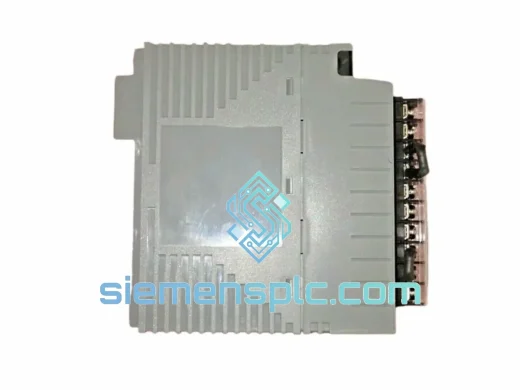
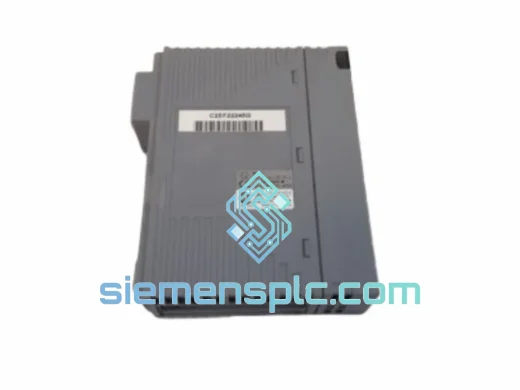
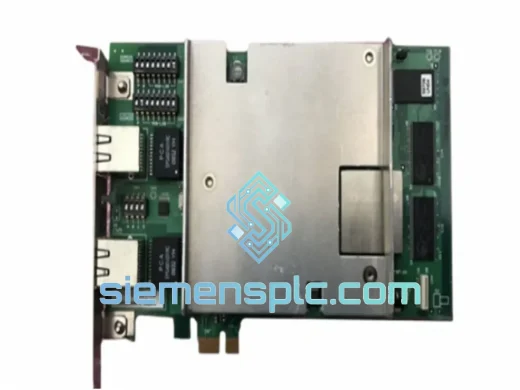
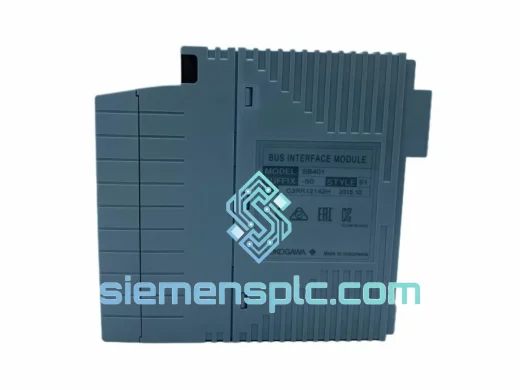
Yokogawa SB401-50 Serial Bus Interface Module – CENTUM VP
CENTUM VP
Origin JP
Serial Bus Interface Module
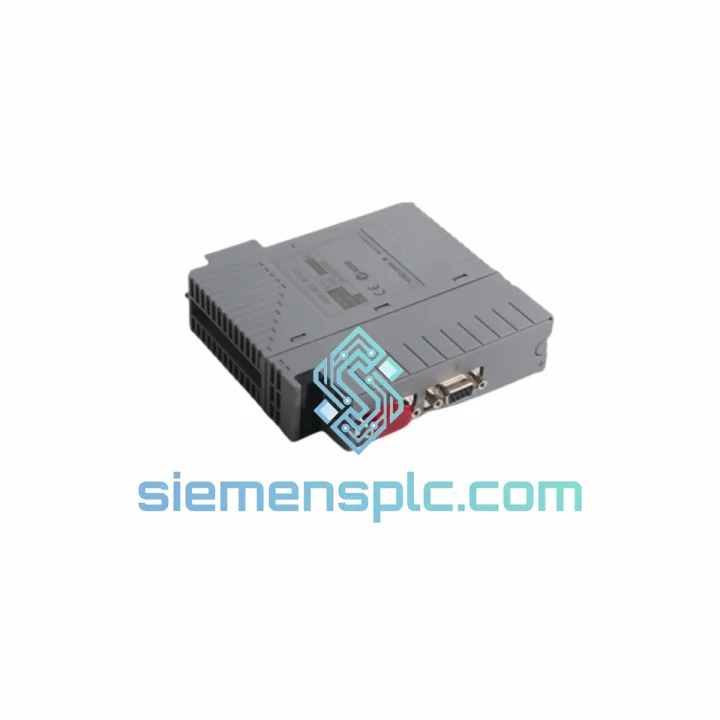
Request verified availability, condition, replacement risk review, packing options and courier lead time for ALP111-S00.
Click Request Quote and the part number is inserted into the inquiry form automatically.
Core fields for model confirmation and RFQ routing. Detailed product narrative remains below.
The YOKOGAWA ALP111-S00 S1 is a dedicated communication interface module designed for deployment within YOKOGAWA’s CENTUM VP and CS 3000 Distributed Control System (DCS) platforms. Its primary function is to manage the deterministic exchange of process data between Field Control Stations (FCS) and the V-net/ESB bus infrastructure, ensuring that time-critical control loop signals are transmitted with bounded latency and zero data collision. In large-scale process plants — refineries, ethylene crackers, LNG terminals — the integrity of this communication layer is not a secondary concern; it is the architectural foundation upon which loop stability depends.
Unlike generic fieldbus adapters, the ALP111-S00 S1 is engineered specifically for YOKOGAWA’s proprietary backplane architecture. Its firmware is tightly coupled to the CENTUM VP real-time kernel, which means the module participates in the system’s deterministic scan cycle rather than operating as an asynchronous peripheral. This distinction matters in high-density I/O configurations where hundreds of analog loops share a single FCS backplane: any non-deterministic communication element introduces jitter that accumulates across scan cycles and degrades PID controller performance.
The S1 hardware revision incorporates updated transceiver circuitry with improved common-mode rejection, a specification change that directly addresses EMC compliance requirements in environments with variable-frequency drives (VFDs) and high-current motor starters operating in proximity to DCS cabinets. Field engineers replacing earlier ALP111 variants with the S1 revision have reported measurable reductions in spurious communication fault alarms in such environments.
Real-time Stock & RFQ: [email protected] | WhatsApp: +86 18359268345
| Parameter | Specification |
|---|---|
| Part Number / SKU | ALP111-S00 S1 |
| Manufacturer | YOKOGAWA Electric Corporation |
| Compatible Platform | CENTUM VP, CS 3000 |
| Module Category | DCS Communication Module |
| Bus Interface | V-net / ESB (Enhanced Serial Backplane) |
| Communication Protocol | YOKOGAWA proprietary real-time DCS protocol |
| Hardware Revision | S1 |
| Mounting | YOKOGAWA standard I/O nest / node unit |
| Power Supply | Supplied via backplane (no external PSU required) |
| Operating Temperature | 0 °C to +55 °C |
| Storage Temperature | -25 °C to +70 °C |
| Relative Humidity | 5% to 95% RH (non-condensing) |
| Weight | Approx. 2,140 g |
| Country of Origin | Japan |
| HS Code | 8537.10.90 |
| Compliance | CE, RoHS (subject to production batch) |
| Warranty | 12 months from date of shipment |
The ALP111-S00 S1 operates as a protocol translation and arbitration node on the ESB backplane. The ESB (Enhanced Serial Backplane) is a token-passing serial bus that connects all I/O modules within a single FCS node unit. The ALP111 holds the bus master role during its allocated token window, collecting process variable (PV) data from downstream I/O modules and assembling it into a structured data frame for transmission to the FCS processor over V-net.
Optical Isolation Architecture: Signal paths between the backplane bus and the module’s internal logic are galvanically isolated using high-speed optocouplers rated for 2,500 V AC isolation voltage. This isolation barrier prevents ground loop currents — common in large industrial installations with distributed earthing — from corrupting digital signal levels on the backplane. The isolation capacitance is kept below 10 pF to preserve signal edge integrity at the ESB bus clock frequency.
EMC Design (S1 Revision): The S1 revision introduces a differential transceiver with a common-mode rejection ratio (CMRR) exceeding 60 dB across the 10 kHz–10 MHz band. Ferrite bead arrays are placed at all connector entry points to suppress conducted emissions. The PCB layout uses a split ground plane with a single-point bridge between analog and digital domains, minimizing return current coupling between the communication circuitry and the module’s power regulation section.
Watchdog and Fault Arbitration: An independent hardware watchdog timer monitors the module’s firmware execution cycle. If the main communication processor fails to reset the watchdog within the configured timeout window (typically 50 ms), the module asserts a hardware fault signal on the backplane, triggering the FCS to enter a safe-state hold mode. This fail-safe mechanism operates independently of the main processor, ensuring that a firmware hang does not result in silent data corruption in the control loop.
Hot-Swap Circuitry: The ALP111-S00 S1 incorporates controlled power sequencing on its backplane connector pins. When the module is inserted into a live nest, inrush current is limited by a soft-start circuit to prevent voltage droop on the shared backplane power rail. Bus arbitration is re-entered only after the module’s internal power rails have stabilized within ±2% of nominal, preventing malformed frames from being transmitted during the initialization transient.
Every YOKOGAWA ALP111-S00 S1 unit supplied by siemensplc.com is sourced as genuine YOKOGAWA original hardware through verified industrial supply channels. Each module undergoes a structured pre-shipment inspection covering label authenticity, connector pin condition, housing integrity, and where test bench access permits, a power-on communication handshake verification against a compatible CENTUM VP or CS 3000 test node.
Units are packed in anti-static ESD shielding bags, placed in foam-lined cartons rated for international air freight handling, and shipped from our warehouse in Xiamen, China. Standard export documentation — commercial invoice, packing list, and certificate of origin — is prepared for every shipment. HS Code 8537.10.90 is declared on all customs documents; buyers requiring additional compliance documentation (CE Declaration, RoHS certificate) may request these at the time of order.
Typical transit times via DHL Express or FedEx International Priority are 3–5 business days to major industrial hubs in Europe, the Middle East, Southeast Asia, and the Americas. Sea freight consolidation is available for bulk orders. All shipments carry a 12-month warranty against manufacturing defects, with advance replacement available for qualified accounts to minimize plant downtime.
Email: [email protected]
WhatsApp: +86 18359268345
Web: siemensplc.com
Location: Xiamen, China
© 2026 siemensplc.com. All rights reserved.
We check the full part number, brand, series and visible nameplate information before quotation.
Sales confirms stock path, condition option, quantity and realistic lead time for export dispatch.
DHL, FedEx, UPS or buyer courier arrangements can be reviewed with packing requirements.
Similar brand or category products for fast comparison and multi-item RFQ lists.