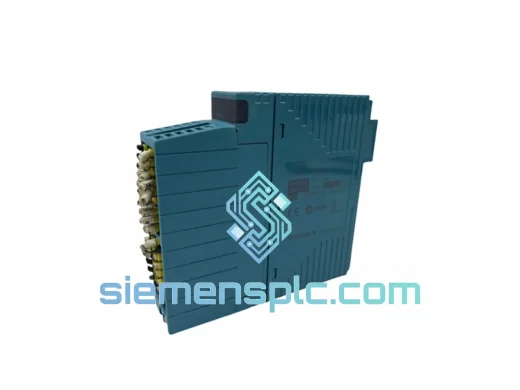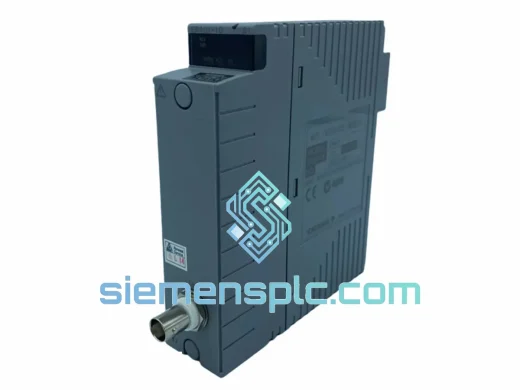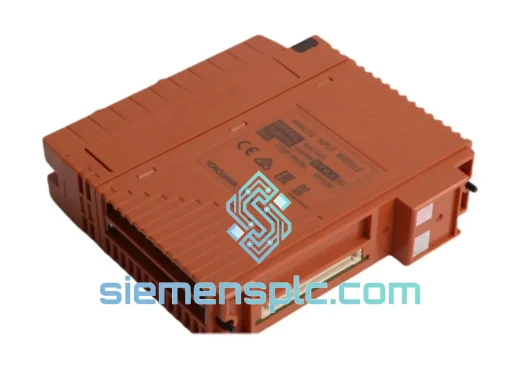
Yokogawa
RFQ Ready
Yokogawa SAI143-H63/PRP S3 DCS Analog Input Module
CENTUM VP
Origin JP
DCS Analog Input Module
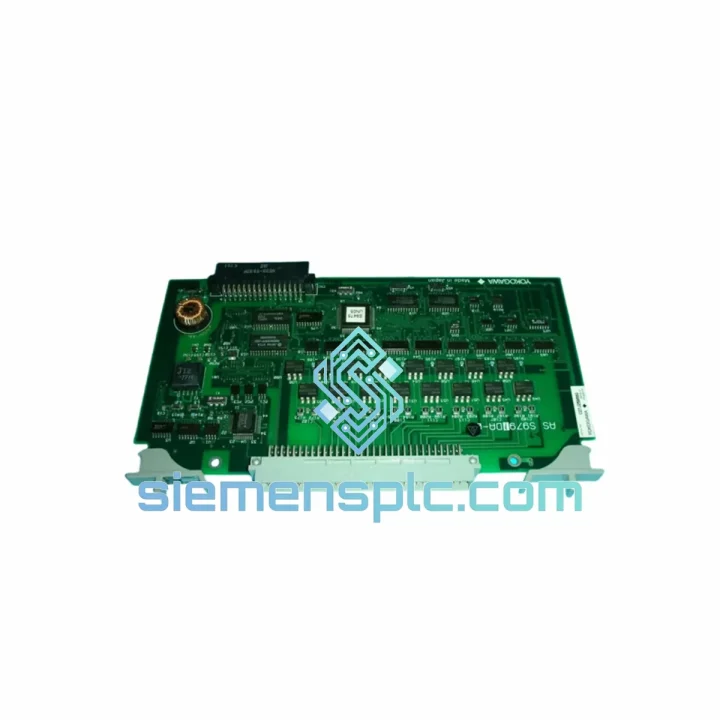
Request verified availability, condition, replacement risk review, packing options and courier lead time for AMM21-S3.
Click Request Quote and the part number is inserted into the inquiry form automatically.
Core fields for model confirmation and RFQ routing. Detailed product narrative remains below.
Your CENTUM VP or CS 3000 system just threw a module fault. Sixteen analog input channels — gone. Temperature loops open, flow measurements dead, pressure readings flatlined. The board is red. Your shift supervisor is standing behind you. You already know the failed card: AMM21-S3. The only question now is how fast you can get a replacement on the rail and restore process visibility.
We stock the YOKOGAWA AMM21-S3 in Xiamen. Not on order. Not inbound. In hand. DHL and FedEx express lanes are open. If you submit your requirement before 18:00 CST, your module moves today. That’s the difference between a 4-hour outage and a 4-day one.
URGENT REQUIREMENT? Contact: [email protected] | WhatsApp: +86 18359268345
| Parameter | Specification |
|---|---|
| Part Number | AMM21-S3 |
| Manufacturer | YOKOGAWA Electric Corporation |
| Compatible Platform | CENTUM VP / CS 3000 DCS |
| Module Function | Analog Input (AI) |
| Input Signal Type | 4–20 mA DC |
| Channel Count | 16 channels, individually isolated |
| Measurement Accuracy | ±0.1% of full span |
| Isolation | Channel-to-channel + channel-to-bus galvanic isolation |
| Power Source | FCU backplane (no external PSU required) |
| Operating Temperature | 0°C to 55°C |
| Humidity Range | 5% to 95% RH, non-condensing |
| Weight | Approx. 420 g |
| Certifications | CE, UL/cUL (verify against official YOKOGAWA datasheet) |
| Generation | S3 — third-generation specification, enhanced noise immunity |
| Stock Status | ✅ Ready to Ship — Xiamen Warehouse |
The AMM21-S3 fails in predictable ways. Knowing the failure signature before you pull the card saves you from chasing ghosts in the field wiring.
Common Fault Codes & What They Actually Mean:
Step-by-Step Hot-Swap Replacement Procedure (CENTUM VP):
The AMM21-S3 was not designed for a climate-controlled server room. It was designed for the reality of industrial process plants — where ambient temperatures swing, humidity condenses on cold surfaces during plant startups, and vibration from rotating machinery is a constant background condition.
YOKOGAWA’s S3-generation modules underwent extended environmental qualification testing that goes beyond standard IEC 61131-2 requirements. The PCB substrate uses a high-Tg laminate that maintains dimensional stability at elevated temperatures, preventing the micro-cracking that causes intermittent faults in cheaper alternatives. Conformal coating on the signal conditioning circuitry provides a barrier against airborne contaminants — sulfur compounds in refineries, chlorine derivatives in chemical plants, and salt fog in coastal installations.
Vibration resistance is validated to IEC 60068-2-6 sinusoidal sweep profiles. The backplane connector retention mechanism uses a positive-locking ejector design that maintains contact integrity under continuous vibration loads — a failure mode that plagues modules with friction-only retention in high-vibration compressor or turbine enclosures.
Thermal cycling performance is equally critical. Plants that experience cold startups — particularly in northern climates or high-altitude installations — subject I/O modules to repeated thermal expansion and contraction cycles. The AMM21-S3’s component selection and PCB layout account for differential thermal expansion coefficients, maintaining solder joint integrity across thousands of thermal cycles over a multi-decade service life.
The result: a module that does not need to be babied. Install it, configure it, and expect it to run for years without intervention. When it does eventually fail — and all electronics eventually fail — the hot-swap architecture means replacement takes minutes, not hours.
Our warehouse is in Xiamen, Fujian — one of China’s primary export hubs with direct access to DHL, FedEx, and UPS international express networks. This is not a coincidence. It is a deliberate operational choice made specifically to serve industrial buyers who cannot wait.
Standard Express Timeline (from order confirmation):
Every shipment includes a commercial invoice, packing list, and certificate of origin — the documentation set your customs broker needs to clear the shipment without delays. For destinations with specific import requirements (India CDSCO, Brazil ANVISA, etc.), contact us before ordering and we will prepare the appropriate supplementary documentation.
Modules are packed in anti-static bags, placed in foam-lined rigid cartons, and outer-boxed with double-wall corrugated material. The packaging survives the handling realities of international express freight — not just the ideal scenario. Tracking numbers are provided within 2 hours of dispatch, and we monitor shipments proactively. If a shipment is delayed in customs or at a hub, we contact you — you do not have to chase us.
For genuine emergencies — plant shutdowns, safety system failures, production line stops — contact us directly on WhatsApp. We can arrange same-day dispatch for orders confirmed before 16:00 CST.
📧 Email: [email protected]
💬 WhatsApp: +86 18359268345
🌐 Web: siemensplc.com
© 2026 siemensplc.com. All rights reserved.
We check the full part number, brand, series and visible nameplate information before quotation.
Sales confirms stock path, condition option, quantity and realistic lead time for export dispatch.
DHL, FedEx, UPS or buyer courier arrangements can be reviewed with packing requirements.
Similar brand or category products for fast comparison and multi-item RFQ lists.