Yokogawa
RFQ Ready
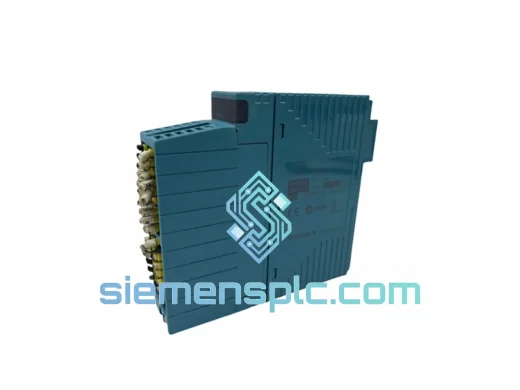
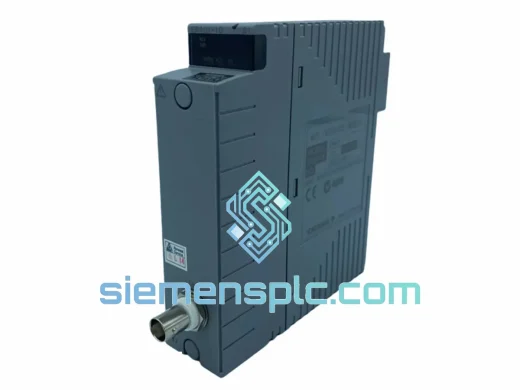
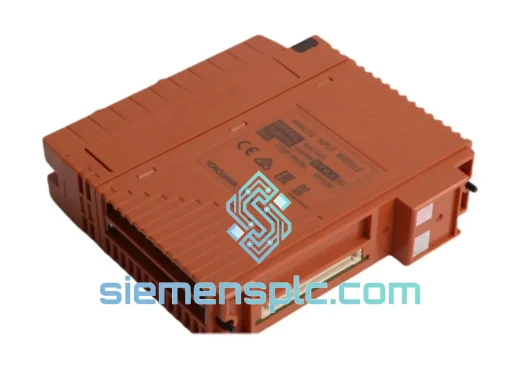
Yokogawa SAI143-H63/PRP S3 DCS Analog Input Module
CENTUM VP
Origin JP
DCS Analog Input Module
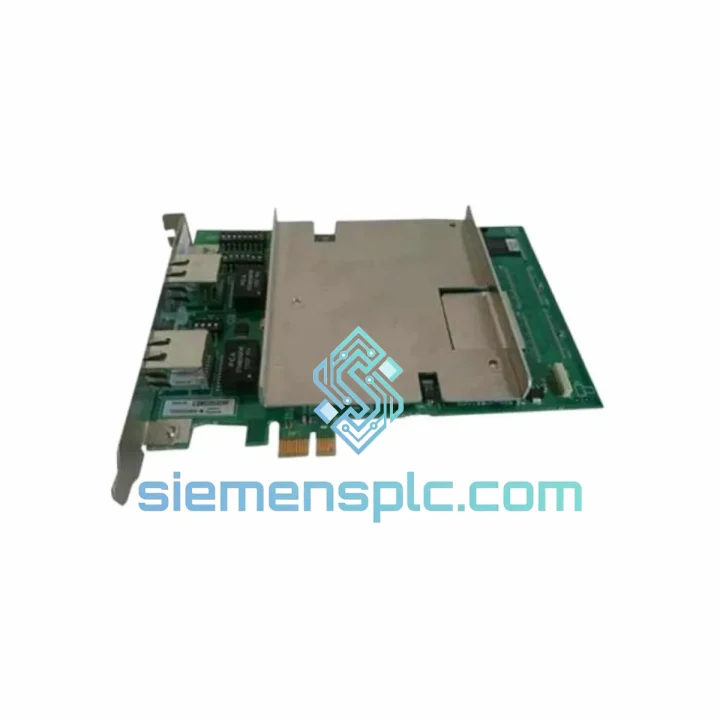
Request verified availability, condition, replacement risk review, packing options and courier lead time for AMM32J S1.
Click Request Quote and the part number is inserted into the inquiry form automatically.
Core fields for model confirmation and RFQ routing. Detailed product narrative remains below.
The YOKOGAWA AMM32J S1 is a dedicated Resistance Temperature Sensor (RTS) Input Multiplexer Module engineered for deployment within YOKOGAWA’s CENTUM VP and CENTUM CS 3000 Distributed Control Systems. Its primary function is to aggregate multiple RTD field inputs — Pt100, Pt200, Pt500, Pt1000, Cu10, Ni100, and similar resistance-based sensors — into a single, high-integrity I/O channel on the DCS backplane. This multiplexing architecture reduces nest slot consumption while maintaining per-channel measurement fidelity, a critical design consideration in large-scale process plants where thermal monitoring points can number in the hundreds.
In a typical control loop, the AMM32J S1 sits between the field junction box and the CENTUM I/O nest. Each RTD input is scanned sequentially at a fixed cycle rate determined by the CENTUM VP control domain configuration. The module’s internal analog front-end applies a precision excitation current to each sensor, measures the resulting voltage drop across the resistance element, and converts the raw value through a 16-bit A/D converter before transmitting calibrated engineering-unit data to the CPU module via the V-net/IP or ESB bus. This architecture eliminates the need for external signal conditioners or transmitters on low-level RTD loops, reducing both wiring complexity and potential failure points in the measurement chain.
Real-time Stock & RFQ: [email protected] | WhatsApp: +86 18359268345
| Parameter | Specification |
|---|---|
| Manufacturer | YOKOGAWA Electric Corporation |
| Part Number | AMM32J S1 |
| Module Category | RTS (Resistance Temperature Sensor) Input Multiplexer |
| Compatible DCS Platform | CENTUM VP, CENTUM CS 3000 |
| Supported Sensor Types | Pt100, Pt200, Pt500, Pt1000, Cu10, Ni100, Ni120 (IEC 60751 / JIS C 1604) |
| Wiring Configuration | 2-wire, 3-wire, 4-wire RTD |
| A/D Resolution | 16-bit |
| Measurement Accuracy | ±0.1°C (Pt100, 3-wire, at 25°C ambient) |
| Input Isolation | Opto-isolated per channel group; channel-to-channel isolation via multiplexer switching matrix |
| Excitation Current | Precision constant-current source (YOKOGAWA proprietary, typically 1 mA) |
| Scan Cycle | Determined by CENTUM VP control domain period (min. 100 ms) |
| Backplane Interface | ESB bus / V-net (YOKOGAWA proprietary) |
| Power Consumption | Supplied via I/O nest backplane (5 VDC internal bus) |
| Operating Temperature | 0°C to +55°C |
| Storage Temperature | -20°C to +70°C |
| Relative Humidity | 5% to 95% RH (non-condensing) |
| Mounting | CENTUM VP / CS 3000 I/O nest (standard slot) |
| Dimensions | Per CENTUM I/O module standard form factor |
| Weight | Approx. 100 g |
| Compliance | CE, RoHS, IEC 61010-1 |
| Country of Origin | Japan |
| Warranty | 12 months from date of shipment |
The AMM32J S1 implements a switched multiplexer topology rather than a parallel-channel ADC bank. A solid-state analog switch matrix — constructed from low-leakage CMOS transmission gates — sequentially connects each RTD input to a shared precision measurement path. This design choice is deliberate: it concentrates calibration error into a single, tightly controlled analog front-end rather than distributing it across multiple independent converters, each with its own offset and gain drift characteristics. The result is a module whose inter-channel accuracy consistency is governed by switch on-resistance matching (typically <1 Ω variation) rather than ADC-to-ADC manufacturing spread.
EMC performance is addressed at the hardware level through a multi-layer PCB stackup with dedicated ground planes separating the analog measurement domain from the digital logic domain. Common-mode rejection on the RTD input lines is achieved via differential input amplifiers with CMRR exceeding 100 dB at 50/60 Hz — a specification directly relevant to installations near variable-frequency drives, large motor starters, or high-current bus bars. Transient suppression on each input terminal uses a combination of TVS diodes and RC filters, providing protection against electrostatic discharge and conducted interference per IEC 61000-4-2 and IEC 61000-4-4 test levels.
The module’s internal firmware implements lead-wire resistance compensation for 3-wire and 4-wire RTD configurations. For 3-wire circuits, the compensation algorithm assumes equal lead resistance on both measurement leads — a valid approximation for installations using matched-pair cable. For 4-wire circuits, the Kelvin sensing arrangement eliminates lead resistance entirely from the measurement, delivering the highest achievable accuracy for long cable runs or fine-gauge sensor wiring. The S1 suffix designates a specific hardware revision or option configuration; procurement teams should verify this suffix against the CENTUM VP module definition file (MDF) installed in their system software to confirm compatibility before substitution.
Every YOKOGAWA AMM32J S1 unit supplied through siemensplc.com is sourced as genuine OEM hardware. Modules are inspected upon receipt for physical integrity, label authenticity, and firmware version consistency. Where original YOKOGAWA packaging is available, it is preserved intact through the storage and dispatch process. Batch traceability records — including manufacturer lot codes and inspection dates — are maintained in our inventory management system and can be provided upon request for applications subject to IEC 61511 functional safety documentation requirements or pharmaceutical GMP audit trails.
Our logistics operations are based in Xiamen, China, a major international freight hub with direct access to DHL, FedEx, UPS, and TNT express networks. Standard export documentation — commercial invoice, packing list, certificate of origin — is prepared for every shipment. For destinations requiring import permits or end-user declarations for industrial automation equipment, our export compliance team provides pre-shipment guidance. Typical dispatch time for in-stock units is 1–3 business days from order confirmation. Express delivery to major industrial centers in Europe, North America, Southeast Asia, and the Middle East is achievable within 3–7 business days via air express. Sea freight consolidation is available for bulk procurement orders where lead time permits.
Email: [email protected]
WhatsApp: +86 18359268345
Web: siemensplc.com
Location: Xiamen, China
© 2026 siemensplc.com. All rights reserved.
We check the full part number, brand, series and visible nameplate information before quotation.
Sales confirms stock path, condition option, quantity and realistic lead time for export dispatch.
DHL, FedEx, UPS or buyer courier arrangements can be reviewed with packing requirements.
Similar brand or category products for fast comparison and multi-item RFQ lists.