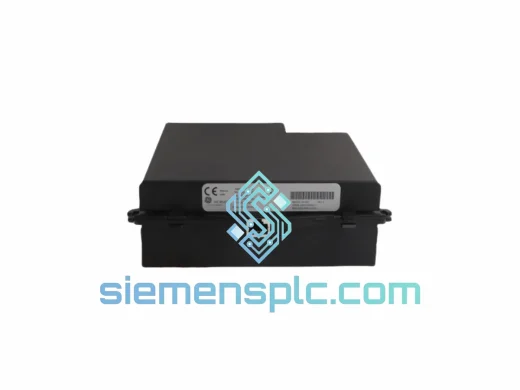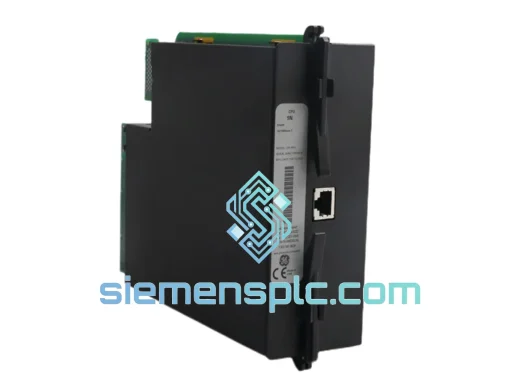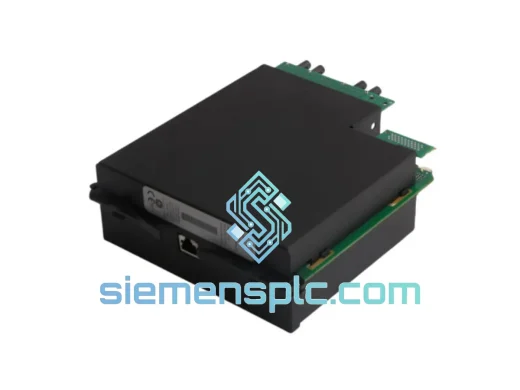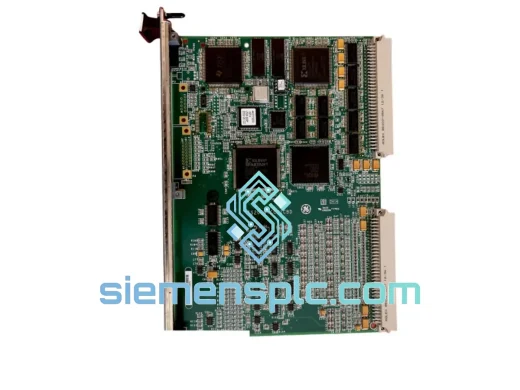
GE
RFQ Ready
GE IS200VTCCH1CBD Thermocouple Processor Board – Mark VI IS200 Series
Mark VI
Origin US
Thermocouple Processor Board
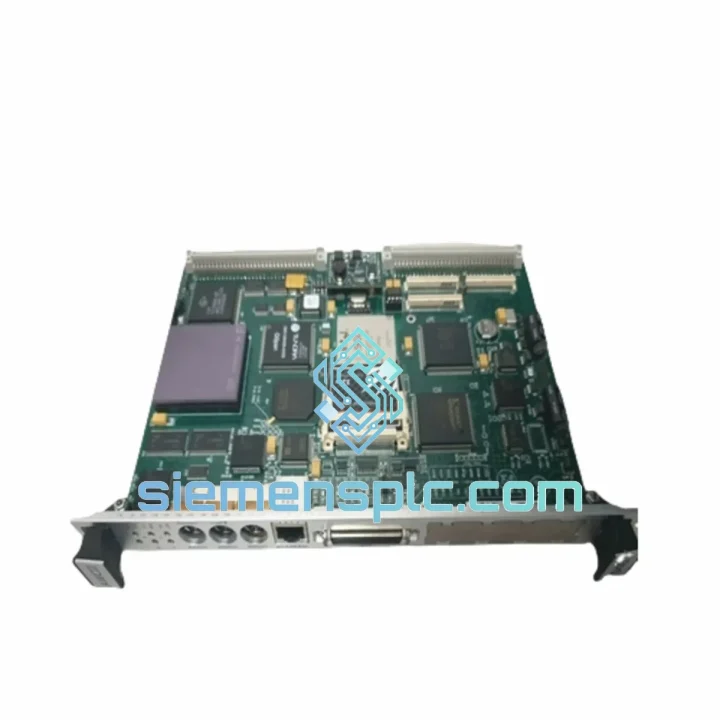
Request verified availability, condition, replacement risk review, packing options and courier lead time for AP102-13-11.
Click Request Quote and the part number is inserted into the inquiry form automatically.
Core fields for model confirmation and RFQ routing. Detailed product narrative remains below.
The AP102-13-11 is the primary logic and signal-processing printed circuit board within ASAHI KEIKI’s AP100 series mass flow controller platform. Its function is not peripheral — it is the computational backbone that receives analog sensor inputs, executes PID control algorithms, drives the proportional valve actuator, and manages the serial communication interface to upstream supervisory systems. When this board fails, the entire flow control loop becomes open-loop: the valve defaults to its fail-safe position, flow data is lost, and process continuity is broken. For facilities operating in pharmaceutical batch synthesis, semiconductor process gas delivery, or chemical dosing, this failure mode carries direct production cost implications.
ASAHI KEIKI (旭計器工業株式会社), headquartered in Tokyo, Japan, has manufactured precision flow measurement and control instrumentation since 1951. The AP100 series represents their mid-range thermal mass flow controller line, designed for corrosive and non-corrosive gas service with full-scale ranges typically spanning 10 sccm to 30 slm. The AP102-13-11 board is specific to the AP102 controller variant within this series, where the suffix “-13-11” denotes the board revision and connector configuration. Sourcing the exact revision is critical — board-level substitution with an incorrect revision can result in calibration offset errors or communication protocol mismatches.
Real-time Stock & RFQ: [email protected] | WhatsApp: +86 18359268345
| Parameter | Specification |
|---|---|
| Part Number | AP102-13-11 |
| Manufacturer | ASAHI KEIKI (旭計器工業株式会社) |
| Series | AP100 Series Mass Flow Controller |
| Component Classification | Signal Processing & Logic Control PCB |
| Board Revision Suffix | -13-11 (connector config & firmware revision) |
| Control Algorithm | PID with analog setpoint tracking |
| Analog Input | 0–5 V DC / 4–20 mA (model-dependent) |
| Analog Output | 0–5 V DC flow signal to host system |
| Valve Drive Output | Proportional solenoid valve driver (PWM) |
| Communication Interface | RS-232C serial (standard); optional RS-485 |
| Operating Temperature | 0°C to +50°C ambient |
| Storage Temperature | -20°C to +70°C |
| Power Supply | ±15 V DC, +5 V DC (supplied by controller chassis) |
| PCB Form Factor | Single-board, edge-connector mount |
| Origin | Japan |
| Shipping Weight | 1,130 g (packaged) |
| Condition | New / Surplus-New (state requirement at RFQ) |
| Warranty | 12 months against manufacturing defects |
The AP102-13-11 board architecture is structured around three discrete functional zones, each with defined signal boundaries to minimize cross-domain interference.
Analog Front-End & Sensor Conditioning: The thermal mass flow sensor in the AP100 series generates a millivolt-level differential signal proportional to gas mass flow rate. The AP102-13-11 incorporates a low-noise instrumentation amplifier stage with a gain-bandwidth product sufficient to resolve flow signals at the lower end of the measurement range (typically sub-1% full scale). A precision voltage reference — typically a buried-zener type with temperature coefficient below 5 ppm/°C — anchors the ADC conversion chain, ensuring that zero-drift does not accumulate across the operating temperature range. This is particularly relevant in semiconductor fab environments where ambient temperature cycling is continuous.
PID Execution & Valve Drive Logic: The control loop executes on a dedicated microcontroller with a fixed interrupt cycle. The PID coefficients are stored in non-volatile EEPROM and are set during factory calibration to match the specific gas type and full-scale range of the AP102 unit. The valve drive stage uses pulse-width modulation to control the proportional solenoid valve, with a flyback diode network protecting the logic circuitry from inductive kickback transients — a common failure mode in boards that lack this protection. The PWM frequency is set above the mechanical resonance frequency of the valve assembly to prevent audible chatter and valve wear.
EMC Design & Isolation Architecture: The AP102-13-11 employs optical isolation at the serial communication interface boundary, separating the host-side ground reference from the controller’s internal analog ground plane. This prevents ground loop currents — common in industrial panel installations where multiple instruments share a common cable tray — from injecting noise into the analog measurement chain. The PCB layout follows a split-ground plane topology: the analog ground and digital ground are joined at a single star point near the power entry connector, a standard practice for mixed-signal boards operating in environments with variable-frequency drive (VFD) interference.
Every AP102-13-11 unit supplied through siemensplc.com is sourced exclusively from verified channels: authorized ASAHI KEIKI distributors, factory-direct surplus, and OEM maintenance stock. No grey-market or unverified secondary-market units are accepted into our inventory. Each board undergoes a structured pre-shipment inspection protocol:
Shipments originate from our warehouse in Xiamen, China, with access to DHL Express, FedEx International Priority, and UPS Worldwide Expedited services. Standard transit times to major industrial hubs: Japan 1–2 days, Southeast Asia 2–3 days, Europe 3–5 days, North America 4–6 days. Full export documentation — commercial invoice, packing list, certificate of origin — is provided with every shipment. For orders requiring CITES, dual-use, or end-user certificate compliance, our logistics team manages documentation preparation.
Email: [email protected]
WhatsApp: +86 18359268345
Web: siemensplc.com
Location: Xiamen, China
© 2026 siemensplc.com. All rights reserved.
We check the full part number, brand, series and visible nameplate information before quotation.
Sales confirms stock path, condition option, quantity and realistic lead time for export dispatch.
DHL, FedEx, UPS or buyer courier arrangements can be reviewed with packing requirements.
Similar brand or category products for fast comparison and multi-item RFQ lists.