GE
RFQ Ready
GE IS210MVRBH1A I/O Interface Board – Mark VIe Series
Mark VI
Origin US
I/O Interface Board
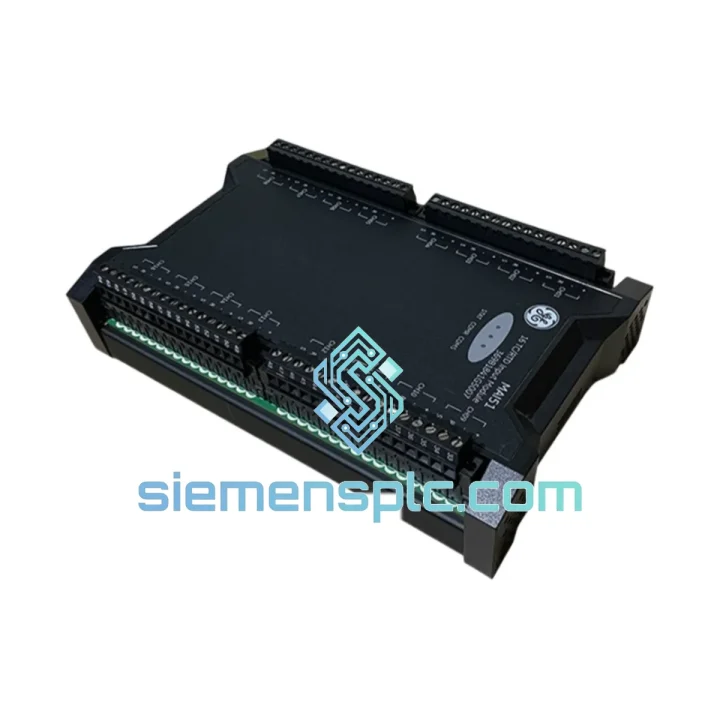
Request verified availability, condition, replacement risk review, packing options and courier lead time for BAO21 369B1871G5003.
Click Request Quote and the part number is inserted into the inquiry form automatically.
Core fields for model confirmation and RFQ routing. Detailed product narrative remains below.
Every hour your Mark VI turbine control system sits offline, you’re bleeding money. A failed analog output module doesn’t just halt production — it triggers cascading alarms, forces manual overrides, and puts your entire plant in a precarious safety posture. The GE BAO21 369B1871G5003 is the exact module that stands between your turbine running at full load and an unplanned outage stretching into days. We stock it. We ship it fast. From Xiamen to your site — DHL or FedEx, door to door.
URGENT REQUIREMENT? Contact: [email protected] | WhatsApp: +86 18359268345
| Part Number | 369B1871G5003 |
| Model | BAO21 |
| Manufacturer | GE (General Electric) |
| Series | Mark VI Turbine Control System |
| Module Function | Analog Output Base Module |
| Signal Type | 4–20 mA / 0–10 V (per channel configuration) |
| Compatible Controllers | VCMI, VTUR, VSVO (Mark VI I/O bus) |
| Turbine Compatibility | GE Frame 6B, 7E, 7FA, 9E, 9FA |
| Configuration | Simplex & TMR (Triple Modular Redundant) |
| Form Factor | Plug-in I/O module, Mark VI terminal board compatible |
| Operating Temperature | 0°C to +60°C (turbine enclosure rated) |
| Weight | Approx. 1 kg |
| Origin | USA (GE OEM) |
| Stock Status | ✔ Ready to Ship — Xiamen Warehouse |
After ten years of pulling failed I/O cards out of Mark VI racks under pressure, here’s what actually matters when you’re swapping a BAO21 in the field:
Common Fault Signatures Before Failure:
Pre-Replacement Checklist:
Firmware Note: The BAO21 does not carry its own firmware — it is a passive analog output board driven by the VCMI or VTUR processor. No firmware flashing is required post-replacement. However, if your Mark VI software revision is below R04.02, verify that the I/O pack firmware on the associated VCMI is current before commissioning the replacement module.
Gas turbine enclosures are not kind to electronics. Ambient temperatures regularly exceed 50°C during summer peak load. Vibration from the turbine shaft transmits through the baseplate and into the control cabinet. Humidity from coastal or tropical sites condenses on PCB surfaces during cold startups. The BAO21 was engineered to survive all of it.
GE designed the Mark VI I/O modules to meet the environmental requirements of IEEE 1613 (Communication Networks for Electric Power Substations) and IEC 60068 vibration and thermal cycling standards. The BAO21’s PCB uses conformal coating on critical analog signal traces to resist moisture ingress — a detail that matters enormously in offshore platform installations where salt-laden air is a constant threat. The module’s edge connector is gold-plated to maintain low contact resistance through thousands of insertion cycles and years of thermal expansion and contraction.
In our warehouse, every BAO21 unit is stored in ESD-safe packaging with silica gel desiccant. Modules sourced from decommissioned panels undergo visual inspection under magnification — we check for cracked solder joints, swollen capacitors, and corrosion on the analog output driver ICs before any unit is offered for sale. If it doesn’t pass visual, it doesn’t ship.
Our warehouse is located in Xiamen, Fujian — one of China’s primary export hubs with direct access to international freight lanes via Xiamen Gaoqi International Airport and Xiamen Port. This geography is deliberate: it means your urgent order moves fast.
Standard process from order confirmation to airfreight departure is under 24 hours for in-stock modules. We ship via DHL Express and FedEx International Priority as default carriers. Both services provide door-to-door tracking and customs clearance support. Typical transit times: Southeast Asia 2–3 days, Middle East 3–4 days, Europe 3–5 days, North America 4–6 days. For genuine emergencies, we can arrange same-day dispatch for orders confirmed before 14:00 CST.
All shipments include a commercial invoice with accurate HS code classification (HS 8537.10 for industrial control modules) to minimize customs delays. We can provide a Certificate of Origin on request for preferential duty treatment under applicable trade agreements. ESD-safe inner packaging, foam-lined outer carton, and fragile labeling are standard — the module arrives at your site in the same condition it left our warehouse.
For large-quantity orders or project-based procurement, sea freight via Xiamen Port to major global ports (Rotterdam, Houston, Singapore, Dubai) is available with competitive lead times. Contact us for a consolidated freight quotation.
Email: [email protected]
WhatsApp: +86 18359268345
Web: siemensplc.com
© 2026 siemensplc.com. All rights reserved.
We check the full part number, brand, series and visible nameplate information before quotation.
Sales confirms stock path, condition option, quantity and realistic lead time for export dispatch.
DHL, FedEx, UPS or buyer courier arrangements can be reviewed with packing requirements.
Similar brand or category products for fast comparison and multi-item RFQ lists.