Honeywell
RFQ Ready
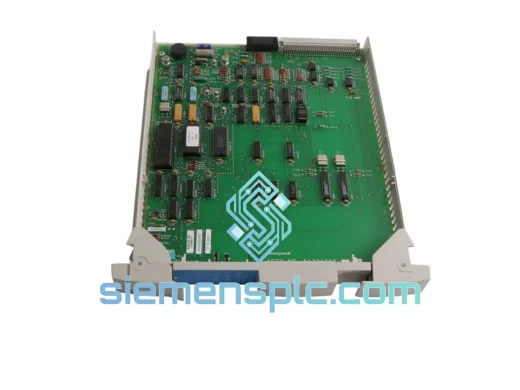
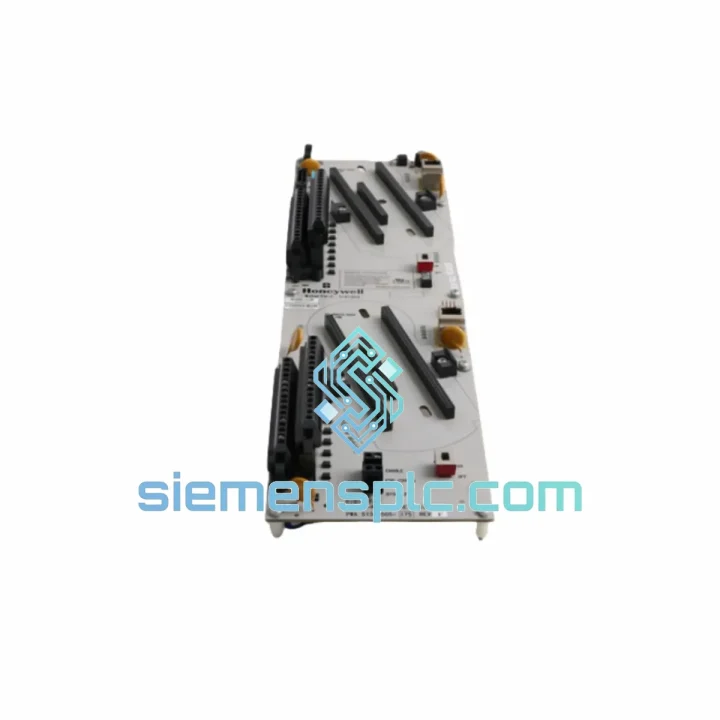
Honeywell SC-PCMX01 51307195-175 DCS Terminal Unit
Experion PKS
Origin US
DCS Terminal Unit
Request verified availability, condition, replacement risk review, packing options and courier lead time for CC-PUIO31.
Click Request Quote and the part number is inserted into the inquiry form automatically.
Core fields for model confirmation and RFQ routing. Detailed product narrative remains below.
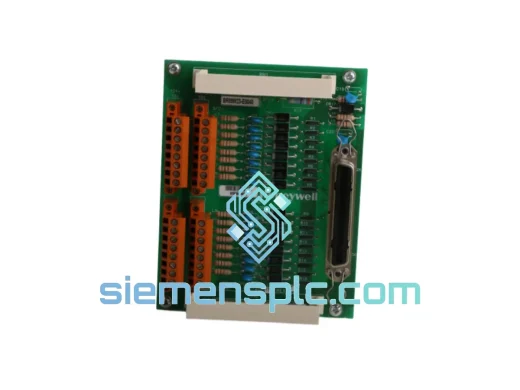
The Honeywell CC-PUIO31 / FC-IOTA-R24 is a factory-engineered Redundant IO Termination Assembly (IOTA) purpose-built for the Experion PKS C300 distributed control platform. Within a C300 field I/O cabinet, the IOTA occupies the structural and electrical midpoint between field instrument cables and the Series C I/O modules. Its mechanical form factor, backplane connector pinout, and signal routing topology are all defined by Honeywell’s Experion PKS hardware specification — making this assembly a non-interchangeable, specification-locked component in any C300 I/O subsystem.
In a redundant I/O configuration, the CC-PUIO31 carrier accepts two Series C I/O modules in a 1:1 hot-standby arrangement. Field wiring terminates once at the IOTA screw terminals; the assembly then distributes each signal simultaneously to both the primary and secondary module slots via a passive, bifurcated backplane trace. The C300 controller continuously monitors both modules and executes a bumpless switchover to the standby module within one scan cycle upon detection of a primary module fault — with no field signal interruption and no operator intervention required. This architecture eliminates the I/O module layer as a single point of failure in high-availability process loops.
The FC-IOTA-R24 designation identifies the physical carrier chassis, while CC-PUIO31 is the Honeywell catalog part number used in bill-of-materials documentation and spare-parts procurement. Both identifiers refer to the same physical assembly and are used interchangeably across Honeywell engineering drawings, system configuration databases, and maintenance records.
Real-time Stock & RFQ: [email protected] | WhatsApp: +86 18359268345
| Parameter | Value |
|---|---|
| Honeywell Part Numbers | CC-PUIO31 / FC-IOTA-R24 |
| Assembly Classification | Redundant IO Termination Assembly (IOTA) |
| Compatible Platform | Honeywell Experion PKS — C300 Controller Series |
| Compatible I/O Modules | Honeywell Series C I/O (AI, AO, DI, DO variants) |
| Redundancy Architecture | 1:1 hot-standby, bumpless switchover |
| Module Slots per IOTA | 2 (Primary + Redundant) |
| Field Wiring Interface | Screw-terminal, per Experion PKS field wiring standard |
| Backplane Connector | Honeywell proprietary Series C backplane interface |
| Operating Temperature | 0 °C to +60 °C |
| Storage Temperature | −40 °C to +85 °C |
| Relative Humidity | 5 % to 95 %, non-condensing |
| Mounting | DIN rail / panel mount per Experion PKS cabinet standard |
| Approx. Weight | 200 g |
| Regulatory Compliance | CE, UL, IEC 61131-2 |
| Country of Origin | United States |
| Warranty | 12 months functional warranty from date of shipment |
Passive Signal Bifurcation and Backplane Trace Topology
The FC-IOTA-R24 carrier implements a passive bifurcated signal path: each field terminal is electrically connected to both module slot backplane connectors through matched-impedance PCB traces. Because the bifurcation is passive — no active switching element sits in the signal path — there is no additional failure mode introduced by the redundancy mechanism itself. The primary module drives the output or reads the input; the standby module monitors the same signal rail simultaneously. Switchover is arbitrated by the C300 controller’s I/O redundancy manager, not by any logic embedded in the IOTA, which keeps the termination assembly’s own failure domain minimal.
EMC Design and Shielding Architecture
The IOTA chassis is constructed with a grounded metal backplane frame that provides a continuous Faraday enclosure around the backplane connector region. Field cable shield termination points are located at the IOTA screw-terminal block, allowing shield drain wires to be grounded at a single, defined point — preventing ground loops while providing a low-impedance path for capacitively coupled interference. This single-point shield grounding topology is consistent with IEC 61000-5-2 installation guidelines for industrial process control environments with high electromagnetic interference (EMI) from variable-frequency drives, high-current bus bars, and RF sources common in refinery and power plant cabinets.
Mechanical Keying and Mis-insertion Prevention
The backplane connector on the FC-IOTA-R24 incorporates mechanical keying features that physically prevent insertion of incompatible I/O module types. This is a deliberate hardware-level safeguard: in a live C300 cabinet where multiple IOTA types may be installed in adjacent slots, the keying eliminates the risk of inserting an analog output module into a digital input IOTA slot — a fault mode that could cause field device damage or process upsets. The keying geometry is defined per Honeywell’s Series C module classification and is not field-modifiable.
Thermal Management
The IOTA carrier is designed for convection-cooled operation within a standard Experion PKS I/O cabinet. The PCB layout maintains component-free keep-out zones around the backplane connector area to ensure unobstructed vertical airflow across the installed I/O modules. The carrier itself dissipates negligible power (passive assembly), so thermal contribution to cabinet heat load is limited to contact resistance losses at the screw terminals under full field wiring load — typically below 0.5 W per assembly under rated conditions.
Every CC-PUIO31 / FC-IOTA-R24 unit offered through siemensplc.com is sourced as genuine Honeywell original hardware. Units undergo a structured incoming inspection protocol upon receipt at our Xiamen, China facility: visual examination of housing, connector, and label integrity; verification of Honeywell date codes and serial number formats against known-good reference documentation; and functional connector continuity checks. Units that do not pass inspection are quarantined and excluded from inventory — no exceptions.
Storage conditions at our Xiamen warehouse maintain temperature between 15 °C and 25 °C with relative humidity controlled below 60 %, consistent with IPC-1601 printed board handling and storage guidelines. All assemblies are stored in anti-static packaging with desiccant to prevent moisture ingress and electrostatic discharge damage to backplane connector contacts.
Outbound logistics from Xiamen are handled via DHL Express, FedEx International Priority, and UPS Worldwide Express — all offering door-to-door transit times of 3–7 business days to major industrial hubs in Europe, the Middle East, Southeast Asia, and the Americas. Full export documentation is prepared for every shipment: commercial invoice, packing list, certificate of origin, and where required, export classification documentation under HS Code 8537.10. Customers in regulated industries can request traceability documentation packages including manufacturer date codes and lot records.
All hardware carries a 12-month functional warranty from the date of shipment. Warranty coverage addresses manufacturing defects and functional failures under normal operating conditions as defined by Honeywell’s Experion PKS hardware specifications. Warranty claims are processed with a target response time of 48 hours from receipt of defective unit.
Email: [email protected]
WhatsApp: +86 18359268345
Web: siemensplc.com
Location: Xiamen, China
© 2026 siemensplc.com. All rights reserved.
We check the full part number, brand, series and visible nameplate information before quotation.
Sales confirms stock path, condition option, quantity and realistic lead time for export dispatch.
DHL, FedEx, UPS or buyer courier arrangements can be reviewed with packing requirements.
Similar brand or category products for fast comparison and multi-item RFQ lists.