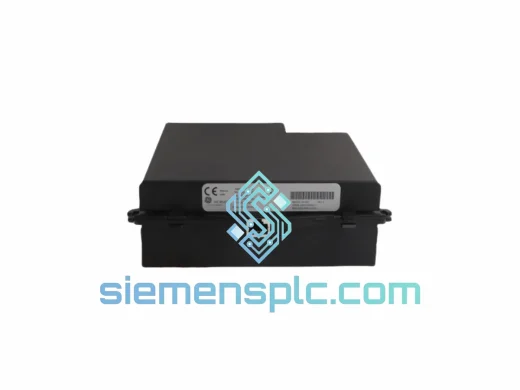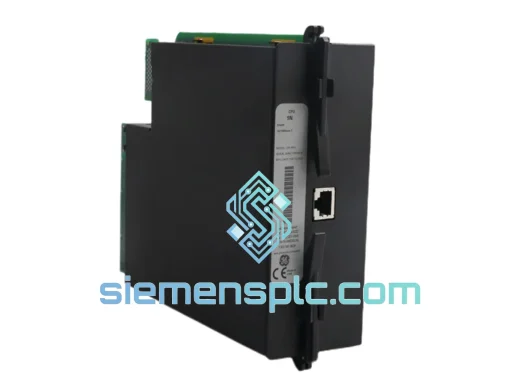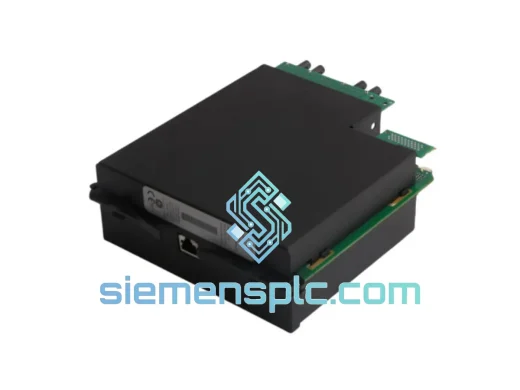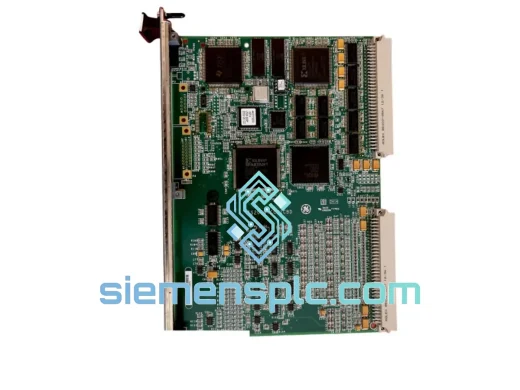
GE
RFQ Ready
GE IS200VTCCH1CBD Thermocouple Processor Board – Mark VI IS200 Series
Mark VI
Origin US
Thermocouple Processor Board
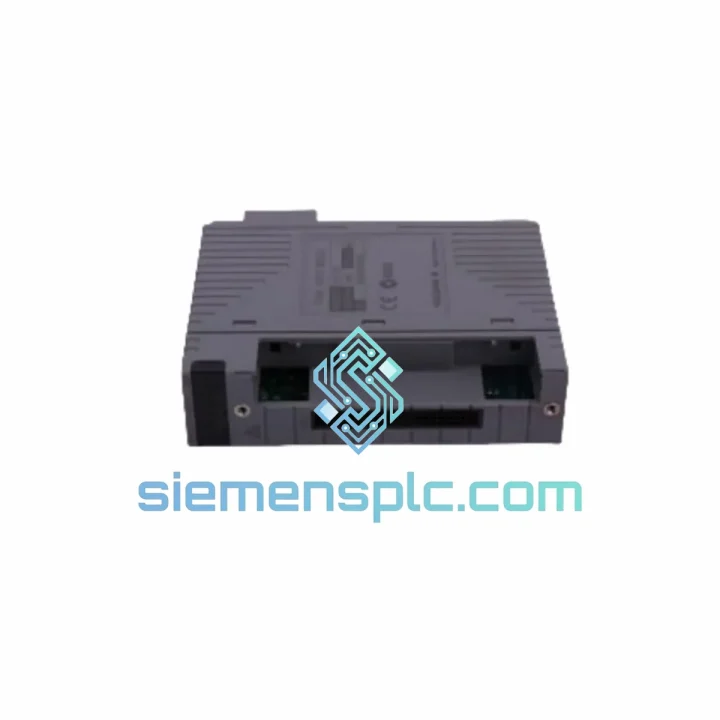
Request verified availability, condition, replacement risk review, packing options and courier lead time for CM222-0003.
Click Request Quote and the part number is inserted into the inquiry form automatically.
Core fields for model confirmation and RFQ routing. Detailed product narrative remains below.
The CM222-0003 is a dedicated automatic burner control unit within KROMSCHRÖDER’s CM222 series, designed to govern the complete ignition-to-supervision sequence for gas-fired industrial burners. In a closed-loop combustion control architecture, this module occupies the safety-critical layer between the process controller (PLC/DCS) and the physical actuators — gas valves, ignition transformers, and flame detectors. Its primary function is deterministic sequencing: it enforces a fixed, EN 298-compliant timing program that cannot be overridden by upstream logic, ensuring that fuel is never admitted without a verified ignition source and that any flame failure triggers an immediate, latched lockout within a defined safety time window.
Unlike a general-purpose relay or PLC output card, the CM222-0003 integrates the ignition transformer drive, valve output sequencing, ionization/UV flame signal conditioning, and lockout latch into a single certified unit. This architecture eliminates the risk of software misconfiguration in the safety path — the sequence is hardwired into the device’s internal logic, not programmed by the end user. For plant engineers specifying combustion safety systems, this distinction is fundamental: the CM222-0003 is a safety device, not a configurable controller.
Deployment environments include industrial steam boilers, continuous process furnaces, thermal oxidizers, paint-curing ovens, and district heating burner assemblies. In each case, the CM222-0003 interfaces directly with the burner’s gas train and provides a clean run/lockout status signal back to the supervisory system, enabling transparent fault diagnostics without requiring the PLC to interpret raw flame sensor signals.
Real-time Stock & RFQ: [email protected] | WhatsApp: +86 18359268345
| Part Number | CM222-0003 |
| Series | CM222 |
| Manufacturer | KROMSCHRÖDER (Elster Group / Honeywell) |
| Device Function | Automatic Burner Control Unit (Brennersteuerung) |
| Supply Voltage | 230 V AC, 50/60 Hz |
| Power Consumption | ≤ 10 VA (standby); ≤ 20 VA (ignition active) |
| Flame Detection Input | Ionization current (µA range) and UV photocell compatible |
| Ignition Output | High-voltage ignition transformer drive (internal relay) |
| Valve Outputs | Safety valve V1 + main valve V2 (sequenced relay outputs) |
| Safety Time (ts) | Defined per EN 298 — fuel admission window before lockout on no-flame |
| Lockout Reset | Manual reset required (front-panel button); auto-reset not permitted |
| Ambient Temperature | -20 °C to +60 °C operating |
| Protection Class | IP40 (housing); IP54 achievable with appropriate enclosure |
| Mounting | DIN rail or panel mount |
| Housing Material | Flame-retardant thermoplastic |
| Weight | 1,240 g |
| Country of Origin | Germany |
| Compliance | EN 298, CE Marking (Gas Appliance Regulation) |
| Warranty | 12 months from date of dispatch |
The CM222-0003’s internal architecture is built around a fixed-sequence relay logic engine rather than a field-programmable microcontroller, a deliberate design choice that satisfies the determinism requirements of EN 298 without introducing firmware update risk into the safety path. The sequence engine drives three primary output stages in a defined temporal order: pre-purge (if configured), ignition transformer energization, pilot valve opening, flame signal acquisition, main valve opening, and continuous supervision. Each transition is gated by a hardware timer, not a software loop, which means the safety time window is immune to CPU load variations or watchdog anomalies.
EMC Design: The unit’s input circuitry for ionization flame detection operates at signal currents in the low-microampere range, making it inherently susceptible to conducted and radiated interference from ignition transformer switching transients. KROMSCHRÖDER addresses this through differential signal conditioning on the ionization input, with internal filtering that rejects common-mode noise generated by the high-voltage ignition pulse. The result is a flame detection circuit that maintains signal integrity even when the ignition transformer is actively firing — a condition that causes false lockouts in less robustly designed units.
Lockout Latch Architecture: The lockout state is implemented as a hardware latch, not a software flag. Once the unit enters lockout — triggered by flame failure within the safety time, or by a valve proving fault — the latch can only be cleared by a deliberate manual reset action. This prevents automatic restart after a flame failure event, which is a fundamental safety requirement in gas combustion systems. The latch state is maintained even through a power cycle, ensuring that a brief supply interruption does not mask a genuine fault condition.
Valve Output Sequencing: The two valve relay outputs (V1 safety valve, V2 main valve) are sequenced with a defined inter-valve delay. V1 opens first, establishing a pilot flame that is verified by the ionization circuit before V2 is permitted to open. If the pilot flame is not confirmed within the safety time window, V1 is de-energized and the unit latches into lockout. This two-stage sequencing limits the maximum unburned gas volume that can accumulate in the combustion chamber during a failed ignition attempt, directly reducing explosion risk.
Every CM222-0003 unit dispatched from our Xiamen, China facility is sourced through verified industrial supply channels and subjected to a structured pre-shipment inspection protocol. Physical inspection confirms part number marking (CM222-0003), housing integrity, terminal block condition, and label authenticity against KROMSCHRÖDER OEM specifications. Units are individually packaged in anti-static, impact-resistant packaging with desiccant inserts to protect against humidity during international transit.
Logistics from Xiamen reach major industrial hubs efficiently: DHL Express and FedEx International Priority services provide 3–5 business day delivery to Europe, North America, Southeast Asia, and the Middle East. For project-volume orders, sea freight consolidation from Xiamen Port is available with full export documentation including commercial invoice, packing list, and certificate of origin. All shipments are covered by cargo insurance and tracked end-to-end. A 12-month warranty applies from the date of dispatch, covering manufacturing defects under normal operating conditions.
Email: [email protected]
WhatsApp: +86 18359268345
Web: siemensplc.com
Location: Xiamen, China
© 2026 siemensplc.com. All rights reserved.
We check the full part number, brand, series and visible nameplate information before quotation.
Sales confirms stock path, condition option, quantity and realistic lead time for export dispatch.
DHL, FedEx, UPS or buyer courier arrangements can be reviewed with packing requirements.
Similar brand or category products for fast comparison and multi-item RFQ lists.