GE
In Stock OK
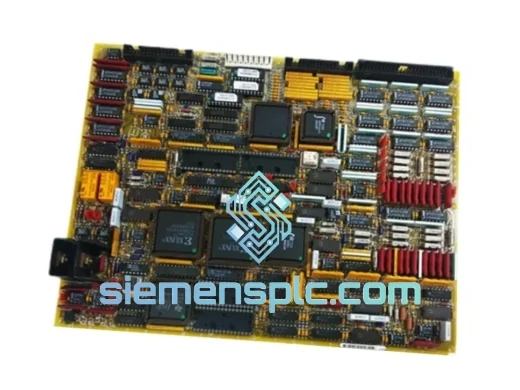
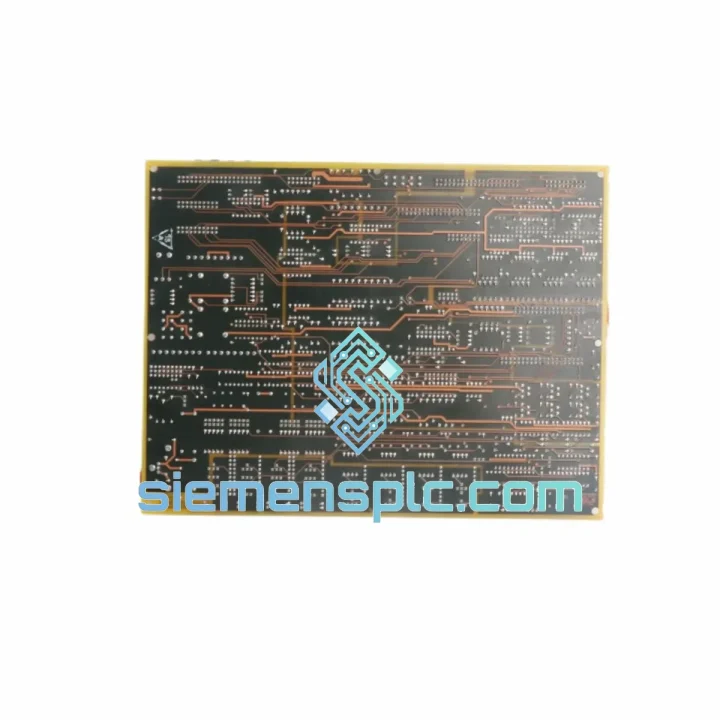
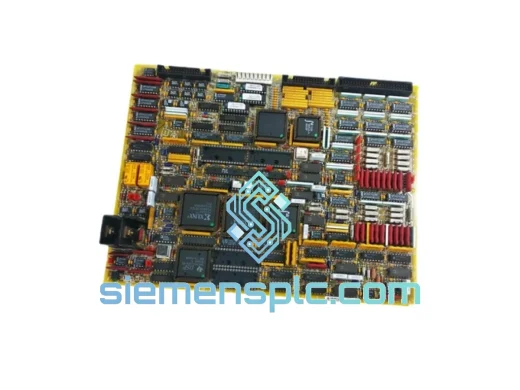
GE DS200TCCBG1BED Analog I/O Board – Mark V Turbine Control
Request verified availability, condition, replacement risk review, packing options and courier lead time for DS200TCCBG1BED.
BrandGE
Part NumberDS200TCCBG1BED
ConditionAvailability Check
Lead TimeRFQ Confirmation
DocumentsDatasheet / photos by RFQ
ShippingExport packing available
Auto-filled RFQ
DS200TCCBG1BED
Click Request Quote and the part number is inserted into the inquiry form automatically.
- Reply by email: [email protected]
- WhatsApp / Tel: +86 18359268345
- Mon-Sat 9:00-18:00 GMT+8
Procurement Data
Key Product Information
Core fields for model confirmation and RFQ routing. Detailed product narrative remains below.
- Brand
- GE
- Primary Part Number
- DS200TCCBG1BED
- Product Type
- Analog I/O Board
- Series / Family
- Mark V
- Manufacturer
- General Electric (GE)
- Country of Origin
- US
- Catalog Category
- I/O Modules
- Operating Temp.
- 0°C to +60°C (ambient, panel-mounted)
- Warranty
- 12 months — functional defect coverage with direct technical support
Model confirmed for inquiry
DS200TCCBG1BED
Send quantity, destination and urgency. The RFQ form keeps this part number attached.
Request Quote
Product Overview
GE DS200TCCBG1BED Analog I/O Board — Signal Conditioning Core of the Mark V Turbine Control Architecture
The DS200TCCBG1BED is a factory-original General Electric analog input/output board engineered for deployment within the GE Mark V Turbine Control System. Within the Mark V architecture, this board occupies a deterministic role: it receives raw analog signals from field instrumentation — thermocouples, RTDs, pressure transducers, and speed pickups — conditions those signals through precision op-amp stages, and delivers digitized process values to the Mark V’s TCCA (Turbine Control Core Assembly) via the internal VMEbus-derived backplane. The reverse path — analog output — drives actuator positioners and valve controllers with milliamp-range current loops (typically 4–20 mA), maintaining closed-loop fidelity across the full turbine operating envelope.
Unlike generic analog front-end boards, the DS200TCCBG1BED is calibrated to GE’s internal tolerance stack for the Mark V platform. Each analog channel is matched to the signal range and impedance profile expected by the TCCA processor card, which means field replacement does not require re-scaling or re-parameterization of the control application — a critical operational advantage during unplanned outages in power generation or petrochemical environments.
Real-time Stock & RFQ: [email protected] | WhatsApp: +86 18359268345
Technical Parameters
| Parameter | Specification |
|---|---|
| Part Number | DS200TCCBG1BED |
| Manufacturer | General Electric (GE) |
| Series | Mark V Turbine Control System |
| Board Function | Analog Signal Conditioning & I/O Interface |
| Analog Input Channels | Multiple differential inputs; thermocouple, RTD, and voltage-mode compatible |
| Analog Output Channels | 4–20 mA current loop outputs for actuator/valve control |
| Input Resolution | 12-bit ADC minimum; channel-matched to TCCA processing tolerance |
| Operating Voltage | +5 VDC / ±15 VDC supplied via Mark V backplane |
| Operating Temperature | 0°C to +60°C (ambient, panel-mounted) |
| Isolation | Optical isolation on field-side signal inputs |
| Backplane Interface | VMEbus-derived GE proprietary parallel bus |
| Board Dimensions | Standard Mark V 6U Eurocard form factor |
| Weight | 460 g |
| Revision Code | G1BED |
| Compatibility | GE Mark V TMR (Triple Modular Redundant) and Simplex configurations |
| Condition | Genuine OEM — new or refurbished-to-OEM-spec (specify at order) |
| Warranty | 12 months — functional defect coverage with direct technical support |
| Country of Origin | United States |
| HS Code | 8537.10 |
Hardware Logical Analysis
The DS200TCCBG1BED’s hardware design reflects GE’s engineering priorities for turbine control: deterministic signal latency, high common-mode rejection, and fault-transparent diagnostics. The following analysis covers the board’s principal design features from a hardware architecture perspective.
Optical Isolation Architecture: Field-side analog inputs are galvanically isolated from the board’s digital logic domain via optocoupler stages. In a turbine control panel environment, ground potential differences between field instruments and the control cabinet can reach several volts — particularly in large gas turbine installations where cable runs exceed 100 meters. The optical isolation barrier on the DS200TCCBG1BED prevents ground loop currents from corrupting ADC readings and protects the TCCA processor from transient overvoltage events originating at field terminals.
EMC Shielding and Layout: The board’s PCB layer stack separates analog signal planes from digital switching planes using dedicated ground pour layers. High-frequency noise generated by the backplane bus drivers is attenuated before it can couple into the precision analog front-end. Ferrite bead filtering is applied at the power entry points for the ±15 VDC analog supply rails, suppressing conducted emissions from the backplane power distribution network. This layout discipline allows the board to maintain signal integrity in environments with significant electromagnetic interference — common in turbine halls where large motors, variable frequency drives, and high-current bus bars operate in proximity to the control cabinet.
Differential Input Topology: Each analog input channel uses an instrumentation amplifier configuration with high common-mode rejection ratio (CMRR). This topology rejects noise that appears equally on both the positive and negative signal conductors — the dominant noise coupling mechanism in long shielded cable runs from thermocouples and RTDs. The differential architecture allows the board to resolve millivolt-level thermocouple signals in the presence of tens of millivolts of common-mode interference without requiring additional signal conditioning hardware at the field junction box.
Current Loop Output Drive Capability: The 4–20 mA analog output channels are implemented with voltage-to-current converter circuits capable of driving loads up to the specified compliance voltage. In turbine control applications, these outputs typically drive electro-hydraulic servo valve positioners and inlet guide vane actuators. The output stage includes short-circuit protection to prevent damage during field wiring faults — a practical consideration during commissioning and maintenance activities.
Backplane Bus Interface Timing: The DS200TCCBG1BED interfaces to the Mark V backplane using GE’s proprietary parallel bus protocol, which operates on a deterministic scan cycle synchronized to the TCCA’s control execution period. The board’s local bus interface logic latches ADC conversion results and presents them to the backplane at defined time slots, ensuring that the TCCA receives consistent, time-stamped analog data without bus contention. This deterministic data delivery is a prerequisite for the Mark V’s closed-loop turbine speed and temperature control algorithms, which require analog feedback values to be current within each 20 ms or 40 ms control frame.
System Integration Benefits
- Drop-in Replacement Compatibility: The DS200TCCBG1BED installs directly into the existing Mark V rack slot without mechanical modification. Connector pinout, board dimensions, and backplane address decoding are identical to the original factory configuration, eliminating re-engineering effort during emergency replacement.
- No Application Re-parameterization Required: Because the board is calibrated to GE OEM tolerances, the Mark V control application does not require re-scaling of analog channel engineering unit conversions after board swap. This reduces commissioning time from hours to minutes in planned maintenance windows.
- TMR Fault Tolerance Support: In Triple Modular Redundant Mark V configurations, three DS200TCCBG1BED boards operate in parallel, with the TCCA performing median-select voting on their analog outputs. A single board failure does not interrupt turbine control — the voting logic continues to operate on the two remaining healthy channels, and the faulty board can be replaced online in some configurations.
- Diagnostic Transparency: The Mark V’s built-in diagnostic software continuously monitors analog channel health. Out-of-range readings, open-circuit inputs, and ADC conversion errors are flagged in the Mark V alarm log with board-level and channel-level resolution, enabling maintenance personnel to isolate faults to the specific board and channel without oscilloscope-level troubleshooting.
- Thermocouple Cold Junction Compensation: The board supports cold junction compensation for thermocouple inputs, allowing accurate temperature measurement without external reference junction hardware. This simplifies field wiring and reduces the number of discrete components in the turbine control panel.
- Wide Signal Range Compatibility: The analog input channels accommodate multiple signal types — millivolt-range thermocouple outputs, resistance-based RTD signals (via external transmitters), and standard 1–5 V or 4–20 mA transmitter outputs — within the same board design. This flexibility reduces the number of distinct spare board types required in a plant’s spare parts inventory.
- Reduced Mean Time to Repair (MTTR): The combination of board-level fault diagnostics, drop-in mechanical compatibility, and pre-verified OEM calibration means that a trained technician can complete a DS200TCCBG1BED replacement and return the turbine to service within a single maintenance shift, compared to multi-day repair cycles for boards requiring depot-level recalibration.
- Long-term Availability from Verified Stock: GE Mark V systems remain in service at power plants and industrial facilities worldwide, many operating beyond their original design life. Maintaining a verified source for DS200TCCBG1BED boards ensures that operators can sustain these assets without forced migration to newer control platforms before they are operationally ready.
Quality Assurance & Global Logistics
Every DS200TCCBG1BED unit dispatched from our Xiamen, China facility undergoes a structured pre-shipment verification process. Visual inspection confirms that board markings, revision codes, and component population match the GE OEM reference for the G1BED revision. Electrical bench testing verifies analog channel functionality under representative load conditions. Serial numbers are logged against shipment records to maintain traceability.
Packaging follows anti-static handling protocols: boards are sealed in ESD-protective bags, placed in foam-lined rigid cartons, and labeled with handling instructions. For international shipments, commercial invoices, packing lists, and certificates of origin are prepared to support import clearance in the destination country. HS Code 8537.10 classification is applied consistently.
Logistics options from Xiamen include DHL Express (2–4 business days to most destinations), FedEx International Priority, UPS Worldwide Expedited, and sea freight consolidation for multi-unit orders. In-stock units ship within 1–3 business days of order confirmation. All shipments include tracking numbers and are covered by our 12-month warranty against functional defects.
Our technical team is available to provide pre-shipment photographs, test reports, and revision code confirmation for customers who require documentation before committing to purchase — a standard practice for regulated industries and EPC contractors managing spare parts procurement for critical assets.
Contact Information
Email: [email protected]
WhatsApp: +86 18359268345
Web: siemensplc.com
Location: Xiamen, China
© 2026 siemensplc.com. All rights reserved.
Ready to quote
[email protected]
Send This Part Number to Sales
RFQ workflow
Quality workflow ->
Confirmation Process
01Model confirmation
We check the full part number, brand, series and visible nameplate information before quotation.
02Availability reply
Sales confirms stock path, condition option, quantity and realistic lead time for export dispatch.
03Packing & courier
DHL, FedEx, UPS or buyer courier arrangements can be reviewed with packing requirements.
Continue sourcing
Browse full catalog ->
Related Automation Parts
Similar brand or category products for fast comparison and multi-item RFQ lists.
GE
RFQ Ready
GE DS200TCQCG1BKG Turbine Control Module – Mark V Series
Mark V
Origin US
Turbine Control Module
GE
RFQ Ready
GE DS200TCQBG1BCB DS215TCQBG1BZZ01A Analog I/O Board
Mark V
Origin US
PLC / DCS I/O Module