GE
RFQ Ready
GE IS200VTCCH1CBD Thermocouple Processor Board – Mark VI IS200 Series
Mark VI
Origin US
Thermocouple Processor Board
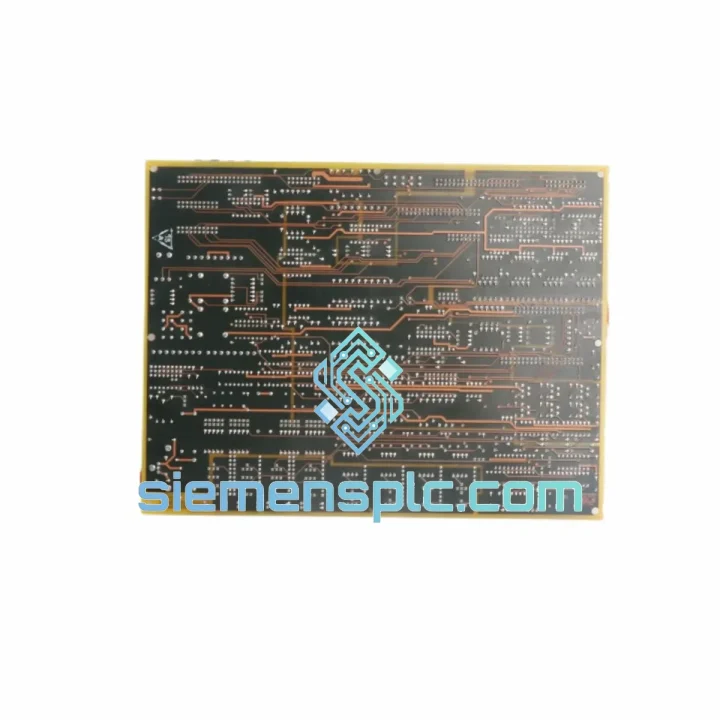
Request verified availability, condition, replacement risk review, packing options and courier lead time for DS200TCQCG1AHD.
Click Request Quote and the part number is inserted into the inquiry form automatically.
Core fields for model confirmation and RFQ routing. Detailed product narrative remains below.
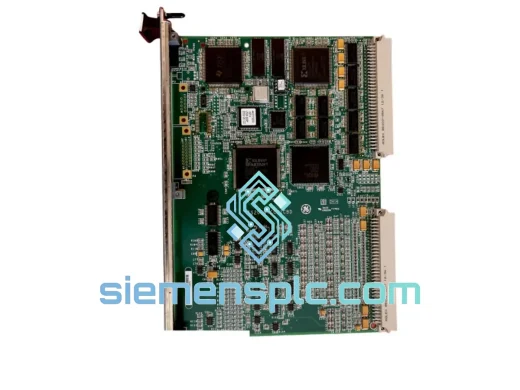
The DS200TCQCG1AHD is the central execution authority within GE’s Mark VI Turbine Control System. Designated as the QC (Quad Controller) board, it occupies the primary controller slot in the Mark VI panel and assumes full responsibility for turbine sequencing logic, speed governing PID execution, protective trip arbitration, and IONet bus mastering across all distributed I/O nodes. Every protective decision and every actuator command issued by the Mark VI panel originates from or is validated through this board before reaching field devices.
The DS200TCQCG1AHD is deployed across gas turbines in combined-cycle power plants, steam turbines in cogeneration facilities, industrial compressor trains in LNG terminals and petrochemical complexes, and marine propulsion systems requiring SIL-rated protective functions. Its operational record spans baseload generation environments with continuous duty cycles exceeding 8,000 hours per year, as well as peaking applications where rapid start-stop cycling imposes sustained thermal and electrical stress on control electronics.
Engineers specify this board both for new Mark VI panel builds and as a direct field replacement when an installed TCQC-series board reaches end-of-life, sustains field damage, or fails functional verification during scheduled maintenance. Backplane connector compatibility and ToolboxST project portability have been maintained across all production revisions, making this a reliable drop-in solution without panel rewiring or software re-engineering.
Real-time Stock & RFQ: [email protected] | WhatsApp: +86 18359268345
| Parameter | Specification |
|---|---|
| Part Number | DS200TCQCG1AHD |
| Platform | GE Mark VI Turbine Control System |
| Board Function | QC — Primary Controller / TMR Arbitration / IONet Bus Master |
| Manufacturer | General Electric (GE Energy / GE Vernova) |
| Form Factor | VME-style single-slot PCB, panel-mount |
| Backplane Bus | IONet — 100 Mbps deterministic Ethernet-derived bus |
| Peer Communication | ARCNET (inter-controller TMR voting), RS-485 auxiliary |
| Processor | Embedded real-time control processor with hardware watchdog supervision |
| Control Scan Cycle | 10–20 ms (panel-configuration dependent) |
| Hardware Trip Response | ≤ 10 ms from protective input assertion to relay de-energization |
| Operating Temperature | 0 °C to +60 °C (panel ambient) |
| Storage Temperature | −40 °C to +85 °C |
| Logic Supply Voltage | +5 VDC via backplane |
| I/O Supply Voltage | +24 VDC via backplane |
| Power Consumption | ≤ 18 W (typical operating) |
| Redundancy Modes | Simplex / Dual / TMR (Triple Modular Redundancy) |
| Safety Integrity Level | SIL 2 (Dual) / SIL 3 (TMR configuration) |
| Functional Safety Standards | IEC 61508, IEC 61511 |
| EMC Immunity — EFT/Burst | IEC 61000-4-4, 2 kV |
| EMC Immunity — Surge | IEC 61000-4-5, 1 kV L-L / 2 kV L-E |
| Backplane Connector | DIN 41612, 96-pin |
| Galvanic Isolation | 1500 V RMS (opto-isolators on all discrete I/O paths) |
| Non-Volatile Storage | Flash (application code) + Battery-backed SRAM (runtime state) |
| Engineering Toolchain | GE ToolboxST (all revisions) |
| Board Weight | 460 g |
| Warranty | 12 months from date of shipment |
IONet Deterministic Bus Mastering: The DS200TCQCG1AHD holds the IONet bus master role within the Mark VI panel. IONet is a 100 Mbps Ethernet-derived communication layer with deterministic scheduling enforced by the QC board. The master issues time-stamped polling frames to each distributed I/O node — TCDA analog boards, TCPS power supply monitors, TCEA excitation controllers, TCRA relay output boards — at fixed intervals. Standard Ethernet’s CSMA/CD collision mechanism is absent; the master-slave polling structure guarantees that every I/O node completes its data exchange within a bounded window. The resulting scan cycle carries a worst-case completion time of 10–20 ms, a hard requirement for speed governing algorithms that must respond to load transients within sub-20 ms to hold turbine speed within ±0.5% of rated setpoint.
TMR 2-of-3 Voting Architecture: In Triple Modular Redundancy configuration, three DS200TCQCG1AHD boards execute identical control algorithms concurrently. Each board reads its dedicated I/O set independently and broadcasts computed output values over the ARCNET peer bus to the other two controllers. A 2-of-3 hardware voting circuit compares the three output values before any actuator command is committed to the field. When one board’s computed output deviates beyond the configured tolerance band, the voting circuit flags that board as faulted, removes it from the active vote, and continues turbine operation on the remaining two boards without interruption. This architecture satisfies IEC 61508 SIL 3 requirements for the protective trip function and eliminates single-point failure modes in the control path.
Hardware Watchdog and Processor Supervision: An independent hardware watchdog timer operates outside the main processor’s execution context. The processor must service the watchdog register within a configurable timeout window — typically 100–500 ms. If the processor fails to do so due to firmware exception, memory access fault, or EMI-induced register corruption, the watchdog asserts a board-level fault signal on the backplane. The panel then executes a controlled handoff to the redundant controller, preventing a silent processor lockup from propagating to the field without detection.
Hardware Trip Path Independence: The protective trip output circuit is implemented in hardware, independent of the software control loop. When a hardwired protective input — overspeed, high exhaust temperature, loss of flame signal, or vibration trip — is asserted at the board’s input terminals, the trip relay de-energizes within 10 ms of signal assertion, regardless of the processor’s current scan cycle state. This hardware-enforced response time is a documented parameter in GE’s Mark VI functional safety assessment and is a primary input to SIL verification calculations under IEC 61508.
EMC Architecture and Signal Isolation: The PCB layout segments the analog signal conditioning domain from the digital processing domain using dedicated ground planes with controlled impedance crossings. All discrete I/O signal paths pass through opto-isolators rated at 1500 V RMS galvanic isolation, blocking ground loop currents that would otherwise corrupt logic-level signals in electrically noisy turbine hall environments. Transient voltage suppressors on all external-facing signal lines clamp inductive switching transients — generated by solenoid valves, contactors, and motor starters — to within the input protection threshold of the receiving circuitry.
Non-Volatile Memory and State Retention: Control application code and panel configuration data reside in flash memory, ensuring the board restores its programmed logic on power-up without requiring a ToolboxST download. Battery-backed SRAM preserves runtime state variables — accumulated operating hours, fault event logs, PID tuning parameters, and setpoint tables — across both planned shutdowns and unplanned power interruptions. This state retention eliminates the re-initialization delay that would otherwise extend restart time after a panel power loss.
Each DS200TCQCG1AHD unit dispatched from our Xiamen, China facility passes a structured pre-shipment verification protocol before release. Visual inspection covers PCB surface condition, solder joint integrity, connector pin alignment, component seating, and label authenticity cross-referenced against GE OEM documentation. Functional verification includes power-on sequencing confirmation, backplane communication handshake validation, watchdog timer response testing, and firmware revision recording. A test report documenting all verification results accompanies each shipment.
Units are sourced from decommissioned plant upgrade programs, GE-authorized surplus channels, and certified industrial electronics refurbishment facilities operating under documented quality management systems. Sourcing records are retained and available for customer review. Packaging conforms to IEC 61340-5-1 ESD protection requirements: anti-static shielding bag, conductive foam insert, and double-wall corrugated carton with corner protection rated for international air freight handling.
Standard international shipments are dispatched via DHL Express, FedEx International Priority, or UPS Worldwide Expedited, with typical transit times of 3–7 business days to Europe, North America, Southeast Asia, and the Middle East. Sea freight consolidation is available for multi-unit orders. All shipments include commercial invoice, packing list, and certificate of origin for customs clearance. Emergency plant-shutdown expedite services with same-day dispatch are available for orders confirmed before 14:00 CST. Our Xiamen location provides direct access to Xiamen Gaoqi International Airport and Xiamen Port, two of China’s primary international freight hubs.
Email: [email protected]
WhatsApp: +86 18359268345
Web: siemensplc.com
Location: Xiamen, China
© 2026 siemensplc.com. All rights reserved.
We check the full part number, brand, series and visible nameplate information before quotation.
Sales confirms stock path, condition option, quantity and realistic lead time for export dispatch.
DHL, FedEx, UPS or buyer courier arrangements can be reviewed with packing requirements.
Similar brand or category products for fast comparison and multi-item RFQ lists.