GE
In Stock OK
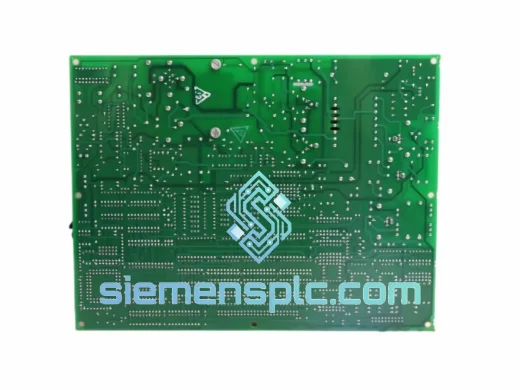
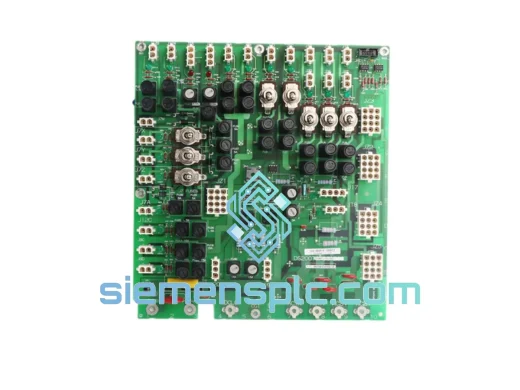
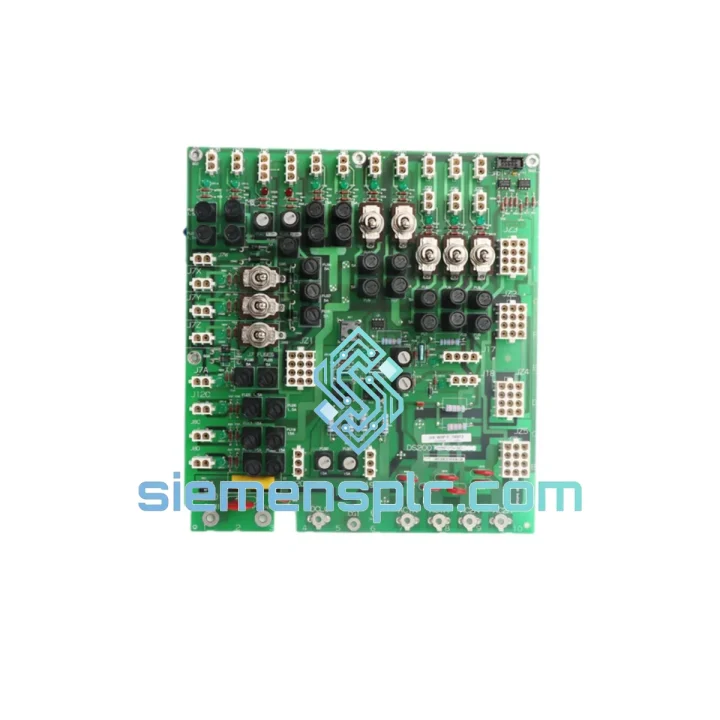
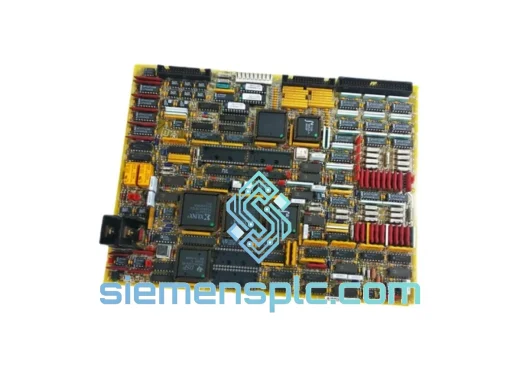
GE DS200TCQCG1BKG Turbine Control Module – Mark V Series
Request verified availability, condition, replacement risk review, packing options and courier lead time for DS200TCQCG1BKG.
BrandGE
Part NumberDS200TCQCG1BKG
ConditionAvailability Check
Lead TimeRFQ Confirmation
DocumentsDatasheet / photos by RFQ
ShippingExport packing available
Auto-filled RFQ
DS200TCQCG1BKG
Click Request Quote and the part number is inserted into the inquiry form automatically.
- Reply by email: [email protected]
- WhatsApp / Tel: +86 18359268345
- Mon-Sat 9:00-18:00 GMT+8
Procurement Data
Key Product Information
Core fields for model confirmation and RFQ routing. Detailed product narrative remains below.
- Brand
- GE
- Primary Part Number
- DS200TCQCG1BKG
- Product Type
- Turbine Control Module
- Series / Family
- Mark V
- Manufacturer
- General Electric (GE)
- Country of Origin
- US
- Catalog Category
- I/O Modules
- Operating Temp.
- 0 °C to +60 °C
- Warranty
- 12 months — functional failure under normal operating conditions
Model confirmed for inquiry
DS200TCQCG1BKG
Send quantity, destination and urgency. The RFQ form keeps this part number attached.
Request Quote
Product Overview
GE DS200TCQCG1BKG — TCQC I/O & Communication Module in the Mark V Turbine Control Architecture
The DS200TCQCG1BKG occupies the TCQC slot within the GE Mark V Turbine Control System, functioning as the primary I/O arbitration and serial communication bridge between field-wired terminal boards and the Mark V’s TMR (Triple Modular Redundant) voting processors. In a standard Mark V panel, three TCQC-class boards operate in parallel — each independently sampling analog and discrete field signals, then forwarding digitized data across the IONET backplane to the R, S, and T processor boards for majority-vote arbitration. The DS200TCQCG1BKG’s hardware revision suffix (G1BKG) identifies a specific gate-array and firmware build that governs its analog input conditioning range, serial baud-rate configuration, and watchdog timer parameters. Substituting an incorrect revision can introduce subtle timing mismatches in the TMR voting window, making exact revision matching a non-negotiable requirement during replacement.
In the control loop hierarchy, this module sits at the boundary between the physical process and the deterministic control domain. Field signals — thermocouple inputs from exhaust thermocouples, 4–20 mA transmitters from fuel control valves, and discrete contact inputs from vibration switches — enter through the companion TCEA terminal board and are routed to the DS200TCQCG1BKG for signal conditioning, analog-to-digital conversion, and noise filtering before being serialized onto the IONET bus. The module’s onboard A/D converters operate at a fixed scan rate synchronized to the Mark V’s 10 ms control frame, ensuring that every processor board receives a consistent, time-stamped snapshot of field conditions within each control cycle. Any degradation in this module — whether from capacitor aging, connector oxidation, or EPROM bit-rot — directly compromises the integrity of the TMR voting data and can trigger spurious protective trips or, more critically, mask genuine fault conditions.
The physical architecture of the DS200TCQCG1BKG centers on a multi-layer PCB populated with a GE-proprietary gate array (FPGA-predecessor ASIC), a bank of precision instrumentation amplifiers for thermocouple cold-junction compensation, and a dual-port serial transceiver for IONET communication. The gate array implements the module’s scan sequencer, interrupt controller, and watchdog logic in hardware — not firmware — which means its deterministic behavior is immune to software stack corruption. The EPROM stores calibration coefficients and the module’s identity parameters; GE’s Mark V diagnostic software reads these coefficients at panel startup to validate module authenticity and calibration status. Boards with corrupted or mismatched EPROM content will fail the panel’s self-test sequence and prevent turbine startup.
Real-time Stock & RFQ: [email protected] | WhatsApp: +86 18359268345
Technical Parameters
| Parameter | Value |
|---|---|
| Part Number | DS200TCQCG1BKG |
| Manufacturer | General Electric (GE) |
| Series | Mark V Turbine Control System |
| Module Designation | TCQC — Turbine Control I/O & Communication Card |
| Hardware Revision | G1BKG |
| Form Factor | Single-width PCB card, Mark V rack-mount |
| Supply Voltage | +5 VDC logic rail / ±15 VDC analog rail (rack-supplied) |
| Analog Input Channels | Up to 16 differential analog inputs (thermocouple / 4–20 mA configurable) |
| Discrete I/O | Contact input and relay output via TCEA terminal board interface |
| A/D Resolution | 12-bit successive-approximation ADC |
| Control Scan Rate | 10 ms frame (synchronized to Mark V system clock) |
| Communication Bus | GE IONET serial backplane (proprietary RS-485 derivative) |
| Onboard Logic | GE-proprietary gate array (ASIC) — scan sequencer, watchdog, interrupt controller |
| EPROM | Calibration coefficients, module identity, firmware revision parameters |
| Operating Temperature | 0 °C to +60 °C |
| Relative Humidity | 5% to 95% non-condensing |
| PCB Dimensions | Standard Mark V card form factor (approx. 330 mm × 220 mm) |
| Weight | 980 g |
| Compatibility | GE Mark V TMR and Simplex panel configurations |
| Companion Terminal Board | DS200TCEAG1B (TCEA) |
| Warranty | 12 months — functional failure under normal operating conditions |
Hardware Logical Analysis
The DS200TCQCG1BKG’s EMC design reflects the operating environment of a gas turbine control enclosure, where high-energy ignition systems, variable-frequency drives, and large motor contactors generate broadband conducted and radiated interference across the 150 kHz–30 MHz range. GE addressed this through three hardware-level mechanisms on this board:
Differential Input Architecture: All analog field signals enter through instrumentation amplifiers configured for high common-mode rejection (CMRR typically >80 dB at 50/60 Hz). This topology rejects ground-loop noise induced by the long cable runs common in turbine enclosures, where thermocouple leads may span 30–50 meters between the exhaust plenum and the control panel.
Optical Isolation Boundary: The discrete I/O section employs optocoupler isolation between the field-voltage domain (typically 24 VDC or 125 VDC) and the module’s 5 V logic domain. This galvanic barrier prevents transient energy from field-side switching events — relay coil collapse, solenoid de-energization — from coupling into the ADC reference rail and corrupting analog measurements taken within the same scan frame.
Gate Array Watchdog Architecture: The onboard ASIC implements a hardware watchdog independent of the module’s serial communication path. If the IONET bus master fails to service the watchdog within a configurable timeout window (typically 100–200 ms), the gate array forces the module’s outputs to a defined safe state and asserts a fault flag on the backplane. This design ensures that a communication failure between the TCQC module and the processor boards does not leave field outputs in an indeterminate state — a critical requirement for turbine protection systems where output ambiguity can result in uncontrolled acceleration or failure to trip.
Backplane Signal Integrity: The IONET interface uses differential signaling with controlled impedance traces on the PCB edge connector. The G1BKG revision incorporates termination resistors matched to the Mark V backplane’s characteristic impedance, reducing reflections that could cause data framing errors at the 1 Mbps IONET baud rate. Earlier revisions without this termination are more susceptible to communication errors in panels with long backplane runs or degraded connector contacts.
System Integration Benefits
- TMR Voting Integrity: Operating as one of three redundant TCQC boards, the DS200TCQCG1BKG feeds independent, time-stamped I/O data to each of the Mark V’s R, S, and T processors. The TMR architecture requires all three data streams to be present and within tolerance for the voting algorithm to produce a valid control output — a failed or missing TCQC board immediately degrades the system from TMR to simplex operation, eliminating fault tolerance.
- Deterministic 10 ms Control Frame: The module’s scan sequencer is hardware-clocked, not software-polled, ensuring that analog samples are acquired at a fixed phase relationship to the Mark V system clock. This determinism is essential for turbine speed control loops, where jitter in the speed signal sample time directly translates to governor instability at low-load operating points.
- Diagnostic Transparency: The module continuously reports its self-test status — ADC reference voltage, EPROM checksum, watchdog state, and IONET communication error count — to the Mark V’s diagnostic display (CIMPLICITY or legacy display). Maintenance engineers can identify a degrading TCQC board before it causes a trip, enabling planned replacement during a scheduled outage rather than an emergency shutdown.
- Cold-Junction Compensation Accuracy: Onboard precision thermistors measure the PCB ambient temperature at the thermocouple terminal reference junction. The gate array applies the compensation coefficient stored in EPROM to correct the raw thermocouple millivolt reading, maintaining exhaust temperature measurement accuracy to ±2 °C across the panel’s operating temperature range — a specification that directly affects turbine firing temperature control and emissions compliance.
- Firmware Revision Traceability: The EPROM revision code is readable by GE’s Mark V toolset (DIGS, Toolbox) and is logged in the panel’s configuration record. This traceability allows maintenance teams to verify that a replacement board matches the panel’s validated configuration baseline, a requirement under IEC 61511 management-of-change procedures for safety-instrumented systems.
- Backward Compatibility within Mark V Generations: The G1BKG revision is compatible with Mark V panels manufactured from the early 1990s through the final production run. It interfaces correctly with both the original TCEA terminal board and later TCDA variants, provided the panel’s I/O configuration file (IOC) is not modified — a significant advantage when sourcing replacement boards for panels where the original configuration documentation is incomplete.
- Reduced Mean Time to Repair (MTTR): Because the DS200TCQCG1BKG is a self-contained, rack-extractable card with no field wiring directly attached (all field connections terminate on the TCEA board), replacement requires only card extraction, insertion, and a panel restart sequence — typically achievable in under 30 minutes by a trained technician, compared to hours for a wired terminal board replacement.
- Long-term Lifecycle Support: GE discontinued the Mark V product line, but the installed base of Mark V-controlled turbines globally exceeds several thousand units, many with remaining operational lives of 10–20 years. Maintaining a tested DS200TCQCG1BKG spare eliminates dependency on OEM new-build lead times (historically 16–26 weeks for legacy boards) and provides a documented, warranted alternative for lifecycle extension programs.
Quality Assurance & Global Logistics
Every DS200TCQCG1BKG unit dispatched from our Xiamen, China facility passes through a structured verification protocol before packaging:
- Visual Inspection: PCB surface examined under 10× magnification for solder joint integrity, capacitor condition, connector pin straightness, and absence of corrosion or mechanical damage to the gate array and EPROM packages.
- Powered Functional Test: Module energized in a Mark V-compatible rack simulator. IONET communication, ADC conversion accuracy across all channels, watchdog timer operation, and EPROM checksum are verified against GE reference parameters.
- EPROM Revision Verification: Firmware revision code read and recorded. Units are matched to customer-specified revision requirements on request — critical for panels where the Mark V toolset enforces revision consistency across all three TCQC slots.
- ESD-Safe Packaging: Board sealed in a conductive anti-static bag, cushioned with 25 mm closed-cell foam, and enclosed in a double-wall corrugated carton rated for international air freight handling. Moisture-barrier desiccant included for sea freight shipments.
- Documentation Package: Each shipment includes a functional test certificate, commercial invoice, packing list, certificate of origin (China), and HS code 8537.10 export documentation for customs clearance in all major import jurisdictions.
- 12-Month Warranty: Covers functional failure under normal Mark V operating conditions. RMA initiated within 2 business days of fault report; replacement unit dispatched within 5 business days of RMA approval.
Logistics from Xiamen: DHL Express (3–5 business days to Europe/Americas), FedEx International Priority (2–4 business days to North America), and sea freight consolidation for multi-unit orders. Emergency same-day dispatch available for in-stock units when order is confirmed before 14:00 CST.
Contact Information
Email: [email protected]
WhatsApp: +86 18359268345
Web: siemensplc.com
Location: Xiamen, China
© 2026 siemensplc.com. All rights reserved.
Ready to quote
[email protected]
Send This Part Number to Sales
RFQ workflow
Quality workflow ->
Confirmation Process
01Model confirmation
We check the full part number, brand, series and visible nameplate information before quotation.
02Availability reply
Sales confirms stock path, condition option, quantity and realistic lead time for export dispatch.
03Packing & courier
DHL, FedEx, UPS or buyer courier arrangements can be reviewed with packing requirements.
Continue sourcing
Browse full catalog ->
Related Automation Parts
Similar brand or category products for fast comparison and multi-item RFQ lists.
GE
RFQ Ready
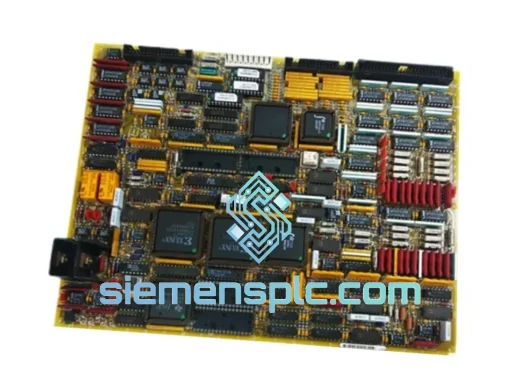
GE DS200TCQBG1BCB DS215TCQBG1BZZ01A Analog I/O Board
Mark V
Origin US
PLC / DCS I/O Module