
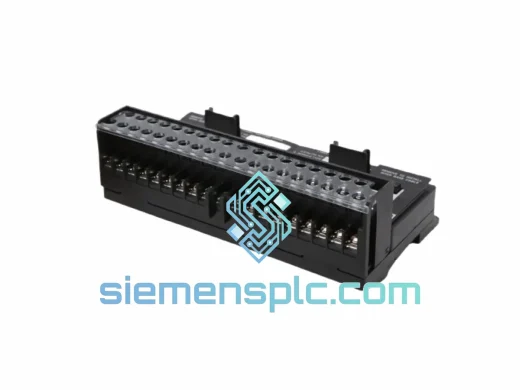
GE
In Stock OK
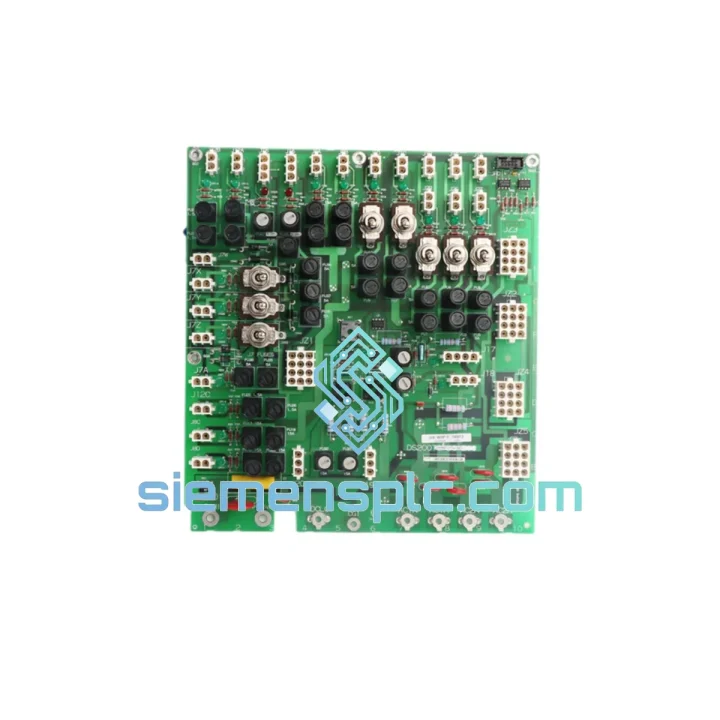
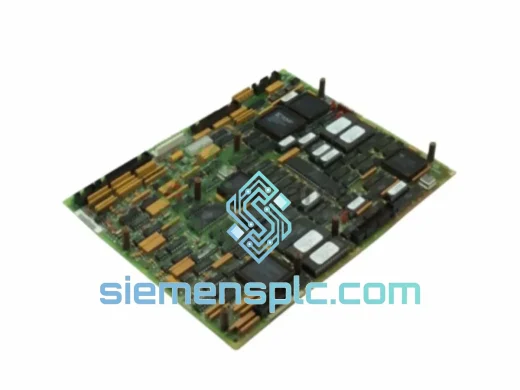
GE DS200TCQCG1RJD Drive Control Board – Mark V EX2100
Request verified availability, condition, replacement risk review, packing options and courier lead time for DS200TCQCG1RJD.
BrandGE
Part NumberDS200TCQCG1RJD
ConditionAvailability Check
Lead TimeRFQ Confirmation
DocumentsDatasheet / photos by RFQ
ShippingExport packing available
Auto-filled RFQ
DS200TCQCG1RJD
Click Request Quote and the part number is inserted into the inquiry form automatically.
- Reply by email: [email protected]
- WhatsApp / Tel: +86 18359268345
- Mon-Sat 9:00-18:00 GMT+8
Procurement Data
Key Product Information
Core fields for model confirmation and RFQ routing. Detailed product narrative remains below.
- Brand
- GE
- Primary Part Number
- DS200TCQCG1RJD
- Product Type
- Drive Control Board
- Series / Family
- Mark V
- Manufacturer
- General Electric (GE)
- Country of Origin
- US
- Catalog Category
- Motor Drives
- Operating Temp.
- 0 °C to +60 °C (ambient, forced-air cooled enclosure)
- Humidity
- 5% to 95% RH, non-condensing
- Warranty
- 12 months from date of shipment
- Compliance
- CE, RoHS (verify against current GE datasheet revision)
Model confirmed for inquiry
DS200TCQCG1RJD
Send quantity, destination and urgency. The RFQ form keeps this part number attached.
Request Quote
Product Overview
GE DS200TCQCG1RJD: Drive Control Board Architecture and Role in Closed-Loop Turbine Excitation Systems
The DS200TCQCG1RJD is a printed circuit board assembly manufactured by General Electric, deployed within the Mark V Turbine Control System and the EX2100 Static Excitation Control System. Its primary function is to serve as the interface and signal-conditioning layer between the high-voltage excitation bus and the digital control processors that govern generator field current regulation. Within the Mark V architecture, this board occupies a defined slot in the TCQC card cage and communicates with the serial backplane at a fixed baud rate, forwarding digitized analog measurements — including field voltage feedback, thyristor firing angle data, and thermal sensor inputs — to the , , and redundant processor boards for voting arbitration.
The board’s role is not passive signal routing. It performs local analog-to-digital conversion at 12-bit resolution for up to eight differential input channels, applies hardware-level scaling via precision resistor networks, and drives optocoupler-isolated gate pulse outputs to the thyristor firing circuits. This local processing offloads latency-sensitive tasks from the main CPU, ensuring that gate pulse timing jitter remains within the ±2 µs window required for stable thyristor commutation at 50/60 Hz grid frequencies. In EX2100 deployments, the board interfaces with the GE DSPX digital signal processor card via a dedicated high-speed parallel bus, enabling sub-millisecond excitation response to transient load events.
Real-time Stock & RFQ: [email protected] | WhatsApp: +86 18359268345
Technical Parameters
| Part Number | DS200TCQCG1RJD |
| Manufacturer | General Electric (GE) |
| Series | Mark V Turbine Control / EX2100 Excitation Control |
| Form Factor | Single-slot PCB assembly, card-cage mount |
| Analog Input Channels | Up to 8 differential channels, 12-bit ADC resolution |
| Input Voltage Range | ±10 V DC (differential), configurable via on-board jumpers |
| Isolation Voltage | 1500 V RMS (optocoupler stage, field-to-logic) |
| Gate Pulse Output | Thyristor firing pulse, TTL-compatible, ±2 µs timing accuracy |
| Backplane Interface | IONET serial bus, Mark V card-cage standard |
| Operating Temperature | 0 °C to +60 °C (ambient, forced-air cooled enclosure) |
| Storage Temperature | -40 °C to +85 °C |
| Humidity | 5% to 95% RH, non-condensing |
| Power Supply | +5 V DC, +15 V DC, -15 V DC (from card-cage backplane) |
| Board Weight | Approx. 980 g |
| Compliance | CE, RoHS (verify against current GE datasheet revision) |
| Warranty | 12 months from date of shipment |
| Condition | Genuine OEM, new or tested-surplus |
Hardware Logical Analysis
The DS200TCQCG1RJD implements a multi-stage signal chain that begins at the field terminal block and terminates at the IONET backplane driver. Understanding each stage is essential for fault isolation and replacement validation.
Optocoupler Isolation Stage: All analog inputs pass through a dual-stage optocoupler barrier rated at 1500 V RMS continuous isolation. GE selected high-linearity optocouplers with a current transfer ratio (CTR) tolerance of ±5% across the operating temperature range, which is tighter than the ±15% typical of general-purpose isolators. This ensures that the ADC sees a consistent input impedance regardless of field-side ground potential shifts — a common failure mode in thyristor-based excitation systems where ground loops can introduce 50–200 mV of common-mode noise.
EMC Design: The board uses a four-layer PCB stack-up with dedicated ground planes on layers 2 and 3, separating the analog signal layer (layer 1) from the digital logic layer (layer 4). Decoupling capacitors (100 nF X7R ceramic, 10 µF tantalum) are placed within 3 mm of each IC power pin. Ferrite beads (impedance ≥600 Ω at 100 MHz) are inserted on all inter-stage signal lines crossing the isolation boundary. This layout achieves conducted emissions compliance to EN 55011 Class A without external filtering modules.
Thyristor Gate Pulse Logic: The firing angle computation is performed upstream by the Mark V processor, but the DS200TCQCG1RJD executes the final pulse shaping. A monostable multivibrator circuit generates a fixed-width gate pulse (typically 100–200 µs, configurable via firmware parameter) synchronized to the zero-crossing detector output. The zero-crossing detector uses a precision comparator with 5 mV hysteresis to suppress false triggering from grid-side harmonic distortion up to the 13th harmonic.
Thermal Management: The board includes two NTC thermistor inputs for monitoring the thyristor heat sink temperature. These inputs feed directly into the ADC without additional buffering, and the raw counts are transmitted to the Mark V processor for over-temperature trip logic. The thermistor interface is calibrated for 10 kΩ NTC sensors with a B-constant of 3950 K, which is the GE standard for EX2100 thyristor assemblies.
System Integration Benefits
- Drop-in Revision Compatibility: The “RJD” hardware revision is the latest production release for this board family. It incorporates all field modification instructions (FMIs) issued by GE up to the board’s end-of-production date, eliminating the need for post-installation hardware rework.
- Deterministic Backplane Latency: IONET communication is time-division multiplexed with a fixed 10 ms frame period. The DS200TCQCG1RJD’s backplane driver guarantees data delivery within one frame, providing the Mark V processor with a worst-case measurement latency of 10 ms — sufficient for the 20 ms excitation control loop cycle time.
- Redundancy Arbitration Support: In TMR (Triple Modular Redundancy) Mark V configurations, three DS200TCQCG1RJD boards operate in parallel. Each board independently digitizes the same analog inputs, and the Mark V voter logic selects the median value. A single board failure does not interrupt excitation control — the system flags the fault and continues operating on the two remaining boards.
- Diagnostic Transparency: The board drives a set of LED indicators visible through the card-cage front panel: green for power-good, amber for communication activity, and red for ADC over-range or isolation fault. These hardware indicators allow field technicians to localize faults without connecting a diagnostic terminal.
- Firmware-Independent Operation: The analog front-end and gate pulse circuits operate independently of the Mark V firmware version. This means the board can be replaced without a firmware upgrade cycle, reducing planned maintenance downtime from hours to minutes.
- Wide Input Common-Mode Range: The differential input stage tolerates ±200 V common-mode voltage at the field terminals, accommodating the ground potential differences typical in large generator installations where the control room and the excitation cubicle may be separated by 50–100 meters of cable.
- Conformal Coating: GE applies a Class AR acrylic conformal coating to the board surface, providing protection against condensation, dust, and mild chemical contamination. This extends board service life in environments where the card-cage door is opened frequently for maintenance access.
- Standardized Connector Interface: The board uses GE’s standard DIN 41612 96-pin connector for backplane mating, ensuring mechanical interchangeability with all Mark V card-cage variants without adapter hardware.
Quality Assurance & Global Logistics
Every DS200TCQCG1RJD unit dispatched from our Xiamen, China facility undergoes a structured pre-shipment verification process. Visual inspection covers solder joint integrity, component seating, connector pin condition, and conformal coating coverage. Functional verification is performed on a GE-compatible card-cage test fixture that replicates the IONET backplane signals and applies calibrated analog inputs to each channel, confirming ADC linearity within ±0.5% of full scale. Gate pulse output timing is verified against a calibrated oscilloscope reference. Units that do not meet these criteria are quarantined and not shipped.
Packaging follows IEC 61340-5-1 ESD protection requirements: boards are sealed in anti-static poly bags with desiccant packs and humidity indicator cards, then placed in foam-lined rigid cartons. Outer cartons are labeled with part number, serial number, and test date for full traceability.
From Xiamen, we dispatch via DHL Express, FedEx International Priority, and UPS Worldwide Express. Transit times to major industrial hubs: Europe 3–5 business days, North America 4–6 business days, Southeast Asia 2–3 business days. All shipments include commercial invoice, packing list, and certificate of origin. For orders requiring export license documentation or end-user certificates, our logistics team provides full support.
A 12-month warranty covers manufacturing defects and functional failures under normal operating conditions. Warranty claims are processed within 5 business days of receipt of the returned unit.
Contact Information
Email: [email protected]
WhatsApp: +86 18359268345
Web: siemensplc.com
Location: Xiamen, China
© 2026 siemensplc.com. All rights reserved.
Ready to quote
[email protected]
Send This Part Number to Sales
RFQ workflow
Quality workflow ->
Confirmation Process
01Model confirmation
We check the full part number, brand, series and visible nameplate information before quotation.
02Availability reply
Sales confirms stock path, condition option, quantity and realistic lead time for export dispatch.
03Packing & courier
DHL, FedEx, UPS or buyer courier arrangements can be reviewed with packing requirements.
Continue sourcing
Browse full catalog ->
Related Automation Parts
Similar brand or category products for fast comparison and multi-item RFQ lists.
GE
RFQ Ready
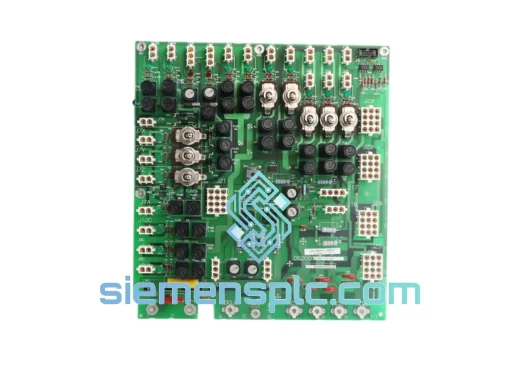
GE DS200SDCCG5AHD Drive Control Board – Mark V Series
Mark V
Origin US
Drive Control Board
GE
RFQ Ready
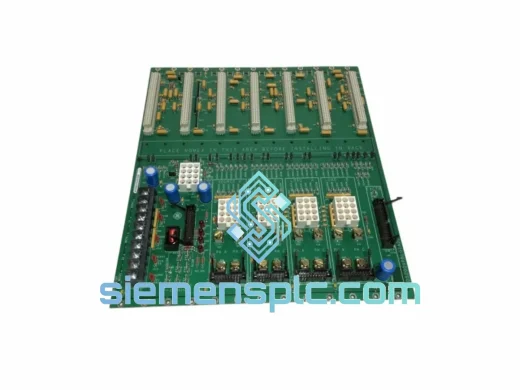
GE DS200SDCCG5RHD Drive Control Board – Mark V Speedtronic
Mark V
Origin US
Drive Control Board