
GE
In Stock OK
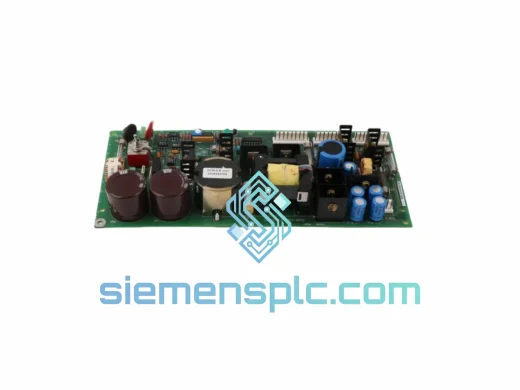
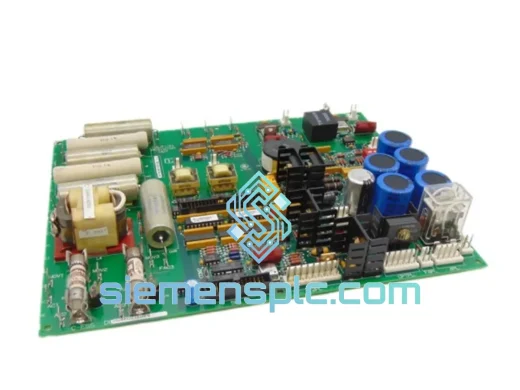
GE DS200TCRAG1AAA Power Supply Board – Mark V Speedtronic
Request verified availability, condition, replacement risk review, packing options and courier lead time for DS200TCRAG1AAA.
BrandGE
Part NumberDS200TCRAG1AAA
ConditionAvailability Check
Lead TimeRFQ Confirmation
DocumentsDatasheet / photos by RFQ
ShippingExport packing available
Auto-filled RFQ
DS200TCRAG1AAA
Click Request Quote and the part number is inserted into the inquiry form automatically.
- Reply by email: [email protected]
- WhatsApp / Tel: +86 18359268345
- Mon-Sat 9:00-18:00 GMT+8
Procurement Data
Key Product Information
Core fields for model confirmation and RFQ routing. Detailed product narrative remains below.
- Brand
- GE
- Primary Part Number
- DS200TCRAG1AAA
- Product Type
- Power Supply Board
- Series / Family
- Mark V
- Manufacturer
- General Electric (GE)
- Country of Origin
- US
- Catalog Category
- Power Supplies
- Operating Temp.
- 0°C to +60°C (panel ambient)
- Warranty
- 12 months against defects in materials and workmanship
Model confirmed for inquiry
DS200TCRAG1AAA
Send quantity, destination and urgency. The RFQ form keeps this part number attached.
Request Quote
Product Overview
GE DS200TCRAG1AAA — Regulated DC Power Distribution at the Core of Mark V Turbine Control
In a GE Mark V Speedtronic turbine control system, every processor card, I/O board, and communication module depends on one thing: a stable, clean, regulated DC power rail. The DS200TCRAG1AAA is the Power Supply Board (TCRA) that delivers exactly that. It sits at the electrical foundation of the Mark V controller rack, converting incoming AC or DC plant power into the multiple regulated DC voltages required by the TCCA, TCDA, TCQA, and TCEA processor assemblies. When this board degrades — through capacitor aging, connector oxidation, or fuse failure — the entire control core becomes unreliable. Voltage ripple on the logic rails causes intermittent processor faults. Undervoltage conditions trigger spurious trips. In a baseload gas turbine running at full capacity, that is not a maintenance event. It is a forced outage.
The DS200TCRAG1AAA is a rack-mount PCB assembly engineered specifically for the Mark V platform. It is not a generic industrial power supply adapted for turbine use — it is a purpose-built board designed to meet the electrical architecture of the Mark V backplane, with output rails matched to the voltage and current demands of each downstream card slot. Understanding its internal design logic is essential for any maintenance engineer responsible for Mark V system availability.
URGENT REQUIREMENT? Contact: [email protected] | WhatsApp: +86 18359268345
Technical Parameters
| Part Number | DS200TCRAG1AAA |
| Manufacturer | General Electric (GE) |
| Series | Mark V Speedtronic Turbine Control |
| Board Function | Regulated DC Power Distribution to Mark V Controller Core |
| Board Designation | TCRA (Turbine Control Regulator Assembly) |
| Form Factor | Rack-mount PCB assembly, single-slot |
| Output Rails | +5 VDC, ±15 VDC, +24 VDC (nominal; confirmed per panel revision) |
| Input Voltage | 125 VDC plant battery bus (typical Mark V configuration) |
| Compatible Racks | TCCA, TCDA, TCQA, TCEA — Mark V P, R, and S panel types |
| Isolation | DC-DC isolated conversion; logic rails isolated from plant bus |
| Protection | Overcurrent fusing per output rail; thermal shutdown |
| Operating Temperature | 0°C to +60°C (panel ambient) |
| Weight | 1,240 g |
| Condition | Original GE — New Surplus / Refurbished & Tested |
| Stock Status | ✅ Ready to Ship from Xiamen, China |
| Warranty | 12 months against defects in materials and workmanship |
Hardware Logical Analysis
The DS200TCRAG1AAA operates on a DC-DC isolated conversion topology. The 125 VDC plant battery bus — standard in GE Mark V installations — is stepped down and regulated through a switching converter stage before being distributed across multiple isolated output rails. This isolation is not incidental; it is a deliberate design choice that prevents ground loops between the plant electrical system and the sensitive logic circuitry of the TCCA processor cards.
Multi-Rail Output Architecture: The TCRA board generates at minimum three distinct regulated rails: +5 VDC for digital logic ICs, ±15 VDC for analog signal conditioning circuits on I/O boards, and +24 VDC for discrete output drivers and relay coils. Each rail is independently regulated and fused. A fault on the +24 VDC rail — caused by a shorted output relay coil, for example — will blow the corresponding fuse without collapsing the +5 VDC logic rail. This rail independence is critical for fault containment in a TMR (Triple Modular Redundancy) Mark V architecture, where a single power fault must not propagate to all three voting channels.
EMC Design Considerations: The switching frequency of the DC-DC converter is selected to avoid interference with the Mark V’s serial communication buses (ARCNET at 2.5 Mbps) and the analog input sampling rates of the TCQA card. Input filtering on the 125 VDC bus suppresses conducted emissions from the plant battery charger. Output filtering on each rail maintains voltage ripple within the tolerance band required by the downstream logic ICs — typically less than 50 mV peak-to-peak on the +5 VDC rail.
Thermal Management: The board uses a combination of copper pour ground planes and component placement optimization to distribute heat across the PCB surface. In a properly ventilated Mark V panel with forced-air cooling, the TCRA board operates well within its thermal envelope. Failures attributed to thermal stress are almost always traceable to blocked panel air filters or failed cooling fans — not to the board itself. When replacing a failed TCRA, always inspect the panel cooling system before returning to service.
Common Failure Modes: Field data from Mark V installations identifies three primary TCRA failure mechanisms. First, electrolytic capacitor degradation on the output filter stage — capacitors age under continuous thermal cycling, increasing ESR and allowing voltage ripple to exceed logic tolerances. Second, connector oxidation on the backplane edge connector — particularly in coastal or high-humidity environments — increases contact resistance and causes intermittent voltage drops. Third, fuse failure due to downstream overcurrent events — a shorted I/O board or relay driver can blow a TCRA output fuse, which is often misdiagnosed as a processor card fault.
System Integration Benefits
- Direct Backplane Compatibility: The DS200TCRAG1AAA is designed to the Mark V backplane connector specification. No adapter, signal conditioning, or firmware modification is required for installation in a compatible rack slot.
- Rail Independence Preserves TMR Integrity: Independent fusing per output rail ensures that a downstream overcurrent event on one voltage domain does not collapse the entire power distribution, preserving the voting logic of TMR-configured systems.
- Deterministic Power-On Sequencing: The TCRA board’s regulated outputs reach steady-state within the power-on timing window required by the TCCA processor’s boot sequence, preventing false initialization errors during system restart.
- Reduced Diagnostic Ambiguity: Because each output rail is independently monitored, a TCRA fault generates a specific diagnostic signal that the Mark V HMI can display — distinguishing a power supply fault from a processor card fault and reducing mean time to diagnose (MTTD).
- Broad Panel Compatibility: A single DS200TCRAG1AAA spare covers P, R, and S panel configurations, reducing the number of unique spare part numbers a plant must stock for Mark V power supply coverage.
- Isolation Prevents Ground Loop Faults: DC-DC isolation between the 125 VDC plant bus and the logic rails eliminates ground loop current paths that would otherwise introduce noise into analog input measurements on the TCQA card.
- Supports Hot-Standby Redundancy: In Mark V systems configured with redundant power supply slots, the DS200TCRAG1AAA supports seamless switchover to the standby unit without interrupting processor operation or triggering a turbine trip.
- Long-Term Availability: GE has transitioned Mark V to end-of-life support status. Sourcing tested DS200TCRAG1AAA units from qualified aftermarket suppliers is now the primary procurement path for plant maintenance teams, with lead times from stock measured in days rather than the 16–26 weeks typical of OEM channels.
Quality Assurance & Global Logistics
Every DS200TCRAG1AAA unit shipped from siemensplc.com is subject to a structured pre-shipment process. Visual inspection covers the PCB surface, backplane edge connector, component seating, and solder joint integrity. Functional bench verification — where test fixtures are available — confirms output voltage levels on each regulated rail before the board is released for shipment. Units are packaged in anti-static bags with foam cushioning inside double-wall export cartons, meeting ISTA 2A transit testing standards for international air freight.
Shipping originates from Xiamen, China. DHL Express and FedEx International Priority are the standard carriers for urgent orders, with transit times of 2–5 business days to most destinations in Europe, the Middle East, Southeast Asia, and the Americas. For large-volume orders or non-urgent procurement, sea freight consolidation is available. All shipments include full tracking, commercial invoice, and packing list documentation. Export classification and HS code documentation are provided upon request for customs clearance in regulated markets.
A 12-month warranty covers defects in materials and workmanship from the date of shipment. Certificate of Conformance and functional test reports are available upon request — standard requirements for procurement in regulated power generation and oil & gas environments.
Contact Information
Email: [email protected]
WhatsApp: +86 18359268345
Web: siemensplc.com
Location: Xiamen, China
© 2026 siemensplc.com. All rights reserved.
Ready to quote
[email protected]
Send This Part Number to Sales
RFQ workflow
Quality workflow ->
Confirmation Process
01Model confirmation
We check the full part number, brand, series and visible nameplate information before quotation.
02Availability reply
Sales confirms stock path, condition option, quantity and realistic lead time for export dispatch.
03Packing & courier
DHL, FedEx, UPS or buyer courier arrangements can be reviewed with packing requirements.
Continue sourcing
Browse full catalog ->
Related Automation Parts
Similar brand or category products for fast comparison and multi-item RFQ lists.
GE
RFQ Ready
GE DS200SDCIG1AFB Turbine Control Board – Mark V
Mark V
Origin US
Turbine Control Board