Yokogawa
RFQ Ready
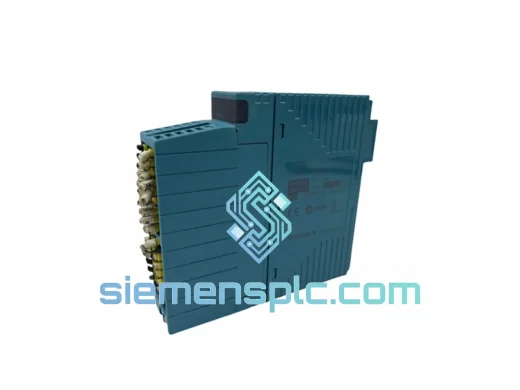
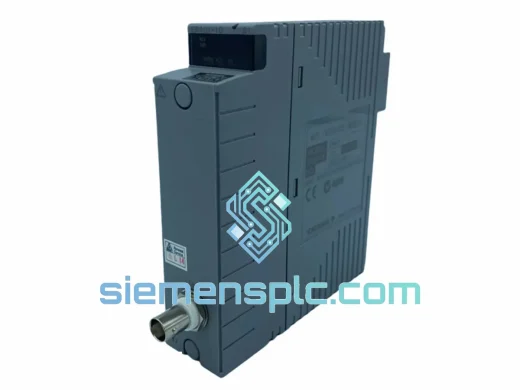
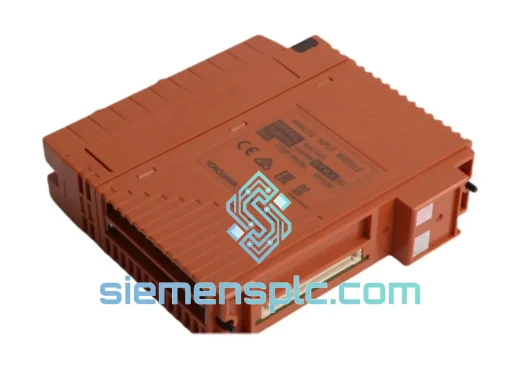
Yokogawa SAI143-H63/PRP S3 DCS Analog Input Module
CENTUM VP
Origin JP
DCS Analog Input Module
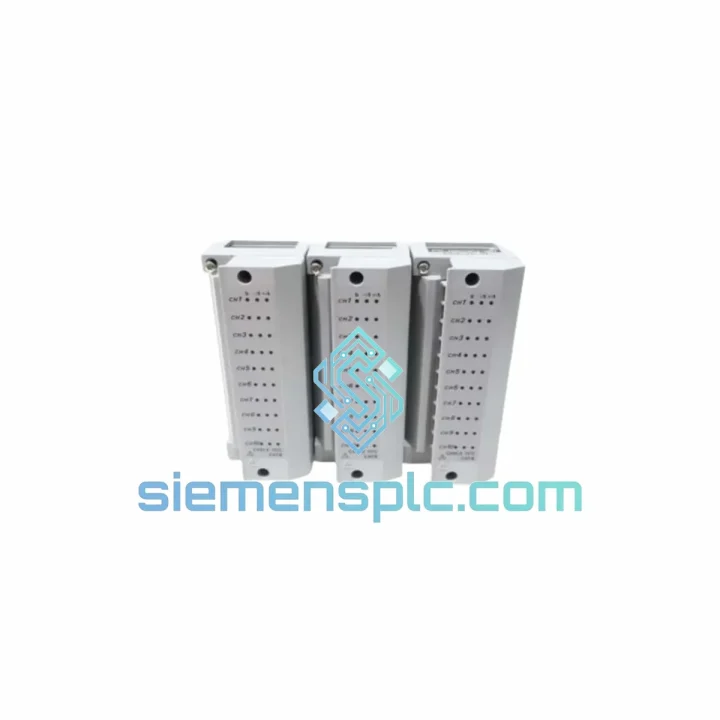
Request verified availability, condition, replacement risk review, packing options and courier lead time for DU200-31.
Click Request Quote and the part number is inserted into the inquiry form automatically.
Core fields for model confirmation and RFQ routing. Detailed product narrative remains below.
The DU200-31 occupies a structurally significant position within Yokogawa’s CENTUM VP distributed control system. As a consolidated multi-signal input card, it accepts DC voltage (DCV), thermocouple (TC), and dry-contact digital input (DI) signals across 16 configurable channels — all within a single I/O nest slot. In process plants where cabinet space is constrained and signal diversity is high, this consolidation directly reduces hardware count, inter-module wiring, and the probability of signal-path faults introduced by external signal conditioners.
The module interfaces with the Field Control Station (FCS) backplane via Yokogawa’s proprietary V-net/IP or ESB bus, depending on the FCS generation. Each control cycle, the FCS polls all active channels synchronously, making the digitized process values immediately available to function blocks — PID controllers, sequence logic, arithmetic blocks — without additional latency introduced by asynchronous polling schemes. This deterministic data delivery is a prerequisite for tight control loops in refinery and petrochemical applications where scan-cycle jitter directly affects loop stability.
For thermocouple inputs, the DU200-31 integrates an onboard cold-junction compensation (CJC) reference sensor. This eliminates the need for isothermal terminal blocks or external CJC modules, which are common sources of measurement offset in field installations. The CJC correction is applied in hardware before digitization, ensuring that the temperature value presented to the FCS already reflects true process temperature rather than a raw EMF reading requiring software correction.
The module’s 16-bit analog-to-digital converter provides a resolution of approximately 0.0015% of full scale for DCV inputs, sufficient for high-precision differential pressure transmitter signals and low-level millivolt inputs from strain gauges or RTD bridge circuits. For thermocouple channels, this resolution translates to sub-degree temperature discrimination across the full span of supported TC types (J, K, E, T, R, S, B, N per IEC 60584 and JIS C 1602).
Channel-to-channel galvanic isolation is implemented via optocoupler barriers on each input path. This architecture prevents ground-loop currents — which arise when field instruments and the DCS share different ground reference potentials — from corrupting adjacent channel readings or, in worst-case scenarios, damaging the FCS backplane. In plants with long cable runs between field junction boxes and the control room, this isolation is not optional; it is a fundamental requirement for measurement integrity.
The DU200-31 is rated for continuous operation from 0°C to +55°C with 5–95% RH (non-condensing), consistent with IEC 61131-2 environmental class requirements for industrial control equipment. Power draw is ≤5 W per module, a figure that matters in high-density I/O nests where thermal management of the control cabinet is a design constraint.
All units shipped from siemensplc.com are sourced as genuine YOKOGAWA OEM hardware, inspected for label authenticity, physical integrity, and firmware version consistency prior to dispatch. Traceability documentation — including lot number and inspection records — is available upon request for MRO procurement teams operating under ISO 9001 or regulated-industry quality frameworks.
Real-time Stock & RFQ: [email protected] | WhatsApp: +86 18359268345
| Parameter | Specification |
|---|---|
| Model Number | DU200-31 |
| Manufacturer | YOKOGAWA Electric Corporation |
| Compatible Platform | CENTUM VP, CS 3000 |
| Module Function | Multi-Signal Input: DCV / TC / DI |
| Input Channels | 16 (configurable per signal type) |
| DCV Input Range | ±10 mV to ±10 V (multi-range selectable) |
| TC Input Types | J, K, E, T, R, S, B, N (IEC 60584 / JIS C 1602) |
| DI Logic Level | Dry contact / 24 VDC voltage input |
| A/D Resolution | 16-bit |
| DCV Accuracy | ±0.1% of full scale |
| TC Accuracy | ±1°C (type-dependent) |
| Cold-Junction Compensation | Onboard hardware CJC sensor |
| Channel Isolation | Galvanic (optocoupler, channel-to-channel) |
| FCS Scan Cycle | Synchronous with FCS control cycle (min. 100 ms) |
| Power Consumption | ≤ 5 W |
| Operating Temperature | 0°C to +55°C |
| Storage Temperature | -20°C to +70°C |
| Relative Humidity | 5% to 95% RH, non-condensing |
| Weight | Approx. 2,200 g (module + housing) |
| Certifications | CE, UL, CSA |
| Country of Origin | Japan |
| Warranty | 12 months from dispatch date |
The DU200-31’s internal signal chain follows a structured path: field terminal → passive RC anti-aliasing filter → analog multiplexer → 16-bit successive-approximation ADC → digital isolation barrier → FCS backplane register. Each stage is engineered to address a specific failure mode common in industrial field environments.
The RC anti-aliasing filter at the input stage attenuates high-frequency noise components — particularly 50/60 Hz power-line interference and switching transients from variable-frequency drives (VFDs) operating in the same cable tray. Without this filter, ADC aliasing would fold high-frequency noise into the baseband signal, producing measurement errors that are difficult to distinguish from genuine process variation.
The analog multiplexer sequentially connects each of the 16 input channels to the shared ADC. Yokogawa’s implementation uses a low-charge-injection CMOS multiplexer to minimize the settling-time error introduced when switching between channels with significantly different source impedances — a common issue when TC inputs (high impedance) and DCV inputs (low impedance) are mixed on the same card.
The digital isolation barrier — implemented via high-speed optocouplers — provides a minimum 500 V RMS isolation voltage between the field side and the FCS backplane. This rating exceeds the IEC 61131-2 requirement for basic insulation in Category II overvoltage environments, providing a safety margin for installations where transient overvoltages from lightning strikes or motor switching are a documented risk.
EMC performance is achieved through a combination of board-level shielding, ground-plane partitioning between analog and digital circuit sections, and ferrite bead filtering on the power supply rails. The module meets IEC 61000-4-2 (ESD), IEC 61000-4-4 (EFT/Burst), and IEC 61000-4-5 (Surge) immunity requirements, which are the three most common EMC failure modes in process plant environments.
For TC channels, the onboard CJC sensor is a precision thermistor mounted at the terminal block, measuring the actual temperature at the point where the thermocouple wire transitions to copper conductors. The CJC correction algorithm applies a linearization polynomial specific to each TC type, compensating for both the reference junction temperature and the non-linearity of the Seebeck coefficient across the measurement range.
Every DU200-31 unit dispatched from our Xiamen, China facility is a genuine YOKOGAWA OEM component. Prior to shipment, each module undergoes a structured pre-dispatch inspection covering: physical housing integrity, connector pin condition, label and serial number authenticity cross-referenced against YOKOGAWA’s product identification standards, and firmware version verification where applicable.
Original YOKOGAWA packaging is preserved where available. For units sourced through authorized distribution channels, original factory seals and documentation — including the YOKOGAWA product data sheet and, where applicable, the certificate of conformance — are included with the shipment.
All units carry a 12-month warranty from the dispatch date, covering manufacturing defects and functional failures under normal operating conditions. Warranty claims are processed with a target response time of 48 hours from receipt of the defective unit.
Logistics from Xiamen are handled via DHL Express, FedEx International Priority, and UCP air freight, with typical transit times of 3–5 business days to Europe, 4–6 days to North America, and 2–4 days to Southeast Asia. Export documentation — commercial invoice, packing list, and HS code declaration (HS 8537.10) — is prepared in compliance with Chinese customs regulations and the import requirements of the destination country. For orders requiring an ECCN classification or end-user certificate, our logistics team can provide the necessary documentation upon request.
In-stock units are dispatched within 1–2 business days of order confirmation. For high-volume or project-based procurement, lead-time commitments and consignment stock arrangements are available — contact us to discuss your project schedule.
Email: [email protected]
WhatsApp: +86 18359268345
Web: siemensplc.com
Location: Xiamen, China
© 2026 siemensplc.com. All rights reserved.
We check the full part number, brand, series and visible nameplate information before quotation.
Sales confirms stock path, condition option, quantity and realistic lead time for export dispatch.
DHL, FedEx, UPS or buyer courier arrangements can be reviewed with packing requirements.
Similar brand or category products for fast comparison and multi-item RFQ lists.