TEL (Tokyo Electron Limited)
RFQ Ready
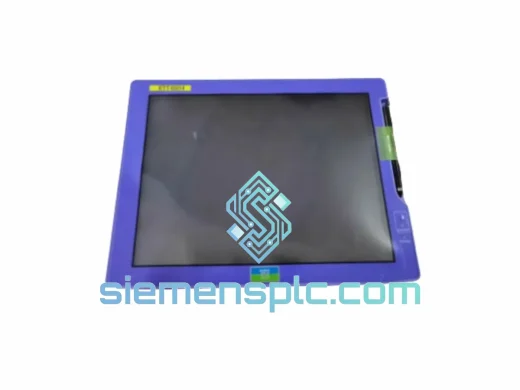
TEL TAC-3TTAATT UF7840-2-TE1 HMI Panel – TAC Series
TAC Series
Origin Japan
Human-Machine Interface Panel
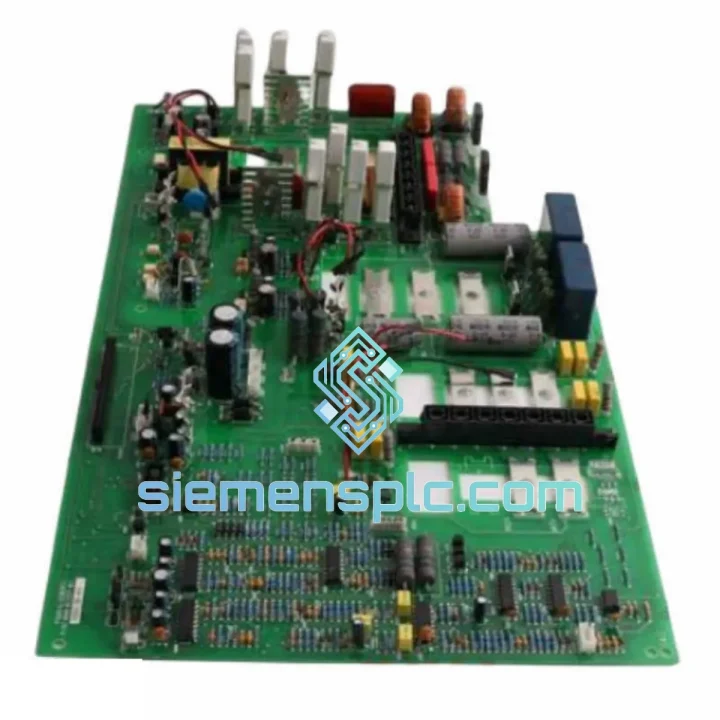
Request verified availability, condition, replacement risk review, packing options and courier lead time for E2B405/M744.
Click Request Quote and the part number is inserted into the inquiry form automatically.
Core fields for model confirmation and RFQ routing. Detailed product narrative remains below.
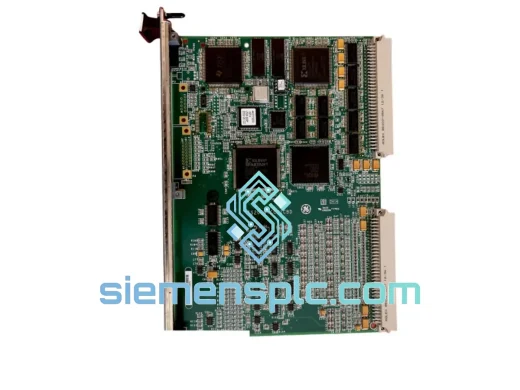
You already know the math. A halted CVD or diffusion furnace in a high-volume fab doesn’t just pause production — it triggers a cascade: scrapped wafer batches, violated SLA windows, emergency maintenance calls, and engineering teams standing around waiting for a board that should have been on the shelf. The E2B405/M744 is the CPU PCB card at the core of TEL semiconductor processing platforms. It handles process logic execution, system bus arbitration, and I/O coordination. When it goes down, the tool goes dark. We stock this board in Xiamen and dispatch same-day. That’s the only answer that matters right now.
URGENT REQUIREMENT? Contact: [email protected] | WhatsApp: +86 18359268345
| Parameter | Detail |
|---|---|
| Part Number | E2B405/M744 |
| OEM Manufacturer | TEL – Tokyo Electron Limited |
| Board Classification | CPU PCB Card — Central Process Controller |
| Primary Function | Recipe execution logic, bus arbitration, I/O sequencing |
| Compatible Equipment | TEL diffusion furnaces, CVD systems, etch platforms — verify model revision before ordering |
| Form Factor | Rack-mount industrial PCB card |
| Unit Weight | ~2,900 g |
| Condition | New surplus / Tested-functional (state requirement at inquiry) |
| Country of Origin | Japan (OEM) — warehoused in Xiamen, China |
| Stock Status | ✔ Ready to Ship — Same-Day Dispatch Before 14:00 CST |
| Lead Time | Dispatched within 24 hours of payment confirmation |
| Export Documentation | ECCN/EAR classification available; full customs package included |
This section is written from field experience, not from a service manual. The E2B405/M744 has well-defined failure modes. Knowing them saves you diagnostic time when the clock is already running against you.
Failure Mode 1 — CPU FAULT / SYSTEM HALT on HMI:
The watchdog timer has lost its heartbeat signal. Before condemning the board, reseat it firmly in the backplane — connector oxidation on the card-edge contacts is a common culprit, especially in tools that run 24/7 with thermal cycling. If the fault returns within minutes of reseating, the CPU card itself has failed. The watchdog circuit is not field-repairable.
Failure Mode 2 — Intermittent Process Bus Timeouts:
The E2B405/M744 manages bus arbitration for the entire card rack. Comm timeouts that clear on reboot but return within a few hours are a classic signature of a degrading oscillator or failing SRAM on the CPU board. This is not a software or network issue — do not waste time reflashing firmware or checking Ethernet connections. The board needs replacement.
Failure Mode 3 — Deterministic Recipe Abort at a Fixed Step:
If the tool aborts at the same recipe step every run, the CPU card’s program memory is suspect. A corrupted EEPROM sector causes the controller to fail at the exact point where it reads that memory block. This failure pattern is highly specific to the CPU board and will not resolve with recipe edits or parameter adjustments.
Failure Mode 4 — No Boot After Power Cycle:
Check the onboard power indicator LED first. No LED illumination points to a backplane power rail fault — investigate the power supply cards before pulling the CPU board. If the LED is on but the system does not boot, the CPU card has failed its POST sequence. Replacement is the only path forward.
Replacement Procedure — What You Must Not Skip:
Semiconductor fabrication environments impose stresses that most industrial electronics are not designed to handle continuously. The E2B405/M744 is built to TEL’s specifications for sustained operation in these conditions — not rated for them on paper, but proven in production environments across multiple fab generations.
Mechanical vibration from vacuum pump systems, mechanical handlers, and HVAC infrastructure is a constant background stress in any fab bay. The E2B405/M744’s component mounting and PCB construction are specified for continuous vibration exposure. Solder joint fatigue — the primary vibration-related failure mechanism in lesser boards — is mitigated by the board’s design and the conformal coating applied to the PCB surface.
Thermal cycling is the dominant long-term degradation factor. The card rack environment subjects the E2B405/M744 to repeated heat-up and cool-down cycles across its operational temperature range. The board’s onboard thermal management is designed to handle heat generated by adjacent power and I/O modules in the rack without requiring active cooling of the CPU card itself. Units stored correctly — ESD-safe packaging, climate-controlled environment below 40% relative humidity — retain full operational integrity for extended periods. Our Xiamen warehouse maintains these storage conditions for all inventory.
In CVD and wet-etch environments, chemical vapor and humidity are secondary concerns. The conformal coating on the E2B405/M744 provides a barrier against condensation and mild chemical vapor ingress. Any board showing signs of direct chemical exposure, corrosion on connector pins, or damaged PCB traces is rejected before it reaches our shipping bench. We inspect every unit under magnification prior to dispatch — this is not a checkbox exercise.
Our warehouse is in Xiamen — a primary export gateway with direct DHL and FedEx hub access. Stock is physically on our shelves. Orders confirmed before 14:00 CST ship the same business day without exception.
We have shipped TEL components to maintenance teams and fab operations in Japan, South Korea, Taiwan, Singapore, Germany, the Netherlands, and the United States. Export compliance documentation is prepared for every shipment. Semiconductor equipment components are handled with full awareness of applicable export control frameworks, and ECCN classification is available on request for any unit.
For urgent requirements, WhatsApp is the fastest channel. Use email for formal quotations, documentation requests, and purchase orders.
© 2026 siemensplc.com. All rights reserved.
We check the full part number, brand, series and visible nameplate information before quotation.
Sales confirms stock path, condition option, quantity and realistic lead time for export dispatch.
DHL, FedEx, UPS or buyer courier arrangements can be reviewed with packing requirements.
Similar brand or category products for fast comparison and multi-item RFQ lists.