Yokogawa
In Stock OK
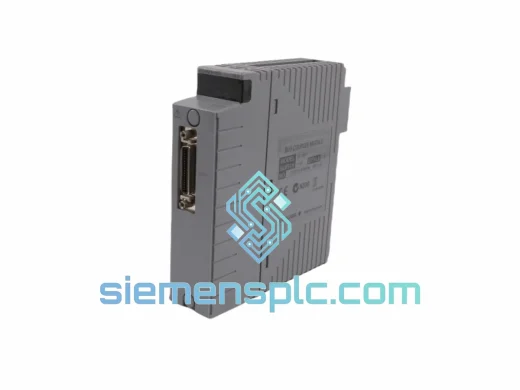
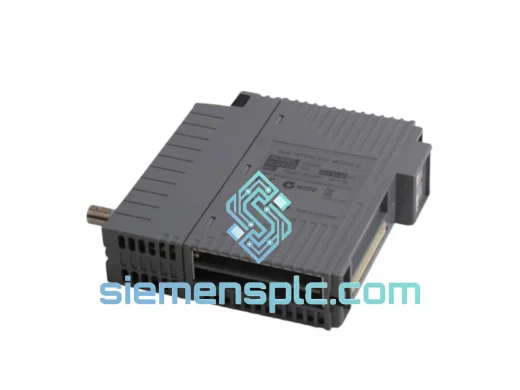
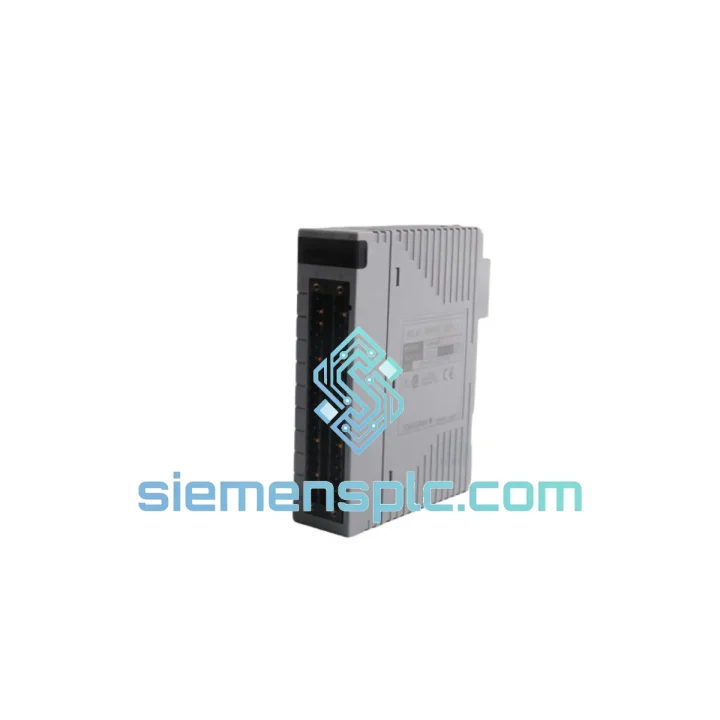
Yokogawa EC401-10 S2 DCS Bus Coupler Module
Request verified availability, condition, replacement risk review, packing options and courier lead time for EC401-10.
BrandYokogawa
Part NumberEC401-10
ConditionAvailability Check
Lead TimeRFQ Confirmation
DocumentsDatasheet / photos by RFQ
ShippingExport packing available
Auto-filled RFQ
EC401-10
Click Request Quote and the part number is inserted into the inquiry form automatically.
- Reply by email: [email protected]
- WhatsApp / Tel: +86 18359268345
- Mon-Sat 9:00-18:00 GMT+8
Procurement Data
Key Product Information
Core fields for model confirmation and RFQ routing. Detailed product narrative remains below.
- Brand
- Yokogawa
- Primary Part Number
- EC401-10
- Product Type
- DCS Bus Coupler Module
- Series / Family
- CENTUM VP
- Manufacturer
- Yokogawa Electric Corporation
- Country of Origin
- JP
- Model Function
- Couples FCS to remote I/O node units via ESB bus backbone
- Catalog Category
- DCS & Safety Modules
Model confirmed for inquiry
EC401-10
Send quantity, destination and urgency. The RFQ form keeps this part number attached.
Request Quote
Product Overview
EC401-10 S2 In Stock — Every Hour of Downtime Costs You More Than This Module
Your CENTUM VP system is down. The ESB bus segment is dead. Production is bleeding money by the minute. The Yokogawa EC401-10 S2 ESB Bus Coupler is the exact hardware standing between you and full process recovery — and we have it on the shelf in Xiamen, ready to clear customs and land on your bench within 48–72 hours via DHL Express.
This is not a catalog listing. This is a field-ready unit, tested, packed, and waiting for your purchase order.
URGENT REQUIREMENT? Contact: [email protected] | WhatsApp: +86 18359268345
Quick Technical Datasheet
| Part Number | EC401-10 S2 ✅ Ready to Ship |
| Manufacturer | Yokogawa Electric Corporation |
| Series | ESB (Enhanced Serial Backplane) Bus Coupler |
| Compatible DCS | CENTUM VP (R4–R6), CENTUM CS 3000 (R3) |
| Function | Couples FCS to remote I/O node units via ESB bus backbone |
| Bus Architecture | ESB — deterministic, cycle-time guaranteed serial backplane |
| Redundancy Support | Dual-bus hot-standby redundant FCS configurations |
| Max Segment Length | 100 m per segment (Yokogawa-specified shielded cable) |
| Mounting | DIN rail / Node unit rack mount |
| Weight | 420 g |
| Origin | Japan |
| Stock Location | Xiamen, China — export-ready |
| Condition | New / Tested — specify on inquiry |
| Lead Time | Same-day dispatch for in-stock units |
Troubleshooting & Replacement Tips
After ten years of pulling failed bus couplers out of live DCS cabinets, here is what actually matters when you are swapping an EC401-10 S2 under pressure:
1. Confirm the fault is the coupler, not the cable. Before you pull the module, check the ESB bus cable continuity and connector seating at both ends. A corroded D-sub or a cracked cable shield causes identical symptoms — loss of communication to the entire downstream I/O node — and swapping the coupler will not fix it. Use the CENTUM VP Engineering Console to check the FCS diagnostic screen: if you see ESB Communication Error or Node Offline alarms with no cable fault indicated, the EC401-10 S2 is the prime suspect.
2. Hardware revision matching. The EC401-10 S2 has gone through multiple hardware revisions (S1 → S2). The S2 suffix is not cosmetic — it reflects internal component changes. Do not substitute an S1 unit into an S2 slot without verifying compatibility with your FCS firmware version. Yokogawa’s TI (Technical Information) documents cover this explicitly. We supply S2-revision units only.
3. No DIP switch configuration required. Unlike some I/O modules in the CENTUM VP family, the EC401-10 S2 does not use DIP switches for node address assignment. Node addressing is handled automatically by the FCS during the ESB bus scan after power-up. Do not let this trip you up — just seat the module, restore power, and watch the FCS re-enumerate the node within 30–60 seconds.
4. Firmware compatibility check. If your CENTUM VP system is running R6.04 or later, verify that the EC401-10 S2 hardware revision is listed in the Yokogawa compatibility matrix for that release. In most cases it is — but for edge-case firmware builds, a quick call to Yokogawa engineering support before installation saves you a second emergency order.
5. Hot-swap procedure. The EC401-10 S2 supports hot insertion in redundant bus configurations. In a single-bus setup, you will lose I/O communication to the downstream node during the swap — plan your process hold accordingly. Notify the control room operator before pulling the module. After insertion, the FCS will automatically re-establish communication; no manual restart is required.
Common fault codes associated with EC401-10 S2 failure:
- ALM-3201 / ESB Bus Communication Failure — primary indicator of coupler or cable fault
- ALM-3205 / Node Unit Not Responding — downstream I/O node unreachable; coupler is the first hardware to check
- ALM-3210 / ESB Bus Redundancy Lost — one of two redundant couplers has failed; system is running on single bus
Reliability in Harsh Conditions
The EC401-10 S2 was not designed for a climate-controlled server room. It was built for the inside of a field control station cabinet in a refinery, a chemical plant, or a power generation facility — environments where ambient temperatures swing, humidity condenses on PCBs, and vibration from rotating machinery is a constant background stress.
Yokogawa’s manufacturing process for the ESB Bus Coupler series includes conformal coating on critical PCB assemblies, gold-plated connector contacts to resist oxidation in humid environments, and component selection rated for extended industrial temperature ranges. The result is a module that routinely runs for 10–15 years in continuous operation before showing any degradation — which is exactly why a failed unit is such a shock when it happens. When it does fail, it is usually due to one of three causes: electrostatic discharge damage from improper handling during a previous maintenance event, capacitor aging in units manufactured before 2010, or physical connector damage from repeated insertion cycles.
Every unit we ship has been inspected for all three failure modes before it leaves our facility.
Global Express Logistics
Our warehouse is located in Xiamen, Fujian Province — one of China’s primary export hubs with direct access to DHL Express, FedEx International Priority, and UPS Worldwide Express services. For most destinations, the logistics chain works as follows:
- Day 0: Order confirmed and payment cleared before 14:00 CST → same-day dispatch
- Day 1: Unit departs Xiamen Gaoqi International Airport on overnight freight flight
- Day 2–3: Customs clearance at destination country (we provide full commercial invoice, packing list, HS code documentation, and certificate of origin on request to expedite clearance)
- Day 2–4: Final delivery to your facility, depending on destination country and local carrier
We have shipped EC401-series modules to refineries in the Middle East, chemical plants in Southeast Asia, power stations in Europe, and process facilities across North America. Our export documentation is prepared to meet customs requirements in all major industrial markets. For destinations with import restrictions on industrial electronics, contact us before ordering — we have experience navigating these requirements.
For orders requiring air freight tracking, we provide the AWB number within 2 hours of dispatch. DHL and FedEx shipment tracking links are sent directly to your registered email.
Contact Information
📧 Email: [email protected]
📱 WhatsApp: +86 18359268345
🌐 Web: siemensplc.com
© 2026 siemensplc.com. All rights reserved.
Ready to quote
[email protected]
Send This Part Number to Sales
RFQ workflow
Quality workflow ->
Confirmation Process
01Model confirmation
We check the full part number, brand, series and visible nameplate information before quotation.
02Availability reply
Sales confirms stock path, condition option, quantity and realistic lead time for export dispatch.
03Packing & courier
DHL, FedEx, UPS or buyer courier arrangements can be reviewed with packing requirements.
Continue sourcing
Browse full catalog ->
Related Automation Parts
Similar brand or category products for fast comparison and multi-item RFQ lists.