Product Overview
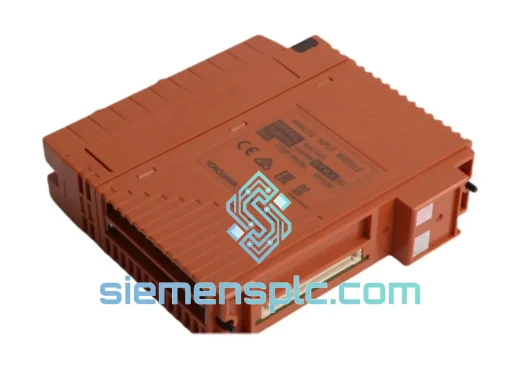
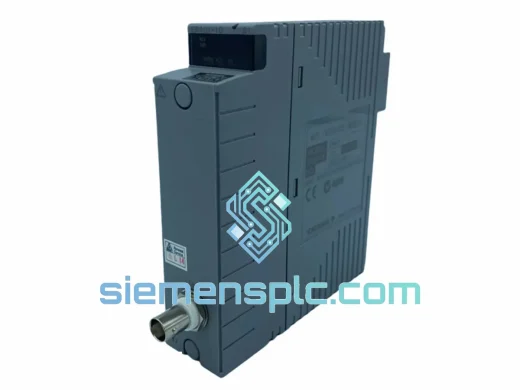
YOKOGAWA EP3*A Analog Input Module — Stop the Bleeding, Get Your Process Back Online
Every minute your CENTUM DCS sits idle, you’re burning money. A failed EP3*A analog input card doesn’t just kill one loop — it can cascade into a full field control station fault, triggering interlock shutdowns across an entire process unit. We’ve seen it happen in refineries, chemical plants, and power stations. The fix is straightforward: swap the card. The problem is always the same: where do you get one right now?
siemensplc.com stocks the YOKOGAWA EP3*A and ships same-day from Xiamen. No lead-time negotiation, no factory order queue, no waiting three weeks for a part that should have been on your shelf. We exist precisely for this moment — when your maintenance window is closing and your operations manager is standing behind you.
URGENT REQUIREMENT? Contact: [email protected] | WhatsApp: +86 18359268345
Quick Technical Datasheet
| Manufacturer |
YOKOGAWA Electric Corporation |
| Part Number / SKU |
EP3*A |
| Module Category |
Analog Input Card (AI) |
| Compatible Platform |
YOKOGAWA CENTUM VP / CS 3000 / CS 1000 — Field Control Station (FCS) |
| Signal Input Range |
4–20 mA DC / 1–5 V DC (model-suffix dependent) |
| Channel Count |
Typically 8 or 16 channels per card (confirm by suffix) |
| Isolation |
Channel-to-channel and channel-to-bus isolation |
| Operating Temperature |
0°C to +60°C |
| Humidity |
5% to 95% RH, non-condensing |
| Power Consumption |
Per YOKOGAWA FCS power budget specifications |
| Mounting |
CENTUM I/O nest / card cage — hot-swap capable on supported FCS revisions |
| Country of Origin |
Japan |
| Condition |
New / Surplus New — stated per order confirmation |
| Stock Status |
✅ Ready to Ship — Xiamen Warehouse |
| Lead Time |
Same-day dispatch for orders confirmed before 15:00 CST |
Troubleshooting & Replacement Tips
After years of field work on CENTUM systems, these are the failure patterns and swap pitfalls that catch engineers off guard:
Common Fault Indicators for EP3*A Failure:
-
IOP (Input Open) alarm on multiple channels simultaneously — if you’re seeing IOP on 4+ channels at once with field wiring confirmed good, the card itself is the suspect, not the transmitters.
-
ALM LED solid red on the module faceplate — combined with HIS alarm group showing AI hardware fault, this is a near-certain card failure. Check the FCS error log via SENG for fault code E1xx series.
-
Intermittent signal dropout on one channel — often a cold solder joint on the input terminal block side. Reseat the card first; if dropout persists after reseating, replace the card.
-
FCS goes to STOP state after card insertion — almost always a firmware revision mismatch or incorrect node address. See configuration notes below before powering up.
Replacement Procedure — Field Checklist:
-
Confirm hot-swap eligibility. CENTUM VP R5.03 and later supports online card replacement for AI modules in redundant FCS configurations. On non-redundant FCS, you must take the station offline. Do not assume hot-swap is available — check your FCS revision in SENG before pulling the card.
-
Note the slot address. The EP3*A uses automatic node addressing based on physical slot position in the I/O nest. No DIP switch setting is required for the card address itself — the nest backplane assigns it. However, confirm the nest unit number and slot number match your SENG I/O builder configuration before insertion.
-
Check firmware compatibility. The EP3*A suffix letter (e.g., EP3AA, EP3BA) indicates hardware revision. Mixing hardware revisions within the same FCS is generally safe, but if your CENTUM system is running a legacy firmware version (pre-R3.x), verify compatibility with YOKOGAWA’s hardware revision matrix. We can supply the matrix on request.
-
Verify range code configuration. Unlike some third-party AI cards, the EP3*A range is configured entirely in software via SENG — there are no physical jumpers or DIP switches for signal range. Confirm the range code in your I/O builder matches the field transmitter output (e.g., R2 for 4–20 mA).
-
After insertion, force a self-test. From SENG, execute a module self-test command on the replaced slot. Wait for the ALM LED to extinguish and the HIS to show the channel returning to normal scan. Do not release the loop to automatic control until all channels pass self-test.
-
Document the swap. Log the old card’s serial number, fault description, and replacement date in your plant maintenance system. YOKOGAWA’s warranty and failure analysis process requires this data if you submit a failed unit for RMA.
Reliability in Harsh Conditions
The EP3*A was engineered for continuous operation in process plant environments — not office-grade conditions. YOKOGAWA designed the CENTUM I/O card series to withstand the realities of industrial installations:
-
Vibration resistance: Compliant with IEC 60068-2-6 sinusoidal vibration testing. The card’s PCB layout and component selection account for mechanical stress from pump vibration, compressor harmonics, and structural resonance common in petrochemical and power plant environments.
-
Thermal cycling tolerance: Rated for 0°C to +60°C continuous operation, with component derating applied to ensure reliability at the upper end of the range. In practice, CENTUM FCS cabinets with proper HVAC maintain 25–35°C — the EP3*A is well within its thermal envelope under normal conditions.
-
Humidity and condensation protection: Conformal coating on the PCB provides protection against humidity ingress up to 95% RH non-condensing. For installations in coastal or high-humidity environments (common in Southeast Asian and Middle Eastern plants), this coating is a meaningful reliability factor.
-
EMI/RFI immunity: Designed to IEC 61000-4 series immunity standards. The card’s isolated input architecture provides inherent common-mode rejection, reducing susceptibility to ground loops and radiated interference from VFDs, welding equipment, and high-voltage switchgear in the vicinity.
-
Long-term component availability: YOKOGAWA’s CENTUM platform has a documented long-term support commitment. The EP3*A uses industrial-grade components with extended temperature ratings and long production lifecycles — not consumer-grade parts that go end-of-life in three years.
Units shipped from our Xiamen warehouse are stored in climate-controlled conditions with anti-static packaging. We do not store inventory in uncontrolled environments. Every card is inspected for physical integrity before dispatch.
Global Express Logistics
Our logistics operation is built around one priority: getting your part to site before your next maintenance window closes.
-
Dispatch point: Xiamen, Fujian Province, China — one of China’s primary export hubs with direct DHL and FedEx gateway access.
-
Carriers: DHL Express and FedEx International Priority are our primary carriers for urgent shipments. Both offer next-flight-out options for critical plant shutdowns. EMS and sea freight are available for non-urgent bulk orders.
-
Transit times (typical):
- Southeast Asia (Singapore, Thailand, Malaysia, Indonesia): 2–3 business days
- Middle East (UAE, Saudi Arabia, Kuwait, Qatar): 3–4 business days
- Europe (Germany, Netherlands, UK, France): 4–5 business days
- North America (USA, Canada): 4–6 business days
- South Asia (India, Pakistan, Bangladesh): 3–5 business days
-
Export documentation: Commercial invoice, packing list, certificate of origin, and HS code declaration (HS 8537.10 or 8538.90 as applicable) are prepared and included with every shipment. We handle customs paperwork — you focus on the repair.
-
Same-day dispatch cutoff: Orders confirmed with payment before 15:00 CST ship the same business day. Orders after cutoff ship the following morning.
-
Tracking: AWB number provided within 2 hours of dispatch. We proactively monitor shipments and alert you to any customs holds or delays.
-
Emergency freight: For genuine plant shutdown situations, contact us directly on WhatsApp. We can arrange next-flight-out courier with airport-to-airport transit for the fastest possible delivery to your region.
Contact Information
📧 Email: [email protected]
💬 WhatsApp: +86 18359268345
🌐 Web: siemensplc.com
© 2026 siemensplc.com. All rights reserved.