
Yokogawa
In Stock OK
YOKOGAWA F3NC02-ON-Z01 Servo Control Module – STARDOM Series
Request verified availability, condition, replacement risk review, packing options and courier lead time for F3NC02-ON-Z01.
BrandYokogawa
Part NumberF3NC02-ON-Z01
ConditionAvailability Check
Lead TimeRFQ Confirmation
DocumentsDatasheet / photos by RFQ
ShippingExport packing available
Auto-filled RFQ
F3NC02-ON-Z01
Click Request Quote and the part number is inserted into the inquiry form automatically.
- Reply by email: [email protected]
- WhatsApp / Tel: +86 18359268345
- Mon-Sat 9:00-18:00 GMT+8
Procurement Data
Key Product Information
Core fields for model confirmation and RFQ routing. Detailed product narrative remains below.
- Brand
- Yokogawa
- Primary Part Number
- F3NC02-ON-Z01
- Product Type
- Servo Control Module
- Series / Family
- STARDOM
- Manufacturer
- YOKOGAWA Electric Corporation
- Country of Origin
- JP
- Catalog Category
- Robotics & Motion
- Warranty
- 12 months from dispatch date
Model confirmed for inquiry
F3NC02-ON-Z01
Send quantity, destination and urgency. The RFQ form keeps this part number attached.
Request Quote
Product Overview
YOKOGAWA F3NC02-ON-Z01: Dedicated Servo Control at the FCN/FCJ Backplane Level
The YOKOGAWA F3NC02-ON-Z01 is a servo control module engineered for direct integration into the STARDOM FCN and FCJ autonomous controller platform. Its function within a control loop is unambiguous: it assumes full closed-loop authority over servo axes — position, velocity, and torque — without offloading computation to an external motion controller or gateway device. This architectural decision eliminates the inter-device latency that plagues distributed motion topologies and places deterministic servo execution directly on the FCN/FCJ backplane bus.
In process-intensive industries where servo axes govern valve actuators, precision dosing pumps, or web tension systems, the F3NC02-ON-Z01 provides the synchronization fidelity that separates acceptable throughput from optimal throughput. The module’s native residence on the STARDOM backplane means its command cycle is locked to the controller’s scan cycle — no asynchronous handshake, no buffered command queue, no jitter accumulation across a fieldbus segment.
Real-time Stock & RFQ: [email protected] | WhatsApp: +86 18359268345
Technical Parameters
| Parameter | Specification |
|---|---|
| Manufacturer | YOKOGAWA Electric Corporation |
| Part Number / SKU | F3NC02-ON-Z01 |
| Module Classification | Servo Control Module |
| Compatible Platform | STARDOM FCN / FCJ Autonomous Controller |
| Module Series | F3 Series Control & I/O |
| Mounting Interface | FCN/FCJ backplane slot (direct insertion) |
| Module Weight | 2,130 g (with housing) |
| Country of Origin | Japan |
| Operating Environment | Industrial plant floor — EMC-hardened design |
| Condition Available | New OEM / Certified Refurbished (specify at RFQ) |
| Warranty | 12 months from dispatch date |
| Documentation | YOKOGAWA OEM datasheet available upon request |
Detailed electrical parameters — encoder interface type, axis count, supply voltage range, maximum pulse frequency — are confirmed against the official YOKOGAWA F3NC02-ON-Z01 datasheet. Contact our technical team to receive the full specification sheet prior to procurement.
Hardware Logical Analysis
The F3NC02-ON-Z01 operates as a tightly coupled peripheral on the STARDOM FCN/FCJ internal backplane bus. Unlike standalone motion controllers that communicate via EtherCAT, PROFIBUS, or MECHATROLINK over a physical cable run, this module’s command path is entirely internal — the FCN/FCJ CPU writes servo setpoints directly to the module’s register map across the backplane, with no protocol stack overhead and no cable-induced propagation delay.
Closed-Loop Execution Architecture: The module implements its own servo loop processor, handling the PID computation for position and velocity control locally. This means the FCN/FCJ CPU is not burdened with real-time PID arithmetic — it issues high-level setpoints (target position, velocity profile, torque limit) and the F3NC02-ON-Z01 executes the inner loop autonomously. This two-tier architecture — supervisory CPU plus dedicated servo processor — is the standard approach in high-performance motion systems because it decouples the determinism of the servo loop from the variable scan time of the main controller.
EMC Design Considerations: Industrial servo environments generate significant conducted and radiated interference — PWM switching transients from servo amplifiers, motor cable capacitive coupling, and ground loop currents are all present simultaneously. The F3NC02-ON-Z01 is built to YOKOGAWA’s industrial EMC standards, which include signal isolation at the encoder feedback interface and power supply filtering at the backplane connector. The encoder input circuitry uses differential line receiver topology, which provides common-mode rejection of noise induced on long encoder cable runs — a critical requirement when encoder cables share cable trays with motor power cables.
Backplane Bus Arbitration: Within the FCN/FCJ rack, multiple modules share the backplane bus under a deterministic arbitration scheme managed by the CPU module. The F3NC02-ON-Z01 participates in this arbitration as a high-priority peripheral, ensuring that servo setpoint updates are not delayed by lower-priority I/O transactions. This priority structure is what allows the module to maintain consistent servo loop timing even when the rack is populated with analog I/O, digital I/O, and communication modules simultaneously.
Encoder Feedback Processing: The module accepts incremental or absolute encoder feedback (confirm interface type against the datasheet for your specific servo drive pairing). Internally, the encoder counter logic is implemented in dedicated hardware — not firmware — which eliminates the count-loss risk that software-based encoder processing introduces at high pulse frequencies. This hardware counter architecture is essential for high-speed axes where encoder pulse rates exceed what a firmware interrupt handler can reliably process.
System Integration Benefits
- Zero-Gateway Motion Integration: The F3NC02-ON-Z01 eliminates the need for a standalone motion controller or fieldbus gateway between the FCN/FCJ CPU and the servo drive. This removes one failure point, one configuration interface, and one source of inter-device timing uncertainty from the system architecture.
- Deterministic Servo Cycle Synchronization: Servo setpoints are updated on every FCN/FCJ scan cycle without buffering or asynchronous handshake. Applications requiring coordinated multi-axis motion — gantry systems, winding machines, synchronized conveyor drives — benefit from the phase coherence this architecture provides.
- Unified Diagnostic Namespace: Servo axis status, fault codes, and position feedback are accessible within the FCN/FCJ tag database alongside process I/O values. Operators and engineers use a single HMI or SCADA interface to monitor both process variables and servo axis health — no separate motion controller diagnostic tool required.
- Simplified Commissioning Workflow: The module is configured through YOKOGAWA’s STARDOM engineering environment (EngineRoom), the same tool used for all FCN/FCJ programming. Engineers do not need to learn a separate motion programming language or commissioning software package.
- Scalable Axis Count: Additional F3NC02-ON-Z01 modules can be inserted into available FCN/FCJ rack slots to expand the servo axis count as production requirements grow, without modifying the controller hardware or communication infrastructure.
- Fault Propagation Transparency: Servo faults detected by the F3NC02-ON-Z01 — encoder loss, following error excess, drive fault acknowledgment — are propagated directly into the FCN/FCJ fault management system. This allows the main control program to execute coordinated safe-state logic across both process and motion domains in response to a single servo fault event.
- Reduced Cable Infrastructure: Backplane-resident servo control eliminates the inter-controller communication cables that a distributed motion topology requires. In large panel installations, this reduction in cable count has measurable impact on panel assembly time, EMC compliance testing, and long-term maintenance burden.
- Long-Term Platform Continuity: YOKOGAWA maintains extended product lifecycle support for STARDOM F3 series modules, consistent with the 15–20 year operational horizons typical in process plant and heavy manufacturing installations. Procurement teams can plan spare parts strategies with confidence in continued availability.
Quality Assurance & Global Logistics
Every YOKOGAWA F3NC02-ON-Z01 unit dispatched from our Xiamen, China facility undergoes a structured pre-shipment verification process. Visual inspection confirms connector pin integrity, PCB surface condition, and part number label authenticity against YOKOGAWA OEM packaging standards. Where bench testing is applicable, modules are powered on and communication handshake with a reference FCN/FCJ rack is verified. Units are cross-referenced against authorized distributor records to confirm provenance.
Packaging follows ESD-safe anti-static bag plus moisture barrier protocol, double-boxed with foam cushioning rated for international air freight handling. All shipments originate from Xiamen, China — a major export hub with direct access to DHL, FedEx, UPS, and TNT express services, as well as consolidated sea freight for volume orders. Typical express transit times: 3–5 business days to Europe and North America, 2–4 days to Southeast Asia and the Middle East. Full tracking is provided from dispatch to delivery. Export documentation — commercial invoice, packing list, certificate of origin — is prepared to the importing country’s customs requirements. A 12-month warranty covers all units from the dispatch date.
Contact Information
Email: [email protected]
WhatsApp: +86 18359268345
Web: siemensplc.com
Location: Xiamen, China
© 2026 siemensplc.com. All rights reserved.
Ready to quote
[email protected]
Send This Part Number to Sales
RFQ workflow
Quality workflow ->
Confirmation Process
01Model confirmation
We check the full part number, brand, series and visible nameplate information before quotation.
02Availability reply
Sales confirms stock path, condition option, quantity and realistic lead time for export dispatch.
03Packing & courier
DHL, FedEx, UPS or buyer courier arrangements can be reviewed with packing requirements.
Continue sourcing
Browse full catalog ->
Related Automation Parts
Similar brand or category products for fast comparison and multi-item RFQ lists.
Yokogawa
RFQ Ready
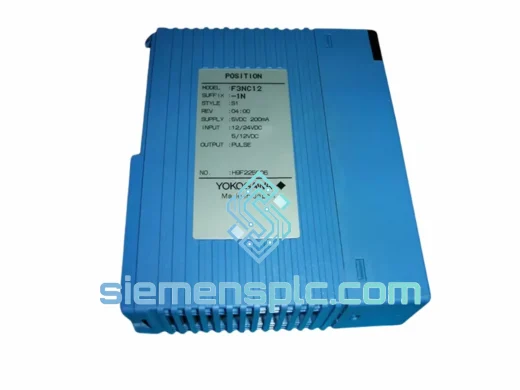
YOKOGAWA F3NC12-1N Position Control Module – FA-M3 Series
FA-M3
Origin JP
Position Control Module
Yokogawa
RFQ Ready
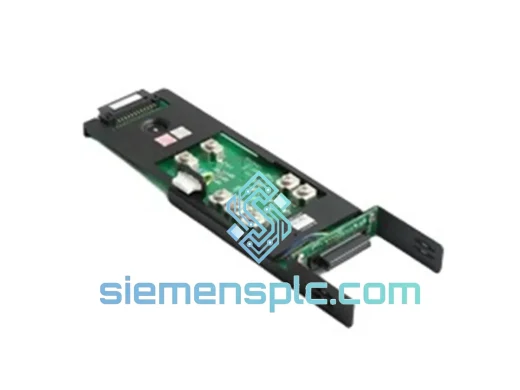
YOKOGAWA F3NC1Z-ON-Z01 Position Module – FA-M3 Series
FA-M3
Origin JP
Position Control Module