GE Fanuc
In Stock OK
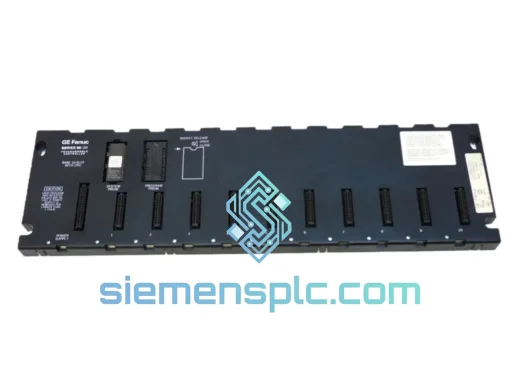
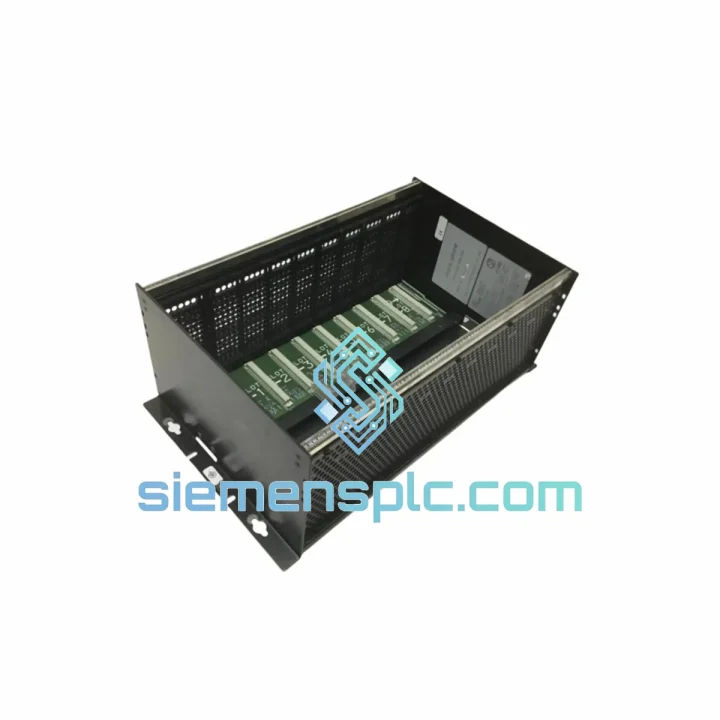
GE Fanuc IC697CHS791J PLC Expansion Chassis – Series 90-70
Request verified availability, condition, replacement risk review, packing options and courier lead time for FANUC IC697CHS791J.
BrandGE Fanuc
Part NumberFANUC IC697CHS791J
ConditionAvailability Check
Lead TimeRFQ Confirmation
DocumentsDatasheet / photos by RFQ
ShippingExport packing available
Auto-filled RFQ
FANUC IC697CHS791J
Click Request Quote and the part number is inserted into the inquiry form automatically.
- Reply by email: [email protected]
- WhatsApp / Tel: +86 18359268345
- Mon-Sat 9:00-18:00 GMT+8
Procurement Data
Key Product Information
Core fields for model confirmation and RFQ routing. Detailed product narrative remains below.
- Brand
- GE Fanuc
- Primary Part Number
- FANUC IC697CHS791J
- Product Type
- PLC Expansion Chassis
- Series / Family
- Fanuc
- Manufacturer
- GE Fanuc Automation
- Country of Origin
- US
- Catalog Category
- Robotics & Motion
- Operating Temp.
- 0 °C to +60 °C
- Warranty
- 12 months from date of shipment
Model confirmed for inquiry
FANUC IC697CHS791J
Send quantity, destination and urgency. The RFQ form keeps this part number attached.
Request Quote
Product Overview
GE Fanuc IC697CHS791J: 9-Slot VME Expansion Chassis for Series 90-70 Distributed I/O Architecture
The IC697CHS791J is a 9-slot expansion chassis manufactured by GE Fanuc Automation for the Series 90-70 rack-based PLC platform. Within a distributed I/O topology, this chassis functions as a remote I/O node — extending the logical I/O address space of the host CPU without requiring an additional processor. The chassis itself carries no active logic; its role is purely structural and electrical: it provides the VME-derived parallel backplane over which I/O modules exchange data with the CPU via a dedicated Bus Receiver module (IC697BEM721) installed in slot 1.
In control loop terms, the IC697CHS791J sits between the field wiring termination layer and the CPU scan cycle. Every discrete or analog signal terminated on modules housed in this chassis is read or written during the CPU’s I/O scan phase, with backplane transfer latency measured in microseconds — well within the deterministic response requirements of most process and machine control applications. For engineers managing panel space constraints or phased I/O expansion, this chassis delivers the highest slot count in the Series 90-70 family without altering the base rack configuration.
Real-time Stock & RFQ: [email protected] | WhatsApp: +86 18359268345
Technical Parameters
| Parameter | Specification |
|---|---|
| Part Number | IC697CHS791J |
| Manufacturer | GE Fanuc Automation |
| Product Series | Series 90-70 |
| Chassis Function | Remote I/O Expansion Chassis (non-CPU) |
| I/O Module Slots | 9 (slots 2–10; slot 1 reserved for Bus Receiver) |
| Backplane Architecture | VME-derived parallel bus, 32-bit data path |
| Bus Interface Module Required | IC697BEM721 (Bus Receiver, installed in expansion chassis) |
| Corresponding Transmitter | IC697BEM711 (Bus Transmitter, installed in base rack) |
| Power Supply Slot | Dedicated left-end slot; accepts IC697PWR710 / IC697PWR711 / IC697PWR724 |
| Max Expansion Racks per CPU | Up to 7 (CPU model and cable length dependent; ref. GFK-0867) |
| Operating Temperature | 0 °C to +60 °C |
| Storage Temperature | −40 °C to +85 °C |
| Relative Humidity | 5% to 95%, non-condensing |
| Mounting Orientation | Horizontal panel mount; DIN rail adapter optional |
| Chassis Weight (bare) | Approx. 600 g |
| Regulatory Compliance | UL, cUL, CE (EMC Dir. 2014/30/EU; LVD 2014/35/EU) |
| IEC Standard | IEC 61131-2 (Programmable Controllers – Hardware) |
| Warranty | 12 months from date of shipment |
Hardware Logical Analysis
The IC697CHS791J backplane is derived from the VMEbus standard, adapted by GE Fanuc to support the proprietary Series 90-70 module pinout and addressing scheme. The backplane provides a 32-bit parallel data path shared across all installed I/O modules, arbitrated by the Bus Receiver module (IC697BEM721) which acts as the local bus master for the expansion rack.
Bus Receiver arbitration logic: The IC697BEM721 installed in slot 1 of this chassis receives serialized I/O data from the Bus Transmitter (IC697BEM711) in the base rack over a shielded coaxial expansion bus cable (IC697CBL500/502). The receiver deserializes this data stream and drives the VME backplane in parallel, distributing read/write commands to individual module addresses. This architecture isolates the expansion rack’s backplane from the base rack’s electrical environment, providing a degree of ground loop rejection between physically separated panels.
EMC design considerations: The chassis frame is constructed from zinc-coated steel, providing a continuous Faraday enclosure around the backplane conductors. Module card guides include grounding fingers that make direct chassis contact upon module insertion, ensuring each module’s shield plane is bonded to chassis ground without relying on the backplane connector alone. This multi-point grounding topology reduces common-mode noise coupling from adjacent power wiring — a relevant factor in panels where variable-frequency drives or high-current contactors share the same enclosure.
Slot addressing: Each of the 9 I/O slots is assigned a rack/slot address recognized by the CPU during configuration. The Series 90-70 CPU scans expansion racks sequentially after the base rack, with each slot’s I/O data mapped to a fixed memory reference table (%I, %Q, %AI, %AQ). This deterministic address mapping means field wiring changes do not require software re-addressing as long as the physical slot assignment is maintained.
Power distribution: The backplane distributes +5 VDC logic power and ±15 VDC analog power from the chassis-mounted power supply to all installed modules via dedicated backplane rails. The power supply slot is electrically isolated from the I/O slots by the backplane’s power plane segmentation, preventing I/O module faults from collapsing the logic supply rail.
System Integration Benefits
- Zero CPU overhead for I/O expansion: The Bus Receiver handles all local backplane arbitration autonomously; the CPU sees the expansion rack’s I/O as a contiguous extension of its reference table, with no additional ladder logic or function block required to manage the remote rack.
- Deterministic scan-cycle inclusion: All 9 slots are included in the CPU’s fixed I/O scan sequence. Unlike Ethernet-based distributed I/O, there is no variable network latency introduced by the expansion bus — transfer timing is governed by the coaxial cable propagation delay, which is constant and sub-microsecond for cable lengths up to 15 m.
- Diagnostic transparency via module fault reporting: Each Series 90-70 I/O module installed in this chassis reports hardware fault status to the CPU via the backplane. Faults appear in the CPU’s fault table (%SA, %SB, %SC reference areas) and can be read by the application program or by a connected programmer (Logicmaster 90-70 or Proficy Machine Edition) without interrupting the scan cycle.
- Mixed I/O module compatibility: The chassis accepts the full Series 90-70 module catalog — discrete input/output (IC697MDL series), analog input/output (IC697ALG series), communications coprocessors, and specialty modules — in any slot combination, subject only to power budget constraints.
- Phased capacity expansion without base rack modification: Adding this chassis to an existing Series 90-70 system requires only the installation of IC697BEM711 in the base rack and IC697BEM721 in slot 1 of this chassis, plus a cable connection. No CPU firmware update or hardware revision is required for standard expansion configurations.
- Panel space efficiency: At 9 I/O slots, this chassis provides the maximum slot density available in the Series 90-70 expansion chassis family. Compared to deploying two 5-slot chassis (IC697CHS750), a single IC697CHS791J reduces panel rail space consumption and eliminates one Bus Receiver module from the BOM.
- Long-term installed base support: Series 90-70 hardware remains in active service across petrochemical, power generation, and discrete manufacturing facilities globally. Sourcing a verified IC697CHS791J extends system operational life without triggering a full migration to PACSystems RX7i or a third-party PLC platform — deferring capital expenditure while maintaining process continuity.
- Simplified spare parts strategy: A single IC697CHS791J chassis serves as a universal spare for any 9-slot expansion position in a Series 90-70 installation, regardless of the I/O module mix installed. This reduces the number of unique chassis part numbers that maintenance teams must stock.
Quality Assurance & Global Logistics
Every IC697CHS791J unit dispatched from our Xiamen, China facility undergoes a structured pre-shipment verification process. Backplane connector integrity is inspected under magnification for bent pins, oxidation, or contamination. The chassis frame is checked for mechanical deformation that could prevent proper module seating. Where applicable, the revision suffix (J) is verified against GE Fanuc product revision documentation to confirm hardware compatibility with the customer’s existing system revision level.
Units are sourced from decommissioned industrial systems, authorized surplus distributors, and verified channel partners. All stock is catalogued with serial number and revision data retained per order for traceability and warranty administration.
Shipments are dispatched from Xiamen via DHL Express, FedEx International Priority, and UPS Worldwide services. Standard in-stock lead time is 1–2 business days from order confirmation. Full export documentation — commercial invoice, packing list, and certificate of origin — is provided for all international shipments. ESD-safe anti-static packaging with foam cushioning inside double-wall cartons is standard for all chassis shipments. A 12-month warranty covers functional defects under normal operating conditions from the date of shipment.
Contact Information
Email: [email protected]
WhatsApp: +86 18359268345
Web: siemensplc.com
Location: Xiamen, China
© 2026 siemensplc.com. All rights reserved.
Ready to quote
[email protected]
Send This Part Number to Sales
RFQ workflow
Quality workflow ->
Confirmation Process
01Model confirmation
We check the full part number, brand, series and visible nameplate information before quotation.
02Availability reply
Sales confirms stock path, condition option, quantity and realistic lead time for export dispatch.
03Packing & courier
DHL, FedEx, UPS or buyer courier arrangements can be reviewed with packing requirements.
Continue sourcing
Browse full catalog ->
Related Automation Parts
Similar brand or category products for fast comparison and multi-item RFQ lists.