Applied Materials
RFQ Ready
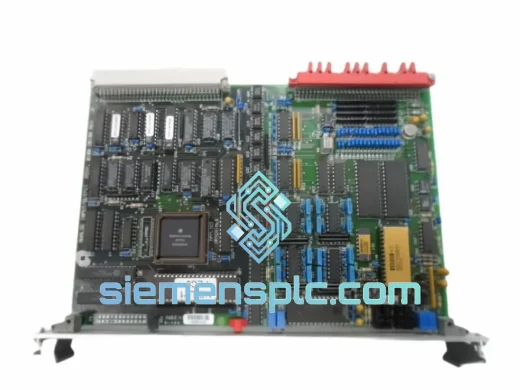
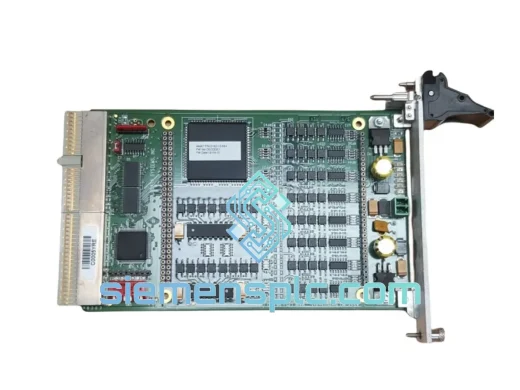
Applied Materials 0190-15384 CompactPCI 96 I/O PCB
Origin US
PLC / Industrial Control Board
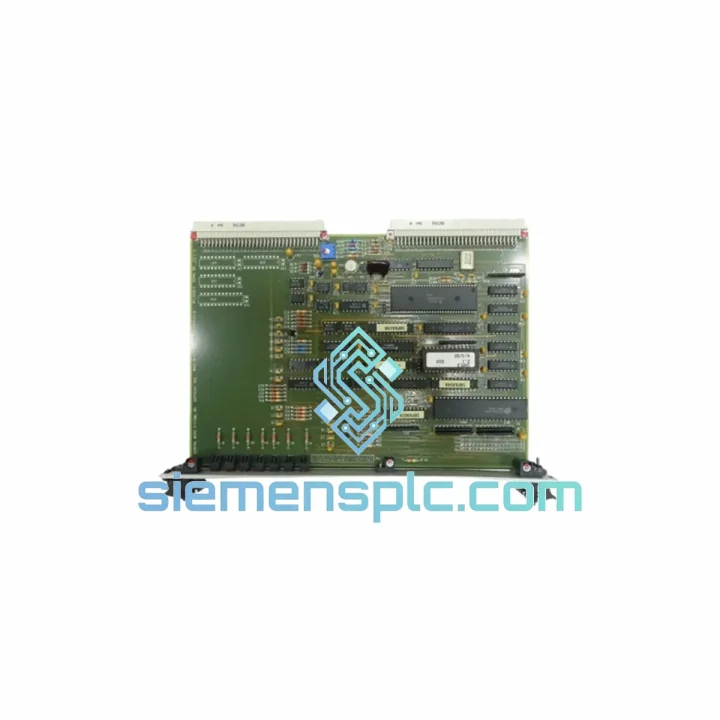
Request verified availability, condition, replacement risk review, packing options and courier lead time for GMSV36-01-D.
Click Request Quote and the part number is inserted into the inquiry form automatically.
Core fields for model confirmation and RFQ routing. Detailed product narrative remains below.
The Applied Materials GMSV36-01-D 91/096D/E is a revision-controlled printed circuit board assembly (PCBA) engineered for deployment within Applied Materials (AMAT) semiconductor process platforms, including CVD, PECVD, and plasma etch tool families. Within the equipment’s control hierarchy, this board occupies the signal acquisition and discrete I/O arbitration tier — the layer that sits between chamber-level instrumentation (thermocouples, pressure transducers, flow sensors) and the central process controller’s command bus. Its revision suffix, 91/096D/E, encodes a specific engineering change level that governs connector pinout assignments, onboard firmware baseline compatibility, and signal routing topology. Substituting an incorrect revision introduces the risk of bus timing mismatches, interlock logic discrepancies, and analog calibration offsets that cannot be corrected through software alone.
In a typical AMAT CVD or etch tool, the process control board at this tier performs four concurrent functions: analog signal acquisition from multi-point thermocouple arrays and capacitance manometers; digital I/O sequencing for pneumatic valve trains and RF match network control lines; real-time status reporting to the host controller over the equipment’s proprietary backplane bus; and hardware-enforced interlock assertion for out-of-tolerance process conditions. The GMSV36-01-D executes all four functions within a single board assembly, reducing the interconnect complexity that would otherwise arise from distributing these functions across multiple discrete modules.
The board is rated for continuous operation inside the electronics enclosure of plasma process tools — an environment defined by broadband RF interference at 13.56 MHz and harmonics, thermal cycling between process and idle states, and the particulate and outgassing constraints of Class 1–100 cleanroom enclosures. Its PCB construction, component selection, and conformal coating specification are each chosen to sustain signal integrity and functional reliability under these combined stressors across the tool’s operational service life.
Real-time Stock & RFQ: [email protected] | WhatsApp: +86 18359268345
| Parameter | Specification |
|---|---|
| OEM Part Number | GMSV36-01-D |
| Revision / Variant Code | 91/096D/E |
| Assembly Classification | Printed Circuit Board Assembly (PCBA) — Signal Conditioning & Discrete I/O |
| Manufacturer | Applied Materials, Inc. (AMAT) |
| Country of Origin | United States |
| Target Equipment Platforms | AMAT CVD, PECVD, Plasma Etch, Wafer Handling Systems |
| Board Interface | Edge connector — proprietary AMAT backplane bus |
| Analog Input Architecture | Differential amplifier front-end; multi-channel ADC with hardware-selectable gain |
| Digital I/O Logic | PLD-based interlock matrix with deterministic assertion latency |
| Operating Ambient Temperature | 0 °C to +55 °C (electronics enclosure) |
| Storage Temperature | −25 °C to +70 °C |
| EMC Design Basis | Multi-layer ground plane; ferrite bead RF suppression; IEC 61000-4-3 radiated immunity |
| ESD Handling Class | Class 2 per ANSI/ESD S20.20 — ESD-controlled handling mandatory |
| Cleanroom Compatibility | Class 1–100; conformal coating per IPC-CC-830 |
| Revision Compatibility Constraint | Specific to tool generations requiring 91/096D/E engineering change baseline |
| Supply Condition | New OEM / Functionally Tested Refurbished — specify at RFQ |
| Warranty Period | 12 months from confirmed shipment date |
| Standard Lead Time (In-Stock) | 2–5 business days; confirm availability at inquiry |
| Shipping Origin | Xiamen, Fujian, China |
Analog Front-End Signal Chain: The GMSV36-01-D’s analog acquisition path begins at instrumentation-grade differential amplifier stages that accept low-level thermocouple outputs (typically in the 0–80 mV range for Type K sensors at process temperatures) and pressure transducer signals from capacitance manometers. Each differential stage provides common-mode rejection ratios (CMRR) sufficient to suppress the ground potential differences that develop across the tool’s chassis when RF power is applied to the plasma chamber. Following amplification, signals pass through an anti-aliasing filter network before reaching the onboard ADC. The ADC’s sampling rate is synchronized to the process controller’s control loop update period — typically 10–100 ms for thermal loops and sub-10 ms for pressure control loops — ensuring that no process excursion aliases below the controller’s detection threshold.
EMC Architecture in Plasma Tool Environments: RF energy at 13.56 MHz (and its 2nd and 3rd harmonics at 27.12 MHz and 40.68 MHz) couples into the electronics enclosure through chamber feedthrough cables, RF match network interconnects, and chassis apertures. The GMSV36-01-D addresses this through a six-layer PCB stackup in which dedicated ground planes are interleaved between every signal layer pair, forming distributed Faraday shielding for analog traces. Power supply rails feeding the analog section are filtered through ferrite bead arrays with impedance characteristics selected for the 13.56 MHz fundamental, attenuating conducted RF before it reaches the ADC reference and amplifier bias networks. Connector shield terminations are routed to chassis ground through low-inductance stitching vias, maintaining a continuous RF return path that prevents shield currents from flowing through signal ground references.
PLD-Based Interlock Logic: The board’s digital section implements the tool’s hardware safety interlock matrix within a programmable logic device (PLD). This architecture places critical interlock decisions — chamber pressure overrange, coolant flow loss, RF arc detection, and door interlock status — in hardware logic that asserts within a fixed, deterministic propagation delay independent of the host controller’s software execution state. The PLD’s interlock outputs drive relay coils and valve solenoids directly, bypassing the backplane bus entirely for safety-critical actuations. This design ensures that a host controller software fault, communication timeout, or watchdog reset cannot delay or suppress a hardware interlock assertion during a process excursion.
Backplane Bus Driver and Timing: The revision 91/096D/E designation reflects, in part, an update to the board’s backplane bus driver circuitry. Revised termination resistor values and adjusted bus timing parameters align the board’s electrical characteristics with the backplane specification revision applicable to the target tool generation. Incorrect revision substitution — for example, installing a 91/096C/E board in a system requiring 91/096D/E — can produce bus contention conditions under heavy backplane loading, manifesting as intermittent communication errors that are difficult to distinguish from cable or connector faults during troubleshooting.
Thermal Zoning and PCB Layout Discipline: Power-dissipating components — linear voltage regulators, bus driver ICs, and the ADC clock oscillator — are grouped in a thermal zone physically separated from the analog signal conditioning area by a PCB routing exclusion region. Copper pour areas on inner layers conduct heat laterally from the power zone to the board’s edge connector region, where the enclosure’s forced-air cooling provides the primary heat removal path. This layout discipline keeps the analog front-end within its specified operating temperature range across the full duty cycle of the process tool, preserving ADC linearity and amplifier offset stability over the board’s service life.
Every Applied Materials GMSV36-01-D 91/096D/E unit dispatched from our Xiamen, Fujian facility passes through a structured pre-shipment verification sequence. Part number markings, revision codes, and date codes are cross-referenced against OEM documentation to confirm identity and revision baseline. New OEM units are verified against original packaging integrity and label authenticity. Refurbished units undergo functional bench testing with documented pass/fail records — available to customers upon request — covering analog channel accuracy, digital I/O response, and bus communication handshaking.
Packaging follows ANSI/ESD S20.20 protocols throughout: boards are sealed in static-shielding bags with humidity indicator cards, cushioned within anti-static foam inserts, and enclosed in double-wall corrugated cartons rated for international air freight drop and vibration profiles. Desiccant packs are included for shipments to high-humidity destinations or where transit times exceed five days.
Shipments originate from Xiamen and reach semiconductor manufacturing hubs in Taiwan, South Korea, Japan, Singapore, the United States, Germany, and the Netherlands within 3–7 business days via DHL Express, FedEx International Priority, or UPS Worldwide Express. Carrier selection is based on destination, urgency, and declared value thresholds. Export documentation — commercial invoice, packing list, Certificate of Conformance, and HS code classification — is prepared as standard for each shipment to support customs clearance in regulated markets.
A 12-month warranty covers manufacturing defects and functional failures under normal operating conditions from the confirmed shipment date. Warranty claims receive a target response within one business day. Advance replacement arrangements are available for customers with active service agreements, minimizing tool downtime exposure during the warranty resolution process.
Email: [email protected]
WhatsApp: +86 18359268345
Web: siemensplc.com
Location: Xiamen, China
© 2026 siemensplc.com. All rights reserved.
We check the full part number, brand, series and visible nameplate information before quotation.
Sales confirms stock path, condition option, quantity and realistic lead time for export dispatch.
DHL, FedEx, UPS or buyer courier arrangements can be reviewed with packing requirements.
Similar brand or category products for fast comparison and multi-item RFQ lists.