
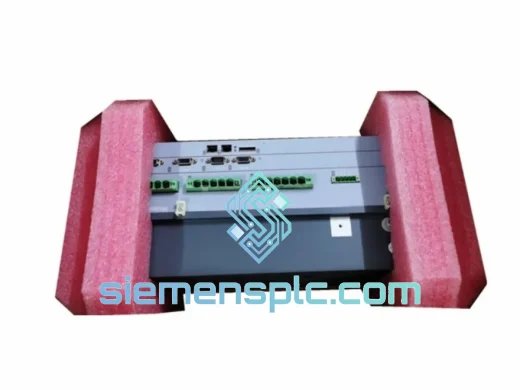
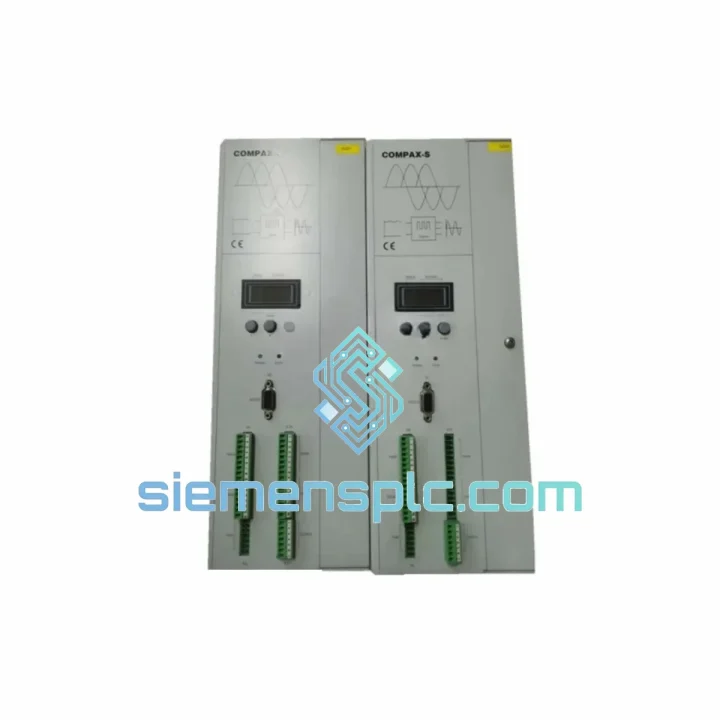
PARKER
In Stock OK
Parker HID2CS/S4 HID5CS/S4 AC Servo Drive – HID Series
Request verified availability, condition, replacement risk review, packing options and courier lead time for HID2CS/S4.
BrandPARKER
Part NumberHID2CS/S4
ConditionAvailability Check
Lead TimeRFQ Confirmation
DocumentsDatasheet / photos by RFQ
ShippingExport packing available
Auto-filled RFQ
HID2CS/S4
Click Request Quote and the part number is inserted into the inquiry form automatically.
- Reply by email: [email protected]
- WhatsApp / Tel: +86 18359268345
- Mon-Sat 9:00-18:00 GMT+8
Procurement Data
Key Product Information
Core fields for model confirmation and RFQ routing. Detailed product narrative remains below.
- Brand
- PARKER
- Primary Part Number
- HID2CS/S4
- Product Type
- AC Servo Drive
- Product Family
- Other series
- Country of Origin
- US
- Catalog Category
- Motor Drives
- Operating Temp.
- 0 °C to +45 °C ambient (derate above 40 °C)
- Humidity
- 5–95% RH, non-condensing
- Warranty
- 12 months from date of shipment
Model confirmed for inquiry
HID2CS/S4
Send quantity, destination and urgency. The RFQ form keeps this part number attached.
Request Quote
Product Overview
Parker HID2CS/S4 & HID5CS/S4 Compact AC Servo Drive — Deterministic Torque and Velocity Control for Multi-Axis Industrial Machines
The Parker HID2CS/S4 and HID5CS/S4 are panel-mount AC servo drives from Parker Hannifin’s HID Series, designed to deliver closed-loop torque, velocity, and position control in space-constrained multi-axis machine architectures. The two variants differ solely in their continuous output current rating — 2 A and 5 A respectively — while sharing an identical mechanical envelope, connector layout, and firmware base. This deliberate design decision allows machine builders to populate a single cabinet layout with mixed-power axes without altering wiring harnesses or DIN-rail footprints.
The drives accept single-phase or three-phase 200–240 V AC input and regulate output to brushless servo motors via a three-phase IGBT bridge. The current loop executes at a fixed 16 kHz switching frequency, producing a torque bandwidth sufficient for high-dynamic applications such as electronic cam profiling, flying shear, and register control in web-fed printing. Position loop closure is handled externally by a Parker ACR or Aries motion controller, which communicates with the drive over RS-232/RS-485 or optional CANopen/PROFIBUS fieldbus modules.
Real-time Stock & RFQ: [email protected] | WhatsApp: +86 18359268345
Technical Parameters
| Parameter | HID2CS/S4 | HID5CS/S4 |
|---|---|---|
| Supply Voltage | 1-phase / 3-phase 200–240 V AC ±10%, 50/60 Hz | |
| Continuous Output Current | 2 A RMS | 5 A RMS |
| Peak Output Current | 6 A (3× rated, 2 s) | 15 A (3× rated, 2 s) |
| Switching Frequency | 16 kHz (fixed) | |
| Control Modes | Torque / Velocity / Position (selectable via parameter) | |
| Feedback Interface | Incremental encoder (5 V differential, A/B/Z); resolver (model-dependent option) | |
| Communication | RS-232 / RS-485 (standard); CANopen / PROFIBUS DP (optional plug-in module) | |
| Analog I/O | ±10 V command input; 1× analog output (velocity/torque monitor) | |
| Digital I/O | 6× opto-isolated inputs (24 V DC); 3× relay/open-collector outputs | |
| Protection Functions | Over-current, over-voltage (DC bus >400 V), under-voltage, over-temperature (heatsink >85 °C), short-circuit, motor stall | |
| Protection Class | IP20 (panel-mount, forced-air or convection) | |
| Operating Temperature | 0 °C to +45 °C ambient (derate above 40 °C) | |
| Storage Temperature | −25 °C to +70 °C | |
| Humidity | 5–95% RH, non-condensing | |
| Altitude | Up to 1,000 m without derating | |
| Weight | Approx. 840 g | |
| Certifications | CE (LVD 2014/35/EU, EMC 2014/30/EU), UL, RoHS | |
| Warranty | 12 months from date of shipment | |
Hardware Logical Analysis
The HID Series power stage is built around a three-phase IGBT bridge with integrated gate drivers and a dedicated DC-bus capacitor bank sized to absorb regenerative energy spikes during deceleration without requiring an external braking resistor in most horizontal-axis applications. The DC bus is monitored at 1 ms intervals; if bus voltage exceeds the 400 V threshold, the drive activates the internal braking chopper and routes excess energy to an optional external resistor, preventing over-voltage faults during high-inertia stops.
The current measurement circuit uses two hall-effect sensors on phases U and W, with phase V reconstructed by Kirchhoff’s current law. This three-wire measurement topology eliminates the common-mode error introduced by shunt resistors in the DC link, improving torque linearity at low speeds — a critical requirement in tension-control winding applications where torque ripple directly translates to product defects.
EMC compliance is achieved through a multi-layer approach: the PCB separates high-frequency switching nodes from the analog signal ground plane using a split-ground architecture with a single star-point connection. The encoder interface uses 5 V differential line receivers (RS-422 compatible) with 120 Ω termination resistors, providing immunity to common-mode noise on cable runs up to 50 m. The opto-isolated digital inputs operate at 24 V DC with a 5 ms hardware filter, suppressing contact bounce and high-frequency transients from inductive loads on the same cabinet rail.
The auto-tuning algorithm executes a frequency-sweep inertia identification routine at commissioning: the drive injects a low-amplitude velocity perturbation, measures the resulting torque response, and calculates the load-to-motor inertia ratio. From this ratio, it sets proportional and integral gains for the velocity loop using a bandwidth-based tuning formula, targeting a default closed-loop bandwidth of 100 Hz. Engineers can override this and push bandwidth to 300+ Hz on stiff, low-inertia loads by adjusting the gain scaling factor in the parameter set.
System Integration Benefits
- Unified mechanical footprint across current ratings — HID2CS/S4 and HID5CS/S4 occupy identical panel space, allowing axis power to be scaled during machine redesign without modifying cabinet drawings or DIN-rail layouts.
- Deterministic current loop at 16 kHz — The fixed switching frequency eliminates variable-frequency noise spectra, simplifying EMC filter design and reducing audible noise in servo motors operating in the 1–5 kHz mechanical resonance range.
- Differential encoder interface with hardware termination — On-board 120 Ω termination and RS-422 line receivers allow encoder cable runs up to 50 m without signal conditioning hardware, reducing BOM cost in large gantry systems.
- Opto-isolated I/O with 24 V DC compatibility — All six digital inputs are galvanically isolated and accept standard 24 V PLC output signals directly, eliminating the need for interposing relays in most machine safety circuits.
- Fieldbus scalability via plug-in modules — CANopen and PROFIBUS DP modules install without tools, allowing the same drive hardware to serve both legacy PROFIBUS networks and newer CANopen motion networks (CiA 402 profile) without firmware changes.
- Comprehensive on-board fault diagnostics — The drive logs the last eight fault events with timestamp and DC-bus voltage at fault time, enabling root-cause analysis without an external data logger during commissioning or field troubleshooting.
- Analog monitor output for oscilloscope diagnostics — A ±10 V analog output can be configured to mirror velocity error, torque command, or DC-bus voltage in real time, providing a hardware-level diagnostic channel independent of the serial communication link.
- Parker Motion Suite software compatibility — Full parameter read/write, oscilloscope capture, and auto-tune functions are accessible via Parker’s Motion Planner software over RS-232, reducing commissioning time on multi-axis machines where axis-by-axis manual parameter entry would be impractical.
- Regenerative energy management without external hardware — The internal braking chopper handles regenerative loads up to the drive’s rated dissipation, covering the majority of horizontal-axis applications and reducing the external component count in the control cabinet.
- Long product lifecycle with documented spare-parts availability — Parker Hannifin maintains industrial product lines for a minimum of 10 years post-production, providing OEM machine builders with a documented spare-parts horizon that protects machine service contracts.
Quality Assurance & Global Logistics
Every Parker HID2CS/S4 and HID5CS/S4 unit supplied by siemensplc.com is sourced from verified industrial supply channels and processed through a structured pre-shipment inspection protocol. Each unit undergoes part-number and date-code verification against Parker’s official documentation, followed by a visual inspection of the PCB, connector housings, and label integrity to confirm authenticity and rule out field-repaired or counterfeit units. Select units undergo power-on functional testing with communication response verification before packaging.
Shipments originate from Xiamen, China — a major export hub with direct access to international express carriers including DHL Express, FedEx International Priority, and UPS Worldwide Expedited. Standard transit times to major industrial regions are 3–5 business days to Europe, 2–4 business days to Southeast Asia, and 3–6 business days to North America. For time-critical production line repairs, same-day dispatch is available on confirmed stock items when orders are placed before 14:00 CST.
Export documentation provided with every shipment includes a commercial invoice, detailed packing list, and certificate of origin. Additional documentation — including Form E (ASEAN FTA), EUR.1 movement certificates (EU preferential tariff), and CITES-exempt declarations — can be arranged upon request. All units ship with a 12-month warranty from the date of shipment, covering manufacturing defects and verified component failures under normal operating conditions.
Contact Information
Email: [email protected]
WhatsApp: +86 18359268345
Web: siemensplc.com
Location: Xiamen, China
© 2026 siemensplc.com. All rights reserved.
Ready to quote
[email protected]
Send This Part Number to Sales
RFQ workflow
Quality workflow ->
Confirmation Process
01Model confirmation
We check the full part number, brand, series and visible nameplate information before quotation.
02Availability reply
Sales confirms stock path, condition option, quantity and realistic lead time for export dispatch.
03Packing & courier
DHL, FedEx, UPS or buyer courier arrangements can be reviewed with packing requirements.
Continue sourcing
Browse full catalog ->
Related Automation Parts
Similar brand or category products for fast comparison and multi-item RFQ lists.
PARKER
RFQ Ready
Parker C3F001D2F12I31T30M00 AC Servo Drive – Compax3 Series
Origin US
AC Servo Drive
PARKER
RFQ Ready
Parker C0MPAX-S 8550S E2 F3 951-550304 Servo Drive – COMPAX-S Series
Origin Germany
Servo Drive
PARKER
RFQ Ready
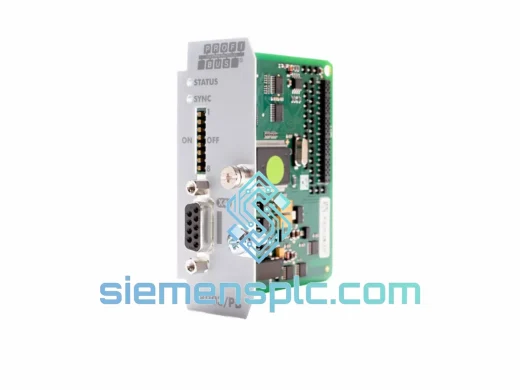
PARKER 8903-PB-00 Communication Module – Profibus TechCard
Origin United Kingdom (Parker SSD Drives, Poole, Dorset)
Communication Module