GE
RFQ Ready
GE IS420UCSDH1 Servo Drive Controller Module
Mark VI
Origin US
Servo Drive Controller Module
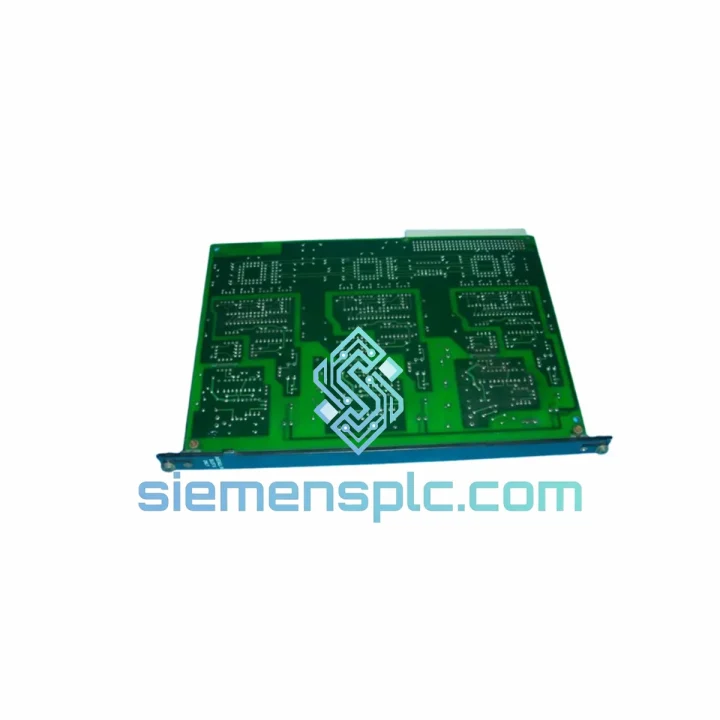
Request verified availability, condition, replacement risk review, packing options and courier lead time for IS200BPIBG1AEB.
Click Request Quote and the part number is inserted into the inquiry form automatically.
Core fields for model confirmation and RFQ routing. Detailed product narrative remains below.
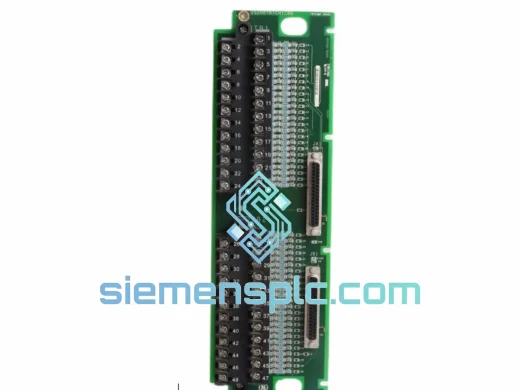
The GE IS200BPIBG1AEB is a backplane-resident gate driver interface board engineered for GE’s Mark VIe distributed turbine control platform. Its functional position is at the boundary between the 24 VDC control logic domain and the high-voltage power semiconductor switching stage — a location that imposes simultaneous requirements for sub-microsecond signal fidelity, galvanic isolation rated to withstand kilovolt-class common-mode transients, and deterministic command latency synchronized to the Mark VIe IONet scan cycle.
Within a gas turbine excitation system or static starter assembly, the IS200BPIBG1AEB receives firing angle commands from the Mark VIe VCMI or VCRC processor board via the backplane IONet bus, converts those commands into precisely timed gate pulses, and drives the gate terminals of IGBT or thyristor arrays with the voltage swing and peak current required to achieve full saturation within the specified switching interval. Gate pulse timing accuracy is a first-order variable in harmonic distortion, switching loss, and thermal stress distribution across the power stack — parameters that directly affect plant heat rate and power semiconductor service life.
The IS200BPIBG1AEB has accumulated extensive field hours across GE Frame 6B, 7E, 7FA, 9E, and 9FA gas turbine fleets, steam turbine governor panels, and combined-cycle plant control cabinets. Operating environments include high ambient temperature, mechanical vibration from turbine foundations, and conducted electromagnetic interference generated by adjacent variable-frequency drives and power conversion equipment. The board’s design reflects GE’s industrial-grade hardware engineering standards: multi-layer PCB construction with embedded power and ground planes, conformal coating on all exposed traces and component bodies, and component stress derating consistent with MIL-HDBK-217 reliability methodology.
In static starter applications, where the IS200BPIBG1AEB drives thyristor bridges that accelerate the turbine-generator shaft from rest to synchronous speed, the board must maintain firing angle symmetry across all six thyristor gate channels simultaneously. Any inter-channel timing skew exceeding the design tolerance introduces torque ripple that stresses the turbine coupling and increases acoustic emissions during the start sequence. The board’s optocoupler array is selected for matched propagation delay across channels, and the gate drive output stage is calibrated to deliver consistent rise and fall times into the capacitive load presented by each thyristor gate-cathode junction.
Real-time Stock & RFQ: [email protected] | WhatsApp: +86 18359268345
| Part Number | IS200BPIBG1AEB |
| Manufacturer | GE (General Electric) |
| Control Platform | Mark VIe Distributed Turbine Control System |
| Module Classification | Gate Driver / Power Interface Board |
| Form Factor | Plug-in PCB module, Mark VIe I/O chassis backplane compatible |
| Target Power Devices | IGBT modules, thyristor (SCR) arrays in excitation and static starter stages |
| Isolation Technology | High-speed optocoupler galvanic isolation; propagation delay < 1 µs per channel |
| Isolation Voltage | 2,500 V RMS (control-to-power domain); reinforced insulation per IEC 61010-1 |
| Gate Drive Output | Totem-pole output stage; peak gate current sufficient for IGBT Cge charge/discharge within switching window |
| Communication Interface | Mark VIe backplane IONet (100 Mbps Ethernet-based deterministic I/O bus) |
| Control Supply Voltage | 24 VDC nominal (Mark VIe backplane rail) |
| Operating Temperature | 0 °C to +60 °C continuous; storage –40 °C to +85 °C |
| Humidity | 5% to 95% RH, non-condensing |
| PCB Construction | Multi-layer; embedded power/ground planes; conformal-coated; MIL-HDBK-217 derated components |
| Weight | 210 g |
| Regulatory Compliance | IEC 61511, IEC 61010-1, RoHS, CE |
| Warranty | 12 months from date of shipment |
The IS200BPIBG1AEB addresses three distinct hardware engineering challenges inherent to gate drive applications in turbine control systems: galvanic isolation integrity, switching timing determinism, and electromagnetic compatibility under industrial plant conditions.
Optocoupler Isolation Architecture: The board employs a matched array of high-speed optocouplers to transfer gate firing commands across the galvanic barrier separating the 24 VDC Mark VIe control logic from the power semiconductor gate circuit. Devices are selected for propagation delay below 1 µs and tight channel-to-channel delay matching — a specification driven by the multi-phase firing symmetry requirement in thyristor bridge applications. The isolation barrier is rated at 2,500 V RMS, providing margin against common-mode transients generated by IGBT switching events, where dV/dt values on the collector-emitter node can reach several hundred volts per microsecond. This prevents transient energy from coupling back through the gate drive path into the Mark VIe backplane and corrupting processor or I/O module operation.
Gate Drive Output Stage: Downstream of the isolation barrier, a totem-pole output configuration provides the current sourcing and sinking capability required to charge and discharge IGBT gate-emitter capacitance (Cge) within the switching time window specified by the power stack design. Factory-set gate resistors on the board balance switching speed against dV/dt-induced electromagnetic emissions — a trade-off optimized by GE’s application engineers for the specific IGBT module types used in Mark VIe excitation and static starter power stacks. The output stage is designed to maintain consistent rise and fall times across the full operating temperature range, preventing firing angle drift as the board warms during sustained operation.
EMC Layout and Decoupling: The multi-layer PCB places power and return planes as adjacent inner layers, minimizing the loop inductance of the gate drive current path and reducing radiated emissions from switching transients. Decoupling capacitors are placed at the supply pins of each active device, with values selected to suppress both high-frequency switching noise in the 10–100 MHz range and lower-frequency conducted emissions that could propagate onto the Mark VIe backplane power rail. The conformal coating applied to the assembled board provides additional protection against condensation-induced surface leakage currents in turbine hall environments where humidity can spike during cold-start conditions.
Desaturation Fault Detection: The board incorporates desaturation detection circuitry that monitors the collector-emitter voltage of each driven IGBT during the on-state conduction interval. When a short-circuit or sustained overload condition forces the IGBT out of saturation, the collector-emitter voltage rises above the desaturation threshold, and the detection circuit asserts a fault signal back to the Mark VIe controller within microseconds. This enables the control system to execute a controlled gate block and initiate a safe shutdown sequence before thermal runaway propagates through the power semiconductor stack — a protection mechanism that is particularly critical in static starter applications where the power stack is exposed to high inrush currents during turbine acceleration.
Each IS200BPIBG1AEB unit supplied by siemensplc.com is subjected to a structured pre-shipment verification protocol before dispatch. Boards are powered on a dedicated test fixture that replicates the Mark VIe backplane electrical environment — 24 VDC supply rail, IONet bus termination, and representative gate load impedance. Gate drive output timing is measured against GE’s published specification using a calibrated digital oscilloscope, and optocoupler forward voltage, output transistor saturation voltage, and power supply rail regulation are recorded for each channel. Visual inspection covers solder joint integrity under magnification, component orientation, conformal coating coverage uniformity, and connector pin condition including contact plating and retention force. Units that do not satisfy all acceptance criteria are quarantined and excluded from shipment.
Each shipment is accompanied by a test record documenting measured parameters, a certificate of conformance stating part number, revision level, and inspection date, and ESD handling instructions. Packaging consists of a heat-sealed anti-static shielding bag enclosed in a foam-lined rigid carton with desiccant sachets for humidity control during extended transit. Export cartons carry IATA-compliant markings for air freight handling.
Logistics operations are based in Xiamen, China, with direct access to Xiamen Gaoqi International Airport and Xiamen Port. Orders confirmed before 15:00 CST are eligible for same-day dispatch. Standard express services via DHL Express, FedEx International Priority, and UPS Worldwide Express reach most industrial destinations in Europe, the Middle East, Southeast Asia, and the Americas within 3–5 business days. For plant outage scenarios requiring accelerated delivery, charter freight and hand-carry courier options are available on request. All shipments include end-to-end tracking and cargo insurance coverage.
Email: [email protected]
WhatsApp: +86 18359268345
Web: siemensplc.com
Location: Xiamen, China
© 2026 siemensplc.com. All rights reserved.
We check the full part number, brand, series and visible nameplate information before quotation.
Sales confirms stock path, condition option, quantity and realistic lead time for export dispatch.
DHL, FedEx, UPS or buyer courier arrangements can be reviewed with packing requirements.
Similar brand or category products for fast comparison and multi-item RFQ lists.