GE
RFQ Ready
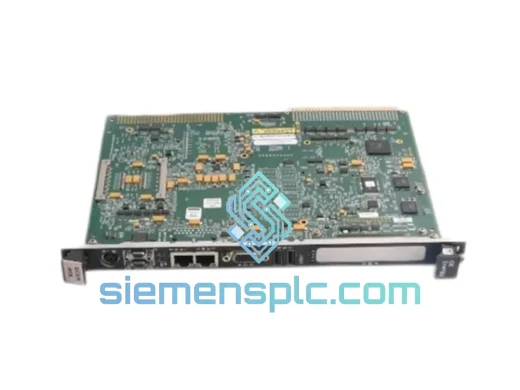
GE IS210MVRBH1A I/O Interface Board – Mark VIe Series
Mark VI
Origin US
I/O Interface Board
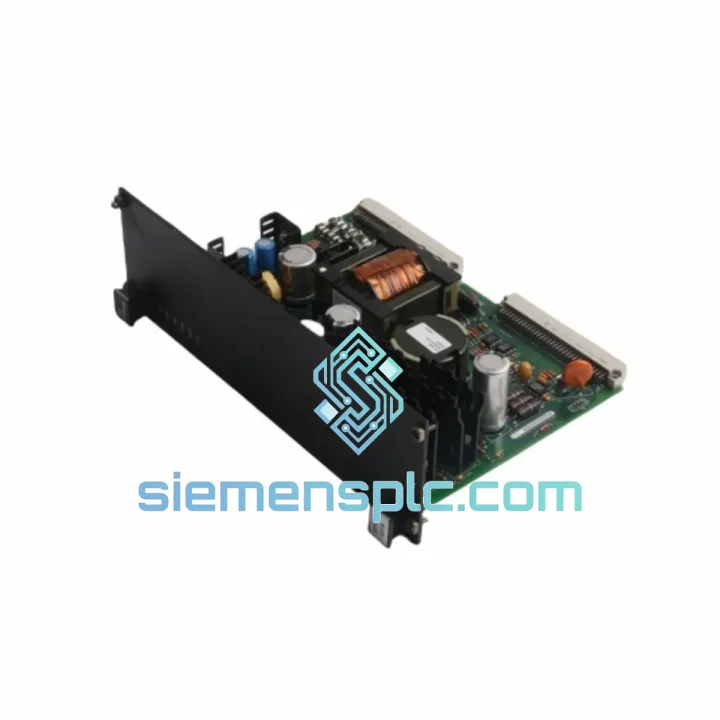
Request verified availability, condition, replacement risk review, packing options and courier lead time for IS200NATPG1CAA.
Click Request Quote and the part number is inserted into the inquiry form automatically.
Core fields for model confirmation and RFQ routing. Detailed product narrative remains below.
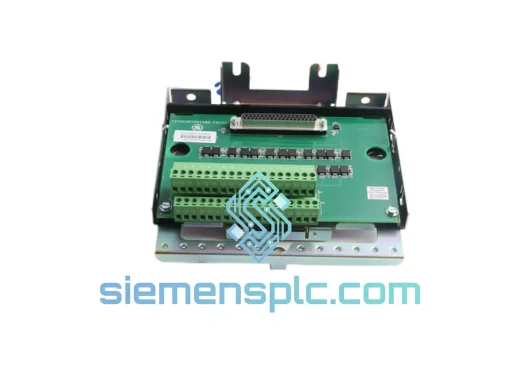
The IS200NATPG1CAA is a Natbus Analog Termination Panel (NATP) manufactured by General Electric as a core I/O interface component within the Mark VI Turbine Control System. Its primary function is to serve as the physical and electrical boundary between field instrumentation — thermocouples, RTDs, 4–20 mA transmitters, and discrete contacts — and the Mark VI controller backplane. Unlike passive terminal blocks, the NATP performs active signal conditioning, channel multiplexing, and bus-protocol framing before data is committed to the Natbus serial backbone. This distinction is operationally significant: signal integrity, scan determinism, and fault isolation all originate at this board level, not at the controller card.
In gas turbine and steam turbine power plants, the IS200NATPG1CAA is installed within the Mark VI I/O rack, typically adjacent to VCMI (VME Communication Module Interface) and VTUR (Turbine Controller) cards. Each NATP board manages a defined channel group, and multiple boards operate in parallel to cover the full I/O count of a turbine unit. The board’s hardware revision — G1CAA — is a firmware-locked identifier that must match the Mark VI toolbox configuration file exactly; mismatched revisions will cause the controller to flag a hardware mismatch fault and inhibit I/O scanning on the affected channel group.
Real-time Stock & RFQ: [email protected] | WhatsApp: +86 18359268345
| Parameter | Specification |
|---|---|
| Part Number | IS200NATPG1CAA |
| Manufacturer | General Electric (GE) |
| Series | Mark VI Turbine Control System |
| Board Classification | Natbus Analog Termination Panel (NATP) |
| Hardware Revision | G1CAA |
| Communication Interface | Natbus — GE proprietary high-speed serial bus |
| Supported Signal Types | Thermocouple (J, K, T, E, R, S, B types), RTD (Pt100/Pt1000), 4–20 mA analog, discrete contact I/O |
| Analog Input Resolution | 16-bit ADC per channel |
| Channel Isolation | Galvanic isolation per channel group; isolation voltage ≥ 500 V DC |
| Operating Temperature | 0°C to +60°C |
| Storage Temperature | −40°C to +85°C |
| Power Supply | +5 V DC via backplane; ±15 V DC for analog front-end |
| Form Factor | PCB module, rack-mountable within Mark VI I/O chassis |
| Approximate Weight | 1,100 g |
| Controller Compatibility | Mark VI VCMI, VTUR, VGEN configurations |
| Condition | New surplus / Tested refurbished / Exchange |
| Warranty | 12 months against manufacturing defects and functional failure under normal operating conditions |
| Country of Origin | United States |
The IS200NATPG1CAA’s internal architecture reflects GE’s design philosophy for high-availability turbine control: every signal path is treated as a potential failure point, and the board’s hardware logic is structured to contain, report, and isolate faults without propagating them upstream to the controller.
Natbus Protocol Framing: The NATP does not simply pass raw analog voltages to the controller. It digitizes each channel via a dedicated 16-bit successive-approximation ADC, frames the result into a Natbus data packet with channel ID, timestamp, and CRC checksum, and transmits it over the proprietary serial bus at a fixed scan rate. This architecture decouples the analog front-end from the controller’s processing cycle, allowing the VCMI to service multiple NATP boards without introducing scan jitter. The CRC layer ensures that any transmission error is detected and flagged as a diagnostic alarm rather than silently corrupting process data.
Galvanic Isolation per Channel Group: Each analog input group on the IS200NATPG1CAA is galvanically isolated from the Natbus backplane using optocoupler arrays and DC-DC converter islands. The isolation barrier sustains a minimum of 500 V DC between field wiring and the digital logic domain. This is not a single common-mode barrier for the entire board — isolation is implemented at the channel-group level, meaning a ground fault on one thermocouple loop cannot inject common-mode noise into adjacent RTD channels. In turbine environments where generator ground faults and high-frequency switching transients are routine, this per-group isolation architecture is a measurable reliability advantage over boards that use a single board-level isolation barrier.
EMC Design: The PCB layout follows GE’s internal EMC guidelines for Mark VI hardware, which mandate separate ground planes for analog and digital domains, guard traces around high-impedance thermocouple inputs, and ferrite bead filtering on all power rails entering the analog front-end. The board’s metal faceplate and rack chassis form a continuous Faraday enclosure, attenuating radiated emissions from adjacent VFDs, bus bars, and high-current switching equipment common in turbine auxiliary panels.
Cold Junction Compensation (CJC): For thermocouple channels, the IS200NATPG1CAA integrates an on-board precision thermistor at the terminal block reference junction. The CJC measurement is sampled at the same rate as the thermocouple channels and applied in firmware before the data packet is transmitted on Natbus. This eliminates the need for external CJC hardware and ensures that ambient temperature drift at the terminal block does not introduce systematic offset errors into temperature measurements — a critical requirement for turbine exhaust spread calculations and combustion dynamics monitoring.
Watchdog and Self-Diagnostics: The board’s local microcontroller runs a continuous self-test loop that monitors ADC reference voltage stability, CJC thermistor continuity, Natbus transmit buffer status, and power rail voltages. Any parameter outside tolerance triggers a board-level fault flag transmitted on the next Natbus packet, allowing the Mark VI controller to log a timestamped diagnostic event and, in TMR (Triple Modular Redundant) configurations, initiate a voter arbitration review without requiring operator intervention.
Every IS200NATPG1CAA unit dispatched from our Xiamen, China facility passes through a structured pre-shipment quality process. Visual inspection covers PCB surface condition, connector pin integrity, component seating, and label legibility against GE reference documentation. Where test fixtures are available, boards are powered and Natbus communication is verified before packaging. All units are shipped in anti-static bags with conductive foam inserts, enclosed in double-wall corrugated cartons rated for international air freight handling. A traceability document — including serial number, inspection date, and technician sign-off — accompanies every shipment.
Logistics from Xiamen covers DHL Express, FedEx International Priority, and UPS Worldwide Expedited for time-critical orders, with typical transit times of 3–5 business days to North America and Europe. Sea freight consolidation is available for bulk spare parts orders. Full export documentation — commercial invoice, packing list, certificate of origin, and HS code declaration — is prepared for every shipment to support customs clearance at the destination port. Our team provides active shipment tracking and responds to customs queries within one business day.
Stock is sourced exclusively from authorized distributor surplus channels, OEM decommissioning projects, and verified industrial asset liquidations. No counterfeit or unverified grey-market components are accepted into inventory. The 12-month warranty covers functional failure under normal operating conditions and includes advance replacement support for critical plant applications.
Email: [email protected]
WhatsApp: +86 18359268345
Web: siemensplc.com
Location: Xiamen, China
© 2026 siemensplc.com. All rights reserved.
We check the full part number, brand, series and visible nameplate information before quotation.
Sales confirms stock path, condition option, quantity and realistic lead time for export dispatch.
DHL, FedEx, UPS or buyer courier arrangements can be reviewed with packing requirements.
Similar brand or category products for fast comparison and multi-item RFQ lists.