GE
RFQ Ready
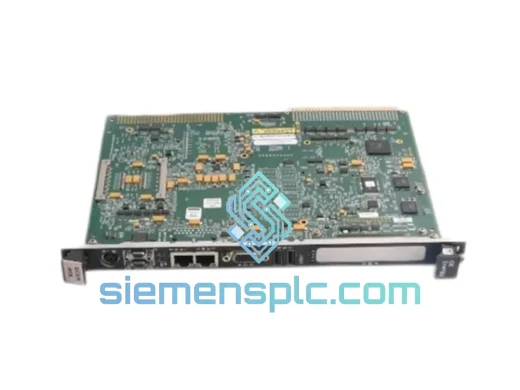
GE IS210MVRBH1A I/O Interface Board – Mark VIe Series
Mark VI
Origin US
I/O Interface Board
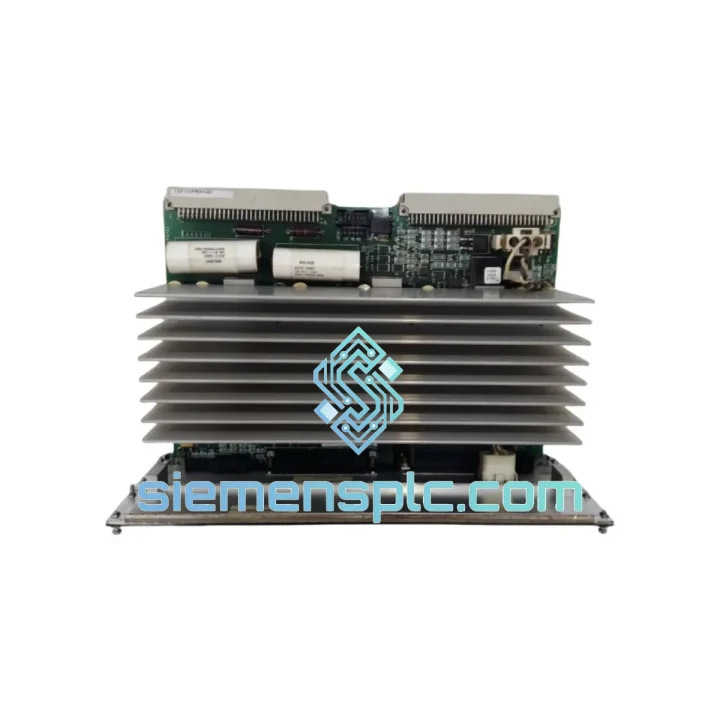
Request verified availability, condition, replacement risk review, packing options and courier lead time for IS215VPROH1BD.
Click Request Quote and the part number is inserted into the inquiry form automatically.
Core fields for model confirmation and RFQ routing. Detailed product narrative remains below.
The IS215VPROH1BD is a resistance temperature detector (RTD) input card engineered for deployment within the GE Speedtronic Mark VI distributed turbine control architecture. Its primary function is the acquisition, linearization, and transmission of temperature signals from PT100 three-wire RTD sensors installed across gas turbine exhaust sections, steam turbine bearing housings, and compressor inter-stage measurement points. The card interfaces directly with the Mark VI VME-format I/O backplane, delivering conditioned analog data to the UCSC or UCSB controller boards via the proprietary I/O bus at deterministic scan rates. In a typical Mark VI configuration, the VPRO family of cards occupies dedicated I/O slots within the , , or protection racks, where triple-redundant voting logic is applied at the controller level to ensure fault-tolerant temperature protection.
Real-time Stock & RFQ: [email protected] | WhatsApp: +86 18359268345
| Parameter | Specification |
|---|---|
| Part Number | IS215VPROH1BD |
| Manufacturer | GE (General Electric) |
| Series | Speedtronic Mark VI |
| Module Function | RTD (Resistance Temperature Detector) Input Signal Conditioning |
| Supported Sensor Type | PT100 (3-wire, α = 0.00385 Ω/Ω/°C) |
| Input Channels | 16 differential RTD input channels |
| Measurement Range | –200°C to +850°C (IEC 60751 Class B) |
| Resolution | 0.1°C per LSB at 12-bit ADC conversion |
| Accuracy | ±0.5°C at 0°C reference; ±1.0°C across full range |
| Excitation Current | 1 mA constant current source per channel |
| Lead Resistance Compensation | 3-wire Kelvin compensation, up to 25 Ω per lead |
| Isolation | Opto-isolated input stage; 500 V DC channel-to-backplane |
| Backplane Interface | Mark VI VME I/O bus, 32-bit parallel data path |
| Scan Cycle | 10 ms per full channel sweep (100 Hz effective sample rate) |
| Operating Temperature | 0°C to +60°C ambient |
| Storage Temperature | –40°C to +85°C |
| Relative Humidity | 5% to 95% non-condensing |
| Power Consumption | 3.3 W typical at 5 V DC backplane supply |
| Form Factor | VME 6U plug-in module, single-slot |
| Weight | Approx. 360 g |
| Compliance | CE, UL 508, IEC 61131-2 |
| Warranty | 12 months from date of shipment |
The IS215VPROH1BD employs a front-end multiplexed analog acquisition architecture in which all 16 RTD channels share a single precision 12-bit successive-approximation ADC. A low-leakage CMOS analog multiplexer sequences through each channel at a 10 ms frame interval, ensuring that no single channel monopolizes conversion bandwidth. The constant 1 mA excitation current is generated by a precision current mirror referenced to an internal bandgap voltage reference (temperature coefficient <10 ppm/°C), which eliminates the measurement error introduced by supply voltage fluctuations common in industrial panel environments.
Each input channel is preceded by a differential instrumentation amplifier stage with a common-mode rejection ratio (CMRR) exceeding 100 dB at 50/60 Hz. This is critical in turbine enclosures where high-current motor drives and ignition systems generate substantial conducted and radiated interference. The opto-isolation barrier between the field-side analog circuitry and the backplane-side digital logic provides 500 V DC galvanic separation, preventing ground loop currents from corrupting temperature readings — a failure mode that has historically caused spurious turbine trips in poorly isolated RTD installations.
The three-wire Kelvin compensation circuit actively measures lead resistance on the return conductor and subtracts it from the total measured resistance before linearization, accommodating cable runs up to 25 Ω per lead without calibration offset. The linearization algorithm is implemented in firmware on an onboard microcontroller, applying the Callendar–Van Dusen equation coefficients for PT100 sensors (A = 3.9083×10⁻³, B = –5.775×10⁻⁷, C = –4.183×10⁻¹²) to convert raw resistance values to engineering-unit temperatures before transmission across the VME bus.
EMC hardening is achieved through a combination of board-level filtering (ferrite beads on all power rails, 100 nF ceramic bypass capacitors at each IC power pin) and chassis-level shielding via the VME card cage. The card meets IEC 61000-4-4 (electrical fast transient, 2 kV) and IEC 61000-4-5 (surge immunity, 1 kV line-to-line) without performance degradation, making it suitable for installation in close proximity to high-voltage switchgear.
Every IS215VPROH1BD unit supplied by siemensplc.com undergoes a structured incoming inspection protocol before entering stock. Each card is powered on a dedicated Mark VI-compatible VME test bench, where all 16 RTD input channels are exercised with a precision decade resistance box across the full PT100 measurement range (18.52 Ω at –200°C to 390.48 Ω at +850°C). Channel accuracy, open-circuit detection, and backplane communication integrity are verified against GE factory acceptance test criteria. Units that do not meet specification are quarantined and not offered for sale.
Traceability documentation — including the original GE manufacturing date code, hardware revision label, and test report — is retained on file and available to customers upon request. All units are packed in anti-static shielding bags, placed in foam-lined cartons, and sealed with tamper-evident tape before dispatch. Export documentation (commercial invoice, packing list, and HS code 8537.10 classification) is prepared in compliance with Chinese customs regulations to minimize clearance delays at destination ports.
Shipments originate from our warehouse in Xiamen, China. Standard international dispatch is via DHL Express or FedEx International Priority, with door-to-door transit times of 3–5 business days to Europe, North America, and Southeast Asia. Freight tracking numbers are issued within 24 hours of payment confirmation. For time-critical plant outages, same-day dispatch is available for orders confirmed before 14:00 CST. All shipments are covered by cargo insurance for the declared value of the goods.
Email: [email protected]
WhatsApp: +86 18359268345
Web: siemensplc.com
Location: Xiamen, China
© 2026 siemensplc.com. All rights reserved.
We check the full part number, brand, series and visible nameplate information before quotation.
Sales confirms stock path, condition option, quantity and realistic lead time for export dispatch.
DHL, FedEx, UPS or buyer courier arrangements can be reviewed with packing requirements.
Similar brand or category products for fast comparison and multi-item RFQ lists.