GE
RFQ Ready
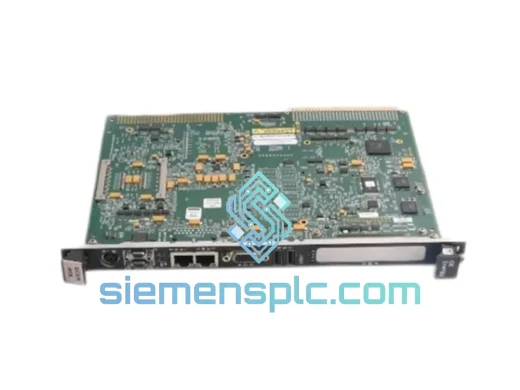
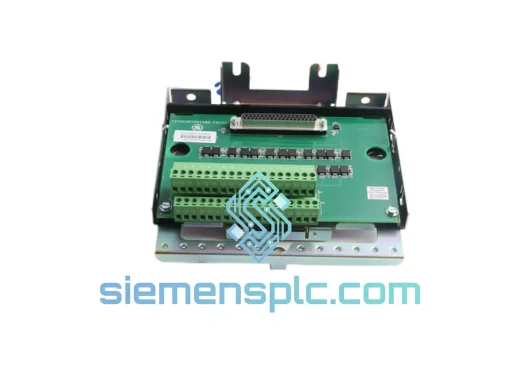
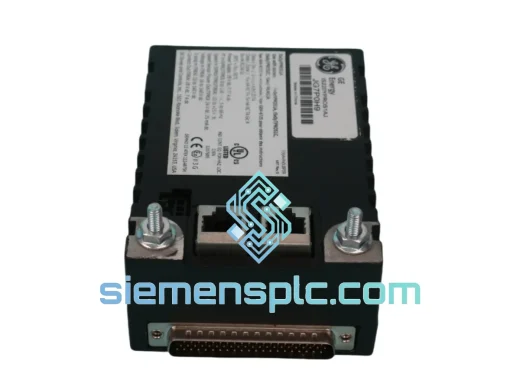
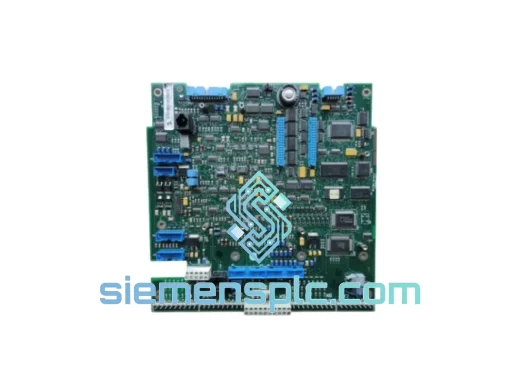
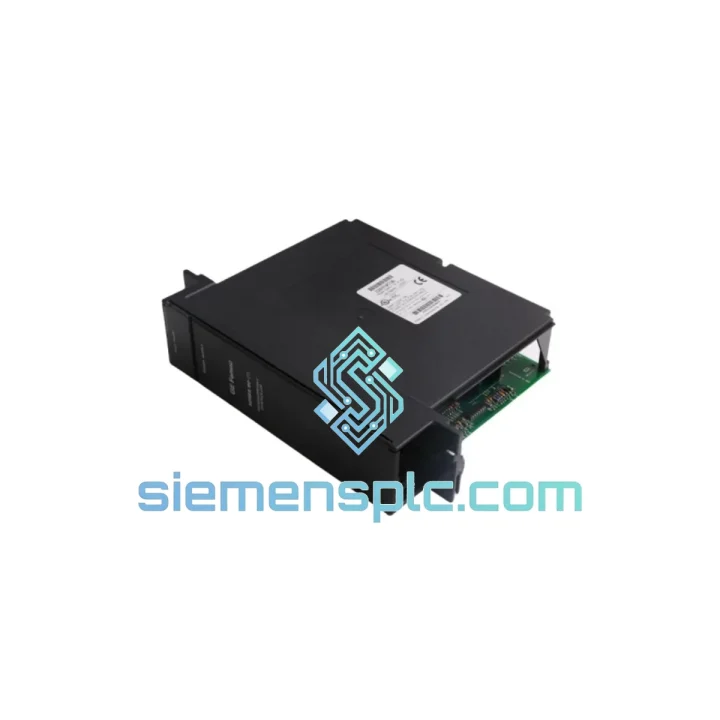
GE IS210MVRBH1A I/O Interface Board – Mark VIe Series
Mark VI
Origin US
I/O Interface Board
Request verified availability, condition, replacement risk review, packing options and courier lead time for IS220PD0AH1A.
Click Request Quote and the part number is inserted into the inquiry form automatically.
Core fields for model confirmation and RFQ routing. Detailed product narrative remains below.
The GE IS220PD0AH1A is a rack-mounted I/O interface card engineered for deployment within GE’s Mark VI Speedtronic turbine control platform. Its primary function is to serve as a deterministic signal conditioner and distribution node between field instrumentation — thermocouples, RTDs, proximity probes, and 4–20 mA transmitters — and the Mark VI’s VME-based controller backplane. In a gas turbine control loop, the IS220PD0AH1A occupies the boundary layer between raw field signals and the real-time control algorithms executing on the VCMI or VCRC processor boards. Signal integrity at this boundary directly governs the accuracy of speed governing, exhaust temperature control, and compressor surge protection — three of the most latency-sensitive control functions in a turbine management system.
The IS220 series was designed to replace earlier Mark V I/O termination assemblies while maintaining backward signal compatibility. The IS220PD0AH1A specifically handles process I/O with optically isolated input channels, ensuring that ground loops originating in field wiring cannot propagate transient noise into the controller’s analog reference plane. Each input channel passes through a dedicated opto-isolator stage rated for 1,500 V isolation, followed by a 16-bit sigma-delta ADC with a sampling rate sufficient to resolve thermocouple drift at sub-millisecond intervals. Output channels are driven through solid-state relay stages with snubber networks to suppress inductive kickback from solenoid valve coils and actuator loads.
Within the Mark VI cabinet architecture, the IS220PD0AH1A connects to the IONet — GE’s proprietary 100 Mbps deterministic Ethernet derivative — via a dual-port interface that supports TMR (Triple Modular Redundancy) voting configurations. In a TMR installation, three IS220PD0AH1A cards read the same field signals independently; the VCMI arbitration logic performs a 2-of-3 majority vote on digitized values before passing them to the control algorithm. This architecture eliminates single-point failure modes at the I/O layer without requiring manual switchover logic in the application software.
The card’s PCB layout follows IPC-A-610 Class 3 workmanship standards, with conformal coating applied to the component side to resist condensation and corrosive atmospheres typical of offshore platforms and coastal power stations. Connector interfaces use gold-plated contacts on the field terminal side to maintain low-resistance connections across the thermal cycling range of −20 °C to +65 °C operating ambient.
Real-time Stock & RFQ: [email protected] | WhatsApp: +86 18359268345
| Parameter | Specification |
|---|---|
| Part Number | IS220PD0AH1A |
| Manufacturer | GE (General Electric) |
| Series | Mark VI Speedtronic Turbine Control System |
| Module Family | IS220 Series I/O Interface Card |
| Form Factor | Rack-mount PCB, VME-compatible card cage |
| Input Channel Isolation | Opto-isolated, 1,500 V channel-to-channel |
| ADC Resolution | 16-bit sigma-delta per analog input channel |
| IONet Interface | Dual-port 100 Mbps deterministic Ethernet (GE proprietary) |
| Redundancy Support | TMR (Triple Modular Redundancy) 2-of-3 voting |
| Operating Temperature | −20 °C to +65 °C |
| Storage Temperature | −40 °C to +85 °C |
| Humidity | 5–95% RH, non-condensing |
| PCB Workmanship | IPC-A-610 Class 3, conformal coated |
| Connector Contact Plating | Gold-plated field terminals |
| Compatible Controllers | VCMI, VCRC, VTUR (Mark VI / Mark VIe) |
| Compatible I/O Modules | IS200, IS210, IS215, IS220 series |
| Weight | 380 g (approx.) |
| Country of Origin | United States |
| Warranty | 12 months from date of shipment |
The IS220PD0AH1A’s hardware design addresses three principal failure modes that historically degraded Mark V-era I/O reliability: common-mode noise injection, ground loop interference, and single-channel ADC saturation during fault transients.
EMC and Common-Mode Rejection: Each analog input stage incorporates a differential instrumentation amplifier with a common-mode rejection ratio (CMRR) exceeding 90 dB at 50/60 Hz. This is critical in turbine enclosures where high-current ignition systems and variable-frequency drives generate broadband electromagnetic interference. The opto-isolator stage adds a second barrier, physically breaking the conductive path between field wiring and the card’s digital ground plane. The result is that a 1,500 V transient on a thermocouple lead — a realistic scenario during a turbine trip event — cannot couple into the ADC reference rail.
Sigma-Delta ADC Architecture: The choice of sigma-delta conversion over successive-approximation (SAR) ADCs is deliberate. Sigma-delta converters inherently oversample and apply digital decimation filtering, which attenuates high-frequency noise components before the digitized value reaches the IONet transmit buffer. For thermocouple inputs measuring exhaust gas temperature (EGT) — where the signal bandwidth of interest is below 10 Hz but the noise environment extends to several kilohertz — this architecture provides effective noise shaping without requiring external analog anti-aliasing filters on each channel.
Dual-Port IONet Redundancy: The dual-port IONet interface does not operate in active-standby mode. Both ports transmit simultaneously to separate IONet segments, and the VCMI controller receives data from both paths independently. If one IONet segment develops a fault — cable break, switch failure, or port degradation — the controller continues receiving valid data from the surviving segment without any switchover delay. This zero-switchover-time behavior is essential for maintaining control loop continuity during maintenance activities on live systems.
Output Stage Snubber Design: Digital output channels driving solenoid valves or relay coils include RC snubber networks sized for inductive loads up to 2 H. Without snubbers, the voltage spike generated when a solenoid de-energizes can exceed 600 V on a 24 VDC output rail, stressing the solid-state relay’s drain-source junction. The integrated snubber clamps this spike below the relay’s rated breakdown voltage, extending output stage service life in applications with frequent valve cycling — such as fuel control and bleed valve sequencing.
Every GE IS220PD0AH1A unit supplied by siemensplc.com is sourced through verified channels with full traceability documentation. Units undergo a structured incoming inspection protocol: visual examination of PCB surface, connector pin integrity, label authenticity cross-referenced against GE part number databases, and where applicable, a powered functional verification against IS220 series communication benchmarks using GE ToolboxST diagnostic software.
Packaging follows ANSI/ESD S20.20 electrostatic discharge control standards. Each card is sealed in a conductive anti-static bag, placed in a foam-lined rigid carton, and secured with tamper-evident tape. Shipments originate from our warehouse in Xiamen, China — a major international logistics hub with direct access to DHL Express, FedEx International Priority, and UPS Worldwide services. In-stock units are dispatched within 1–3 business days of order confirmation. Emergency procurement requests can be accommodated with same-day quotation and next-flight-out dispatch coordination. All export documentation — commercial invoice, packing list, certificate of origin, and ECCN classification statement — is prepared as standard. A 12-month warranty covers manufacturing defects and functional failures under normal operating conditions.
Email: [email protected]
WhatsApp: +86 18359268345
Web: siemensplc.com
Location: Xiamen, China
© 2026 siemensplc.com. All rights reserved.
We check the full part number, brand, series and visible nameplate information before quotation.
Sales confirms stock path, condition option, quantity and realistic lead time for export dispatch.
DHL, FedEx, UPS or buyer courier arrangements can be reviewed with packing requirements.
Similar brand or category products for fast comparison and multi-item RFQ lists.