KUKA
RFQ Ready
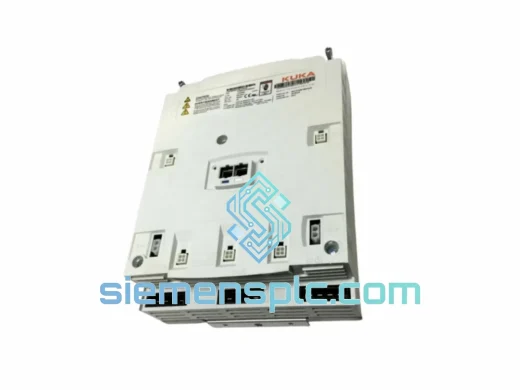
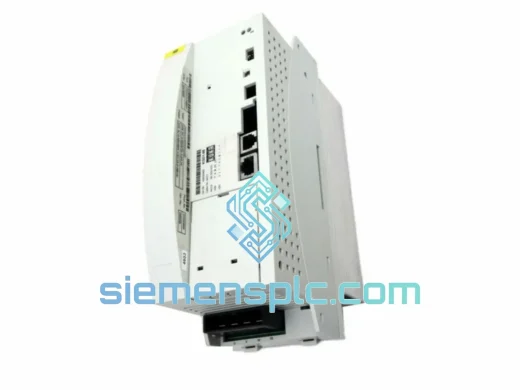
KUKA KSD1-16-00-122-285 AC Servo Amplifier – KSD1 Series
KRC1 KRC2 Robot
Origin DE
AC Servo Amplifier
Request verified availability, condition, replacement risk review, packing options and courier lead time for KSD1-48C200-105-413.
Click Request Quote and the part number is inserted into the inquiry form automatically.
Core fields for model confirmation and RFQ routing. Detailed product narrative remains below.
The KUKA KSD1-48C200-105-413 is a dedicated servo drive module within KUKA’s KSD1 series, engineered to deliver closed-loop current and velocity control for individual joint axes in KUKA industrial robot platforms. Operating on a 48V DC bus architecture, this unit accepts a regulated DC link from the KPS series power supply and converts it into precisely shaped three-phase output current to drive the brushless AC servo motors mounted at each robot joint. The drive’s internal current controller operates at a switching frequency that allows torque ripple to remain below the threshold detectable by the robot’s mechanical structure, which is a prerequisite for smooth path interpolation in welding, dispensing, and surface-finishing applications.
Within the KSD1 series product family, the suffix C200 designates a 200A peak output current rating — the highest current tier in the KSD1 lineup — making this variant the correct selection for large-frame KUKA robots where axis motors demand high instantaneous torque during acceleration phases. The suffix fields 105-413 encode hardware revision and firmware compatibility identifiers that determine which KRC controller generations and which motor resolver feedback types the drive can interface with. Substituting a drive with a different suffix string, even within the KSD1 family, risks resolver signal mismatch or controller communication faults, which is why exact part number matching is mandatory for MRO replacement.
Real-time Stock & RFQ: [email protected] | WhatsApp: +86 18359268345
| Parameter | Value / Specification |
|---|---|
| Part Number | KSD1-48C200-105-413 |
| Brand | KUKA Roboter GmbH |
| Series | KSD1 (KUKA Servo Drive 1) |
| Product Category | Robot Joint Axis Servo Drive |
| DC Bus Input Voltage | 48V DC (nominal), supplied by KPS series power supply |
| Peak Output Current | 200A (C200 designation) |
| Output Phases | 3-phase PWM to brushless AC servo motor |
| Feedback Interface | Resolver-based position feedback (hardware revision 105) |
| Controller Compatibility | KUKA KRC2 (primary); verify KRC4 cabinet variant before ordering |
| Communication Bus | KUKA internal KSD backplane bus (proprietary) |
| Mounting | DIN-rail compatible, KSD1 drive rack slot |
| Approximate Weight | 580 g |
| Operating Temperature | 0°C to +55°C (derate above 45°C) |
| Protection Class | IP20 (cabinet-mounted) |
| Compliance | CE, EMC Directive 2014/30/EU, IEC 61800-3 |
| Country of Origin | Germany |
| Warranty | 12 months from dispatch date |
The KSD1-48C200-105-413 implements a three-layer control hierarchy within a single compact module. At the innermost layer, a dedicated gate-drive ASIC generates the PWM switching signals for the IGBT bridge, with dead-time compensation applied in hardware to prevent shoot-through current during commutation transitions. This hardware-level dead-time management is not software-configurable, which eliminates the risk of firmware bugs causing bridge short-circuit events — a design choice that reflects KUKA’s safety-first architecture philosophy for robot drive systems.
The intermediate layer handles the current control loop. A pair of Hall-effect current sensors on two of the three output phases feed differential signals into a high-speed ADC, which samples at a rate synchronized to the PWM carrier. The current controller itself is a discrete-time PI regulator with anti-windup logic, implemented in a fixed-point DSP core. The bandwidth of this current loop is set conservatively relative to the mechanical resonance frequencies of KUKA robot arm structures, which typically fall in the 20–80 Hz range for large-frame robots. This bandwidth margin prevents the drive from exciting structural resonances during rapid velocity reversals.
The outermost layer is the velocity and position interface, which communicates with the KRC controller over the KSD backplane bus. The drive receives torque setpoints from the KRC’s motion planner at a fixed interpolation cycle rate and executes them locally without requiring per-cycle acknowledgment from the controller. This local execution model means that even if the backplane communication experiences a single-cycle latency event, the drive continues executing the last valid torque command rather than defaulting to zero torque — a behavior that prevents the mechanical jerk that would otherwise occur from abrupt torque interruption in a loaded robot axis.
The EMC design of the KSD1 housing incorporates a conductive aluminum alloy enclosure with continuous perimeter gasket contact to the drive rack frame, providing a Faraday shield against radiated emissions from the IGBT switching transients. The DC bus input filter includes a common-mode choke and X/Y capacitor network rated to suppress conducted emissions in the 150 kHz–30 MHz band, which is the frequency range most problematic in robot controller cabinets that co-locate servo drives with Ethernet-based fieldbus hardware.
Every KUKA KSD1-48C200-105-413 unit dispatched from our Xiamen, China facility is sourced through verified supply channels with full traceability documentation. Units are inspected against the following protocol before shipment:
Logistics from Xiamen covers all major global destinations. DHL Express, FedEx International Priority, and UPS Worldwide Express are the standard carriers, with typical transit times of 3–5 business days to Europe and North America, and 2–4 business days to Southeast Asia. For urgent production-down situations, same-day dispatch is available for orders confirmed before 14:00 CST. Full shipment tracking is provided at the time of dispatch, and our team monitors shipments through customs clearance to minimize delivery exceptions.
Email: [email protected]
WhatsApp: +86 18359268345
Web: siemensplc.com
Location: Xiamen, China
© 2026 siemensplc.com. All rights reserved.
We check the full part number, brand, series and visible nameplate information before quotation.
Sales confirms stock path, condition option, quantity and realistic lead time for export dispatch.
DHL, FedEx, UPS or buyer courier arrangements can be reviewed with packing requirements.
Similar brand or category products for fast comparison and multi-item RFQ lists.