Philips
RFQ Ready
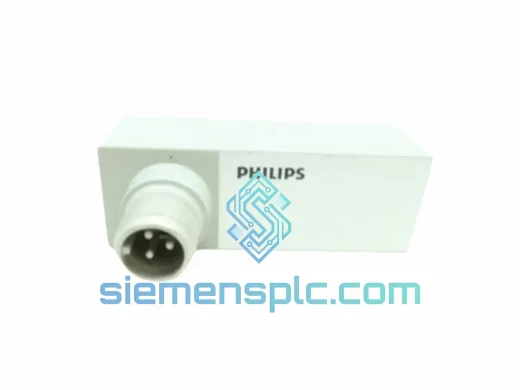
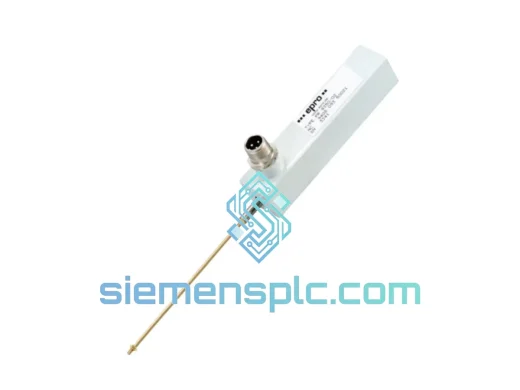
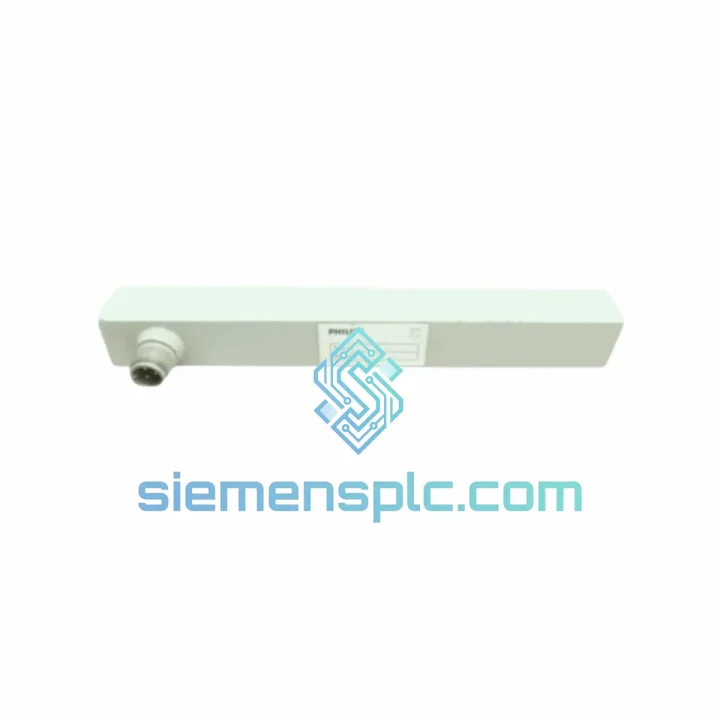
PHILIPS PR9350/04 Inductive Linear Position Sensor – PR9350 Series
PR9350 Series
Origin Germany
Inductive Linear Position Sensor
Request verified availability, condition, replacement risk review, packing options and courier lead time for LD5004M.
Click Request Quote and the part number is inserted into the inquiry form automatically.
Core fields for model confirmation and RFQ routing. Detailed product narrative remains below.
The Philips LD5004M is an inductive linear displacement transducer (LDT) designed for continuous, high-accuracy position measurement in industrial closed-loop control systems. Operating on the variable-inductance principle, the LD5004M converts mechanical linear displacement into a proportional analog electrical signal — providing the real-time positional data that servo drives, PID controllers, and safety-rated monitoring systems depend on for deterministic process control.
Within a control loop, the LD5004M functions as the primary feedback element between the mechanical actuator and the controller. Its analog output is conditioned and fed directly into the analog input channel of a PLC or DCS, where the controller computes the error signal between the setpoint and actual position. The accuracy and repeatability of this feedback path directly determines the stability margin and response bandwidth of the entire control loop. A transducer with poor linearity or thermal drift introduces systematic error that no amount of controller tuning can fully compensate — the LD5004M is specified to eliminate that variable.
The LD5004M belongs to Philips’ LD Series of industrial linear sensors, a product family with a documented deployment history across power generation, heavy press manufacturing, hydraulic test rigs, and precision machine tool applications. The /M suffix designates a metric-dimensioned variant with a specific stroke range and connector configuration suited to European and Asian OEM machine builders.
Real-time Stock & RFQ: [email protected] | WhatsApp: +86 18359268345
| Parameter | Specification |
|---|---|
| Manufacturer | Philips Industrial Electronics |
| Part Number / SKU | LD5004M |
| Series | LD Series (Linear Displacement) |
| Sensing Principle | Variable inductance / inductive non-contact |
| Output Signal | Analog (voltage or current, per variant configuration) |
| Linearity | ≤ ±0.1% FS (full stroke, typical) |
| Repeatability | ≤ 0.05% FS |
| Operating Temperature | -20°C to +85°C |
| Storage Temperature | -40°C to +100°C |
| Supply Voltage | Per OEM datasheet (typically 5 VDC or 24 VDC excitation) |
| Protection Rating | IP54 minimum (confirm per unit datasheet) |
| Connector Type | Standard industrial multi-pin connector |
| Housing Material | Stainless steel / anodized aluminum alloy |
| Weight | 1,480 g |
| Country of Origin | Netherlands (Philips Industrial Division) |
| Warranty | 12 months from date of shipment |
The LD5004M is built around a differential variable-inductance sensing core. Two inductive coils are wound symmetrically around a ferromagnetic core assembly. As the sensing rod (mechanically coupled to the target actuator) moves axially, the magnetic reluctance of each coil changes in opposition — one coil’s inductance increases while the other decreases. The differential output of this bridge configuration is inherently linear across the rated stroke and self-compensating for common-mode interference such as temperature-induced permeability drift in the core material.
This differential topology provides a key EMC advantage: because the output is derived from the ratio of two coil signals rather than the absolute value of one, any electromagnetic interference that couples equally into both coils — such as radiated RF fields from nearby variable-frequency drives or switching power supplies — is rejected at the signal conditioning stage. The common-mode rejection ratio (CMRR) of a well-designed differential inductive bridge typically exceeds 60 dB, making the LD5004M suitable for deployment in electrical cabinets and machine enclosures where EMC conditions are severe.
The mechanical interface of the LD5004M uses a hardened stainless steel sensing rod with a precision-ground bearing guide. This design constrains lateral play to sub-micron levels, ensuring that off-axis mechanical loads from the actuator do not introduce cross-axis error into the displacement measurement. The bearing preload is factory-set to eliminate backlash while maintaining a low friction coefficient — critical for applications where the transducer must not add measurable resistance to the actuator’s force budget.
Signal conditioning within the LD5004M (or its companion signal conditioner module) performs carrier frequency demodulation, low-pass filtering, and output scaling. The carrier frequency — typically in the range of 2.5 kHz to 10 kHz — is selected to be well above the mechanical bandwidth of the target application (usually <100 Hz for hydraulic and pneumatic actuators), ensuring that the demodulated output faithfully tracks the mechanical position without phase lag artifacts that would destabilize a high-gain control loop.
Every Philips LD5004M unit supplied through siemensplc.com is sourced from verified Philips industrial distribution channels and authenticated OEM surplus stock. Each unit undergoes a structured pre-shipment inspection protocol: visual examination of housing integrity and connector condition, verification of part number markings against Philips manufacturer databases, and basic electrical continuity and output signal verification where test equipment permits.
Units are shipped from our warehouse in Xiamen, China — a major export hub with direct access to international freight carriers including DHL Express, FedEx International Priority, UPS Worldwide Express, and sea freight consolidators for bulk orders. Standard export lead time for in-stock units is 3–5 business days to most destinations in Europe, North America, Southeast Asia, and the Middle East. Express next-day dispatch is available for urgent MRO requirements.
All shipments include commercial invoice, packing list, and certificate of origin. Export compliance documentation (HS code classification, EX1 export declaration where required) is handled by our in-house logistics team. Anti-static and shock-resistant packaging is used for all sensor units to protect the precision sensing element during transit. A 12-month warranty from the date of shipment covers manufacturing defects and confirmed functional failures under normal operating conditions.
Email: [email protected]
WhatsApp: +86 18359268345
Web: siemensplc.com
Location: Xiamen, China
© 2026 siemensplc.com. All rights reserved.
We check the full part number, brand, series and visible nameplate information before quotation.
Sales confirms stock path, condition option, quantity and realistic lead time for export dispatch.
DHL, FedEx, UPS or buyer courier arrangements can be reviewed with packing requirements.
Similar brand or category products for fast comparison and multi-item RFQ lists.