Yokogawa
RFQ Ready
Yokogawa SAI143-H63/PRP S3 DCS Analog Input Module
CENTUM VP
Origin JP
DCS Analog Input Module
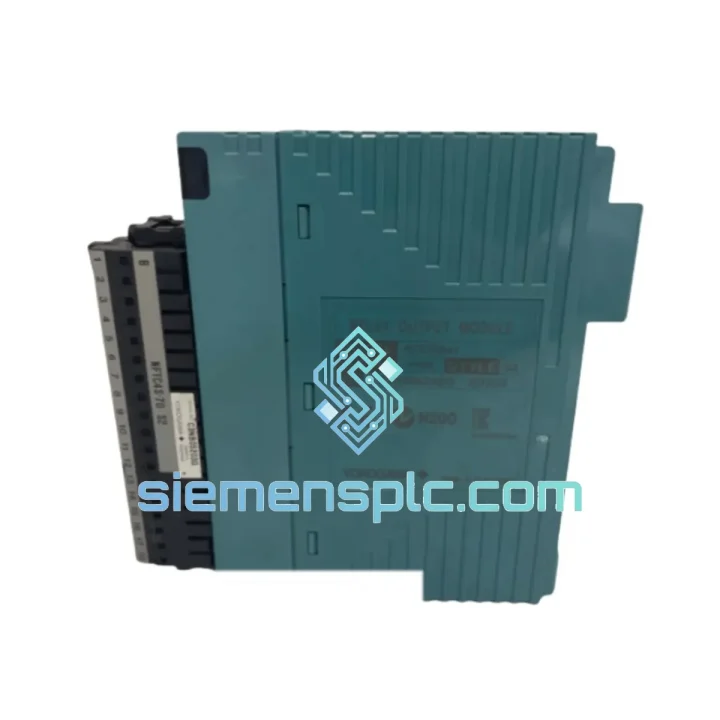
Request verified availability, condition, replacement risk review, packing options and courier lead time for NFDR541-P50.
Click Request Quote and the part number is inserted into the inquiry form automatically.
Core fields for model confirmation and RFQ routing. Detailed product narrative remains below.
The NFDR541-P50 occupies a structurally decisive position within the YOKOGAWA CENTUM VP I/O subsystem. As a 16-channel relay output module, it serves as the terminal interface between the digital command domain of the field control unit (FCU) and the physical switching loads of the plant — solenoid valves, motor starter coils, alarm annunciators, and interlock relay panels. Unlike analog output modules that modulate a continuous signal, the NFDR541-P50 operates in the discrete domain: each channel either closes or opens a dry contact, delivering a binary command with galvanic isolation from the control bus. This architecture is not incidental — it is the deliberate result of YOKOGAWA’s design philosophy for process-critical DCS I/O, where field-side transients must never propagate into the controller backplane.
Within a CENTUM VP node unit, the NFDR541-P50 communicates over the ESB (Enhanced Signal Bus) backplane. The ESB is a deterministic, time-division multiplexed bus that guarantees fixed scan cycle latency regardless of I/O load — a property that distinguishes it from asynchronous fieldbus architectures. The FCU polls each I/O module slot at a defined interval, typically 100 ms for standard control or 10 ms for high-speed loops, and the NFDR541-P50 responds with channel status feedback, allowing the engineering station to detect relay coil faults or contact weld conditions without additional field wiring. This closed-loop diagnostic transparency is a measurable advantage in safety-instrumented environments where proof-test intervals must be documented.
The relay contacts themselves are rated at 250 VAC / 30 VDC with a 2 A per-channel load capacity. Each channel uses a dedicated relay element — there is no multiplexing of contacts across channels — which means a single channel failure does not affect adjacent outputs. The contact form is configurable as normally open (NO) or normally closed (NC) depending on the terminal block wiring, providing flexibility for fail-safe or fail-energized actuator designs without requiring additional external relays. Channel-to-channel isolation and channel-to-bus isolation are implemented through optical coupling on the coil drive side and physical relay contact separation on the output side, yielding a two-barrier isolation architecture that meets IEC 61131-2 requirements for industrial I/O modules.
The module supports hot-swap replacement within a live node unit. When a module is extracted, the FCU detects the slot vacancy within one scan cycle and raises a hardware fault alarm at the engineering station. Upon reinsertion of a replacement NFDR541-P50, the FCU automatically downloads the channel configuration from its internal database — no manual re-parameterization is required at the module level. This behavior reduces mean time to repair (MTTR) in continuous-process environments where a controlled shutdown for maintenance is operationally and economically prohibitive.
The NFDR541-P50 is deployed across refining, petrochemical, power generation, pulp and paper, and water treatment facilities globally. Its long production history within the CENTUM VP platform means that spare module availability is well-established, and its electrical and mechanical form factor has remained stable across multiple CENTUM VP software revisions, protecting capital investment in installed node infrastructure.
Real-time Stock & RFQ: [email protected] | WhatsApp: +86 18359268345
| Parameter | Value |
|---|---|
| Part Number | NFDR541-P50 |
| Manufacturer | YOKOGAWA Electric Corporation |
| Module Category | Relay Output Module (DO) |
| Compatible Platform | CENTUM VP Distributed Control System |
| Output Channels | 16 channels, independent relay per channel |
| Contact Form | Dry contact, NO/NC field-selectable |
| Rated Load Voltage | 250 VAC / 30 VDC |
| Rated Load Current | 2 A per channel (resistive load) |
| Channel-to-Channel Isolation | Yes — independent relay elements |
| Channel-to-Bus Isolation | Yes — optical coupling on coil drive side |
| Backplane Interface | ESB (Enhanced Signal Bus) |
| Scan Cycle Support | 100 ms standard / 10 ms high-speed |
| Hot-Swap | Supported — auto-reconfiguration on reinsertion |
| Mounting | Node unit rack-mount (CENTUM VP node slot) |
| Operating Temperature | 0°C to 55°C |
| Storage Temperature | -25°C to 70°C |
| Relative Humidity | 5% to 95% RH (non-condensing) |
| Module Weight | Approx. 400 g |
| Compliance | CE, UL, IECEx (system-level certification) |
| Country of Origin | Japan |
| Warranty | 12 months from shipment date |
The NFDR541-P50’s hardware design addresses three principal failure modes that affect relay output modules in industrial DCS environments: backplane noise coupling, contact weld under inductive load, and coil drive circuit latch-up.
EMC and Backplane Noise Isolation: The coil drive circuit for each relay channel is driven through an optocoupler stage that provides a minimum 1,500 V isolation barrier between the ESB logic domain and the relay coil. This prevents common-mode noise generated by large inductive field loads — motor starters, solenoid valves — from coupling back into the FCU backplane through the module’s power rail. The relay coil itself is fitted with a transient suppression diode (flyback diode) across the coil terminals, clamping the inductive kickback voltage to within the coil driver’s safe operating area when the relay de-energizes. Without this clamp, repeated inductive switching would degrade the optocoupler LED over time, increasing the forward voltage threshold and eventually causing intermittent channel failures that are difficult to diagnose in the field.
Contact Architecture and Weld Detection: Each relay element is a single-pole, single-throw (SPST) type with silver-alloy contacts. Silver-alloy contacts exhibit lower contact resistance than standard silver contacts (typically <100 mΩ at rated current) and have higher resistance to arc erosion under AC inductive loads. The FCU’s diagnostic scan reads back the contact state via a separate sense circuit on the module, comparing the commanded state against the sensed contact position. A discrepancy — commanded open, sensed closed — indicates a welded contact condition and raises a channel fault alarm in the CENTUM VP alarm management system. This feedback loop eliminates the need for external contact monitoring relays in many interlock applications.
Redundancy Arbitration Compatibility: In CENTUM VP configurations with redundant FCU pairs, the NFDR541-P50 participates in the bumpless switchover protocol. The standby FCU maintains a shadow copy of all output states. On primary FCU failure, the standby FCU assumes control and the relay output states are maintained without a de-energize/re-energize transient — a critical requirement for applications where a momentary relay dropout would trigger a process interlock or ESD sequence.
Every NFDR541-P50 unit dispatched from our Xiamen, China facility undergoes a structured inspection protocol before packaging. Visual inspection covers connector pin integrity, label authenticity, PCB surface condition, and firmware revision markings. Electrical verification includes power-on continuity checks and, where test fixtures are available, per-channel relay actuation and contact resistance measurement. Units are shipped in anti-static ESD bags with foam cushioning inside double-wall corrugated cartons, with moisture barrier desiccant packs for sea freight consignments.
All units carry a 12-month warranty from the shipment date, covering manufacturing defects and DOA (Dead on Arrival) conditions. A certificate of conformity and inspection report are available upon request for quality-system documentation purposes.
Logistics options from Xiamen include DHL Express (3–5 business days to most destinations), FedEx International Priority, UPS Worldwide Express, and sea freight consolidation for bulk orders. Full export documentation — commercial invoice, packing list, certificate of origin — is provided with every shipment. Customs HS code classification support is available for destinations with complex import duty structures.
Email: [email protected]
WhatsApp: +86 18359268345
Web: siemensplc.com
Location: Xiamen, China
© 2026 siemensplc.com. All rights reserved.
We check the full part number, brand, series and visible nameplate information before quotation.
Sales confirms stock path, condition option, quantity and realistic lead time for export dispatch.
DHL, FedEx, UPS or buyer courier arrangements can be reviewed with packing requirements.
Similar brand or category products for fast comparison and multi-item RFQ lists.