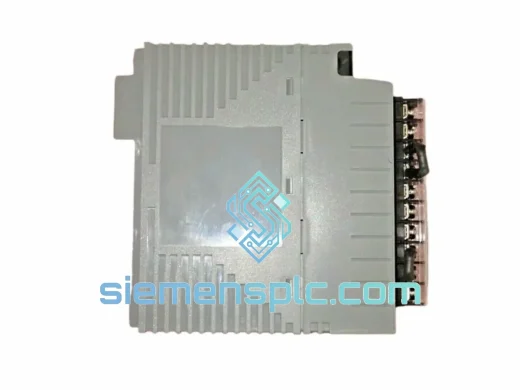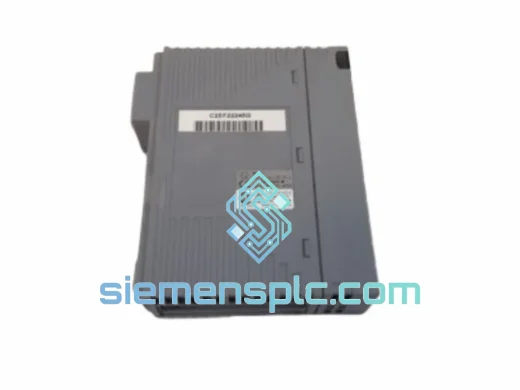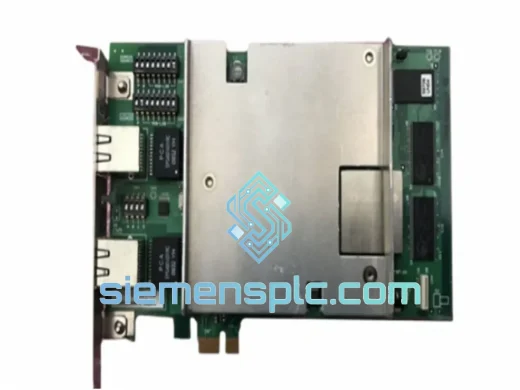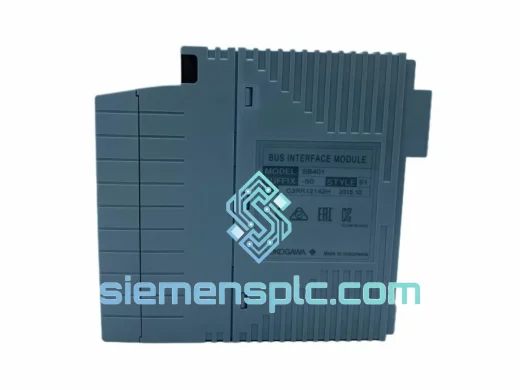
Yokogawa
RFQ Ready
Yokogawa SB401-50 Serial Bus Interface Module – CENTUM VP
CENTUM VP
Origin JP
Serial Bus Interface Module
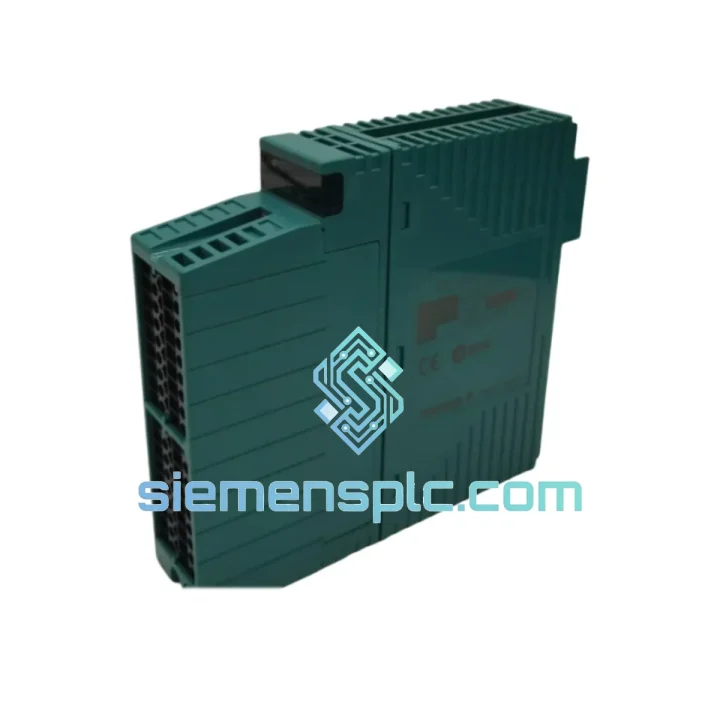
Request verified availability, condition, replacement risk review, packing options and courier lead time for NFTR8S-00.
Click Request Quote and the part number is inserted into the inquiry form automatically.
Core fields for model confirmation and RFQ routing. Detailed product narrative remains below.
Your CENTUM VP or CS 3000 fieldbus segment just dropped. Instruments are ghosting. The control room is dark on eight loops. You’ve already isolated the fault to the NFTR8S-00 — now the only question is how fast you can get a replacement on the rail. We stock this module in Xiamen and ship same-day via DHL Express. Most customers in Southeast Asia and the Middle East have a replacement unit in hand within 48–72 hours. That’s the difference between a shift delay and a week-long production halt.
We are not a catalog broker. Every NFTR8S-00 we ship has been physically inspected, power-on tested, and verified against Yokogawa’s firmware revision matrix before it leaves our warehouse. If you’re reading this at 2 AM during an emergency shutdown, send us a WhatsApp now — we respond around the clock.
URGENT REQUIREMENT? Contact: [email protected] | WhatsApp: +86 18359268345
| Part Number / SKU | NFTR8S-00 ✔ Ready to Ship |
| Manufacturer | Yokogawa Electric Corporation |
| Module Function | Foundation Fieldbus H1 Communication Interface |
| Compatible Platform | CENTUM VP (R4.x – R6.x), CENTUM CS 3000 |
| Protocol Standard | Foundation Fieldbus H1 — IEC 61158 / IEC 61784 |
| H1 Segments | 8 independent segments per module |
| Max Devices / Segment | 16 field devices (topology dependent) |
| Transmission Rate | 31.25 kbit/s (H1 standard) |
| Isolation | Galvanic isolation per segment — protects backplane from field transients |
| Power Source | DCS backplane — no external PSU required |
| Redundancy | Dual-redundant controller pairing supported |
| Operating Temperature | 0 °C to +60 °C |
| Storage Temperature | −25 °C to +70 °C |
| Humidity | 5% – 95% RH, non-condensing |
| Weight | Approx. 700 g |
| Certifications | CE, UL, cUL; IEC 61158, IEC 61784 compliant |
| Country of Origin | Japan |
| Stock Status | In Stock — Ships Same Business Day from Xiamen |
Fault Scenario 1 — Segment Communication Loss (All 8 Segments Dead)
If all eight H1 segments on a single NFTR8S-00 go offline simultaneously, the module itself is the prime suspect — not the field wiring. Before condemning the module, check the I/O node’s power supply voltage at the backplane connector (should be within ±5% of rated). If PSU is healthy and the status LED is solid red or unlit, the module’s internal LAS processor has likely failed. Pull the module, inspect the edge connector for corrosion or bent pins, and swap in the replacement.
Fault Scenario 2 — Partial Segment Dropout (1–3 Segments Intermittent)
Intermittent dropout on a subset of segments usually points to one of three causes: (a) field-side wiring impedance mismatch — verify terminator resistors are installed at both ends of each affected trunk; (b) per-segment galvanic isolation failure — measure isolation resistance between segment terminals and chassis ground; (c) firmware incompatibility after a CENTUM VP system upgrade. Always confirm the NFTR8S-00 firmware revision matches the I/O node generation (AFV10 vs. AFV30) before insertion.
Replacement Procedure — Step by Step
Common Diagnostic Codes
The NFTR8S-00 was engineered for continuous operation in environments that would kill consumer-grade electronics inside a week. Yokogawa’s design validation includes sinusoidal vibration testing per IEC 60068-2-6 (10–150 Hz, 2 g), random vibration per IEC 60068-2-64, and mechanical shock per IEC 60068-2-27 (15 g, 11 ms half-sine). In practice, this means the module survives the constant low-frequency vibration of compressor halls, pump stations, and offshore platform decks without connector fatigue or PCB trace cracking.
Thermal cycling is where many third-party or counterfeit modules fail first. The NFTR8S-00’s operating range of 0 °C to +60 °C is validated across the full range — not just at room temperature. The onboard DC-DC converters and isolation transformers are rated for continuous operation at the upper thermal limit, which matters in non-air-conditioned marshalling cabinets in tropical climates. We have shipped units to refineries in Malaysia, Saudi Arabia, and Nigeria where ambient cabinet temperatures regularly exceed 50 °C — and they run without derating.
Humidity is the silent killer of fieldbus modules. Condensation on the PCB causes leakage currents that corrupt H1 signal integrity long before visible corrosion appears. Yokogawa applies a conformal coating to the NFTR8S-00’s PCB, providing protection against moisture ingress in environments up to 95% RH non-condensing. Every unit we ship is stored in climate-controlled conditions and sealed in anti-static, moisture-barrier packaging with desiccant. If you’re installing in a coastal or high-humidity environment, request our humidity-indicator card service — we include a color-change card in the packaging so you can verify the unit was never exposed to excessive moisture in transit.
Our warehouse is located in Xiamen, Fujian Province — one of China’s primary export hubs with direct DHL, FedEx, and UPS gateway access. This is not a drop-ship arrangement. The physical unit is on our shelf, inspected, and ready to pack the moment your order is confirmed.
Typical Transit Times from Xiamen:
Shipping Process: Order confirmed → same-day packing and DHL/FedEx pickup → tracking number sent within 4 hours → real-time tracking via carrier portal. For emergency orders placed before 14:00 CST, same-day dispatch is guaranteed. We provide full export documentation: commercial invoice, packing list, certificate of origin, and HS code declaration (HS 8537.10). DDP (Delivered Duty Paid) terms available for most destinations — ask us for a landed cost quote before ordering so there are no customs surprises on arrival.
For orders requiring air freight consolidation, special export licensing, or re-export to sanctioned-adjacent regions, contact us directly. We handle the paperwork — you focus on getting your plant back online.
Email: [email protected]
WhatsApp: +86 18359268345
Web: siemensplc.com
© 2026 siemensplc.com. All rights reserved.
We check the full part number, brand, series and visible nameplate information before quotation.
Sales confirms stock path, condition option, quantity and realistic lead time for export dispatch.
DHL, FedEx, UPS or buyer courier arrangements can be reviewed with packing requirements.
Similar brand or category products for fast comparison and multi-item RFQ lists.