SICK
RFQ Ready
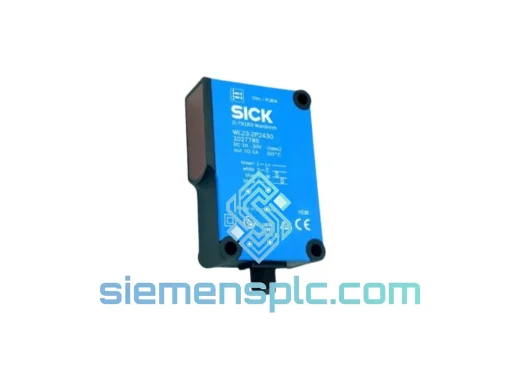
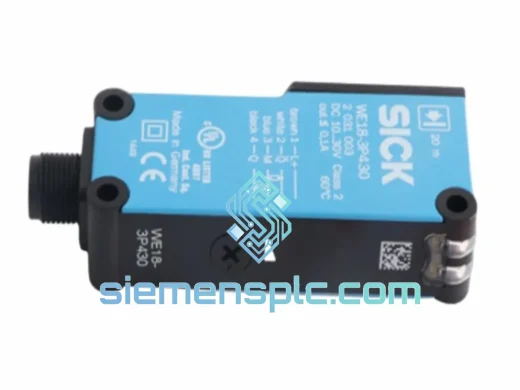
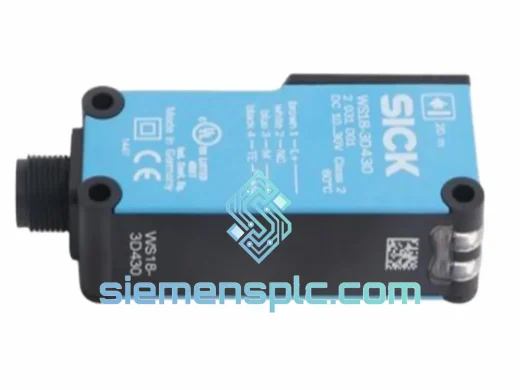
SICK WS18-3D430 Photoelectric Sensor
W18 Series Photoelectric
Origin DE
Photoelectric Sensor
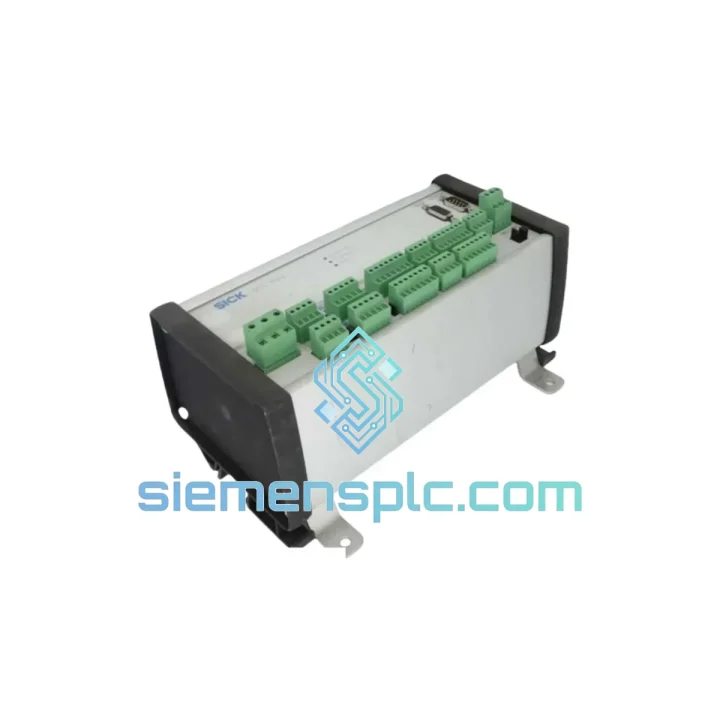
Request verified availability, condition, replacement risk review, packing options and courier lead time for OTC400-0000.
Click Request Quote and the part number is inserted into the inquiry form automatically.
Core fields for model confirmation and RFQ routing. Detailed product narrative remains below.
The SICK OTC400-0000 is a dedicated Omni Tracking Controller engineered for closed-loop object position management across multi-axis conveyor networks, automated sortation systems, and precision-registration production lines. Unlike general-purpose vision controllers, the OTC400-0000 is purpose-built around SICK’s proprietary sensor fusion pipeline, accepting real-time position data from upstream laser scanners, photoelectric arrays, or encoder feedback loops and translating that data into deterministic tracking vectors with sub-millisecond latency. Its role in a control architecture is not peripheral — it functions as the positional arbiter between the field sensor layer and the PLC execution layer, offloading object-state computation from the main CPU and delivering pre-resolved tracking objects via a structured fieldbus frame.
In high-density sortation environments where object gaps can fall below 80 mm at belt speeds exceeding 2.5 m/s, the OTC400-0000 maintains individual object identity through gap events, merge-split scenarios, and sensor blind zones by applying a configurable object persistence algorithm. Each tracked object is assigned a unique ID that propagates downstream across divert gates, label applicators, and reject stations without requiring PLC-side re-identification logic. This architecture reduces PLC scan-cycle load and eliminates the race conditions that arise when object tracking is handled entirely within ladder logic.
Real-time Stock & RFQ: [email protected] | WhatsApp: +86 18359268345
| Part Number | OTC400-0000 |
| Brand | SICK AG |
| Series | OTC400 — Omni Tracking Controller |
| Function | Multi-object position tracking and conveyor synchronization |
| Sensor Inputs | Compatible with SICK laser scanners, photoelectric sensors, and encoder signals |
| Communication Interface | PROFIBUS DP / PROFINET IO (variant-dependent; confirm per order) |
| Supply Voltage | 24 V DC ±10% |
| Power Consumption | ≤ 8 W typical |
| Operating Temperature | 0 °C to +50 °C |
| Storage Temperature | −20 °C to +70 °C |
| Protection Rating | IP 20 (control cabinet installation) |
| Mounting | 35 mm DIN rail (EN 60715) |
| Housing Material | Polycarbonate / ABS blend, UL 94 V-0 rated |
| Weight | Approx. 220 g |
| Certifications | CE, cULus (verify against current SICK documentation) |
| Configuration Tool | SICK SOPAS Engineering Tool (ET) |
| Warranty | 12 months from date of shipment |
| Origin | Germany |
The OTC400-0000 implements a dual-processor architecture: a real-time DSP core handles sensor data ingestion and object-state computation at a fixed cycle rate independent of fieldbus communication timing, while a secondary communication processor manages the PROFIBUS/PROFINET frame assembly and handshake sequences. This separation ensures that fieldbus jitter — a common source of tracking drift in single-CPU designs — does not propagate into the object position calculation layer.
EMC Design: The controller’s PCB layout follows IEC 61000-4 class criteria, with differential-mode filtering on all 24 V DC input lines, isolated signal ground planes for sensor inputs, and a shielded backplane connector that maintains ≥ 40 dB common-mode rejection across the 150 kHz–30 MHz band. In cabinet environments with variable-frequency drives operating in close proximity, this isolation architecture prevents encoder signal corruption that would otherwise introduce phantom object events into the tracking queue.
Object Persistence Algorithm: The OTC400-0000 maintains a configurable object table with up to 400 simultaneous tracked objects (hence the model designation). Each entry stores position, velocity vector, dimensional envelope, and a confidence score derived from sensor agreement. When a sensor gap occurs — such as a photoelectric beam blocked by a structural column — the controller applies a dead-reckoning extrapolation using the last confirmed velocity vector and a configurable timeout window (1 ms to 999 ms). Objects that exceed the timeout without re-acquisition are flagged with a diagnostic bit rather than silently dropped, giving the PLC full visibility into tracking confidence at all times.
Encoder Synchronization: Incremental encoder inputs are processed through a hardware quadrature decoder with 32-bit position accumulation, eliminating software-based pulse counting and the associated interrupt latency. Belt speed compensation is applied in real time, so object position data delivered to the PLC reflects true physical position rather than a time-stamped snapshot that requires downstream correction.
Every SICK OTC400-0000 unit supplied through siemensplc.com is sourced as genuine SICK AG factory production, carrying original SICK serial numbers, factory labels, and traceable manufacturing documentation. Units are not refurbished, relabeled, or repackaged. Pre-shipment inspection includes visual label authentication, housing integrity check, and connector pin verification against SICK factory acceptance criteria.
Shipments originate from our Xiamen, China operations center, positioned within the Xiamen Free Trade Zone for streamlined export documentation. Standard export documentation includes commercial invoice, packing list, and HS code classification (HS 8537.10 for programmable controllers and associated modules). For project orders requiring IEC or CE conformity declarations, copies of SICK’s original EU Declaration of Conformity are provided upon request.
Logistics options include DHL Express (3–5 business days to EU/US), FedEx International Priority, and sea freight consolidation for bulk orders. All shipments are tracked end-to-end with proactive status updates. Emergency air freight for production-down situations can be arranged with same-day dispatch for orders confirmed before 14:00 CST.
Email: [email protected]
WhatsApp: +86 18359268345
Web: siemensplc.com
Location: Xiamen, China
© 2026 siemensplc.com. All rights reserved.
We check the full part number, brand, series and visible nameplate information before quotation.
Sales confirms stock path, condition option, quantity and realistic lead time for export dispatch.
DHL, FedEx, UPS or buyer courier arrangements can be reviewed with packing requirements.
Similar brand or category products for fast comparison and multi-item RFQ lists.