SAIA-Burgess
RFQ Ready
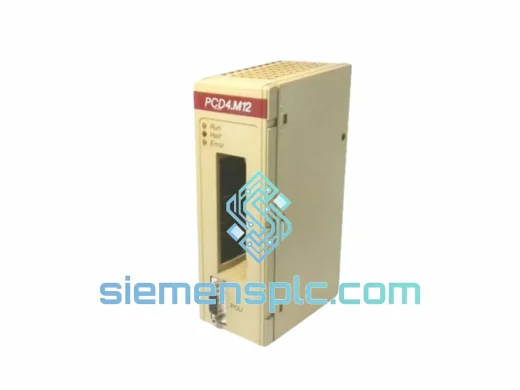
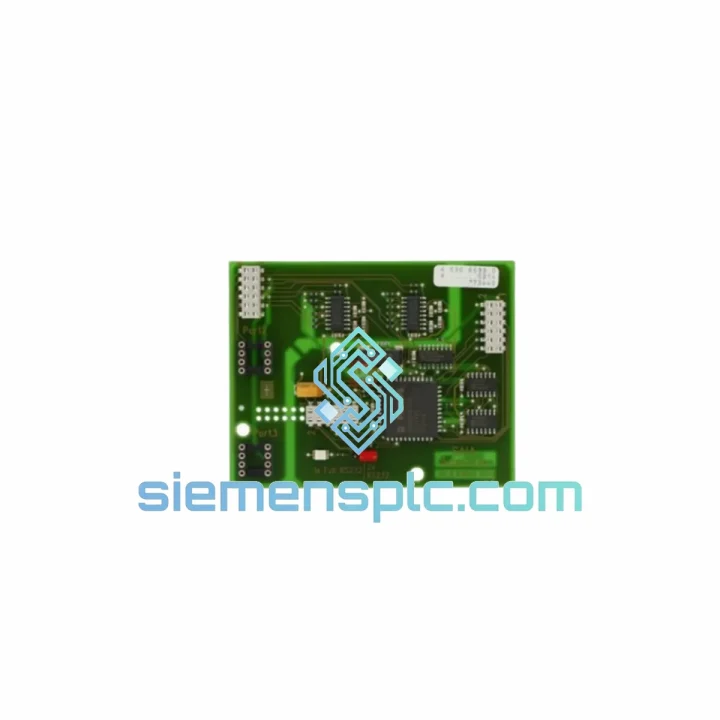
SAIA PCD4.M12 PLC Interface Module
ndustrial-Grade PCD4 Series
Origin US
PLC Interface Module
Request verified availability, condition, replacement risk review, packing options and courier lead time for PCD2.F522.
Click Request Quote and the part number is inserted into the inquiry form automatically.
Core fields for model confirmation and RFQ routing. Detailed product narrative remains below.
The SAIA PCD2.F522 is a dedicated interface and signal conditioning module engineered for the PCD2 modular PLC platform developed by SAIA-Burgess Controls AG. Within a PCD2-based control loop, the PCD2.F522 occupies the signal boundary layer — the electrical and logical interface between the CPU backplane bus and the physical field wiring. Its primary function is to condition, isolate, and route discrete or analog signals between the controller’s internal logic domain and external field devices, ensuring that transient voltages, ground loops, and common-mode noise present in industrial field wiring do not propagate into the CPU’s data acquisition circuitry.
The PCD2 platform operates on a proprietary parallel backplane bus architecture. Each slot on the PCD2 base unit provides a direct electrical connection to the CPU’s I/O bus, with address decoding handled by the base unit’s slot-select logic. The PCD2.F522 plugs directly into this bus, presenting a defined register map to the CPU firmware. Signal transactions between the CPU and the module occur via memory-mapped I/O cycles, with the module’s onboard logic handling all signal-level translation, timing, and status reporting independently of the CPU scan cycle. This architecture reduces CPU overhead and ensures deterministic signal acquisition latency — a critical requirement in closed-loop control applications where scan-to-output jitter must remain below defined thresholds.
The module’s isolation architecture employs optocoupler-based galvanic separation between the field-side terminals and the backplane logic. Each signal channel passes through a dedicated optocoupler stage, providing channel-to-channel and channel-to-bus isolation. This design eliminates ground-loop currents that would otherwise introduce DC offset errors in analog measurements or false triggering in digital input channels. The isolation barrier is rated to withstand transient overvoltages consistent with IEC 61000-4-5 surge immunity requirements, protecting the CPU and backplane from field-side fault events.
In building automation and HVAC applications — the primary deployment environment for PCD2 systems — the PCD2.F522 interfaces with sensor networks that may span hundreds of meters of field wiring. At these cable lengths, capacitive coupling and inductive interference from adjacent power conductors are significant. The module’s input filtering stages attenuate high-frequency noise components before signal digitization, maintaining measurement accuracy within the specified tolerance band across the full operating temperature range of 0°C to +55°C.
Real-time Stock & RFQ: [email protected] | WhatsApp: +86 18359268345
| Parameter | Specification |
|---|---|
| Part Number / SKU | PCD2.F522 |
| Brand | SAIA-Burgess Controls AG |
| Series | PCD2 |
| Module Category | Interface / Signal Conditioning Module |
| Form Factor | Plug-in card for PCD2 base unit (single slot) |
| Backplane Bus Interface | PCD2 proprietary parallel I/O bus |
| Isolation Technology | Optocoupler galvanic isolation, field-to-bus |
| Operating Temperature | 0°C to +55°C |
| Storage Temperature | -25°C to +70°C |
| Relative Humidity | 5% to 95%, non-condensing |
| EMC Immunity | IEC 61000-4 series (ESD, EFT, Surge, Conducted RF) |
| Module Weight | 470 g |
| Country of Origin | Germany |
| Compatibility | SAIA PCD2 Series base units |
| Programming Environment | SAIA PG5 (STEP 5 compatible configuration) |
| Warranty | 12 months from date of shipment |
| Condition Available | New / Tested Surplus / Refurbished |
Backplane Bus Arbitration: The PCD2.F522 participates in the PCD2 backplane’s slot-addressed I/O arbitration scheme. The base unit assigns each slot a unique address segment decoded by the slot’s hardware address lines. The PCD2.F522’s onboard address decoder latches its assigned address at power-up and responds exclusively to CPU read/write cycles directed to its address range. This hard-wired address assignment eliminates software-configurable address conflicts and ensures deterministic bus response times — typically within one bus clock cycle after the CPU asserts the address strobe.
Optocoupler Isolation Stage: Each signal channel on the PCD2.F522 passes through a dedicated high-speed optocoupler. The optocoupler’s LED drive circuit is current-limited by a precision resistor network, maintaining consistent forward current across the full supply voltage tolerance band (typically ±10% of nominal). The phototransistor output stage drives a Schmitt-trigger input buffer, providing hysteresis that suppresses contact bounce on discrete input channels and eliminates false transitions caused by slow-rising analog signals crossing the logic threshold. The isolation barrier capacitance is minimized by the optocoupler’s internal construction, limiting high-frequency common-mode current injection from the field side to the logic side.
EMC Design Measures: The PCD2.F522 PCB layout follows SAIA-Burgess’s standard EMC partitioning practice: the field-side circuitry and the logic-side circuitry are physically separated by the isolation barrier, with no shared ground plane crossing the isolation boundary. Decoupling capacitors are placed at each power supply pin of the logic ICs, with values selected to attenuate both high-frequency switching noise from the backplane bus and low-frequency ripple from the power supply module. The module’s metal front panel provides a Faraday shield for the connector area, reducing capacitive coupling of external RF fields into the signal input traces.
Thermal Management: The module’s power dissipation is distributed across the optocoupler array and the logic supply regulator. The PCB copper pour on the logic ground plane acts as a heat spreader, conducting heat to the module’s metal housing and thence to the base unit’s ventilation airflow. This passive thermal management approach eliminates the need for active cooling components, contributing to the module’s high MTBF rating in continuous-duty industrial installations.
Every SAIA PCD2.F522 unit dispatched from our Xiamen, China facility undergoes a structured pre-shipment verification process. Visual inspection confirms physical integrity of the PCB, connector pins, and front panel labeling. Functional verification applies nominal supply voltage to the module and exercises each signal channel through its full input range, confirming correct logic-level output and isolation integrity. Units sourced as new-old-stock (NOS) are verified against original SAIA-Burgess factory test criteria. Refurbished units undergo component-level inspection of the optocoupler array and power supply section before functional testing.
Packaging follows anti-static handling protocols: each module is placed in a conductive foam-lined anti-static bag, sealed, and placed in a rigid corrugated carton with foam corner protection. For international shipments, cartons are labeled with IATA-compliant electrostatic-sensitive device (ESD) markings. Export documentation — including commercial invoice, packing list, and certificate of origin — is prepared to the destination country’s import requirements, minimizing customs clearance delays.
Logistics options from Xiamen include DHL Express (3–5 business days to Europe, North America, Southeast Asia), FedEx International Priority (3–5 business days), UPS Worldwide Express (3–6 business days), and sea freight consolidation for bulk orders. Tracking numbers are provided within 24 hours of dispatch. For urgent breakdown situations, same-day dispatch is available for orders confirmed before 14:00 CST.
Our supplier network spans authorized industrial surplus channels and verified distributor stock, ensuring traceability of each unit’s provenance. No gray-market or counterfeit components are accepted. Units with suspect markings or non-standard date codes are quarantined and not offered for sale.
Email: [email protected]
WhatsApp: +86 18359268345
Web: siemensplc.com
Location: Xiamen, China
© 2026 siemensplc.com. All rights reserved.
We check the full part number, brand, series and visible nameplate information before quotation.
Sales confirms stock path, condition option, quantity and realistic lead time for export dispatch.
DHL, FedEx, UPS or buyer courier arrangements can be reviewed with packing requirements.
Similar brand or category products for fast comparison and multi-item RFQ lists.