Fuji Electric
RFQ Ready
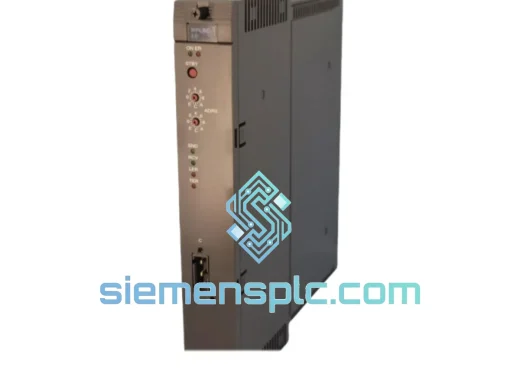
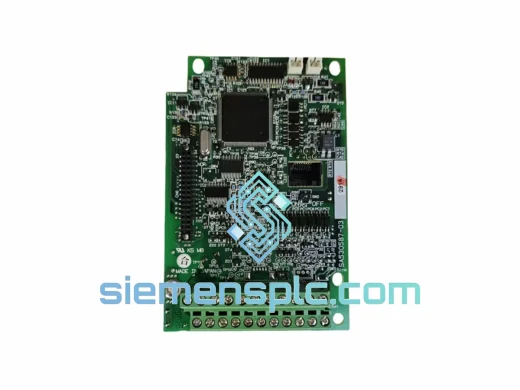
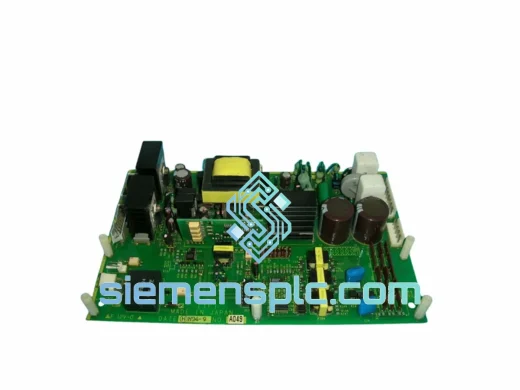
FUJI Electric EP-3531D C1-Z1 Inverter Control Board
P-3531D C1-Z1 FRENIC Series
Origin Japan
Inverter Drive Control Board
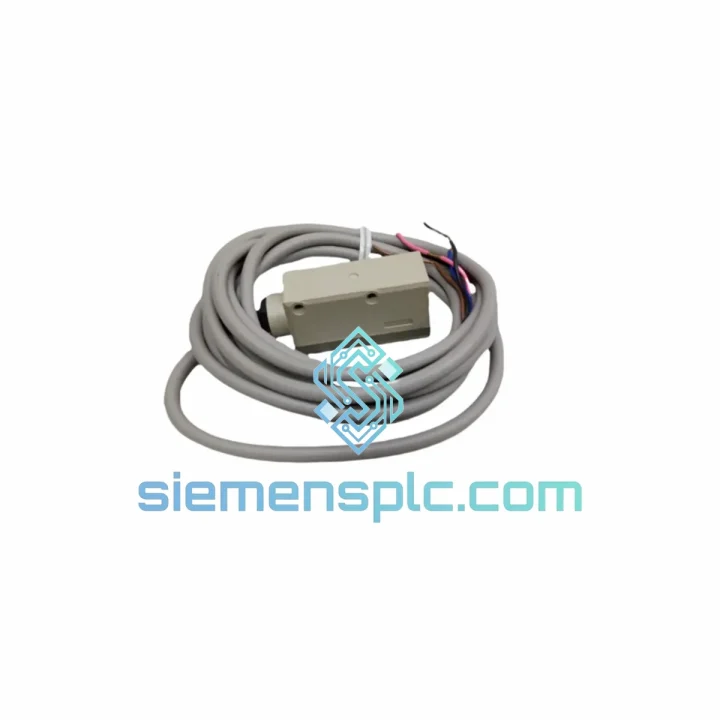
Request verified availability, condition, replacement risk review, packing options and courier lead time for PH2-T2MNR.
Click Request Quote and the part number is inserted into the inquiry form automatically.
Core fields for model confirmation and RFQ routing. Detailed product narrative remains below.
In a discrete I/O control loop, the photoelectric sensor occupies the first node of the signal chain — it converts a physical state (object presence or absence) into a deterministic electrical signal that the PLC’s digital input module can latch, timestamp, and act upon within a single scan cycle. The FUJI PH2-T2MNR is a retro-reflective photoelectric sensor from FUJI Electric’s PH2 Series, engineered for continuous-duty industrial environments where switching repeatability, ambient light immunity, and NPN output compatibility are non-negotiable requirements.
The retro-reflective topology positions the emitter and receiver in a single housing, with detection achieved by interruption of the beam between the sensor head and a corner-cube reflector mounted on the opposite side of the detection zone. This single-side installation geometry reduces mechanical alignment complexity compared to through-beam configurations and eliminates the need for a separate receiver cable run. The PH2-T2MNR’s infrared LED emitter operates at a wavelength outside the visible spectrum, providing inherent rejection of fluorescent and incandescent ambient light sources common on factory floors.
The NPN (open-collector, sinking) output stage of the PH2-T2MNR is directly compatible with the NPN-input digital I/O modules that dominate Asian and European PLC architectures — including FUJI MICREX-SX, Siemens S7-300/400/1200/1500, Mitsubishi MELSEC iQ-R/Q/L, and Omron CJ/CS/NX Series. When the sensor detects an object (beam interrupted), the NPN transistor pulls the output line to the 0 V rail, presenting a logic-LOW signal to the PLC input card. This sinking behavior is consistent with IEC 61131-2 Type 1 and Type 3 digital input specifications, ensuring interoperability without additional signal conditioning hardware.
Within FUJI Electric’s sensor portfolio, the PH2 Series targets mid-range industrial applications where the sensor must tolerate mechanical vibration (IEC 60068-2-6 class), resist ingress of particulate and moisture, and maintain a stable switching frequency across the full operating temperature range. The PH2-T2MNR’s compact rectangular housing accepts standard M18-equivalent or DIN-rail bracket mounting, and the M12 connector interface supports quick-disconnect field wiring — a practical advantage in high-density machine builds where sensor replacement must be completed without rewiring.
From a system-level perspective, the PH2-T2MNR functions as a deterministic presence-detection node. Its output state is polled by the PLC’s I/O scanner at every program scan cycle (typically 1–10 ms in standard PLC configurations). The sensor’s response time — the interval between beam interruption and output state change — must be shorter than the PLC scan cycle to guarantee that no detection event is missed. FUJI’s PH2 Series is designed with response times in the sub-millisecond range, ensuring that even high-speed conveyor applications (object transit times as short as 5–10 ms) are reliably captured without requiring high-speed interrupt inputs.
For procurement engineers and maintenance planners, the PH2-T2MNR represents a well-characterized, widely stocked component with a stable form factor across the PH2 Series generation. Cross-referencing to equivalent models from Omron (E3Z series), Keyence (PR-G series), or Sick (W4 series) is straightforward based on output type, housing dimensions, and sensing range — our technical team can provide formal cross-reference documentation upon request.
Real-time Stock & RFQ: [email protected] | WhatsApp: +86 18359268345
| Parameter | Value |
|---|---|
| Manufacturer | FUJI Electric Co., Ltd. |
| Model / SKU | PH2-T2MNR |
| Series | PH2 Series |
| Detection Method | Retro-Reflective (corner-cube reflector required) |
| Output Type | NPN Open-Collector (sinking), NO/NC selectable |
| Light Source | Infrared LED (modulated) |
| Supply Voltage | 10–30 V DC (consult datasheet for exact range) |
| Output Current (max) | 100 mA (consult datasheet) |
| Response Time | <1 ms (consult datasheet for exact value) |
| Operating Temperature | -25°C to +55°C (consult datasheet) |
| Protection Rating | IP67 (consult datasheet) |
| Connection | M12 4-pin connector |
| Housing Material | ABS / PBT (consult datasheet) |
| Mounting | Rectangular bracket / M18-equivalent |
| Country of Origin | Japan |
| Warranty | 12 months from date of shipment |
| Condition | New, genuine FUJI Electric |
Electrical parameters are indicative. Always verify against the official FUJI Electric PH2 Series datasheet before final design-in. Contact [email protected] for the latest documentation.
The PH2-T2MNR’s internal architecture is built around three functional blocks: the optical transmitter, the synchronous receiver/demodulator, and the output switching stage.
Optical Transmitter: The infrared LED is driven by a modulated pulse circuit rather than a continuous DC signal. Modulation frequency is typically in the range of 5–20 kHz. The receiver’s demodulator is tuned to this specific carrier frequency, which means it rejects any ambient light source — including high-intensity HID lamps and variable-frequency drive (VFD) indicator lights — that does not match the modulation signature. This is the primary EMC defense mechanism at the optical layer.
Synchronous Receiver/Demodulator: The photodiode receiver feeds a bandpass filter and synchronous demodulator. The demodulator compares the received signal phase and amplitude against the transmitted reference. Only signals that match both parameters trigger the output stage. This architecture provides immunity to slow-varying ambient light changes (e.g., sunlight through skylights) and fast transients (e.g., arc welding flash).
NPN Output Stage: The output transistor is an open-collector NPN device. In the non-detecting state (beam clear), the transistor is OFF and the output floats high via the PLC input card’s internal pull-up resistor (typically 3.3–10 kΩ). In the detecting state (beam interrupted), the transistor saturates, pulling the output to the 0 V rail with a V_CE(sat) typically below 1.5 V — well within the logic-LOW threshold of IEC 61131-2 Type 1 inputs (V_IL ≤ 5 V). The output stage includes a flyback protection diode and short-circuit current limiting to protect against wiring faults.
EMC Hardening: The sensor housing provides shielding against radiated RF interference. The M12 connector’s metal shell provides a continuous ground path from the cable shield to the sensor body, reducing common-mode noise injection into the signal line. This is particularly relevant in environments with high-density servo drives and VFDs, where conducted and radiated EMI levels can exceed EN 61000-4-3 Class A limits.
Every FUJI PH2-T2MNR unit dispatched from our Xiamen, China facility is sourced directly from authorized FUJI Electric distribution channels or verified bonded warehouse stock. Authenticity is confirmed through label verification, lot traceability cross-referencing, and functional output switching tests prior to dispatch.
Pre-Shipment Inspection Protocol:
Logistics from Xiamen, China: Xiamen is a major international port city with direct DHL, FedEx, and UPS express hub access. Standard express delivery timelines are 3–5 business days to Southeast Asia, 4–6 business days to Europe, and 5–7 business days to North America. For bulk orders, sea freight via Xiamen Port (CNXMN) is available with competitive transit times to major global ports. All shipments include tracking numbers and commercial documentation suitable for customs clearance. Export compliance with CN customs regulations and destination country import requirements is handled by our logistics team.
A 12-month warranty covers manufacturing defects and functional failures under normal operating conditions. Dead-on-arrival (DOA) units are replaced or credited within 7 business days of confirmed receipt. Warranty claims are processed via [email protected] with photographic evidence and test report.
Email: [email protected]
WhatsApp: +86 18359268345
Web: siemensplc.com
Location: Xiamen, China
© 2026 siemensplc.com. All rights reserved.
We check the full part number, brand, series and visible nameplate information before quotation.
Sales confirms stock path, condition option, quantity and realistic lead time for export dispatch.
DHL, FedEx, UPS or buyer courier arrangements can be reviewed with packing requirements.
Similar brand or category products for fast comparison and multi-item RFQ lists.