Sanyo Denki
RFQ Ready
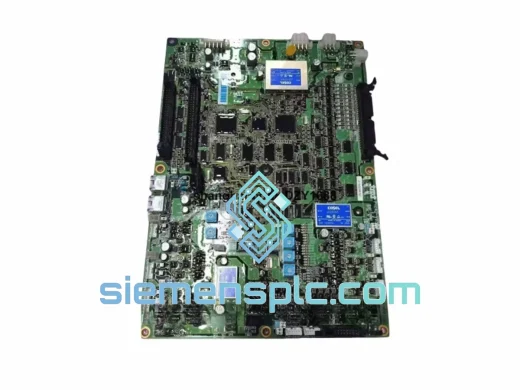
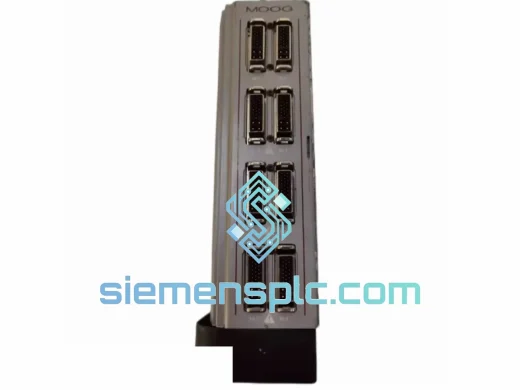
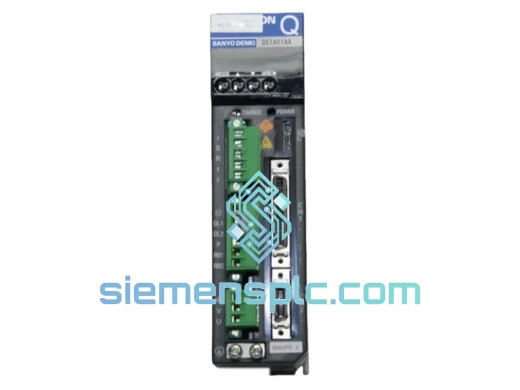
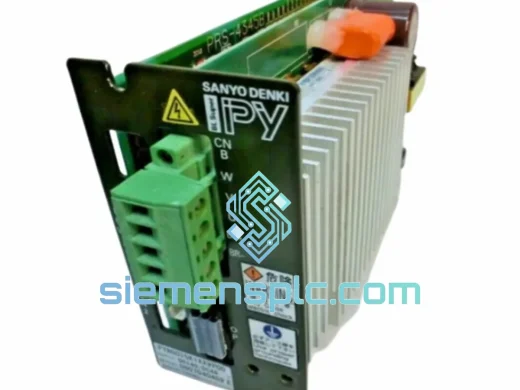
SANYO DENKI PYRG015K1XXVP00 Servo Amplifier
I PYRG015K1XXVP00 PY Series
Origin JP
Servo Amplifier
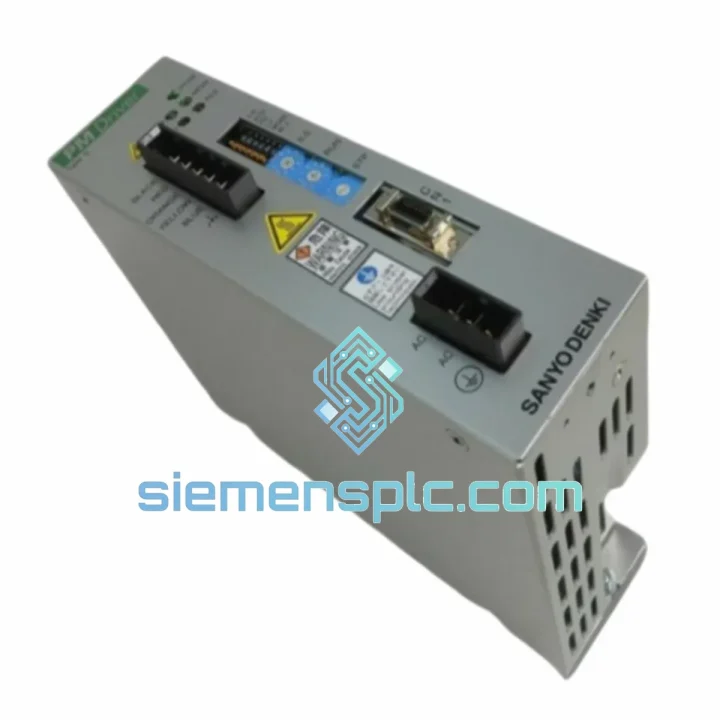
Request verified availability, condition, replacement risk review, packing options and courier lead time for PMAPA1S6B01.
Click Request Quote and the part number is inserted into the inquiry form automatically.
Core fields for model confirmation and RFQ routing. Detailed product narrative remains below.
The PMAPA1S6B01 is a compact microstepping driver from SANYO DENKI’s SANMOTION P series, designed to deliver deterministic, low-resonance step-motor control in closed-cabinet industrial environments. Unlike general-purpose stepper controllers, this unit is engineered around SANYO DENKI’s proprietary current-waveform synthesis algorithm, which shapes the phase-current profile at each microstep boundary to suppress mid-range resonance — a failure mode that causes missed steps and audible noise in conventional full-step or half-step drivers operating above 500 RPM.
In a motion control loop, the PMAPA1S6B01 sits between the pulse-output stage of a PLC or motion controller and the two-phase stepping motor. Its role is to translate discrete pulse-and-direction (P&D) or CW/CCW command signals into precisely timed, current-regulated phase excitation sequences. The driver’s internal current regulator operates at a switching frequency well above the audible range, maintaining constant torque output across the motor’s speed envelope without requiring external snubber networks or motor-specific tuning files.
This page provides verified technical parameters, hardware architecture analysis, and integration guidance for engineers specifying the PMAPA1S6B01 in new designs or MRO replacement scenarios.
Real-time Stock & RFQ: [email protected] | WhatsApp: +86 18359268345
| Parameter | Value / Specification |
|---|---|
| Part Number | PMAPA1S6B01 |
| Manufacturer | SANYO DENKI Co., Ltd. |
| Series | SANMOTION P |
| Driver Type | Two-phase microstepping driver |
| Control Input Interface | Pulse/Direction (P&D); CW/CCW selectable |
| Microstep Resolution | 1, 1/2, 1/4, 1/8, 1/16, 1/32, 1/64, 1/128 step (switch-selectable) |
| Input Pulse Frequency (max) | 500 kHz (typical SANMOTION P rating) |
| Phase Current Output | Per datasheet — confirm with SANYO DENKI documentation for rated RMS and peak values |
| Power Supply Input | DC input (refer to nameplate; typically 24 VDC or 48 VDC regulated) |
| Protection Functions | Overcurrent shutdown, overvoltage lockout, overtemperature cutoff, motor open-phase detection |
| Mounting Method | DIN rail (EN 60715 TH35) or panel screw mount |
| Operating Temperature | 0 °C to +50 °C (ambient, with adequate panel airflow) |
| Storage Temperature | −20 °C to +65 °C |
| Humidity | 20 % to 90 % RH, non-condensing |
| Vibration Resistance | 10–55 Hz, 9.8 m/s² (per IEC 60068-2-6) |
| Weight | Approx. 150 g |
| Certifications | CE (EMC + LVD), RoHS 2 compliant |
| Country of Origin | Japan |
| Warranty | 12 months against manufacturing defects from date of shipment |
| Lead Time (in-stock) | Ships within 1–3 business days from Xiamen, China |
| Lead Time (out-of-stock) | Contact [email protected] for sourcing ETA |
Current Waveform Synthesis and Resonance Suppression
The fundamental challenge in microstepping driver design is maintaining sinusoidal phase-current fidelity at high step rates. The PMAPA1S6B01 uses a PWM-based constant-current chopper circuit with a switching frequency in the range of 20–40 kHz. At each microstep position, the driver’s DAC (digital-to-analog converter) sets a reference voltage corresponding to the target phase current amplitude on that sine/cosine waveform segment. The current-sense resistor in each phase leg feeds back the actual current to a comparator, which modulates the PWM duty cycle to maintain the reference. This closed-current-loop architecture eliminates the torque ripple that characterizes voltage-mode drivers, particularly at low speeds where back-EMF is negligible.
EMC Design and Conducted Noise Mitigation
Stepper drivers are inherently noisy switching devices. SANYO DENKI addresses this at the PCB layout level by separating the high-current motor drive traces from the low-level signal and logic planes using a ground-plane partition strategy. The input pulse interface uses optocoupler isolation, breaking the ground loop between the PLC’s pulse-output stage and the driver’s power ground. This isolation barrier typically withstands 500 V common-mode transients, which is sufficient for most industrial panel environments where VFDs and contactors share the same cabinet. The motor output lines are filtered with common-mode chokes to reduce conducted emissions on the motor cable, which can otherwise couple back into adjacent signal wiring.
Thermal Management Architecture
The driver’s power stage dissipates heat primarily through the H-bridge MOSFETs during current regulation. The PMAPA1S6B01’s thermal design routes heat from the MOSFET package through a copper thermal pad to the unit’s aluminum baseplate, which acts as a heat spreader. The overtemperature protection circuit monitors junction temperature via an NTC thermistor bonded to the baseplate and initiates a controlled shutdown before the MOSFET junction reaches its rated maximum — preventing catastrophic failure rather than simply tripping a breaker. This design philosophy extends MTBF in high-ambient-temperature installations such as outdoor enclosures or foundry environments.
Motor Open-Phase Detection
An often-overlooked protection feature in the PMAPA1S6B01 is motor open-phase detection. If a motor winding connection is broken — due to connector vibration, cable fatigue, or incorrect wiring — the driver detects the absence of current flow in that phase within one PWM cycle and asserts a fault output. This prevents the motor from running on a single phase, which would cause uncontrolled rotation, mechanical damage, and potential safety incidents in vertical-load or clamping applications.
Genuine SANYO DENKI Components
Every PMAPA1S6B01 unit supplied by siemensplc.com is sourced through verified industrial distribution channels. Units are inspected against SANYO DENKI’s published label format, date code structure, and packaging specifications before acceptance into inventory. We do not accept units from unverified brokers or channels that cannot provide traceable supply documentation.
Pre-Shipment Inspection Protocol
Each unit undergoes visual inspection of the PCB, connector integrity, and housing for transit damage. Serial numbers and date codes are logged against the sales order for full traceability. Units are packed in anti-static bags with foam cushioning inside double-wall corrugated cartons rated for international air freight handling.
Xiamen Export Hub — Logistics Advantage
Our warehouse is located in Xiamen, Fujian Province — a designated free-trade zone with direct access to Xiamen Gaoqi International Airport and Xiamen Port, one of China’s top-ten container ports by throughput. This geographic position enables:
Payment and Trade Terms
We support T/T bank transfer, PayPal, Western Union, and major credit cards. Multi-currency invoicing is available in USD, EUR, HKD, and CNY. Net-30 terms are available for qualified institutional buyers upon credit review.
12-Month Warranty
All new units carry a 12-month warranty against manufacturing defects from the date of shipment. Warranty claims are processed by return-and-replace. Extended warranty and annual maintenance contracts are available for volume accounts.
Email: [email protected]
WhatsApp: +86 18359268345
Web: siemensplc.com
Location: Xiamen, Fujian, China
© 2026 siemensplc.com. All rights reserved.
We check the full part number, brand, series and visible nameplate information before quotation.
Sales confirms stock path, condition option, quantity and realistic lead time for export dispatch.
DHL, FedEx, UPS or buyer courier arrangements can be reviewed with packing requirements.
Similar brand or category products for fast comparison and multi-item RFQ lists.