Yokogawa
RFQ Ready
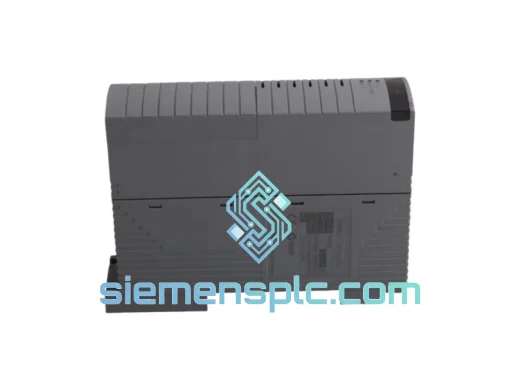
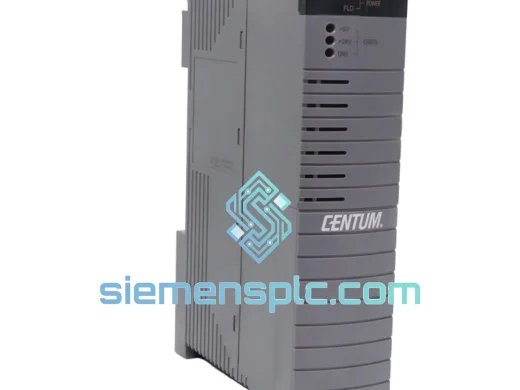
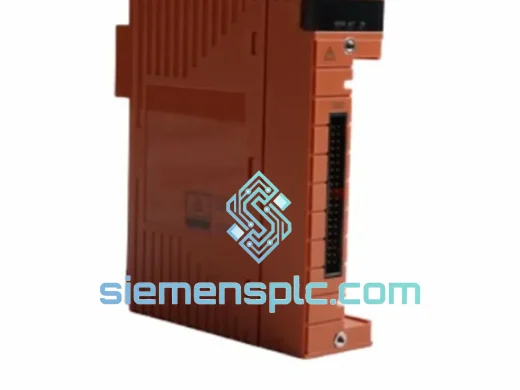
Yokogawa SPW482-13 S1 DCS Power Supply Module
CENTUM VP
Origin JP
DCS Power Supply Module
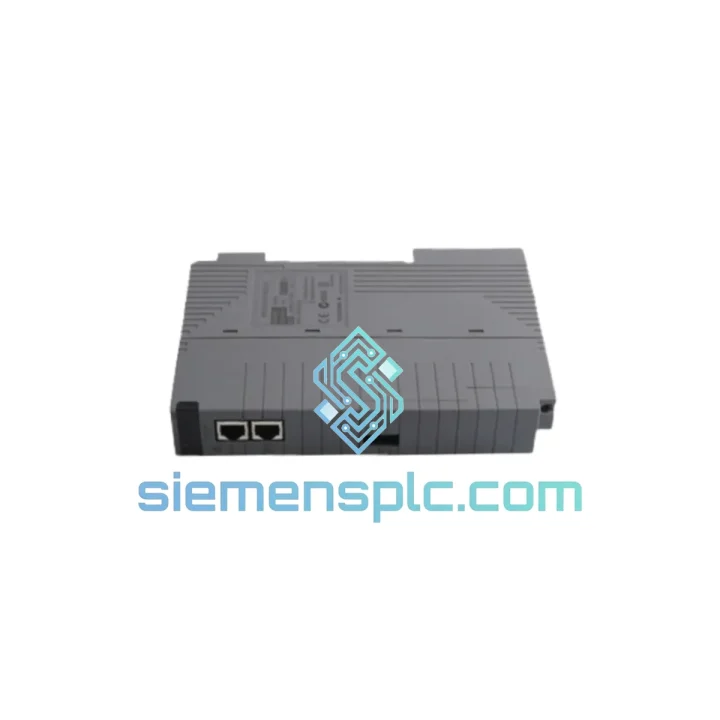
Request verified availability, condition, replacement risk review, packing options and courier lead time for PW101 S2.
Click Request Quote and the part number is inserted into the inquiry form automatically.
Core fields for model confirmation and RFQ routing. Detailed product narrative remains below.
The Yokogawa PW101 S2 is a dedicated 24 V DC power supply module engineered for deployment within the CENTUM CS 3000 distributed control system (DCS) platform. Its primary function is to deliver regulated, low-ripple DC power to field control station (FCS) nests and their associated I/O sub-modules, maintaining the electrical stability that deterministic process control demands. Unlike general-purpose DIN-rail power supplies, the PW101 S2 is factory-validated against the CENTUM CS 3000 backplane specification, ensuring that inrush current profiles, output impedance characteristics, and connector pinout geometry conform precisely to Yokogawa’s system-level design envelope.
In a CENTUM CS 3000 architecture, the FCS nest houses CPU cards, communication cards, and I/O modules that collectively execute real-time control loops at scan rates typically between 100 ms and 1 s. Any power rail deviation—whether transient voltage sag, excessive ripple, or thermal-induced output drift—directly degrades analog signal accuracy on 4–20 mA loops and introduces timing jitter in digital I/O state transitions. The PW101 S2 addresses this by maintaining output regulation within ±1% across its full load range, with ripple and noise suppressed to levels compatible with 16-bit analog resolution requirements.
The module supports hot-swap insertion and extraction within a redundant dual-PSU nest configuration. When two PW101 S2 units are installed in the same FCS nest, the CENTUM CS 3000 power management logic performs automatic load sharing and seamless failover without interrupting the control loop execution cycle. This architecture is particularly relevant in continuous process industries—oil refining, ethylene cracking, LNG liquefaction—where an unplanned process shutdown carries direct financial and safety consequences measured in tens of thousands of dollars per hour.
The S2 revision designation indicates the current production standard, incorporating hardware refinements over the earlier S1 variant. Procurement engineers specifying spare parts for existing CS 3000 installations should confirm the revision level of installed units before ordering, as S1 and S2 share the same mechanical form factor but differ in internal component selection and thermal management design. Both revisions are electrically interoperable within the same nest, but mixing revisions in a redundant pair is not recommended by Yokogawa’s field service guidelines.
From a supply chain perspective, the PW101 S2 occupies a critical position in the spare parts matrix for any plant running CENTUM CS 3000. The module’s mean time between failures (MTBF) under continuous 24/7 industrial operation is rated in excess of 100,000 hours, yet procurement teams managing aging DCS infrastructure must maintain buffer stock to cover the statistical tail of early failures and the increasing lead times associated with legacy module procurement. siemensplc.com maintains verified stock of genuine Yokogawa PW101 S2 modules sourced through authorized surplus channels, with each unit subject to incoming inspection and functional power-on verification prior to dispatch.
Real-time Stock & RFQ: [email protected] | WhatsApp: +86 18359268345
| Parameter | Specification |
|---|---|
| Model Number | PW101 S2 |
| Manufacturer | Yokogawa Electric Corporation |
| Compatible Platform | CENTUM CS 3000 (all revisions); CENTUM CS 1000 (verify nest type) |
| Module Function | Regulated DC Power Supply for FCS Nest |
| Input Voltage Range | 100–240 V AC, single-phase, 50/60 Hz |
| Output Voltage | 24 V DC (nominal) |
| Output Voltage Regulation | ±1% across full load range |
| Ripple & Noise | Compatible with 16-bit analog I/O resolution requirements |
| Mounting Method | CENTUM CS 3000 FCS nest slot (factory-keyed connector) |
| Hot-Swap Support | Yes – supports live insertion/extraction in redundant PSU configuration |
| Redundancy Mode | Dual PW101 S2 load-sharing with automatic failover |
| Operating Temperature | 0°C to 55°C |
| Storage Temperature | -25°C to 70°C |
| Relative Humidity | 5% to 95% RH, non-condensing |
| Module Weight | Approx. 360 g |
| Revision | S2 (current production standard) |
| Certifications | CE, UL (refer to Yokogawa datasheet for full listing) |
| MTBF | >100,000 hours continuous operation |
| Warranty | 12 months against manufacturing defects from date of shipment |
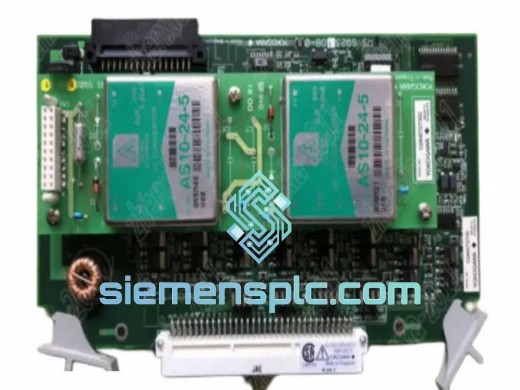
The PW101 S2 employs a switched-mode power supply (SMPS) topology optimized for the electrical environment of an industrial DCS cabinet. The input stage incorporates an EMC filter network—comprising common-mode chokes and X/Y-class capacitors—that attenuates conducted emissions in the 150 kHz to 30 MHz range, conforming to EN 55011 Class A limits. This is not a cosmetic compliance measure; in a DCS cabinet where multiple CPU cards, communication modules, and I/O cards share a common ground plane, conducted noise injected by a poorly filtered PSU propagates directly into analog measurement circuits, manifesting as baseline drift on thermocouple and RTD inputs.
The power conversion stage uses a half-bridge resonant converter architecture operating at a fixed switching frequency above 100 kHz. The resonant tank circuit achieves zero-voltage switching (ZVS) transitions, which eliminates the hard-switching losses that generate broadband electromagnetic interference in conventional PWM converters. The practical consequence is a measurable reduction in the radiated EMI floor within the FCS cabinet, which directly benefits the signal integrity of low-level analog inputs operating in the 1–10 mV range.
The output stage incorporates synchronous rectification with active current sharing logic. In a dual-PSU redundant configuration, the current sharing bus equalizes the load current between both PW101 S2 units to within ±5% of each other. This prevents the thermal asymmetry that would otherwise develop if one unit carried a disproportionate share of the load, extending the operational life of both modules and maintaining uniform thermal aging across the redundant pair.
The module’s output protection circuitry includes overcurrent limiting with automatic recovery, overvoltage crowbar protection, and thermal shutdown with hysteresis. The overcurrent limit is set above the maximum rated load of the FCS nest but below the current level that would damage backplane traces or connector contacts, providing a defined protection boundary that does not require manual reset under transient overload conditions.
Every Yokogawa PW101 S2 unit dispatched from siemensplc.com’s Xiamen, China facility undergoes a structured incoming inspection protocol. Visual examination confirms that module housing, connector contacts, and labeling are free from mechanical damage, corrosion, and evidence of prior field use without refurbishment. Functional power-on verification applies a calibrated resistive load to the 24 V DC output and measures output voltage, ripple, and current sharing bus signal against Yokogawa’s published acceptance criteria. Units that do not meet these criteria are quarantined and not offered for sale.
Original Yokogawa packaging and documentation are preserved where available. For units sourced from verified surplus channels, siemensplc.com provides a certificate of conformance on request, documenting the inspection steps performed and the measured parameters recorded. Batch traceability records are maintained for a minimum of five years, supporting the audit requirements of regulated process industries including pharmaceutical manufacturing under FDA 21 CFR Part 11 and oil and gas operations under IEC 61511.
Logistics from Xiamen to major industrial hubs in Southeast Asia, the Middle East, Europe, and the Americas is executed via DHL Express, FedEx International Priority, and UPS Worldwide Express, with typical transit times of 3–7 business days to most destinations. Export documentation—including commercial invoice, packing list, and certificate of origin—is prepared in compliance with Chinese customs regulations and the import requirements of the destination country. For time-critical plant maintenance scenarios, same-day dispatch is available for orders confirmed before 14:00 CST. All shipments are fully insured against transit damage and loss.
Email: [email protected]
WhatsApp: +86 18359268345
Web: siemensplc.com
Location: Xiamen, China
© 2026 siemensplc.com. All rights reserved.
We check the full part number, brand, series and visible nameplate information before quotation.
Sales confirms stock path, condition option, quantity and realistic lead time for export dispatch.
DHL, FedEx, UPS or buyer courier arrangements can be reviewed with packing requirements.
Similar brand or category products for fast comparison and multi-item RFQ lists.