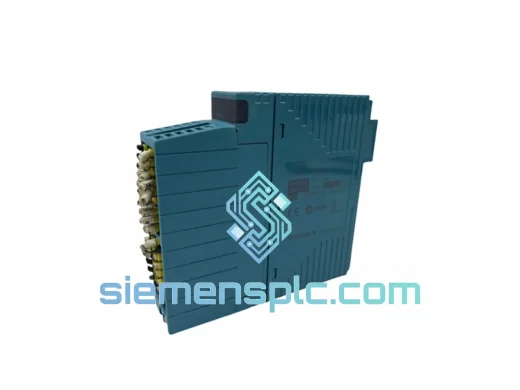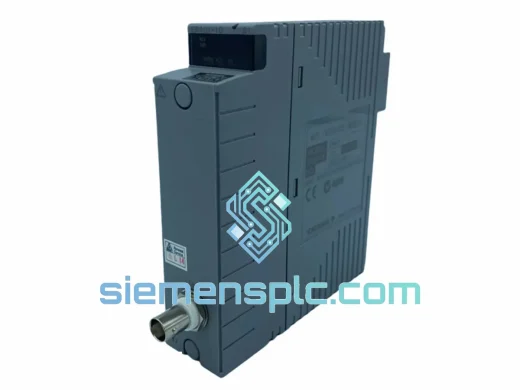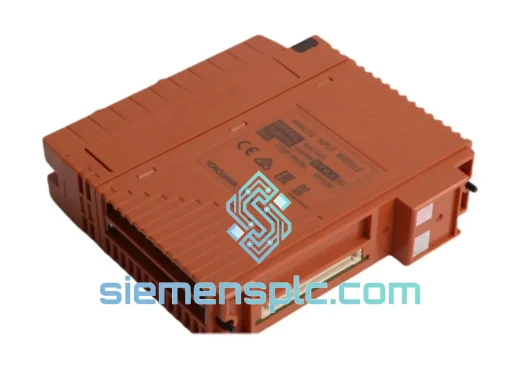
Yokogawa
RFQ Ready
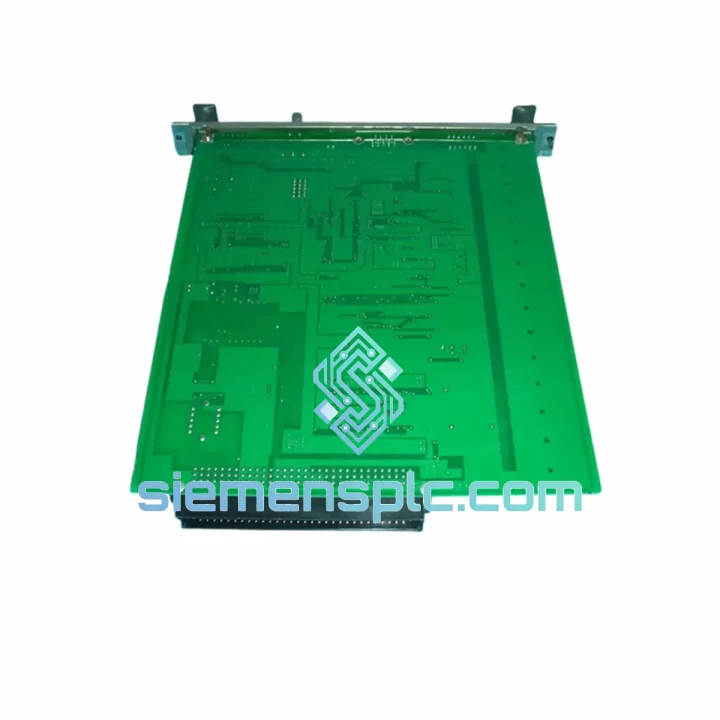
Yokogawa SAI143-H63/PRP S3 DCS Analog Input Module
CENTUM VP
Origin JP
DCS Analog Input Module
Request verified availability, condition, replacement risk review, packing options and courier lead time for RB401-S4.
Click Request Quote and the part number is inserted into the inquiry form automatically.
Core fields for model confirmation and RFQ routing. Detailed product narrative remains below.
The YOKOGAWA RB401-S4 is a Remote I/O (RIO) Bus Module designed for deployment within CENTUM VP and CS 3000 Distributed Control System node units. Its primary function is to establish and maintain the high-speed, deterministic communication link between the Field Control Station (FCS) and remote I/O node units distributed across the plant floor. In large-scale process facilities — refineries, chemical complexes, power generation plants — the RB401-S4 occupies a structurally critical position: it is the physical and logical interface through which all field signal data traverses the RIO bus segment before being processed by the FCS controller. Without a correctly specified and functioning RIO bus module, the entire node unit becomes communicatively isolated, rendering all downstream I/O cards inoperative regardless of their individual health status.
The RIO bus itself operates on a proprietary YOKOGAWA high-speed serial protocol, distinct from fieldbus standards such as PROFIBUS or Foundation Fieldbus. This design choice reflects YOKOGAWA’s engineering philosophy of prioritizing deterministic scan cycle performance over open interoperability at the field device layer. The RB401-S4 implements this protocol at the hardware level, managing bus arbitration, frame synchronization, and error detection without burdening the FCS processor — a key architectural advantage in systems with high I/O point counts and tight control loop timing requirements.
Real-time Stock & RFQ: [email protected] | WhatsApp: +86 18359268345
| Parameter | Specification |
|---|---|
| Part Number / SKU | RB401-S4 |
| Manufacturer | YOKOGAWA Electric Corporation |
| Compatible Platform | CENTUM VP / CENTUM CS 3000 |
| Module Classification | RIO Bus Interface Module |
| Communication Protocol | YOKOGAWA Proprietary RIO Bus (high-speed serial) |
| Bus Topology Support | Single bus / Dual-redundant bus |
| Maximum Bus Segment Length | Up to 750 m (with specified shielded cable) |
| Mounting Interface | CENTUM VP Node Unit chassis (ANB/ANR series) |
| Power Source | Backplane bus (node unit PSU) |
| Operating Temperature | 0 °C to +60 °C |
| Storage Temperature | -20 °C to +70 °C |
| Relative Humidity | 5% to 95% RH (non-condensing) |
| Approx. Module Weight | 400 g |
| Regulatory Compliance | CE, UL, RoHS |
| Warranty | 12 months from date of shipment |
The RB401-S4 implements bus interface logic at the hardware layer, separating communication management from the FCS application processor. This architectural separation has measurable consequences for system performance and fault containment.
Bus Arbitration and Frame Management: The module handles RIO bus frame generation, token passing, and acknowledgment sequencing autonomously. In a dual-redundant configuration, two RB401-S4 modules operate in active/standby mode within the same node unit. The standby module continuously monitors bus traffic and maintains synchronization with the active module’s state. Switchover upon active module failure occurs within one bus scan cycle — typically sub-100 ms — without requiring FCS intervention or application-layer reconfiguration.
EMC Design Considerations: Industrial process environments generate significant electromagnetic interference from variable-frequency drives, high-current switching equipment, and RF sources. The RB401-S4’s bus interface circuitry incorporates differential signal transmission on the RIO bus physical layer, providing common-mode noise rejection. The module’s chassis grounding path through the node unit backplane provides a low-impedance reference for shielded cable termination, which is essential for maintaining signal integrity over 750 m bus runs in electrically noisy plant environments.
Error Detection and Fault Isolation: The module implements cyclic redundancy check (CRC) error detection on all bus frames. Persistent CRC errors trigger diagnostic flags visible in the CENTUM VP HIS (Human Interface Station) without interrupting the scan cycle of healthy node units on the same bus segment. This fault isolation characteristic prevents a single degraded node from propagating communication errors to adjacent nodes — a critical property in systems where partial I/O loss must not cascade into full process shutdown.
Backplane Interface: On the node unit side, the RB401-S4 interfaces with the backplane bus that connects to installed I/O cards (analog input, analog output, digital I/O). The backplane scan and the RIO bus scan operate on coordinated timing, ensuring that field data collected from I/O cards is coherently assembled into RIO bus frames without inter-card timing skew. This coordination is managed by the module’s internal timing logic, not by the FCS, reducing jitter in the data delivery path.
Every YOKOGAWA RB401-S4 unit supplied through siemensplc.com is sourced as genuine OEM hardware — no third-party remanufacturing, no counterfeit risk. Each unit undergoes a structured pre-shipment inspection protocol: physical condition assessment covering connector integrity, label authenticity, and housing condition; hardware revision verification against YOKOGAWA’s published revision history; and functional power-on verification where test infrastructure permits. Units are packaged in anti-static bags with desiccant and humidity indicator cards, then secured in double-wall corrugated cartons rated for international air freight handling.
Shipments originate from our warehouse in Xiamen, China, with access to major international freight carriers including DHL Express, FedEx International Priority, and UPS Worldwide Expedited. Standard export documentation — commercial invoice, packing list, and certificate of origin — is prepared for all international shipments. For projects requiring expedited delivery, air freight transit times to major industrial hubs are typically 3–5 business days to Southeast Asia, 5–7 days to the Middle East and Europe, and 5–8 days to North America. All units are covered by a 12-month warranty from the date of shipment, with direct technical support from our engineering team for installation and compatibility questions.
📧 Email: [email protected]
💬 WhatsApp: +86 18359268345
🌐 Web: siemensplc.com
📍 Location: Xiamen, China
© 2026 siemensplc.com. All rights reserved.
We check the full part number, brand, series and visible nameplate information before quotation.
Sales confirms stock path, condition option, quantity and realistic lead time for export dispatch.
DHL, FedEx, UPS or buyer courier arrangements can be reviewed with packing requirements.
Similar brand or category products for fast comparison and multi-item RFQ lists.