Yokogawa
RFQ Ready
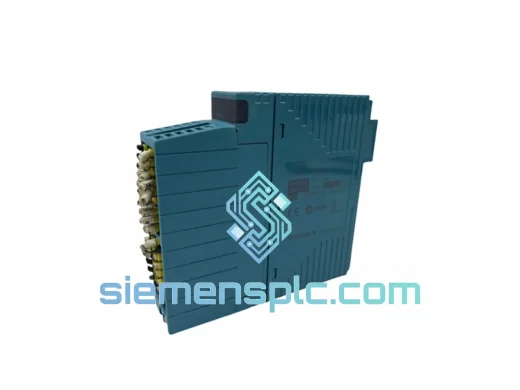
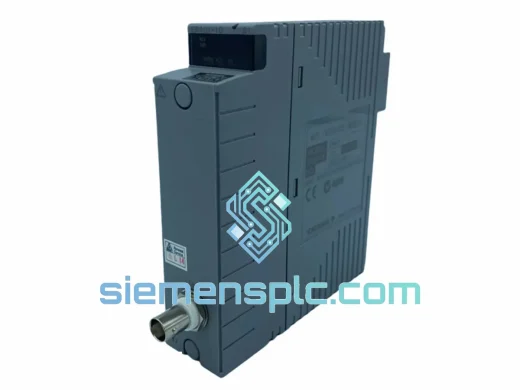
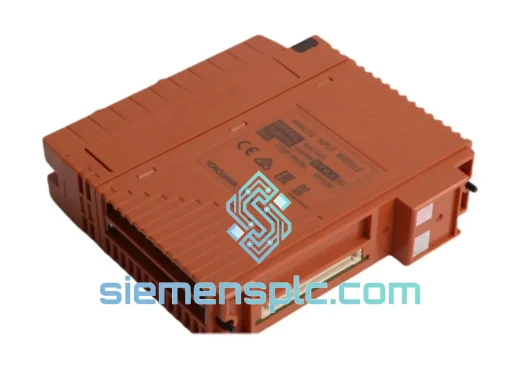
Yokogawa SAI143-H63/PRP S3 DCS Analog Input Module
CENTUM VP
Origin JP
DCS Analog Input Module
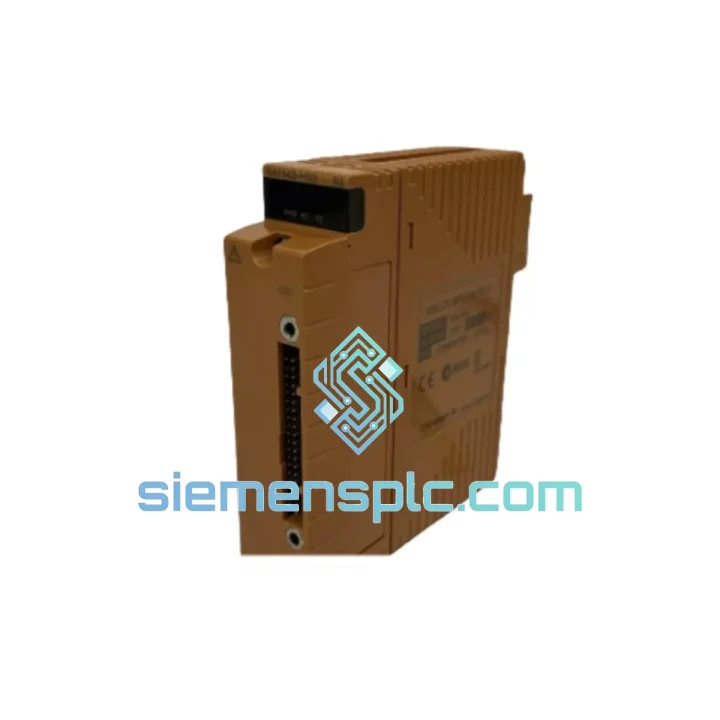
Request verified availability, condition, replacement risk review, packing options and courier lead time for SAI143-H33.
Click Request Quote and the part number is inserted into the inquiry form automatically.
Core fields for model confirmation and RFQ routing. Detailed product narrative remains below.
Every hour a CENTUM VP field control station runs blind on a failed analog input card, your plant is hemorrhaging money. Temperature loops drift unmonitored, pressure readings flatline on the HIS screen, and operators are forced into manual workarounds that introduce their own risk. The Yokogawa SAI143-H33 S2 is a high-density analog input module purpose-built for the CENTUM VP FCS I/O subsystem — and when yours fails, there is no acceptable substitute. siemensplc.com maintains verified stock of this module and ships globally via DHL/FedEx express from Xiamen, China, with same-day dispatch on confirmed orders.
The SAI143-H33 S2 handles multi-channel 4–20 mA and voltage analog inputs with the signal integrity and isolation characteristics that Yokogawa’s CENTUM VP architecture demands. The -H33 suffix designates a specific hardware configuration variant — channel count, input range, and barrier type — while the S2 revision code locks in the firmware compatibility tier. Getting the suffix wrong means the module either won’t seat correctly in the nest unit or will generate persistent I/O fault alarms that your FCS cannot clear without a full slot reconfiguration. This is not a part where close enough works.
⚡ URGENT REQUIREMENT? Contact: [email protected] | WhatsApp: +86 18359268345
| Parameter | Specification |
|---|---|
| Part Number | SAI143-H33 S2 |
| Manufacturer | Yokogawa Electric Corporation |
| Platform | CENTUM VP Field Control Station (FCS) |
| Module Category | Analog Input Module (AIM) |
| Input Signal Type | 4–20 mA DC / Voltage (model-dependent per -H33 config) |
| Suffix -H33 | Hardware variant: channel configuration & input range spec |
| Suffix S2 | Firmware/hardware revision tier — must match FCS software version |
| Bus Interface | CENTUM VP I/O bus (nest unit backplane) |
| Operating Temperature | 0°C to +60°C |
| Humidity | 5% to 95% RH, non-condensing |
| Weight | Approx. 800 g |
| Origin | Japan |
| Stock Status | ✔ Ready to Ship — Contact for Live Availability |
| Lead Time (In-Stock) | Same-day dispatch / 1–3 business days international delivery |
| Warranty | 12 months from date of shipment |
Before you pull the card, confirm the fault is actually the module and not the field wiring or the nest unit. On the CENTUM VP HIS, navigate to the FCS hardware status view and check whether the I/O fault is isolated to a single slot or cascading across the entire nest. A single-slot fault with the LED on the module showing solid red or alternating red/green is almost always the card itself. If the entire nest is reporting faults, check the nest unit power supply and the I/O bus cable first — replacing the SAI143-H33 S2 won’t fix a dead nest backplane.
Common fault codes associated with SAI143 series failures:
Replacement procedure — key steps an FAE won’t skip:
Process plants don’t offer controlled laboratory environments. The SAI143-H33 S2 is designed to operate continuously in conditions that would degrade consumer or light-industrial electronics within months. Yokogawa’s manufacturing process for CENTUM VP I/O modules includes vibration testing per IEC 60068-2-6, subjecting each board to sinusoidal vibration across the 10–150 Hz frequency range to simulate the mechanical stress of pump rooms, compressor halls, and offshore platform decks.
Thermal cycling is equally rigorous. The module’s internal components are rated for continuous operation at ambient temperatures up to 60°C — a realistic figure for enclosed marshalling cabinets in tropical climates or near heat-generating equipment. The PCB conformal coating provides a moisture barrier that resists condensation during temperature swings, which is the primary failure mechanism for uncoated boards in coastal or high-humidity plant environments.
EMI immunity is addressed through the module’s isolated input design. Each analog input channel incorporates galvanic isolation, preventing ground loop currents from corrupting signal readings and protecting the module’s internal circuitry from transient voltage spikes on field wiring — a common occurrence in plants with large motor drives or frequent switching operations nearby. This isolation architecture is why CENTUM VP I/O modules consistently outlast generic third-party alternatives in real-world plant service.
siemensplc.com operates from Xiamen, Fujian Province — one of China’s primary international trade ports with direct access to DHL, FedEx, and UPS express freight networks. When a confirmed order is placed before 14:00 CST, same-day dispatch is standard for in-stock modules. The Xiamen customs clearance process for industrial electronic components is well-established: commercial invoice, packing list, and HS code declaration (typically 8537.10 for programmable control modules) are prepared as a standard export package with every shipment.
Typical transit times from Xiamen via express courier:
Every shipment includes full tracking from pickup to delivery, ESD-safe anti-static packaging, and foam-cushioned outer carton to protect the module’s connector pins and PCB during transit. For projects requiring import documentation — certificate of origin, commercial invoice with HS code, or customs declaration support — our logistics team prepares these as standard. Expedited customs brokerage assistance is available for time-critical plant shutdowns.
📧 Email: [email protected]
💬 WhatsApp: +86 18359268345
🌐 Web: siemensplc.com
© 2026 siemensplc.com. All rights reserved.
We check the full part number, brand, series and visible nameplate information before quotation.
Sales confirms stock path, condition option, quantity and realistic lead time for export dispatch.
DHL, FedEx, UPS or buyer courier arrangements can be reviewed with packing requirements.
Similar brand or category products for fast comparison and multi-item RFQ lists.