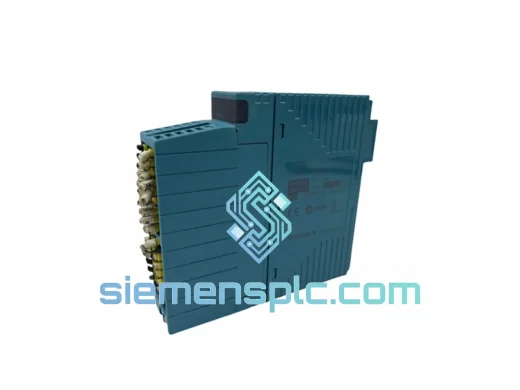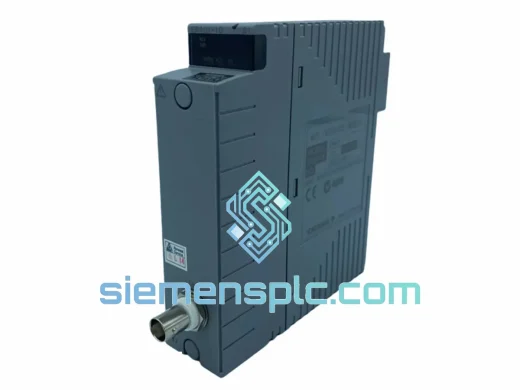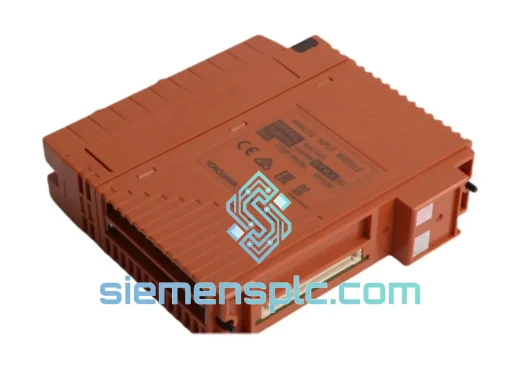
Yokogawa
RFQ Ready
Yokogawa SAI143-H63/PRP S3 DCS Analog Input Module
CENTUM VP
Origin JP
DCS Analog Input Module
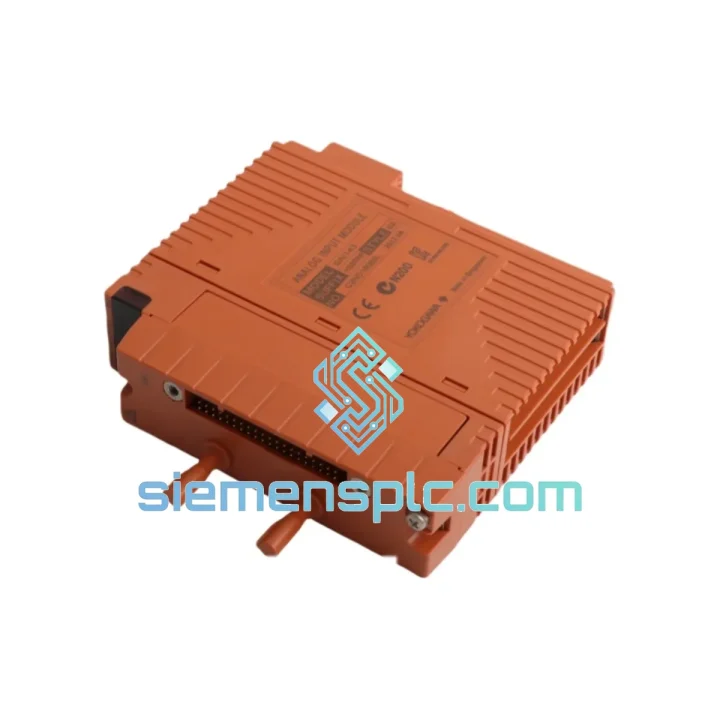
Request verified availability, condition, replacement risk review, packing options and courier lead time for SAI143-H33/PRP.
Click Request Quote and the part number is inserted into the inquiry form automatically.
Core fields for model confirmation and RFQ routing. Detailed product narrative remains below.
The Yokogawa SAI143-H33/PRP occupies a structurally significant position within the CENTUM VP field control architecture. As a 16-channel analog input module with integrated HART communication and hardware-level PRP (Parallel Redundancy Protocol) redundancy, it serves as the primary signal acquisition boundary between field instrumentation and the distributed control system’s computational core. Every 4–20 mA signal entering the control loop passes through this module’s A/D conversion stage, making its electrical integrity and communication reliability directly deterministic of loop accuracy and system uptime.
In process industries where a single undetected signal dropout can trigger emergency shutdowns or product quality deviations, the SAI143-H33/PRP addresses the root cause at the hardware layer rather than relying on software-level error correction. Its dual-path Ethernet architecture, per-channel optical isolation, and simultaneous HART polling capability make it a technically defensible choice for refinery, petrochemical, power generation, and pharmaceutical automation projects operating under continuous uptime mandates.
Real-time Stock & RFQ: [email protected] | WhatsApp: +86 18359268345
| Part Number / SKU | SAI143-H33/PRP |
| Manufacturer | Yokogawa Electric Corporation |
| Platform / Series | CENTUM VP (backward compatible: CENTUM CS 3000) |
| Module Classification | Analog Input (AI), High-Density |
| Channel Count | 16 channels, independently processed |
| Input Signal Type | 4–20 mA DC with HART superimposed (FSK, 1200/2200 Hz) |
| Internal Burden Resistor | 250 Ω per channel |
| A/D Resolution | 16-bit successive approximation |
| Measurement Accuracy | ±0.1% of full scale (at 25 °C reference) |
| HART Revision Support | HART 5 and HART 7, simultaneous per channel |
| Redundancy Architecture | PRP — Parallel Redundancy Protocol per IEC 62439-3 |
| Network Paths | Dual independent Ethernet (LAN-A / LAN-B), zero switchover latency |
| Channel Isolation | Optical isolation, channel-to-channel and channel-to-backplane bus |
| Isolation Voltage | 500 V DC (channel-to-bus), 250 V DC (channel-to-channel) |
| Power Consumption | ≤ 5 W (typical operating load) |
| Supply Voltage | Supplied via CENTUM VP Node Unit backplane (24 V DC internal bus) |
| Operating Temperature | 0 °C to +60 °C |
| Storage Temperature | −25 °C to +70 °C |
| Relative Humidity | 5% to 95% RH, non-condensing |
| EMC Compliance | IEC 61000-4 series (ESD, EFT, surge, conducted/radiated immunity) |
| Safety Certifications | CE, UL, cUL; ATEX Zone 2 with approved Zener barrier |
| Mounting Interface | Node Unit (NU) backplane slot, CENTUM VP Field Control Unit (FCU) |
| Hot-Swap Support | Yes — under power, with FCU configured for redundant I/O |
| Module Weight | Approx. 360 g |
| Country of Origin | Japan |
| Warranty | 12 months from date of shipment |
The SAI143-H33/PRP’s internal architecture separates signal acquisition, protocol processing, and network transmission into three discrete functional layers, each with independent power domains and fault containment boundaries.
Signal Acquisition Layer: Each of the 16 channels operates through a dedicated 250 Ω burden resistor that converts the 4–20 mA loop current into a 1–5 V DC voltage signal. This voltage is fed into a 16-bit successive approximation A/D converter. The use of per-channel converters rather than a multiplexed single-ADC topology eliminates inter-channel crosstalk and ensures that a fault on one channel’s acquisition path does not degrade the conversion accuracy of adjacent channels. Sampling is performed at a rate sufficient to support CENTUM VP’s scan cycle requirements without introducing aliasing artifacts into the digitized process variable.
HART Extraction and Multiplexing: The HART FSK signal (1200 Hz = logic 1, 2200 Hz = logic 0) is superimposed on the 4–20 mA DC loop at amplitudes of ±0.5 mA, well within the loop’s noise margin. The SAI143-H33/PRP incorporates a per-channel HART modem that demodulates the FSK signal independently of the primary A/D conversion path. This parallel processing architecture means HART polling — for device diagnostics, secondary variables, or configuration reads — does not introduce latency or jitter into the primary process variable acquisition. All 16 HART channels can be polled simultaneously, forwarding device data to Yokogawa’s Plant Resource Manager (PRM) via the V-net/IP control bus.
Optical Isolation Architecture: The isolation boundary is implemented at two levels. Channel-to-channel isolation (250 V DC) prevents ground potential differences between field instruments from creating circulating currents that would offset measurement accuracy. Channel-to-bus isolation (500 V DC) protects the CENTUM VP backplane and FCU processor from field-side transient events — including lightning-induced surges on cable runs exceeding 100 m. The optocoupler devices used in the isolation stage are selected for low capacitance to minimize high-frequency noise coupling across the isolation barrier.
PRP Redundancy Sub-Module: The /PRP suffix designates the presence of a dedicated PRP coupler integrated into the module’s network interface. Per IEC 62439-3, PRP operates by transmitting identical Ethernet frames simultaneously over two independent physical networks (LAN-A and LAN-B). The receiving node accepts the first arriving frame and discards the duplicate. This mechanism provides zero-latency failover — there is no detection period, no switchover delay, and no packet loss when one network path fails. This is architecturally distinct from HSR (High-availability Seamless Redundancy) ring topologies, which introduce a finite frame circulation delay. For CENTUM VP installations with sub-100 ms scan cycle requirements, PRP’s deterministic zero-latency behavior is the technically correct redundancy choice.
EMC Design: The module’s PCB layout employs a multi-layer stackup with dedicated ground planes separating the analog signal layer from the digital processing layer. Ferrite bead filters are placed at the channel input terminals to attenuate conducted RF interference in the 150 kHz–30 MHz range. The module housing provides shielding continuity to the Node Unit chassis ground, ensuring compliance with IEC 61000-4-3 radiated immunity requirements at 10 V/m field strength.
Every SAI143-H33/PRP unit offered through siemensplc.com is sourced from verified supply channels maintaining full traceability to Yokogawa’s original manufacturing records. Incoming inspection at our Xiamen facility covers visual examination of the module housing and terminal block for mechanical damage, firmware version verification against Yokogawa’s published revision history, and functional loop testing at 4 mA, 12 mA, and 20 mA input levels on all 16 channels. Original Yokogawa serial numbers and date codes are retained without alteration. No remarking, refurbishment, or component-level repair is performed without explicit disclosure to the buyer.
Packaging follows anti-static handling protocols: each module is sealed in a conductive anti-static bag, placed in a foam-lined corrugated carton, and accompanied by a humidity indicator card for shipments involving extended transit times or sea freight legs. A Certificate of Conformance (CoC) and channel-level test report are available upon request for quality documentation requirements.
Logistics operations are managed from Xiamen, China, with access to DHL Express, FedEx International Priority, and UPS Worldwide Expedited services. Standard export documentation — commercial invoice, packing list, and HS code declaration — is prepared for each shipment. EXW Xiamen and CIF destination Incoterms are both supported. Typical dispatch lead time after order confirmation is 1–3 business days for in-stock units. International transit times range from 3–5 business days (DHL/FedEx express) to 7–14 business days (economy air freight). All shipments are covered by cargo insurance. A 12-month warranty from the date of shipment covers manufacturing defects and functional failures under normal operating conditions.
Email: [email protected]
WhatsApp: +86 18359268345
Web: siemensplc.com
Location: Xiamen, China
© 2026 siemensplc.com. All rights reserved.
We check the full part number, brand, series and visible nameplate information before quotation.
Sales confirms stock path, condition option, quantity and realistic lead time for export dispatch.
DHL, FedEx, UPS or buyer courier arrangements can be reviewed with packing requirements.
Similar brand or category products for fast comparison and multi-item RFQ lists.