Yokogawa
RFQ Ready
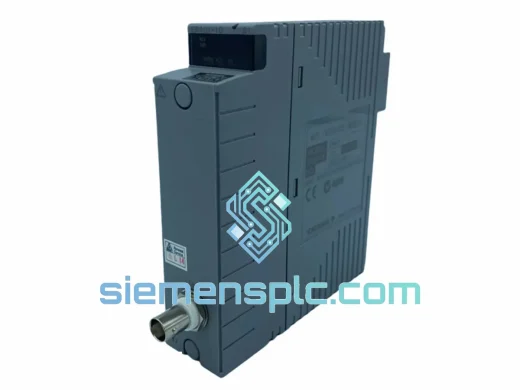
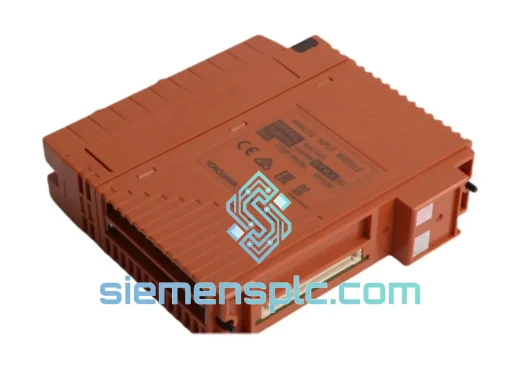
Yokogawa SAI143-H63/PRP S3 DCS Analog Input Module
CENTUM VP
Origin JP
DCS Analog Input Module
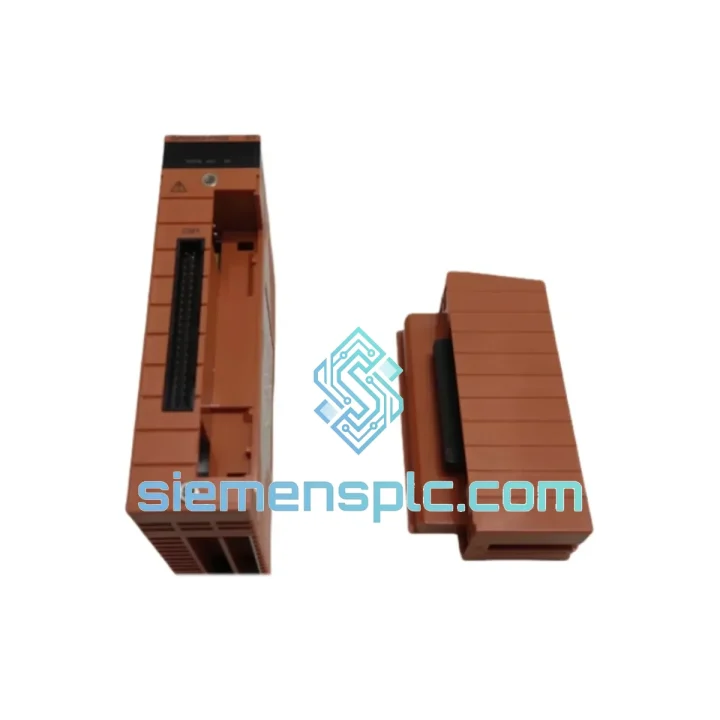
Request verified availability, condition, replacement risk review, packing options and courier lead time for SAI533-H03.
Click Request Quote and the part number is inserted into the inquiry form automatically.
Core fields for model confirmation and RFQ routing. Detailed product narrative remains below.
Your CENTUM VP DCS just flagged a module fault. The SAI533-H03 is offline. Sixteen analog input channels are dead. The control room is watching. Maintenance is waiting. Every minute that reactor, compressor, or distillation column sits idle is burning cash — and your reputation.
We have the YOKOGAWA SAI533-H03 on the shelf in Xiamen right now. Not on order. Not inbound next week. In stock. Ready to pull, pack, and hand to DHL today. This is the exact module — same part number, same hardware revision suffix -H03, same CENTUM VP backplane pinout — that your system was designed around. No adapters. No firmware gymnastics. Seat it, power up, let the FCS auto-detect it, and your loop is back.
We have shipped SAI533-H03 units to refineries in the Middle East, power plants in Southeast Asia, and chemical complexes in Europe — all on emergency timelines. We know what “urgent” means in a plant environment, and we do not treat it like a standard web order.
URGENT REQUIREMENT? Contact: [email protected] | WhatsApp: +86 18359268345
| Parameter | Specification |
|---|---|
| Part Number | SAI533-H03 |
| Manufacturer | YOKOGAWA Electric Corporation |
| Compatible Platform | CENTUM VP / CENTUM CS 3000 |
| Module Function | Analog Input Signal Conditioner |
| Input Channels | 16 channels, individually isolated |
| Input Signal Range | 4–20 mA DC (2-wire and 4-wire transmitters) |
| Internal Load Resistor | 250 Ω per channel |
| A/D Resolution | 16-bit |
| Channel Isolation | Channel-to-channel and channel-to-bus |
| Operating Temperature | 0 °C to +60 °C |
| Power Source | 24 V DC via CENTUM VP I/O nest backplane |
| Mounting Interface | CENTUM VP Field Control Station I/O nest |
| Hot-Swap Support | Yes — online replacement in redundant FCS configurations |
| Approvals | CE, UL, RoHS |
| Country of Origin | Japan |
| Stock Status | ✔ Ready to Ship — Xiamen, China |
After ten years of watching engineers swap I/O modules under pressure, here is what actually goes wrong and how to avoid it on the SAI533-H03:
1. Confirm the hardware revision before you pull the old module. The -H03 suffix is not cosmetic. YOKOGAWA has released multiple hardware revisions of the SAI533 family. Mixing -H00 and -H03 in the same I/O nest can cause the FCS to flag a hardware mismatch alarm (ALM 3210 or similar). Check the label on the faulted module before ordering. If the label is unreadable, pull the FCS engineering data in CENTUM VP Builder — the configured module type is stored there.
2. No DIP switches on this module — address is backplane-assigned. Unlike older YOKOGAWA I/O cards that required manual node address setting via rotary switches, the SAI533-H03 uses automatic slot-position addressing within the I/O nest. Seat it in the correct slot and the FCS assigns the address on power-up. Do not move it to a different slot without updating the CENTUM VP Builder configuration first, or you will generate a configuration mismatch fault.
3. Verify firmware compatibility with your FCS version. If your Field Control Station is running an older CENTUM VP firmware baseline (pre-R5.03), confirm with YOKOGAWA technical support that the SAI533-H03 hardware revision is supported. In most cases it is, but a firmware mismatch can prevent the module from being recognized after hot-swap. The FCS event log will show “I/O module type error” if this occurs.
4. Common fault codes to know before you start:
5. Hot-swap procedure in brief: In a redundant FCS configuration, switch control to the redundant FCS before touching the primary I/O nest. Confirm the redundant FCS has taken control (green RUN indicator). Then extract the faulted SAI533-H03 — the module has a front-panel extraction lever. Seat the replacement firmly until you hear the connector click. The FCS will detect the new module within 5–10 seconds and resume scanning. Verify all 16 channel values are reading correctly in the CENTUM VP HIS before switching back to primary control.
The SAI533-H03 was not designed for a climate-controlled server room. YOKOGAWA built this module for the realities of industrial field control stations — enclosures that sit next to heat exchangers, inside offshore platform cabinets, and in tropical chemical plants where ambient temperature and humidity push the limits of electronics daily.
The module’s 16-bit A/D converter is mounted on a conformal-coated PCB that resists moisture ingress and corrosive atmospheres. Channel-to-channel isolation is implemented at the hardware level using optical isolation barriers, which means a field-side wiring fault — a ground fault, a shorted transmitter, a lightning strike on a cable run — cannot propagate back through the backplane and take down adjacent channels or the FCS itself. This is not a software feature. It is a physical barrier built into every unit.
Vibration resistance meets IEC 60068-2-6 test profiles, which covers the mechanical stress of being mounted in a cabinet next to rotating machinery. The backplane connector is a high-retention 96-pin DIN type that maintains contact integrity under continuous vibration without requiring periodic re-seating. Operating temperature range of 0 °C to +60 °C covers the vast majority of industrial cabinet environments globally, including non-air-conditioned substations in hot climates.
Units we ship have been stored in controlled-humidity warehousing with anti-static packaging and humidity indicator cards. We do not pull modules from unknown storage conditions and ship them without inspection. Every unit is visually inspected for connector pin damage, PCB contamination, and label integrity before it leaves our facility.
Our dispatch operation runs out of Xiamen, China — one of the most connected export hubs on the Chinese coast, with direct DHL and FedEx gateway access. When you confirm an order for the SAI533-H03, here is exactly what happens:
Same-day cutoff: 15:00 CST. Orders confirmed with payment before 15:00 China Standard Time ship the same business day. Orders confirmed after 15:00 ship the following morning. We do not batch orders or hold for weekly consolidation.
Packaging: The SAI533-H03 is packed in anti-static foam-lined carton with corner protection. The module is bagged in an ESD shielding bag with a humidity indicator card. Gross weight is approximately 800 g including packaging. The carton is labeled with the part number, serial number (where available), and your reference number for easy identification at customs.
Export documentation: We prepare a commercial invoice, packing list, and certificate of origin for every international shipment. HS Code 8537.10 is used for DCS I/O modules. We can provide an end-user declaration if required by your country’s import authority. All documents are emailed to you within 2 hours of dispatch so your customs broker can pre-clear the shipment.
Transit times (DHL Express from Xiamen):
For genuine plant emergencies, we can arrange FedEx International Priority or DHL Express 9:00 delivery to major hubs. Contact us before placing the order and we will quote the premium freight option alongside standard express.
Tracking numbers are sent via email and WhatsApp immediately upon carrier pickup. We monitor shipments actively and will proactively contact you if a customs hold or delay is detected — we do not wait for you to chase us.
Email: [email protected]
WhatsApp: +86 18359268345
Web: siemensplc.com
© 2026 siemensplc.com. All rights reserved.
We check the full part number, brand, series and visible nameplate information before quotation.
Sales confirms stock path, condition option, quantity and realistic lead time for export dispatch.
DHL, FedEx, UPS or buyer courier arrangements can be reviewed with packing requirements.
Similar brand or category products for fast comparison and multi-item RFQ lists.