Yokogawa
RFQ Ready
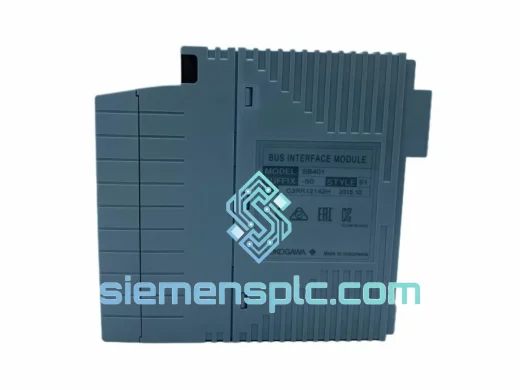
Yokogawa SB401-50 Serial Bus Interface Module – CENTUM VP
CENTUM VP
Origin JP
Serial Bus Interface Module
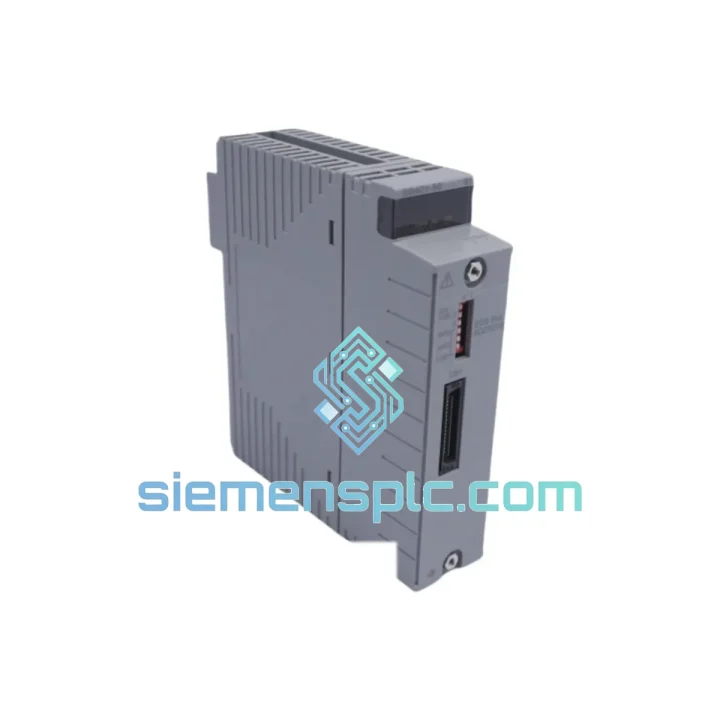
Request verified availability, condition, replacement risk review, packing options and courier lead time for SB401-51.
Click Request Quote and the part number is inserted into the inquiry form automatically.
Core fields for model confirmation and RFQ routing. Detailed product narrative remains below.
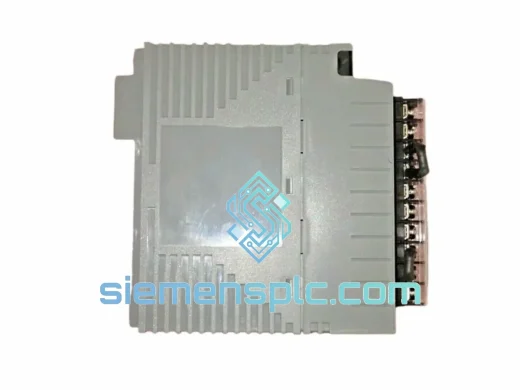
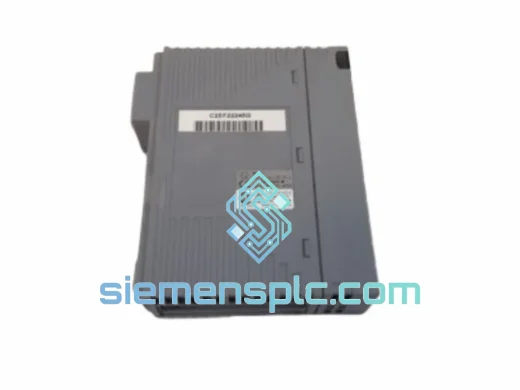
The Yokogawa SB401-51 is a single-slot communication interface card designed for installation within the Field Control Station (FCS) chassis of the CENTUM VP distributed control system. Its architectural function is precise: it manages the physical and logical communication layer between the FCS backplane and the ESB (Enhanced Serial Backplane) bus network, decoupling communication scheduling from the FCS CPU’s control execution thread. This separation is not incidental — it is a deliberate design constraint that preserves scan cycle determinism under variable network load conditions.
In process control environments — hydrocarbon processing, power generation, chemical synthesis, pulp and paper — the integrity of the communication layer between field I/O and the supervisory control layer is a direct determinant of loop performance. A communication card that introduces variable latency into the data path will manifest as jitter in PID loop feedback, degrading control quality in fast-responding processes. The SB401-51 addresses this through hardware-level bus arbitration logic that operates independently of the FCS CPU’s firmware execution state, guaranteeing bounded communication frame dispatch regardless of CPU utilization.
The card is compatible with the CENTUM VP platform and, subject to firmware revision verification, with legacy CENTUM CS 3000 installations. This cross-generation compatibility is a practical consideration for plants managing phased migration programs, where full I/O subsystem replacement is deferred to minimize capital expenditure and operational disruption.
Real-time Stock & RFQ: [email protected] | WhatsApp: +86 18359268345
| Parameter | Specification |
|---|---|
| Part Number / SKU | SB401-51 |
| Manufacturer | Yokogawa Electric Corporation |
| Product Series | CENTUM VP Distributed Control System |
| Module Classification | ESB Bus Communication Interface Card |
| Bus Interface Type | ESB (Enhanced Serial Backplane) Bus |
| Compatible Platform | CENTUM VP; CENTUM CS 3000 (firmware-revision dependent) |
| Form Factor | Single-slot plug-in card, FCS chassis-mounted |
| Operating Temperature Range | 0°C to +60°C |
| Storage Temperature Range | -20°C to +70°C |
| Relative Humidity | 5% to 95% RH, non-condensing |
| EMC Immunity Standard | IEC 61000-4 series (ESD, EFT/burst, surge, conducted RF, radiated RF) |
| Galvanic Isolation | Optical isolation on backplane signal interface |
| Module Weight | Approx. 180 g |
| Country of Origin | Japan |
| Warranty Period | 12 months from confirmed shipment date |
Fixed-Priority Bus Arbitration State Machine: The SB401-51 implements ESB bus arbitration through a dedicated hardware state machine rather than a firmware polling loop. In a polling architecture, arbitration latency is a function of CPU load — under high utilization, arbitration cycles are deferred, introducing non-deterministic delays into the communication path. The SB401-51’s hardware state machine operates asynchronously from the FCS CPU, resolving bus contention through fixed-priority interrupt logic with a bounded worst-case arbitration window. In multi-card FCS configurations where several communication cards share the ESB bus, this architecture prevents any single card’s communication activity from stalling the bus for other participants.
Optical Isolation on the Backplane Interface: The signal path between the ESB backplane connector and the card’s internal logic is galvanically isolated via optocouplers. This isolation barrier eliminates the ground loop current paths that form in large industrial installations where DCS cabinets, field junction boxes, and motor control centers share a common earthing grid with distributed impedance. Ground loop currents superimposed on communication signal lines manifest as common-mode noise that degrades signal integrity and increases CRC error rates. The SB401-51’s isolation barrier is rated to withstand transient voltages consistent with IEC 61000-4-5 Level 3 surge immunity, protecting the card and the FCS chassis from field-side electrical transients propagating through the backplane.
Multi-Layer PCB with Dedicated Ground Planes: The card’s PCB employs a multi-layer stackup with dedicated power and ground planes interleaved between signal routing layers. High-frequency digital switching circuits — clock distribution, bus transceivers, FPGA I/O — are physically separated from any analog signal conditioning paths by ground plane partitioning. Ferrite bead filters are placed at the backplane connector interface to suppress common-mode noise injection onto the ESB bus from the card’s internal switching activity. This layout discipline is essential in DCS cabinets co-located with variable-frequency drives and large motor starters, where radiated and conducted EMI levels routinely exceed the thresholds that would corrupt unshielded communication lines.
Redundancy Arbitration Without CPU Intervention: In redundant FCS configurations, the SB401-51 participates in the active/standby arbitration protocol at the hardware level. The card monitors heartbeat signals from its paired counterpart on a dedicated arbitration channel. Upon detecting a heartbeat timeout — indicating a communication fault in the active card — the standby card executes a deterministic switchover sequence without issuing an interrupt to the FCS CPU. This design ensures that redundancy switchover events do not consume CPU cycles or introduce latency into the control scan cycle. The switchover window is bounded by the hardware arbitration logic, not by firmware execution time.
Thermal Qualification for Continuous Industrial Duty: The SB401-51’s component selection and PCB thermal spreading are qualified for continuous operation across the 0°C to +60°C ambient range. This qualification covers non-air-conditioned marshalling cabinets in tropical climates (sustained ambient temperatures above 40°C with high humidity) and desert environments (low humidity, high thermal radiation), provided the FCS enclosure maintains forced-air ventilation per Yokogawa’s installation engineering specifications. The card’s power dissipation profile is managed to remain within the FCS chassis power budget without requiring supplemental cooling.
Every Yokogawa SB401-51 unit dispatched by siemensplc.com is sourced through verified industrial automation supply channels and processed through a structured pre-shipment inspection protocol before leaving our Xiamen facility:
Email: [email protected]
WhatsApp: +86 18359268345
Web: siemensplc.com
Location: Xiamen, China
© 2026 siemensplc.com. All rights reserved.
We check the full part number, brand, series and visible nameplate information before quotation.
Sales confirms stock path, condition option, quantity and realistic lead time for export dispatch.
DHL, FedEx, UPS or buyer courier arrangements can be reviewed with packing requirements.
Similar brand or category products for fast comparison and multi-item RFQ lists.