Yokogawa
In Stock OK
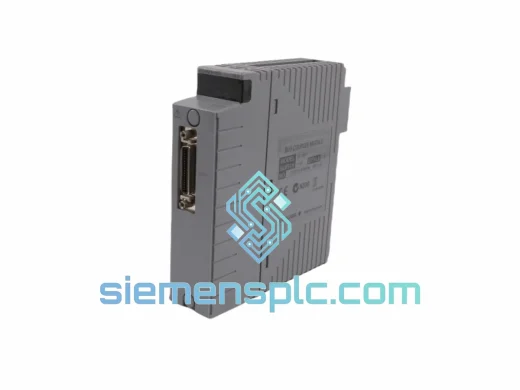
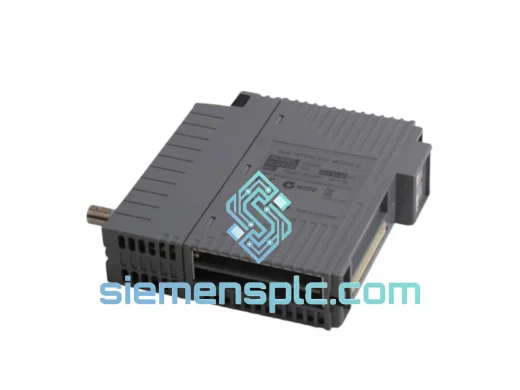
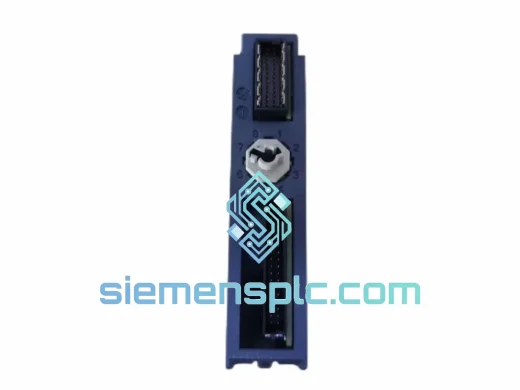
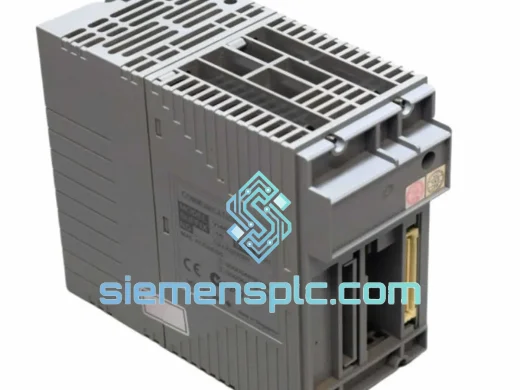
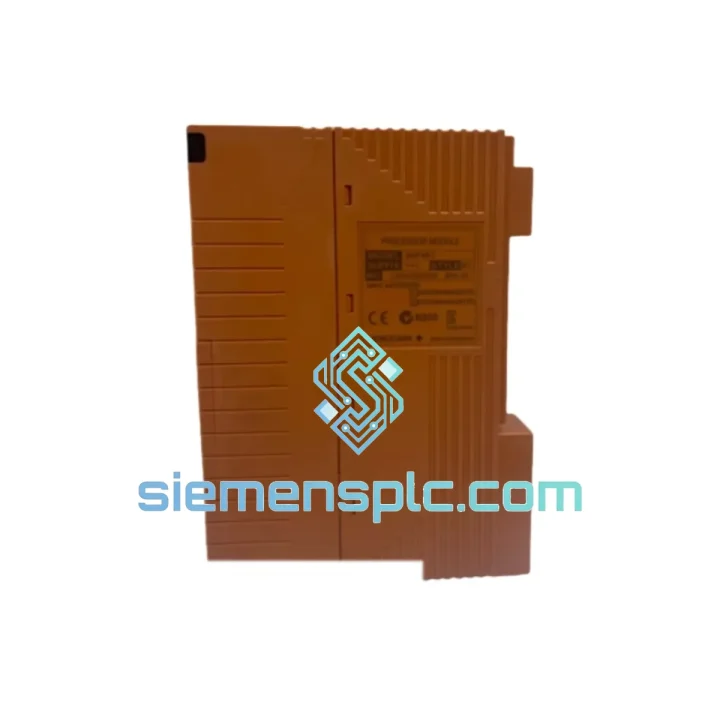
Yokogawa SCP461-11-S1 DCS Controller Module – CENTUM CS 3000
Request verified availability, condition, replacement risk review, packing options and courier lead time for SCP461-11-S1.
BrandYokogawa
Part NumberSCP461-11-S1
ConditionAvailability Check
Lead TimeRFQ Confirmation
DocumentsDatasheet / photos by RFQ
ShippingExport packing available
Auto-filled RFQ
SCP461-11-S1
Click Request Quote and the part number is inserted into the inquiry form automatically.
- Reply by email: [email protected]
- WhatsApp / Tel: +86 18359268345
- Mon-Sat 9:00-18:00 GMT+8
Procurement Data
Key Product Information
Core fields for model confirmation and RFQ routing. Detailed product narrative remains below.
- Brand
- Yokogawa
- Primary Part Number
- SCP461-11-S1
- Product Type
- DCS Controller Module
- Product Family
- Other series
- Manufacturer
- Yokogawa Electric Corporation
- Country of Origin
- JP
- Catalog Category
- DCS & Safety Modules
- Operating Temp.
- 0°C to 55°C
- Warranty
- 12 months against manufacturing defects; DOA replacement policy
Model confirmed for inquiry
SCP461-11-S1
Send quantity, destination and urgency. The RFQ form keeps this part number attached.
Request Quote
Product Overview
Yokogawa SCP461-11-S1 Standard Controller Module – Core Execution Engine of the CENTUM CS 3000 Field Control Station
The SCP461-11-S1 is the primary processing module within the Yokogawa CENTUM CS 3000 Field Control Station (FCS). Its function is not peripheral — it is the deterministic execution core that carries every control algorithm, every sequence logic block, and every I/O arbitration decision for the process loops assigned to its FCS node. In a distributed control architecture where scan-cycle jitter directly translates to process variability, the SCP461-11-S1 provides the computational substrate that keeps loop execution within defined timing windows regardless of upstream network load.
The module operates within the FCS cabinet mounted on the V-net segment, receiving engineering downloads from the CENTUM Engineering Environment (ENG) workstation and executing compiled control strategies autonomously. This autonomous execution model means that even during V-net communication interruptions — whether caused by switch failure, cable fault, or planned maintenance — the SCP461-11-S1 continues executing all resident control functions without degradation. The separation of execution from supervision is a deliberate architectural decision that defines the reliability posture of the CENTUM CS 3000 platform.
Downstream, the module communicates with analog and digital I/O sub-modules (AAI141, ADV151, ADA series) via the ER Bus backplane. The ER Bus is a synchronous, deterministic backplane protocol that delivers I/O data to the SCP at fixed intervals, eliminating the non-determinism associated with shared-medium fieldbus architectures. Each I/O scan cycle is time-stamped at the backplane level, providing the SCP with coherent process snapshots for PID computation, cascade management, and interlock evaluation.
For installations requiring high availability, the SCP461-11-S1 supports dual-redundant controller pairing. In a redundant FCS configuration, two SCP modules operate in active/standby mode with continuous state synchronization over a dedicated redundancy link. Failover is bumpless — the standby module assumes control within one scan cycle, with no step change in output to the field. This behavior is critical in processes where output transients during controller switchover would trigger safety system responses or cause product quality deviations.
The SCP461-11-S1 is a verified drop-in replacement for existing CENTUM CS 3000 installations. No backplane reconfiguration, no firmware re-download, and no I/O remapping are required for standard replacement scenarios. The module reads its configuration from the FCS database on first power-up, restoring all control strategies, tuning parameters, and I/O assignments automatically. This characteristic significantly reduces planned maintenance windows and eliminates the risk of manual re-entry errors during module swap procedures.
Each unit supplied by siemensplc.com is sourced from verified industrial channels, subjected to board-level visual inspection, and powered on for functional verification prior to dispatch. Serial numbers are documented, and counterfeit screening is applied to all incoming stock. Units are shipped in anti-static ESD packaging with foam cushioning from our warehouse in Xiamen, China, with DHL/FedEx express options available for same-week delivery to most global destinations.
Real-time Stock & RFQ: [email protected] | WhatsApp: +86 18359268345
Technical Parameters
| Parameter | Specification |
|---|---|
| Part Number | SCP461-11-S1 |
| Manufacturer | Yokogawa Electric Corporation |
| Platform | CENTUM CS 3000 |
| Module Classification | Standard Controller Processor (SCP) |
| Mounting Location | Field Control Station (FCS) cabinet, V-net segment |
| Backplane Interface | ER Bus (synchronous, deterministic I/O backplane) |
| Network Interface | V-net / V-net ER (Yokogawa proprietary Ethernet-based control network) |
| Control Functions | PID, cascade, ratio, feedforward, sequence, batch logic |
| Redundancy | Dual-redundant active/standby pairing supported; bumpless failover within one scan cycle |
| Power Supply | 24 VDC via backplane (supplied by FCS power module) |
| Operating Temperature | 0°C to 55°C |
| Storage Temperature | -20°C to 70°C |
| Relative Humidity | 5% to 95% RH, non-condensing |
| Vibration Resistance | IEC 60068-2-6 compliant |
| EMC Compliance | CE Mark; IEC 61000-4 series (ESD, EFT, surge, conducted/radiated immunity) |
| Safety Certification | IEC 61508 SIL-capable platform (system-level) |
| Weight | Approx. 1,000 g |
| Country of Origin | Japan |
| Warranty | 12 months against manufacturing defects; DOA replacement policy |
Hardware Logical Analysis
The SCP461-11-S1 implements a multi-layer hardware design that addresses the three primary failure modes in industrial controller modules: electromagnetic interference ingress, power transient propagation, and thermal-induced logic instability.
EMC Architecture: The module’s PCB layout follows a segmented ground plane strategy, physically separating the analog signal processing domain from the digital logic domain. This separation prevents high-frequency switching noise generated by the processor clock from coupling into the analog measurement paths. The backplane connector interface incorporates common-mode chokes on all signal lines, attenuating differential noise injected from adjacent I/O modules. The module housing provides a Faraday enclosure effect, with conductive gaskets at all panel interfaces to maintain shielding continuity. Compliance with IEC 61000-4-4 (electrical fast transient) and IEC 61000-4-5 (surge immunity) is achieved through TVS diode arrays on all external-facing signal lines and a staged LC filter network on the 24 VDC power input.
Redundancy Arbitration Logic: In dual-redundant FCS configurations, the SCP461-11-S1 implements a hardware-assisted arbitration mechanism that monitors the active module’s heartbeat signal at the backplane level. The standby module continuously shadows the active module’s memory state via the redundancy synchronization link. Upon detection of a heartbeat timeout — configurable but typically set to one scan cycle — the standby module asserts bus mastership within the same scan interval. The arbitration decision is made in hardware, not software, eliminating the latency associated with OS-level failover routines. This design ensures that the bumpless transfer specification is met even under conditions where the active module’s processor has entered an unrecoverable fault state.
Thermal Management: The module’s processor and memory ICs are mounted on a thermally conductive substrate bonded to the aluminum module housing. Heat generated during continuous operation is conducted to the housing surface and dissipated by forced-air convection within the FCS cabinet. The thermal design maintains junction temperatures within rated limits at the maximum specified ambient of 55°C, providing a thermal margin that extends component service life in installations where cabinet cooling is marginal.
System Integration Benefits
- Autonomous Control Execution: All resident control strategies execute locally on the SCP without dependency on V-net communication, maintaining process stability during network maintenance or fault conditions.
- Deterministic Scan-Cycle Timing: ER Bus backplane delivers I/O data at fixed intervals; scan-cycle jitter is bounded by hardware design, not OS scheduling, ensuring consistent loop performance across all operating conditions.
- Bumpless Redundancy Failover: Hardware-arbitrated switchover within one scan cycle eliminates output transients during controller replacement or fault recovery, protecting downstream process equipment and product quality.
- Zero-Configuration Module Replacement: The SCP reads its full control database from FCS non-volatile storage on power-up; no manual re-entry of tuning parameters, I/O assignments, or strategy logic is required after module swap.
- Integrated Diagnostic Transparency: Built-in self-test routines execute at power-up and continuously during operation; fault codes are reported to the CENTUM HIS operator station with module-level granularity, enabling rapid fault isolation without physical cabinet access.
- Scalable FCS Architecture: Multiple SCP modules can be deployed within a single FCS cabinet to distribute control load; each module operates as an independent execution domain, preventing a single module fault from affecting control loops assigned to other modules.
- Long-Term Platform Continuity: CENTUM CS 3000 installations with operational lifespans exceeding 20 years benefit from verified replacement modules that maintain backward compatibility with existing engineering databases, eliminating forced migration costs.
- SIL-Capable Platform Foundation: The CENTUM CS 3000 platform, with the SCP461-11-S1 as its execution core, supports IEC 61508 safety instrumented function implementation at the system level, enabling integration with safety logic in mixed SIS/DCS architectures.
Quality Assurance & Global Logistics
Every SCP461-11-S1 unit dispatched from siemensplc.com is a genuine Yokogawa-manufactured module. Sourcing is conducted exclusively through verified industrial channels with documented provenance. Each unit undergoes a structured pre-shipment process: visual inspection of PCB and connector surfaces, board-level examination for component damage or rework indicators, functional power-on verification with status LED confirmation, and serial number documentation against our inventory records. Counterfeit screening — including label authentication and firmware version verification — is applied to all incoming stock before it enters our available inventory.
Our warehouse is located in Xiamen, China, a major export hub with direct access to international express freight networks. Standard dispatch lead time for in-stock units is 1–2 business days from payment confirmation. Shipping options include DHL Express, FedEx International Priority, and UPS Worldwide Express, with typical transit times of 3–5 business days to Europe, North America, Southeast Asia, and the Middle East. Full export documentation is provided with every shipment: commercial invoice, packing list, certificate of origin, and HS code 8537.10 classification for customs clearance. Anti-static ESD packaging with foam cushioning protects the module during transit. For large-quantity orders, third-party pre-shipment inspection (SGS, Bureau Veritas) can be arranged upon request.
All units are covered by a 12-month warranty against manufacturing defects from the date of shipment. Dead-on-arrival (DOA) units are replaced without charge. Warranty claims are processed within 5 business days of receipt of the returned unit.
Contact Information
Email: [email protected]
WhatsApp: +86 18359268345
Web: siemensplc.com
Location: Xiamen, China
© 2026 siemensplc.com. All rights reserved.
Ready to quote
[email protected]
Send This Part Number to Sales
RFQ workflow
Quality workflow ->
Confirmation Process
01Model confirmation
We check the full part number, brand, series and visible nameplate information before quotation.
02Availability reply
Sales confirms stock path, condition option, quantity and realistic lead time for export dispatch.
03Packing & courier
DHL, FedEx, UPS or buyer courier arrangements can be reviewed with packing requirements.
Continue sourcing
Browse full catalog ->
Related Automation Parts
Similar brand or category products for fast comparison and multi-item RFQ lists.