
Yokogawa
In Stock OK
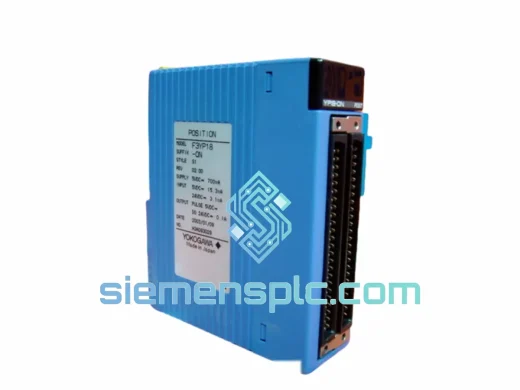
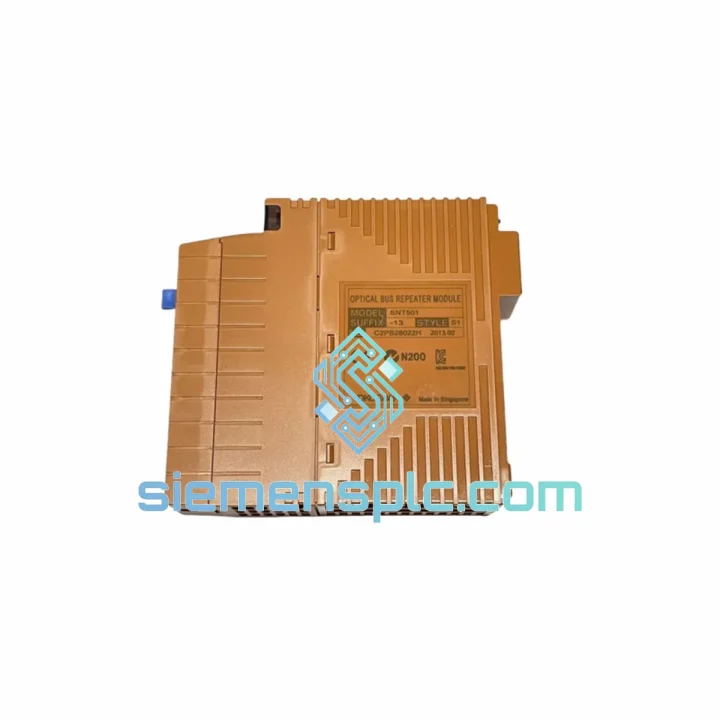
YOKOGAWA SNT521-53 Bus Repeater Slave Module – STARDOM Series
Request verified availability, condition, replacement risk review, packing options and courier lead time for SNT521-53.
BrandYokogawa
Part NumberSNT521-53
ConditionAvailability Check
Lead TimeRFQ Confirmation
DocumentsDatasheet / photos by RFQ
ShippingExport packing available
Auto-filled RFQ
SNT521-53
Click Request Quote and the part number is inserted into the inquiry form automatically.
- Reply by email: [email protected]
- WhatsApp / Tel: +86 18359268345
- Mon-Sat 9:00-18:00 GMT+8
Procurement Data
Key Product Information
Core fields for model confirmation and RFQ routing. Detailed product narrative remains below.
- Brand
- Yokogawa
- Primary Part Number
- SNT521-53
- Product Type
- Bus Repeater Module
- Series / Family
- STARDOM
- Manufacturer
- YOKOGAWA Electric Corporation
- Country of Origin
- JP
- Catalog Category
- Industrial Automation Spares
- Operating Temp.
- 0 °C to +55 °C (IEC 60068-2-1/2 tested)
- Warranty
- 12 months from shipment date
Model confirmed for inquiry
SNT521-53
Send quantity, destination and urgency. The RFQ form keeps this part number attached.
Request Quote
Product Overview
YOKOGAWA SNT521-53 Bus Repeater Slave Module: Signal Topology Extension in STARDOM Distributed Control Architecture
The SNT521-53 occupies a structurally critical position within the YOKOGAWA STARDOM FCN/FCJ distributed control platform. Its primary function is to extend the physical reach of the STARDOM field bus by acting as a slave-side repeater node — regenerating bus signals, re-timing data frames, and isolating electrical faults between bus segments. In large-scale process plants where I/O nodes are distributed across hundreds of meters of cable runs, the SNT521-53 prevents cumulative signal attenuation from degrading communication integrity between the FCN controller backplane and remote I/O clusters.
Unlike passive bus terminators, the SNT521-53 performs active signal conditioning. Each incoming frame is received, decoded, and retransmitted at full amplitude and with corrected timing margins. This active regeneration mechanism ensures that bit error rates remain within the IEC 61158 specification envelope even at maximum segment length. The module integrates directly into the STARDOM SNT521-xx I/O chassis without additional wiring adapters, drawing power from the chassis backplane rail and presenting a standard bus slave address to the FCN controller’s communication processor.
In control loop terms, the SNT521-53 is transparent to the application layer. The FCN controller’s IEC 61131-3 runtime does not distinguish between I/O data sourced from a directly connected module and data routed through one or more SNT521-53 repeater stages. Scan cycle determinism is preserved because the repeater’s propagation delay is fixed and accounted for in the bus timing parameters configured at the FCN communication layer. This determinism is non-negotiable in closed-loop PID applications where process variable latency directly affects loop stability margins.
Real-time Stock & RFQ: [email protected] | WhatsApp: +86 18359268345
Technical Parameters
| Parameter | Specification |
|---|---|
| Part Number | SNT521-53 |
| Manufacturer | YOKOGAWA Electric Corporation |
| Series | STARDOM FCN / FCJ |
| Module Function | Bus Repeater Slave Module |
| Bus Protocol | STARDOM proprietary field bus (IEC 61158 compliant physical layer) |
| Signal Regeneration | Active — full amplitude restoration and frame re-timing per segment |
| Chassis Compatibility | SNT521-xx I/O chassis; FCN-100, FCN-500, FCJ controller platforms |
| Power Supply | Backplane-powered; no external 24 VDC supply required |
| Operating Temperature | 0 °C to +55 °C (IEC 60068-2-1/2 tested) |
| Storage Temperature | −25 °C to +70 °C |
| Relative Humidity | 5 % to 95 % RH, non-condensing |
| EMC Compliance | EN 61000-4-2 (ESD), EN 61000-4-4 (EFT/Burst), EN 61000-4-5 (Surge) |
| Vibration Resistance | IEC 60068-2-6: 10–150 Hz, 1 g |
| Shock Resistance | IEC 60068-2-27: 15 g, 11 ms half-sine |
| Enclosure Rating | IP20 (panel-mount installation) |
| Weight | 1,380 g |
| Certifications | CE, RoHS, IEC 61131-2 |
| Country of Origin | Japan |
| Warranty | 12 months from shipment date |
Hardware Logical Analysis
Active Signal Regeneration Architecture: The SNT521-53 employs a receive-decode-retransmit pipeline rather than a simple analog amplifier stage. Incoming differential bus signals are sampled by a dedicated line receiver IC with a defined input threshold hysteresis of ±200 mV, which rejects common-mode noise induced by ground potential differences between cabinet sections. The decoded digital frame is buffered in a small FIFO and retransmitted by a line driver with controlled slew rate — typically 10 V/µs — to suppress high-frequency harmonic emissions that would otherwise violate EN 55011 Class A radiated emission limits in dense panel environments.
Galvanic Isolation Boundary: The bus interface incorporates transformer-based galvanic isolation between the chassis backplane domain and the extended bus segment. This isolation barrier sustains a working voltage of 500 V AC (rms) and a test voltage of 1,500 V AC for 1 minute per IEC 60950-1, effectively breaking ground loops that are endemic in multi-cabinet installations where cabinet earth potentials can differ by several volts due to high-current motor drive return currents sharing the plant earth grid.
EMC Shielding and Filtering: The module’s PCB layout routes the bus differential pair as a controlled-impedance 120 Ω trace pair with guard traces tied to chassis ground, minimizing crosstalk from adjacent I/O signal traces. Ferrite bead filters on the backplane power rails attenuate switching noise from adjacent power supply modules in the 1–30 MHz range, preventing conducted interference from corrupting the bus receiver’s analog front end.
Thermal Management: Power dissipation of the SNT521-53 is held below 3 W under worst-case bus loading conditions. The module relies on natural convection within the I/O chassis enclosure; no forced-air cooling is required. The PCB substrate is FR4 with 2 oz copper pour on the ground plane layer, providing adequate thermal spreading to maintain junction temperatures of active components below 85 °C at a 55 °C ambient — consistent with a 10-year MTBF projection exceeding 200,000 hours under IEC 61709 stress conditions.
Fault Containment Logic: An onboard watchdog circuit monitors bus activity on the extended segment. If no valid frame is detected within a configurable timeout window (default: 500 ms), the module asserts a local fault flag on the backplane diagnostic bus. The FCN controller’s communication processor reads this flag during its next diagnostic scan cycle and generates a system alarm without halting the main control task — preserving process continuity while alerting the operator to a wiring or node fault on the extended segment.
System Integration Benefits
- Deterministic scan cycle preservation: Fixed propagation delay through the repeater stage is registered in the FCN bus timing table, ensuring that the controller’s IEC 61131-3 task scheduler accounts for repeater latency without introducing jitter into the process variable update rate.
- Transparent application-layer operation: The FCN runtime addresses I/O modules beyond the SNT521-53 using standard slot addressing; no special function blocks or driver modifications are required in the control program.
- Extended physical bus reach: Each SNT521-53 stage extends the maximum allowable cable run by the full segment length specification, enabling I/O distribution across large plant footprints — refineries, power stations, water treatment facilities — without intermediate junction boxes or active hubs.
- Ground loop elimination: The 500 V AC galvanic isolation barrier prevents ground loop currents from corrupting bus data, a common failure mode in plants where variable-frequency drives share the earth grid with control system cabinets.
- Diagnostic transparency: Fault flags propagated to the FCN diagnostic bus allow CENTUM VP or third-party SCADA systems via OPC-UA to display segment-level health status, reducing mean time to diagnose (MTTD) for bus faults from hours to minutes.
- Reduced wiring infrastructure cost: By extending the bus rather than running individual signal cables from each remote I/O node back to the controller cabinet, the SNT521-53 reduces total installed cable length and associated conduit, termination labor, and cable tray costs in greenfield projects.
- Hot-swap chassis compatibility: When installed in an SNT521-xx chassis that supports hot-swap I/O, the repeater module can be replaced during plant operation without interrupting bus communication on the controller-side segment, provided the extended segment is temporarily isolated.
- Scalable topology: Multiple SNT521-53 units can be cascaded within the limits defined in the STARDOM hardware engineering guide, supporting star, daisy-chain, and hybrid bus topologies to match the physical layout of the installation without redesigning the control network architecture.
Quality Assurance & Global Logistics
Every SNT521-53 unit supplied by siemensplc.com is sourced through verified procurement channels with full traceability documentation. Prior to dispatch, each module undergoes a structured inspection protocol: visual examination of label integrity and connector pin condition, power-on functional verification of bus communication, and cross-reference of the module’s serial number against manufacturer production records where accessible. Units that do not pass all inspection criteria are quarantined and not offered for sale.
Packaging follows anti-static handling procedures consistent with IEC 61340-5-1. Each module is placed in a conductive foam-lined anti-static bag, sealed, and placed in a rigid corrugated carton with shock-absorbing foam inserts rated for the module’s weight class. For international shipments, the carton is further over-packed to withstand the mechanical handling conditions of air freight palletization.
Logistics operations are based in Xiamen, China — a major port city with direct access to DHL Express, FedEx International Priority, and UPS Worldwide Expedited services. In-stock units are dispatched within 1–3 business days of order confirmation. Full export documentation is prepared for every shipment: commercial invoice, packing list, certificate of origin, and HS code declaration (HS 8537.10 for programmable controller modules). Customs clearance support is available for destinations requiring additional import documentation.
A 12-month warranty covers manufacturing defects and functional failures under normal operating conditions from the date of shipment. Warranty claims are processed within 5 business days of receipt of the returned unit, with replacement dispatch or credit note issued upon confirmation of the defect.
Contact Information
Email: [email protected]
WhatsApp: +86 18359268345
Web: siemensplc.com
Location: Xiamen, China
© 2026 siemensplc.com. All rights reserved.
Ready to quote
[email protected]
Send This Part Number to Sales
RFQ workflow
Quality workflow ->
Confirmation Process
01Model confirmation
We check the full part number, brand, series and visible nameplate information before quotation.
02Availability reply
Sales confirms stock path, condition option, quantity and realistic lead time for export dispatch.
03Packing & courier
DHL, FedEx, UPS or buyer courier arrangements can be reviewed with packing requirements.
Continue sourcing
Browse full catalog ->
Related Automation Parts
Similar brand or category products for fast comparison and multi-item RFQ lists.
Yokogawa
RFQ Ready
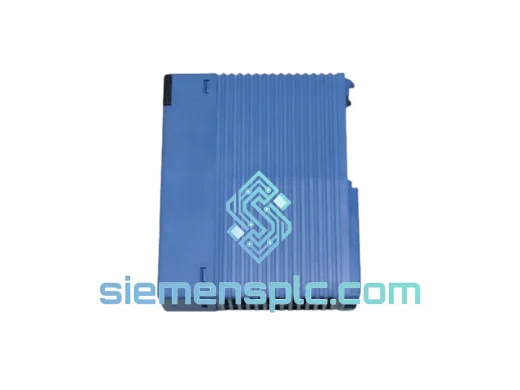
YOKOGAWA F3NC01-0N Network Communication Module – STARDOM FCN/FCJ
STARDOM
Origin JP
Network Communication Module
Yokogawa
RFQ Ready
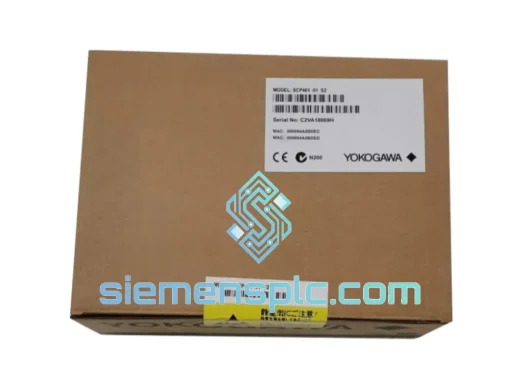
YOKOGAWA SCP461-E1 Signal Converter – STARDOM SCPx Series
STARDOM
Origin JP
Signal Converter
Yokogawa
RFQ Ready
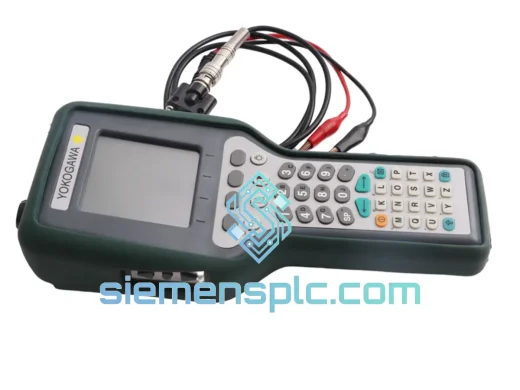
YOKOGAWA YHC4150X-01 HART Communicator
YHC4150X Series
Origin JP
HART Communicator