SST
RFQ Ready
SST SST-ESR2-CPX-P Communication Gateway – ESR2 Series
ESR2 Series
Origin United States
Industrial Communication Gateway
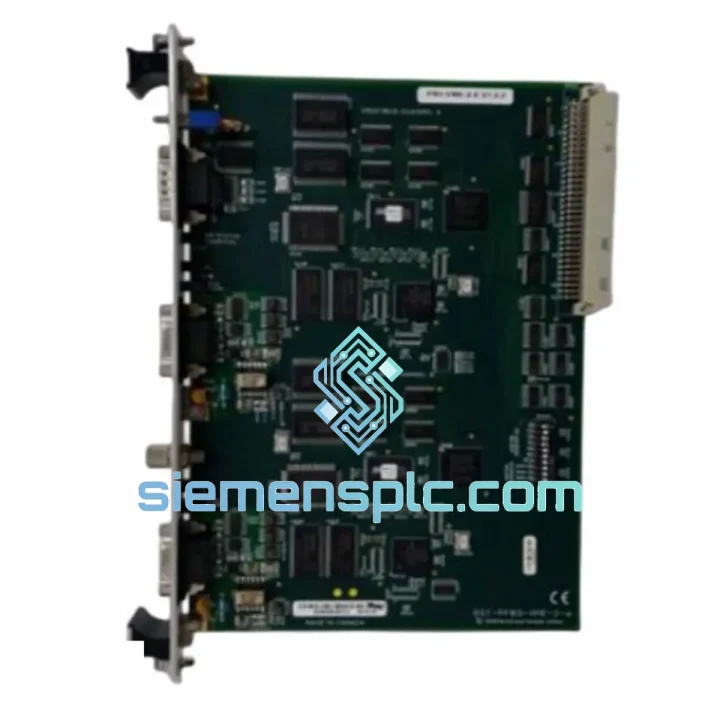
Request verified availability, condition, replacement risk review, packing options and courier lead time for SST-PB3-VME-2.
Click Request Quote and the part number is inserted into the inquiry form automatically.
Core fields for model confirmation and RFQ routing. Detailed product narrative remains below.
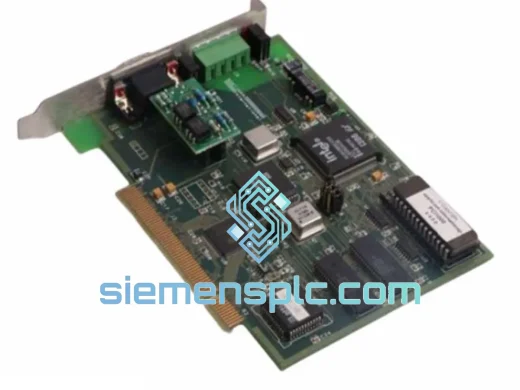
The SST-PB3-VME-2 is a 6U VMEbus-compliant, dual-channel PROFIBUS DP network interface card manufactured by SST (Woodhead SST, now integrated into the Molex industrial connectivity portfolio). In a distributed control architecture, this card sits at the protocol boundary between a VME single-board computer (SBC) and the PROFIBUS DP field network. Its function is precise: it translates VME backplane memory-mapped read/write transactions into time-deterministic PROFIBUS DP telegram sequences, and vice versa — without burdening the host CPU with protocol stack execution.
Each of the two independent PROFIBUS channels on the SST-PB3-VME-2 supports the full EN 50170 / IEC 61158 DP protocol stack, including Class 1 DP Master (cyclic I/O exchange), Class 2 DP Master (acyclic parameterization and diagnostics), and DP Slave modes. Both channels operate from separate onboard PROFIBUS ASIC instances, meaning a bus fault, excessive collision rate, or token-loss event on one segment has zero impact on the communication cycle of the other. This hardware-level isolation is a non-negotiable requirement in DCS topologies where one channel carries process-critical data and the other handles auxiliary or diagnostic traffic.
At 12 Mbps — the maximum PROFIBUS DP baud rate — the card sustains deterministic token-passing cycles across up to 125 slave nodes per channel. The onboard microcontroller manages all token-ring arbitration, slave polling, and retry sequencing autonomously, exposing only the resulting I/O data image to the host SBC through a shared dual-port RAM (DPRAM) region mapped into the VME A24/D16 or A32/D32 address space. This DPRAM architecture eliminates interrupt-driven fieldbus overhead from the host CPU’s execution context entirely.
Real-time Stock & RFQ: [email protected] | WhatsApp: +86 18359268345
| Part Number | SST-PB3-VME-2 |
| Manufacturer | SST (Woodhead SST / Molex) |
| Form Factor | 6U VMEbus, IEEE 1014-1987 compliant |
| Protocol Standard | PROFIBUS DP, EN 50170 / IEC 61158 / IEC 61784-1 |
| Number of PROFIBUS Channels | 2 × fully independent DP channels |
| Supported Baud Rates | 9.6 kbps / 19.2 kbps / 93.75 kbps / 187.5 kbps / 500 kbps / 1.5 Mbps / 3 Mbps / 6 Mbps / 12 Mbps (hardware auto-detect) |
| Max Slave Nodes per Channel | 125 |
| DP Operating Modes | Class 1 DP Master, Class 2 DP Master, DP Slave (per channel, independently configured) |
| VME Address Modes | A24/D16, A32/D32 |
| Host Interface | Dual-Port RAM (DPRAM), memory-mapped via VME backplane |
| Field Connector | DB-9 female, one per channel (per PROFIBUS standard pinout) |
| Physical Layer Isolation | Galvanic isolation, RS-485 transceiver to VME ground, rated 500 V DC |
| Power Supply | +5 VDC via VME backplane |
| Typical Power Consumption | ≤ 5 W (both channels active at 12 Mbps) |
| Operating Temperature | 0 °C to +60 °C |
| Storage Temperature | −40 °C to +85 °C |
| Relative Humidity | 5% to 95%, non-condensing |
| RTOS Driver Support | VxWorks, QNX, LynxOS, Windows NT (legacy) |
| Unit Weight | Approx. 1,500 g |
| Warranty | 12 months from date of shipment |
The SST-PB3-VME-2 is built around a split-processor architecture that separates fieldbus protocol execution from host application logic at the silicon level. Two independent PROFIBUS ASIC instances — one per channel — each contain a dedicated token-passing state machine, cyclic data-exchange (CDX) scheduler, and slave address table. These ASICs operate on their own clock domains, independent of the VME backplane clock, which means PROFIBUS bus cycle timing is not subject to VME arbitration latency or host CPU interrupt response jitter.
DPRAM Decoupling Mechanism: The host SBC writes output data to the DPRAM output image area and reads input data from the DPRAM input image area. The onboard microcontroller transfers data between the DPRAM and the PROFIBUS ASIC’s I/O buffers at intervals synchronized to the PROFIBUS bus cycle — not to the VME bus cycle. This decoupling means the host can write to the DPRAM at any point in its execution cycle without needing to align writes to PROFIBUS token-passing windows. The ASIC picks up the latest DPRAM values at the next scheduled exchange interval, guaranteeing that field device outputs are updated within one PROFIBUS bus cycle of the host write.
RS-485 Galvanic Isolation: Each channel’s RS-485 transceiver is galvanically isolated from the VME backplane ground reference at 500 V DC. In large industrial installations — particularly those spanning multiple electrical panels, buildings, or process areas — PROFIBUS cable shields frequently carry ground-loop currents driven by differences in ground potential between panels. Without isolation, these currents appear as common-mode noise on the RS-485 differential pair, degrading signal margins and increasing bit-error rates at high baud rates. The SST-PB3-VME-2’s isolation barrier blocks this current path, maintaining RS-485 differential signal integrity across cable runs of up to 1,200 m at 93.75 kbps or 100 m at 12 Mbps.
Hardware Baud Rate Auto-Detection: The PROFIBUS ASIC measures the bit-period of incoming synchronization telegrams using an internal timer with sub-microsecond resolution. This hardware-level detection eliminates the need for manual baud rate configuration during commissioning and allows the card to re-synchronize to the bus within milliseconds following a power cycle or bus fault recovery — without host software intervention. In maintenance scenarios where a replacement card is inserted into a running system, this feature reduces the time from card insertion to active communication to the duration of a single PROFIBUS bus scan cycle.
Per-Channel Watchdog and Diagnostic Registers: Each ASIC exposes a set of diagnostic registers accessible through the DPRAM address map, reporting: current token-holder address, retry count per slave, slave response timeout count, bus cycle time (measured), and current detected baud rate. The host application can poll these registers at any interval to implement supervisory logic that detects degraded bus conditions — such as a slave with a rising retry count indicating a failing RS-485 termination — before the condition escalates to a communication fault. This register-level diagnostic access eliminates the need for an external PROFIBUS bus analyzer during routine maintenance.
Each SST-PB3-VME-2 unit shipped from our Xiamen, China facility passes through a structured pre-dispatch inspection protocol. Board-level visual inspection verifies component placement integrity, connector condition, PCB surface quality, and label authenticity against OEM reference standards. Lot codes and date codes are recorded per order to support full traceability — a requirement for regulated industries including power generation, oil and gas, and pharmaceutical process control.
Units are packed in anti-static ESD shielding bags with desiccant inserts where moisture sensitivity applies, consistent with IPC/JEDEC J-STD-033 handling guidelines. Outer cartons use shock-absorbing foam inserts dimensioned for 6U VME card geometry, with reinforced corrugated walls rated for international air freight drop and vibration profiles.
From Xiamen, shipments reach industrial destinations across Asia-Pacific, Europe, the Middle East, and the Americas within 3–7 business days via DHL Express, FedEx International Priority, or UPS Worldwide Expedited. Commercial invoices, packing lists, and certificates of origin are prepared for all cross-border consignments to support customs clearance without delay. Acceptance test reports (ATR) and functional verification prior to dispatch are available upon request — contact us to define test scope and lead time before order placement.
All units are covered by a 12-month warranty from the date of shipment, applicable to manufacturing defects and verified functional failures under normal operating conditions. Warranty claims receive a target initial response within 2 business days.
Email: [email protected]
WhatsApp: +86 18359268345
Web: siemensplc.com
Location: Xiamen, China
© 2026 siemensplc.com. All rights reserved.
We check the full part number, brand, series and visible nameplate information before quotation.
Sales confirms stock path, condition option, quantity and realistic lead time for export dispatch.
DHL, FedEx, UPS or buyer courier arrangements can be reviewed with packing requirements.
Similar brand or category products for fast comparison and multi-item RFQ lists.